 October 9, 2026
 Categories: Headline / Parsha / Torah
The First Baruch Hashem
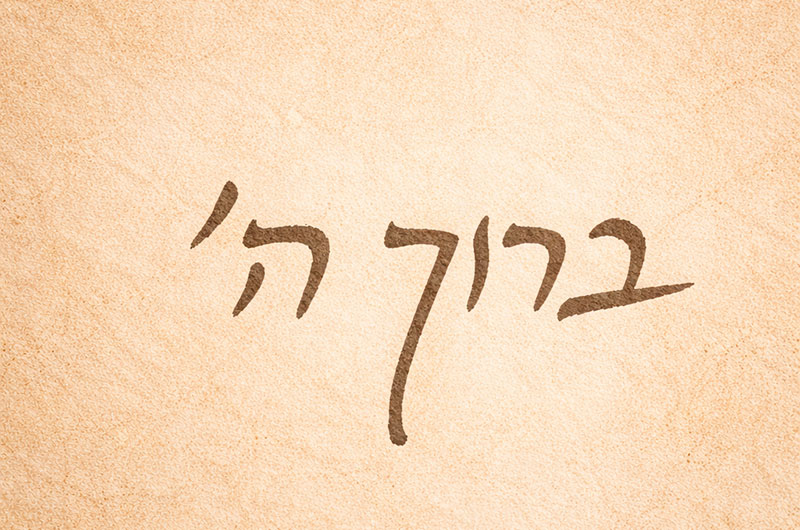


We say it all the time.
How are you? “Baruch Hashem.” How was your trip? “Baruch Hashem.” How are the kids? “Baruch Hashem.”
Two words so familiar they have become almost automatic, a kind of culturally Jewish punctuation, a comma we place between sentences without stopping to notice it.
But the Gemara in Sanhedrin tells us something unsettling about those words. The first person in recorded history to say Baruch Hashem was not Moshe. Not Aharon. Not Miriam. It was Yisro, a Midyanite priest, a father-in-law arriving with the grandchildren. An outsider.
And the Gemara does not frame this as trivia. G’nai hu l’Moshe v’shishim ribo. It was a disgrace to Moshe and the six hundred thousand that no one said Baruch Hashem until Yisro did.
That is a strong word. Disgrace. Did not Klal Yisrael sing an entire Shira? Did they not give voice to one of the most exalted expressions of praise in all of Tanach? What more could possibly have been missing?
The Netziv points to a quiet but decisive distinction. The Jewish people did thank Hashem, but they waited. They waited for the sea to split, for the danger to pass, for the story to reach its resolution. And only then, in a powerful, collective, composed moment, they sang. It was magnificent. It was holy. It was exactly right.
Yisro, however, responded differently.
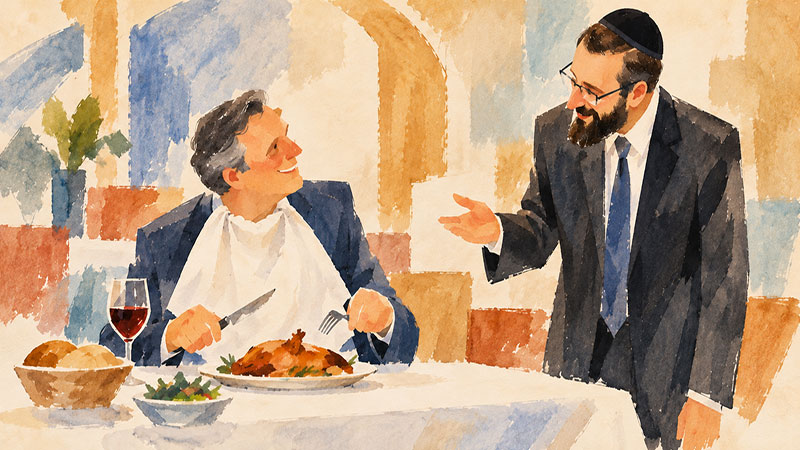
He was sitting with his son-in-law at a table, sharing a meal and hearing the story unfold, and he simply said it. Baruch Hashem. No ceremony. No formal structure. Just a full heart and an open mouth.
That difference matters, because gratitude is shaped by where we are standing when we say it.
Klal Yisrael’s Shira came from a very real, very human place. They were newly free, still close to what they had survived. Their gratitude was the gratitude of relief, thank G-d we made it through.
Yisro was standing somewhere else. He himself had not been enslaved. His family was safe. That allowed him to hear the story differently. When he said Baruch Hashem, it was not only about what had ended, but about the goodness he could now fully take in. Same G-d, same miracles, entirely different posture. And Torah makes room for both.
But the Torah does not tell us this only to describe the past. It tells us this because the same pattern repeats in our lives.
How many of us wait for perfect conditions before we express gratitude? We save our thank yous for formal spaces, Modim, bentching, milestones, and tell ourselves we will feel thankful when the outcome is clear, when the tension lifts, when the situation resolves.
Sometimes parents wait to say how proud they are of their children until a bar mitzvah or a wedding. Sometimes spouses save expressions of care for anniversaries, as if love is meant to be marked only on special dates. Appreciation, like gratitude, does not need an occasion. It belongs in conversation, in process, in ordinary days. If we wait for the perfect moment, that moment may never come.
And then the Torah reveals what was truly new about Yisro’s Baruch Hashem.
The Torah tells us vayichad Yisro. He felt it deeply, viscerally. He was moved by something that happened to someone else.
Yisro was never going to be subjugated. His family was safe in Midyan. And yet, when he heard what Hashem had done for the Jewish people, his heart overflowed as if it were his own story. He felt another nation’s salvation in his own bones.
The Ksav Sofer explains that up until this moment, no one in history had done this. Klal Yisrael thanked Hashem for what happened to them. Their gratitude was real, but it was self referential. It took an outsider to model what it looks like to thank Hashem for someone else’s miracle.
For those of us living outside of Israel, this idea feels especially relevant. We read the news, hear the stories, and watch history unfold, often from a place of physical safety that can easily become emotional distance. Yisro challenges us to ask whether distance must mean detachment. Whether gratitude, fear, and hope can cross oceans. Whether we can say Baruch Hashem, with fullness rather than slogans, for courage, resilience, and survival that are not being demanded of us in the same way.
When someone in our community receives the news they have been davening for, do we say Baruch Hashem with the same fullness as when it is our news? Or does something in us quietly calculate what we are still waiting for? Can we allow someone else’s joy to expand our own heart, rather than reminding us of what has not yet arrived?
We often speak about nosei b’ol im chaveiro, carrying another person’s burden. Yisro teaches us that there is an equally demanding avodah: nosei b’simcha im chaveiro, carrying another person’s joy. Not acknowledging it politely, but allowing it to take up real space inside us.
Rav Shlomo Wolbe writes that this is precisely why the Torah places Yisro’s arrival before Kabbalas HaTorah. To become a person of Torah, one must be willing to listen, not just with a discerning ear, but with an open heart. Vayishma Yisro. He heard someone else’s story, and he let it in. He let it change him.
Contrast that with Paroh, who witnessed every miracle firsthand and only hardened. Some people see everything and remain unmoved. Others hear a story over a meal, and it transforms them.
That is what Yisro brought to the Jewish camp that day. Not just Tziporah and the children. He brought a Baruch Hashem that no one else had said yet, and that, if we are honest, we are still learning how to say