 October 16, 2026
 The Kol That Echoes Through the Ages


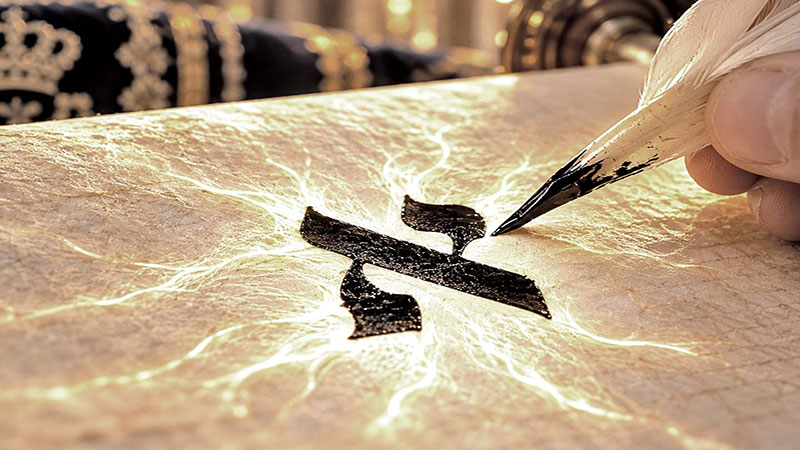
There is a question that has intrigued me for many years regarding the manner in which the Almighty chose to transmit His Torah to the Jewish people. According to our tradition, when Moshe Rabbeinu stood at Mount Sinai, he received not only the Written Torah (Torah Shebichtav), but also the Oral Torah (Torah Shebe'al Peh). The Written Torah was committed to parchment, while the Oral Torah was entrusted to memory and transmitted verbally from parent to child and from teacher to disciple. Only centuries later, when our Sages feared that exile, persecution, and the passage of time might cause this priceless tradition to be forgotten, did they commit it to writing in the Mishna and later in the Talmud. Yet, despite having been written down, we continue to refer to it as the Oral Law.
This has always raised a fundamental question. Why did G-d choose such a complicated method of preserving His Torah? Would it not have been far simpler had every detail of every commandment been included in the Written Torah itself? Why were the laws governing tefillin, tzitzit, mezuzah, shechita, Shabbat, and countless other mitzvot omitted from the text? The Torah commands us to bind "a sign upon your hand" and to place fringes upon our garments, but nowhere does it describe what those tefillin or tzitzit should look like. Without the Oral Tradition we would have no way of knowing how these mitzvot are to be fulfilled.
For many years, I suggested to my students that perhaps the Almighty intentionally left these details unwritten in order to place the responsibility for transmitting Judaism upon every generation. Had every law appeared in the Torah itself, parents might have felt little obligation to teach their children. They could simply have handed them a book and told them to study it on their own. Instead, every father and mother became an indispensable link in an unbroken chain stretching back to Sinai. Judaism would never become merely a religion of books; it would remain a religion of living teachers and devoted families, where Torah is not only read but lovingly transmitted from one generation to the next.
While I still believe there is truth in that explanation, over the years I have become convinced that there is an even deeper reason. It is found in a single Hebrew word that appears throughout the Torah and the Prophets – the word "Kol," a voice or a sound.
The significance of the spoken word has occupied great thinkers for centuries. Interestingly, Plato questioned the superiority of the written word, arguing that a written text cannot explain itself. Once words are placed on parchment, they become silent. Readers may misunderstand the author's intention, and the text has no ability to clarify, respond, or engage in dialogue. A living voice, however, conveys far more than information. It communicates feeling, conviction, compassion, urgency, and inspiration. A spoken word allows questions to be asked, ideas to be clarified, and hearts to be touched in ways that ink upon parchment never can.
Perhaps this helps us understand why the Torah was never intended to exist as merely a written document. The Torah was meant to possess a living voice.
It is remarkable how often the Torah employs the word Kol, and each time it appears it conveys not merely a sound but an overwhelming emotional and spiritual experience.
The first appearance occurs after Adam and Chava ate from the Tree of Knowledge. When the Almighty called to Adam, he responded, "I heard Your voice in the Garden, and I was afraid because I was naked, and so I hid" (Bereishit 3:10). Adam does not simply say that he encountered G-d; he speaks of hearing His Kol. Within that voice one senses majesty, holiness, judgment, and overwhelming awe. It was not merely the words that frightened Adam but the Divine presence conveyed through that voice.
A few chapters later, after Cain murdered his brother Abel, the Almighty declared, "The voice of your brother's blood cries out to Me from the earth" (Bereishit 4:10). Blood possesses no physical voice, yet the Torah teaches that innocent blood cries out before Heaven. Embedded within that single word, Kol, is all the anguish, injustice, and tragedy of a life cruelly taken. Throughout our history the blood of countless innocent Jews has continued to cry out before the Almighty, reminding us that no sacrifice is ever forgotten.
Perhaps the most familiar reference appears when Yaakov entered Yitzchak's tent disguised as Esau. Although Yitzchak was uncertain whom he faced, he uttered the immortal words, "The voice is the voice of Jacob, but the hands are the hands of Esau" (Bereishit 27:22). These words describe far more than a single episode in the lives of our Patriarchs. They encapsulate two opposing forces that have shaped human history. Esau represents power achieved through physical strength, while Jacob represents the spiritual strength of faith, prayer, learning, and morality. Nations may rise through military might, but the Jewish people have survived because of the enduring power of the Kol Yaakov.
History itself bears testimony to this truth. The Jewish people have survived exiles, expulsions, inquisitions, pogroms, and the horrors of the Holocaust, not because we possessed great armies or vast empires, but because the Kol of Torah never ceased. Our enemies burned our books, closed our academies, and sought to silence our teachers, yet they could not extinguish the voice of Torah. Somewhere a father quietly reviewed a Mishna with his son. Somewhere a mother sang the words of the Shema to her child before bedtime. Somewhere an elderly scholar repeated by heart the Gemara he had learned decades earlier. The chain remained unbroken because the Torah continued to live within the voices of its people.
Nowhere is the significance of this voice more dramatically illustrated than at Mount Sinai. The Torah tells us, "And all the people saw the voices" (Shemot 20:15). Ordinarily one hears sounds; one does not see them. Yet at Sinai, the Jewish people experienced a revelation that transcended the limitations of the physical world. They not only heard the Divine voice but perceived it with absolute clarity. Chazal explain that every individual heard that heavenly voice according to his own level of understanding. The message was one, yet every soul received it personally. Such is the miracle of Torah. It speaks to every generation, every community, and every individual, while remaining forever unchanged.
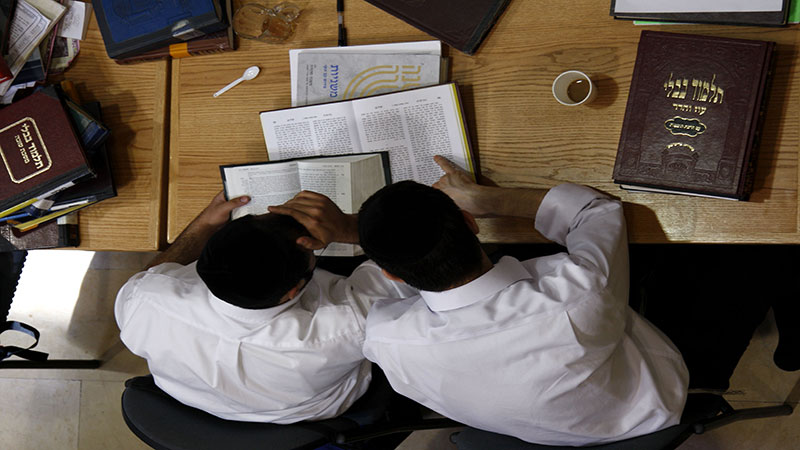
This may also explain why our Sages repeatedly emphasize that Torah should be studied aloud. Reading silently engages the mind, but speaking the words of Torah gives them life. The beit midrash has never been a silent library. It is filled with the voices of students questioning, debating, analyzing, and explaining. To an outsider the sounds may appear almost chaotic, yet they form a magnificent symphony that has echoed from generation to generation since the days of Moshe Rabbeinu.
Even in our own generation, when every sefer can be stored on a computer or downloaded onto a phone within seconds, something essential cannot be digitized. Information can be transmitted electronically, but a living tradition cannot. A child does not inherit Judaism from a screen. He inherits it from hearing his parents recite Kiddush on Friday night, from listening to his grandfather chant the Haggadah at the Seder, from hearing his teacher explain a page of Gemara with warmth and enthusiasm, and from joining thousands of other voices responding "Amen" in the synagogue. The melody, warmth, emotion, and conviction carried by those voices become part of the Mesorah itself.
Perhaps this is the deepest meaning of the Oral Torah. The Almighty did not simply entrust us with a book; He entrusted us with a voice. Every generation has added its own voice to the eternal conversation that began at Sinai without ever altering its message. The melodies may have differed from one country to another, the accents may have changed, and the languages surrounding us may have been countless, but the Kol Yaakov has remained unmistakably the same.
Empires have risen and disappeared. Mighty civilizations have flourished and faded into history. Yet the Jewish people, scattered across continents and separated by centuries, continue to be united by one enduring sound – the voice of Torah. It is heard in the chant of a child reciting the aleph-beit, in the lively discussion of a page of Gemara in the beit midrash, in the melody of Kiddush on Friday night, and in the whispered Shema before sleep.
Perhaps, then, the greatest miracle of Jewish history is not simply that we preserved the Torah, but that we never allowed its voice to fall silent. As long as that eternal Kol continues to resonate in our homes, our schools, our synagogues, and our hearts, the chain of our Mesorah will remain unbroken, linking us forever to the voice that first echoed from Mount Sinai.