 October 9, 2026
 Categories: Headline / Parsha / Torah
The Message in the Kohen Gadol’s Yom Kippur Garments
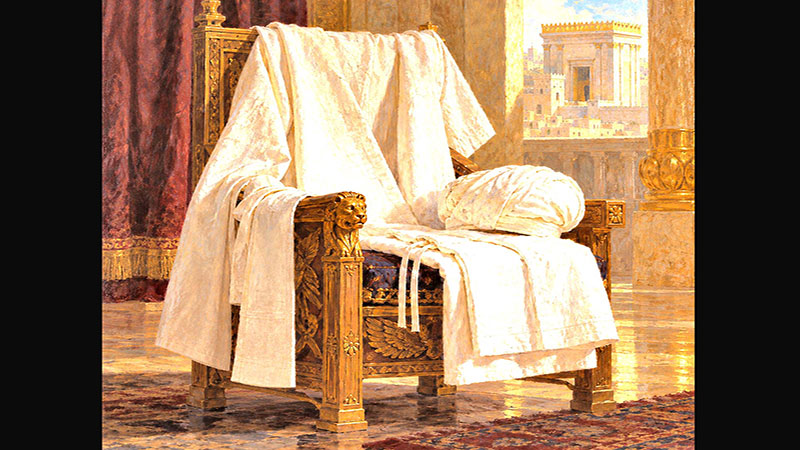


One truly memorable aspect of the service in the Beit HaMikdash on Yom Kippur was the special garments of the Kohen Gadol that he only wore once, on this day, for this purpose. These special clothes were worn into the Kodesh Kedoshim, the Holy of Holies. At the designated time when the Kohen Gadol was to change back into his regular “golden” clothes, the white clothes were left in their place beside the Sanctuary forever. The white Yom Kippur garments of the Kohen Gadol were made entirely of linen.
Rav Moshe Cordovero (RaMaK), in his commentary on the Yom Kippur service, associates the two sets of garments – each comprising four pieces – with the four-letter Divine Name. The golden clothes represent the name Ado-nai that we say in place of the ineffable name when we pray and read the Torah, and which represents the Divine Kingship in the world and in all created worlds. The white clothes correspond to the tetragrammaton, which we do not speak aloud but which the Kohen Gadol did utter on Yom Kippur – and only on Yom Kippur, and only while wearing the white linen garments. This name represents Divine Mercy, which transcends all of Creation and preceded it in its intention. This mercy is also the prevailing theme of Yom Kippur, and eliciting its influence in our lives is the main purpose of the service of the day.
RaMaK points out in his commentary that linen is a material typically associated with the attribute of judgment, which on the surface would seem to oppose its use here and the connection with the Divine Name of Mercy. He explains that the mechanism of the linen is similar to that of the scarlet woolen string that turns white to signify that we have been forgiven. The harsh judgment of linen is bleached white and worn on the body of the Kohen Gadol – the paragon of mercy – to signify that even the instruments of judgment in this world have been co-opted for mercy and forgiveness on Yom Kippur. This recalls what we saw a few weeks ago in the teachings of Rav Kook that even our sins themselves become inverted from accusers into advocates. RaMaK further connects the linen of the clothes of the Kohen Gadol to the pargod, the heavenly screen that separates the eternal realms from our material world.
Though RaMaK does not mention it here, one might also consider the Malach Gavriel, who is often described allegorically as “the man clothed in linen [lit. fabric].” (See, for example, Daniel 10:5, and elsewhere, including especially Sefer Yechezkel.) Gavriel is also associated with Divine Judgment and even retribution, but typically when he appears in his linen garments before the prophets of Israel, he is on a mission of mercy. The Kohen Gadol in his linen garments literally passes through the curtain separating the “Holy” from the “Holy of Holies” in an act that is meant to evoke that transition between this world and the next. He does this, of course, while wearing linen garments.
The principal source for the association of linen with Judgment is the Midrash on Bereishit (Tanchuma 9) where the Sages taught that Kayin’s offering was linen (and Hevel’s, wool). In this context, the implication is that Kayin was channeling Judgment, whereas Hevel evoked Mercy. There is even a tradition attributed to the Arizal that Aharon the Kohen Gadol was the reincarnation of Hevel.
Linen is also noteworthy because it is singled out in the Mishna in Shabbat (2:3 – “Bameh Madlikin”) as the only material which derives from a tree that is permissible to use as a wick for our Shabbat candles. The Mishna also teaches there (and elsewhere) that linen is the only material derived from a tree that can transmit tum’a, ritual impurity. The Gemara asks two very obvious questions on these teachings: What makes the linen a tree and why does it confer impurity? The source for calling it a tree is found in the story of the spies who hid on Rachav’s roof in Yericho (Yehoshua 2:6) where “she hid them among the linen trees.” The reason that linen transmits impurity also connects back to the service of Yom Kippur in the Beit HaMikdash and before that in the Mishkan. The Gemara explains that it’s very obvious that linen should be integral to the “impurity of a structure” – literally “a tent” – because the tent itself is made of linen. The Gemara learns this from the text describing the erection of the Mishkan, when the “tent” is stretched over the columns to enclose the structure.
The linen garments of the Kohen Gadol on Yom Kippur somehow manage to link together Divine Judgment, the Mercy that supersedes it, the division between the material and the spiritual, and the entire structure of the cosmos. That’s a lot to think about on Yom Kippur as we recite the litany of the Temple Service during the repetition of Musaf (though the Ashkenazi version of that repetition tracks all of these themes closely).
May we all merit complete forgiveness and total redemption, and may we see the Temple Service restored in its proper place and time. And if we do not merit that, then let Hashem grant us forgiveness and restoration anyway, for the sake of His Name that is encoded in the clothes of the Kohen Gadol, which are still hidden somewhere on the Temple Mount.