 August 14, 2026
 Categories: Features On The Jewish World / Collecting / In Print
The Role of Judaism in the Life of Uriah Levy



Uriah Phillips Levy (1792-1862) occupies a unique and distinguished place in American history as both a pioneering naval officer and as the first Jewish American to reach the rank of commodore in the United States Navy. His life, however, cannot be reduced to his military accomplishments alone, as he was, throughout his life, a figure deeply connected to his Jewish identity, traditions, and community. This dual commitment to the American Republic and to his Jewish faith shaped his career, his reputation, and his legacy, and his story is not only that of an individual navigating the turbulent waters of early nineteenth-century America, but also of a man whose personal integrity and commitment to Judaism made him stand out in a nation still struggling to learn to accommodate religious and cultural multiplicity.

Levy was born into a Jewish Philadelphia family that traced its roots back to Portugal and Spain, with ancestors who had fled persecution during the Inquisition. His family was part of the Sephardic Jewish community that had established itself in America during the colonial era, particularly in cities like Newport, Philadelphia, and Charleston. His maternal grandfather was the founding member and parnas of the Mikvah Israel synagogue, to which his parents also belonged. They raised their son within this milieu, imbuing in him both a sense of loyalty to Jewish religious practice and a determination to assert his place within American society.

From an early age, Levy was drawn to the sea; at just ten years old, against the wishes of his family, he ran away from home and took a job as a cabin boy on a ship that carried goods up and down the Atlantic Ocean between Boston and Savannah, beginning a lifelong love affair with naval life. Much to the amiable amusement of his shipmates, he did his best to keep kosher, and he advised the ship captain that he could commit to only two years of service because he wanted to return home in time to prepare for his bar mitzvah – and, indeed, he did return to celebrate the Jewish rite with his family.

However, rejecting his parents’ insistence that he become a merchant, he apprenticed as a common seaman serving aboard ships bringing cargo to Europe and the West Indies and, by the age of twenty, when the War of 1812 broke out, he had secured a place as a sailing master in the United States Navy. His service during the war was marked by courage and distinction, including during his capture by the British and subsequent imprisonment, an experience that hardened his resolve to remain in the Navy notwithstanding the prejudice he encountered as a Jew. Notably, during his sixteen horrendous months incarcerated in the notorious Dartmoor Prison, he attempted to organize a minyan, but he was only able to find four other American Jewish prisoners. Levy’s decision to pursue a naval career was itself remarkable, coming at a time when few Jews held prominent positions in public life, and the Navy, with its entrenched traditions and social hierarchies, was hardly welcoming to Jews.
Levy’s Judaism was not a superficial marker of identity but an essential part of his life. Although shipboard life made full observance difficult, he remained committed to his principles and he was known for his observance of the Sabbath whenever possible and for keeping kosher dietary practices even when at sea, where such adherence required great personal sacrifice. Accounts of his life note his attendance at synagogue when ashore; in New York, where he spent considerable time, he was affiliated with Shearith Israel, the oldest Jewish congregation in the United States, which had been founded in the seventeenth century by Sephardic Jews of Spanish and Portuguese descent. Shearith Israel played an important role in maintaining the traditions of Sephardic practice, and Levy’s continuing connection to the congregation provided him with a community that reinforced his faith.
Levy’s naval career was marked by brilliance as a seaman and courage as an officer, but also by repeated conflicts with fellow officers, some of which stemmed from his outspoken personality and his unwillingness to compromise on matters of principle, but many of which were the result of overt antisemitism, as he endured insults and slights directed at his Jewish identity. Some of these challenges to his honor resulted in duels, not because he had any affection for violence, but because the culture of the time demanded that a gentleman defend his honor.
The first major incident occurred in 1809 when Levy was approached in a bar by a British marine sergeant accompanied buy a six-man squad, who demanded that he produce his identification papers. When Levy surrendered his papers, which evidenced his role as a second mate of the American ship Polly and Betsy, the sergeant said, “You don’t look like an American to me. You look like a Jew,” to which Levy responded proudly, “I am both an American and a Jew.” When the sergeant contemptuously replied, “If the Americans have Jew peddlers sailing their ships, it is no wonder that they sail so badly,” Levy punched him square in the mouth and a British officer knocked Levy out cold with the butt of his rifle.
When he regained consciousness, Levy found himself on a British ship, where he was forced to serve as a British seaman, but after a month he so impressed the Admiral of the British Atlantic fleet with his seamanship that he was released from servitude. The Admiral offered him a commission with the British Navy, but he declined the honor, thanked the Admiral, and explained that as an American and as a Jew, he would remain loyal to the United States: “Sir, I cannot take the oath. I am an American and cannot swear allegiance to your king. And I am a Hebrew and do not swear on your testament, or with my head uncovered.”
Levy’s professional life thereafter manifested a repeating pattern: a relatively small incident or personal conflict with another officer or with a superior; a charge or series of charges brought against him, all evidencing antisemitic animus; an adverse decision in the short run (he was court-martialed and found guilty five times between July 1816 and November 1827); and an appeal or review that resulted in mitigation, reversal, or reinstatement. Perhaps the most famous early episode that set the tone for later trouble occurred in Philadelphia in June 1816 when, at a social ball, Lieutenant William Potter shouted an antisemitic epithet at Levy, was sharply slapped in the face in response, and then challenged him to a duel. At the commencement of the duel, Levy announced his refusal to fire at his opponent and, in fact, for each of Potter’s first five missed shots, Levy responded by firing his weapon into the air, even after he was wounded in his ear after Potter’s fifth shot. However, when Potter maintained his insistence that the duel would be concluded only with the death of one of the combatants, Levy took careful aim on his sixth shot and hit Potter in the chest, killing him.
Levy was arrested and tried in a criminal court and before a naval disciplinary tribunal, each of which acquitted him, finding that he had acted in self-defense. However, the incident fed subsequent enmities and helped to make his relationship with other officers fraught for the remainder of his life.
Multiple mid- and late-career court-martials are recorded, and several incidents in the 1817 – 1821 era are commonly singled out in institutional summaries, including a court-martial resulting from petty disputes and disrespect complaints against Levy in which a sentence of dismissal was imposed (but later reversed by President James Monroe) and a February 1819 proceeding, where he was accused of “conduct unbecoming” in using “language in rebuking another officer,” a charge which was dismissed by a naval court.
Court-martial panels in this era were formed of commissioned naval officers of the service, and the presiding officer at a general court-martial would be a senior captain or commodore; the membership would be a panel of captains and lieutenants. (Detailed court-martial rolls and the names of jurors for each specific proceeding are contained in the Naval records and in the manuscript files; those rolls are cataloged by the Naval History and Heritage Command and in National Archives series of naval courts-martial.) Reversals required review and signature by the Secretary of the Navy and, where a presidential reversal is recorded, the President’s formal order or message directing reinstatement was also required. The early Monroe reversal(s) cited in multiple finding aids and biographies suggest that Levy’s friends and advocates in and out of government persuaded the executive branch that some of the sentences were disproportionately severe. The pamphlet Defence of Uriah P. Levy, the printed record of the 1857 Court of Inquiry, provides direct documentary context for the more formal mid-century review of his case.
Although Levy had achieved seniority by the late 1830s and 1840s, he remained highly controversial and, though he was promoted to commander (1837) and later to captain (1844), he continued to face hostility. A noteworthy later disciplinary episode concerns his command of the USS Vandalia and an incident in which he used a non-corporal punishment – he pasted a dollop of heated tar and feathers to a cabin boy’s posterior, certainly humiliating, but causing no physical harm at all – rather than flogging. His refusal to administer a brutal punishment for a relatively minor infraction led to allegations that he had used “cruel and scandalous” methods of punishment, and a court-martial convicted him and sentenced him to dismissal. A later presidential review reduced the sentence; President Tyler reportedly asked rhetorically whether substituting a humiliating punishment for twelve lashes really merited dismissal but, to mollify Navy command, he reduced Levy’s sentence to a one-year suspension without pay.
The last major round of formal review, which produced a broad public defense of Levy, occurred in the late 1850s when, after a controversial administrative action in 1855 – part of a Navy “efficiency” reorganization that eliminated some captains and placed others on waiting lists – Levy was effectively removed from active command. When he sought redress, a Court of Inquiry sat in Washington in November-December 1857 to examine his case and the broader propriety of removals made in the name of efficiency, and Levy was ultimately reinstated, and was appointed Captain of the Macedonian in the Mediterranean command. On February 21, 1860, he was named Commanding Officer of the Mediterranean Squadron and accorded the title Commodore, the seniormost flag designation in that era. Notably, when Levy was ordered to bring part of his squadron home in the summer of 1860, he included with his assigned cargo a shipload of earth from Eretz Yisrael, which he secured for Shearith Israel for use in taharot and burying its Jewish dead.
Several episodes during Levy’s foreign service earned him the gratitude and esteem of crews and foreign dignitaries. Most famously, while the U.S. warship Cyane sat in a Brazilian port at Rio de Janeiro, Lieutenant Levy was wounded when he personally intervened to rescue an American seaman who was being seized for forced service by a Brazilian press-gang. He approached Brazilian officials directly, invoking both American sovereignty and naval honor; he demanded that the impressed sailor be freed on the grounds that American citizens could not be subjected to foreign impressment (forced military service), especially given the delicate state of U.S.–Brazilian relations at the time; and he threatened to escalate the matter to higher levels of the American government if the sailor was not immediately returned.
The episode so impressed the Brazilian sovereign, Dom Pedro I, that he ordered that no American would hereafter be impressed into Brazilian service. According to multiple contemporary accounts, he offered Levy a commission in the Brazilian navy, which he respectfully declined, citing his patriotism and his duty to the U.S. Navy. The incident not only increased Levy’s popularity with his crew and earned him favorable attention in the U.S. and abroad, but it also carried important broader implications for the American Jewish community, who held Levy up as an exemplar for the proposition that – in defiance of antisemitic allegations to the contrary – a Jew could be gallant and patriotic in service to the United States.
Levy became a prominent opponent of Navy flogging – whipping sailors with a cat-o’-nine-tails – which he considered to be a barbaric, degrading, and an inhumane practice. Flogging had long been a principal instrument of naval discipline throughout the Western world and the U.S. Navy which, modeled largely on British practice, relied on the cat-o’-nine-tails and lashings to enforce order, deter desertion, and punish breaches of discipline. Levy’s campaign to abolish corporal punishment at sea placed him in conflict with many of the naval officers, defamers, and villifiers, who often referred to him as “that damned Jew” and hardly needed additional grounds to hate him.
When the question of banning flogging was presented to Congress, the congressional campaign became exceptionally heated. Supporters of the legislation framed their case in moral and patriotic terms – flogging degraded American manhood, violated Christian principles, and undermined the Navy’s honor by incentivizing cruelty rather than duty – while opponents argued that corporal punishment was indispensable to preserving order among unruly crews and warned that removing the lash might invite mutiny. Throughout the summer and fall of 1850, the public debate ran alongside vivid press and literary condemnations that had made the issue both immediate and morally charged, and the final roll call was very close, with the Senate passing the bill on a razor-close 26–24; finally, the “Act to Abolish the Practice of Flogging in the Navy” was passed by Congress on September 25, 1850 and signed into law by President Millard Fillmore. Virtually all historians and commentators credit Levy’s years of passionate advocacy with playing a leading role in the enactment of the anti-flogging law.

In the years after 1850, Levy continued to press for humane practices in naval discipline and he published and distributed manuals, and used positions on court-martial boards, to argue for consistent application of alternatives and for rules that emphasized order and duty without corporal punishment. In particular, he prepared a Manual of Internal Rules and Regulations for Men-of-War that offered concrete institutional mechanisms for discipline that depended on fair process, penalties short of flogging, and professional officer training, that was widely circulated among reformers and within the Navy’s administrative community.
After his reinstatement and during his commands, many respected his seamanship and his insistence on humane discipline, and many ordinary sailors welcomed an officer who opposed the lash. By contrast, however, many of his fellow commissioned officers, particularly older, traditional officers, remained resentful, suspicious of his temper and his Jewishness, and remained his adversaries in the ship’s wardroom and in administrative boards. The contradictory reactions explain why Levy could be both commissioned for flagship Mediterranean service and simultaneously placed on “waiting orders” for long periods: enlisted sailors often valued him, while peers plotted to sideline him. At the end of the day, although he served in the Navy until the end of his life, he spent significant stretches on waiting lists rather than in continuous sea command, with the record showing that he spent only about 16 of the 49 years of his naval career in active sea duty, with the rest being periods of court cases, awaiting orders, or shore status.
Ironically, toward the end of his life, the man who survived no less than six courts-martial served on the Court-Martial Board in Washington. When he failed to convince the Navy to send him back to sea during the Civil War, he wrote directly to President Lincoln, who gently suggested that Levy was too old but thought that his “experience” before military disciplinary tribunals made him a perfect candidate for the Court-Martial Board.
In his personal life, Levy never abandoned his religious heritage, even as he advanced within an institution and a society that often viewed Jews with suspicion. His choice of spouse is a telling indicator of his commitment when, in 1853 at age 61, he married his 18-year-old niece, Virginia Lopez, in a Jewish wedding. Interestingly, in Saving Monticello, Levy biographer Marc Leepson claims that Levy married her in fulfillment of the biblical mitzvah of yibum (“levirate marriage”): he writes that Levy “was following an ancient, if obscure, Jewish tradition that obligates the closest unmarried male relative of a recently orphaned or widowed woman in financial difficulties to marry her.” However, Leepson is apparently ignorant of the parameters of this mitzvah, which applies only to the brother of a married man who died without children (and not to an orphan of the deceased), and the financial status of the widow is irrelevant.

Levy’s Jewish identity also found expression in his philanthropic activities and he was generous to Jewish causes and worked to support the growth of Jewish institutions in America. His most famous philanthropic act, however, connected both his American patriotism and his Jewish heritage: his 1836 purchase and preservation of Monticello, Thomas Jefferson’s home, which had fallen into near total disrepair after Jefferson’s death. (Levy had previously commissioned a statue of Jeffersonn, which he donated to Congress; it now stands to the right of the statue of Washington in the Capitol rotunda.) For Levy, Jefferson was a hero not only as the author of the Declaration of Independence, but also as a champion of religious liberty, and he deeply admired Jefferson’s Virginia Statute for Religious Freedom, which helped lay the foundation for the First Amendment’s protections of religious practice.
As an American Jew, Levy deeply admired Jefferson as a figure who had helped secure the rights that allowed him to live openly as a Jew and to serve his country without renouncing his faith. By restoring Monticello, preserving it for future generations, and lovingly bequeathing it “to the People of the United States” (his relatives successfully contested his will, and the estate was sold in 1923 to the Thomas Jefferson Memorial Association for $500,000), he sought to honor Jefferson’s legacy and to link it permanently with the American ideal of liberty, including liberty for religious minorities like the Jews. And notwithstanding monumental efforts by contemporary leftist and socialist academics, liberal journalists, “progressive” activists, and Democratic Party militants to besmirch Jefferson’s name and Monticello’s legacy, the history of this great Founding Father will survive all their malicious attempts at historical revisionism.
Levy maintained correspondence and connections with leading Jews of his time, including those involved in synagogue leadership and philanthropy. While there is no evidence that he ever traveled to Eretz Yisrael, he was aware of the discussions in his time about a Jewish homeland and expressed sympathy for Jews facing persecution abroad; his focus, however, was on America as the land where Jews could find freedom and dignity, and his own life was testimony to that belief.
Levy was both admired and criticized within the American Jewish community. Many Jews saw him as a symbol of Jewish pride and accomplishment, proof that Jews could serve with distinction in the highest ranks of American public life, while others were uncomfortable with his duels, his combative personality, and the controversies that surrounded him. Nonetheless, his position as the first Jewish commodore made him a role model for Jewish Americans striving for acceptance in a society that often excluded them from positions of authority.
When Levy died in 1862, he was buried in the Beth Olom Cemetery in Queens, N.Y., a Jewish burial ground associated with Shearith Israel, and his funeral was conducted in accordance with Jewish tradition. His funeral was a moment of pride for the Jewish community, which recognized in Levy one of its most distinguished sons. The statue over his grave contains an epigraph that he had written for himself: “Uriah P. Levy, Captain in the United States Navy, Father of the law for the abolition of the barbarous practice of corporal punishment in the Navy of the United States.”


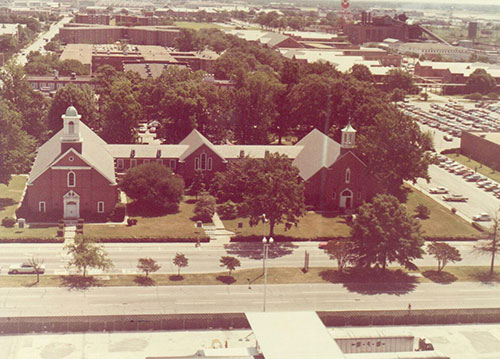
Although many of his peers had regarded him with hostility during his life, Levy was increasingly celebrated after his death by Jewish communal groups and by naval historians as a reforming conscience of the service. The World War II destroyer escort USS Levy (DE-162) was named in his honor, as were the Uriah P. Levy Jewish Chapel at the Norfolk Naval Base in Virginia and the Commodore Uriah P. Levy Center and Jewish Chapel at the United States Naval Academy in Annapolis, Md. (2005). Several statues and plaques in his honor in Jewish communal settings further reflect a retrospective institutional embrace of a figure who had been controversial in his own day.


Levy’s legacy may well be best summarized by testimony that he gave during his 1857 hearing:
My parents were Israelites and I was nurtured in the faith of my ancestors. In deciding to adhere to it, I have but exercised a right, guaranteed to one by the constitution of my native state and of the United States – a right more precious to each of us than life itself. But, while claiming and exercising this freedom of conscience, I have never failed to acknowledge and respect the like freedom in others . . .They [Jews] are unsurpassed by any other portion of our people in loyalty to the Constitution, and to the Union; by their support of our laws; by the cheerfulness with which they contribute to the public burthens; and by the liberal donations many of them have made to promote the general interests of education and charity.