 October 16, 2026
 Twelve Paths, One Destination


We are living in a remarkable period in Jewish history – the time of etchalta d’geulah, redemption. Our journey toward redemption began in the month of Nissan, when, after 210 years of slavery, the Jewish people walked out of Egypt and began the dramatic journey that would transform them from an enslaved people into a nation. That journey has continued for thousands of years, through exile, persecution, dispersion, and return. Even today, we find ourselves somewhere along that ancient road, facing new challenges and trying to understand what is being asked of us at this extraordinary moment in Jewish history.
There is something particularly fascinating about the way our people began that journey. We left Egypt as one nation, but we were not a uniform people. We consisted of twelve tribes, each with its own identity, its own flag, and its own character. The tribes undoubtedly had different customs, perspectives, and approaches to life. Yet they were all part of one nation.
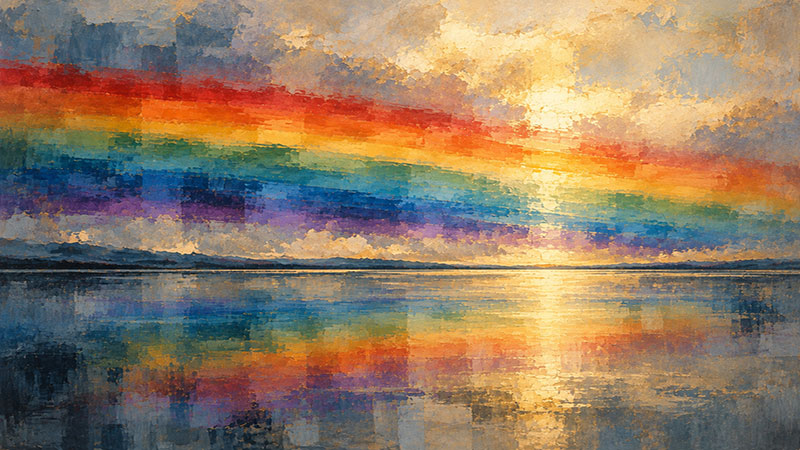
The Midrash presents a remarkable image of what happened when the Jewish people reached the Yam Suf. According to the Midrash, when the sea split, it did not create one single path for the entire nation. Instead, it opened twelve separate paths, one for each tribe. At first glance, this seems surprising. One might have expected that at this defining moment, G-d would create one road on which every Jew would walk together, symbolizing the unity of the nation. After all, when the Jewish people later stood at Mount Sinai, Rashi describes them as “ke’ish echad b’lev echad” – as one person with one heart.
But perhaps the twelve paths were themselves the message. Jewish unity was never meant to suggest that every Jew must be identical. The tribes could have different identities and still belong to one people. They could walk on separate paths – as long as those paths were leading toward the same destination. The lesson may be that the strength of the Jewish people is not found in eliminating our differences, but in ensuring that our differences do not cause us to lose sight of our common purpose.
I believe that this idea has enormous significance for the Jewish people today, particularly in the State of Israel. One of the most remarkable things about Israel is the way Jewish life has become part of the fabric of the entire country. Israelis may differ enormously in their religious beliefs and practices. Some are deeply observant, others are secular, and many fall somewhere in between. Yet when Pesach arrives, the entire country knows it is Pesach. When Purim comes, children and adults dress in costumes. Before Sukkot, stores are filled with decorations and supplies for Sukkot. On Rosh Hashanah and Yom Kippur, the rhythm of the country changes.
Even those who do not observe these holidays because of halacha often observe them because of family, tradition, history, or national identity. The motivation may be different, but the Jewish calendar still shapes their lives. On the radio on Friday, one hears “Shabbat Shalom.” Before a holiday, people wish each other “Chag Sameach.” Jewish symbols, traditions, and celebrations are not confined to the synagogue or the religious community – they are part of the public life of the nation.
To me, this is one of the most moving signs of our generation. Perhaps there are Jews who currently celebrate Pesach primarily because it is part of their national heritage. Perhaps they have not yet discovered the deeper religious meaning of the holiday. But the connection is there. They are maintaining a link to the Jewish story. And perhaps, with time, that national connection will lead them to discover the spiritual dimension that lies beneath it.
This is one of the profound differences between living in Israel and living outside the Land of Israel. In the Diaspora, Judaism can easily become something we must consciously preserve within an environment that is moving in another direction. We go to work in a society whose calendar, values, and rhythms are often completely different from our own, and then we return home and attempt to create a Jewish environment for our families. Our children may spend their days surrounded by influences that have little connection to Jewish tradition, and we must constantly remind them of who they are and where they come from.
In Israel, a person does not have to be religious to experience the Jewish rhythm of the country. The calendar is Jewish. The language is Hebrew. The holidays are part of the national consciousness. Shabbat changes the streets. Pesach changes the supermarkets. Yom Kippur changes the entire atmosphere of the country. Even someone whose personal observance is limited is living within a society whose identity is rooted in Jewish history.
The twelve tribes at the Yam Suf teach us something that we desperately need to remember today: We do not have to walk the same path. We do not have to agree about everything. We can have different customs, different perspectives, and different ways of expressing our Jewish identity. But we must never allow those differences to obscure the greater journey we are all undertaking.
The question is not whether there will be twelve paths. There always have been.
The question is whether those twelve paths are moving toward the same destination.