 October 16, 2026
 Categories: Headline / Halacha & Hashkafa / Torah
What Chazal Meant When They Said Mezuzah Protects
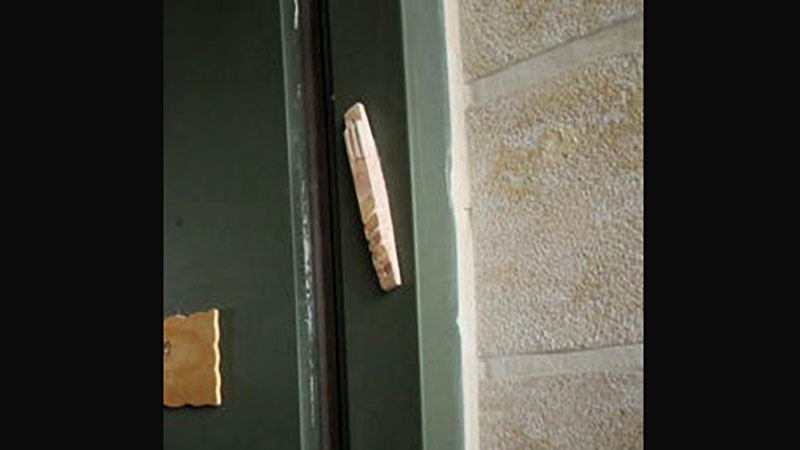


Every week, I get calls from people who are going through something.
Sometimes it is a health issue. Sometimes it is a string of financial problems. Sometimes there is difficulty in the home, or simply the feeling that lately nothing seems to be going right.
And very often the question is the same:
“Should I check my mezuzos?”
As someone who spends much of his day dealing with mezuzos, tefillin, and Sifrei Torah, I certainly believe in checking STaM. I have opened mezuzos that were water damaged, cracked, missing letters, improperly written, or occasionally never kosher in the first place.
But there is a deeper question worth asking: Where did we get the idea that when something goes wrong in life, we should look at the mezuzah?
The starting point is the remarkable protective quality that Chazal themselves associate with mezuzah.
The Yerushalmi, Peah 1:1 relates that Artaban sent Rebbi a precious jewel. Rebbi sent him a mezuzah in return. Artaban protested that he had sent something extremely valuable and received something seemingly insignificant.
Rebbi explained the difference. Artaban had sent him something that he would have to guard. Rebbi had sent something that would guard Artaban even while he slept.
The idea appears again in Menachos 33b. The Gemara discusses placing the mezuzah near the outside edge of the doorway, and one explanation is ki heichi detintarei, so that the house should be protected.
Perhaps the most powerful expression appears in Avodah Zarah 11a. As Onkelos was being taken away by Roman soldiers, he touched the mezuzah and explained that while a human king sits inside and his servants guard him from outside, Hashem does the opposite. His servants sit inside while He guards them from outside.
That last point is critical.
The mezuzah is not guarding the house independently.
Hashem is guarding the house.
Halacha certainly requires mezuzos to be checked. The Shulchan Aruch, Yoreh Deah 291:1 rules that privately owned mezuzos should be checked twice every seven years. There is also a longstanding custom among many to check mezuzos at spiritually significant times, and sources record the practice of checking them during periods of trouble. An early precedent is cited from Teshuvos Maharil, and later gedolim frequently advised people facing difficulties to examine their mezuzos and tefillin.
But we have to be careful what conclusion we draw from that.
The Rambam gives us an important warning. In Hilchos Mezuzah 5:4, he strongly criticizes those who turn mezuzah into a kind of amulet for personal benefit. The mitzvah is supposed to remind us of Hashem, His unity, and our love for Him. It is not magic.
Maybe that gives us a better way to understand the custom of checking mezuzos during difficult times.
When something shakes us, we instinctively examine our lives. Are there mitzvos we have neglected? Is there something in our home that needs attention? A mezuzah is a particularly appropriate place to begin because it literally sits at the entrance to Jewish life, reminding us every time we enter and leave Who is really in charge.
If your mezuzos have not been checked in years, check them. If they were exposed to moisture or heat, check them. If you bought them from an uncertain source, definitely have them examined.
But if something difficult happens and the mezuzos turn out to be kosher, that should not surprise us.
And even if a mezuzah is found to be pasul, we should be very hesitant to declare that we have discovered why someone became sick, lost a job, or experienced a tragedy. We do not know Hashem’s calculations.
Sometimes a mezuzah needs fixing.
Sometimes we need fixing.
And sometimes, despite the first phone call people make to me, it probably wasn’t the STaM.