 November 13, 2026
Categories: Headline / Business/Finance / Money Matters
Your Money Is Ready for Retirement. Are You?


"My wife and I are approaching retirement, and we're feeling a bit nervous about what comes next. It isn't about money. It's about the fact that so much of who we are has been shaped by our work. We've spent most of our days focused on our careers, our philanthropic involvement grew out of our professional lives, and even socially we often find ourselves talking about what's happening at work. We're trying to understand how to shift from a life built around working to a retirement where that rhythm changes. How do we make that transition in a healthy and meaningful way?"
After nearly two decades as a financial advisor, I can tell you that you are far from alone in this concern. A growing share of my client conversations center around issues that no spreadsheet can solve. Money determines whether you can retire. Other factors determine whether you will thrive once you do.
A Warning from an Unlikely Source: Few people understand the loss of a defining role better than Richard Nixon. After leaving office, he observed in an interview:
"The unhappiest people in the world are those in the international watering places... going to parties every night, playing golf every afternoon... drinking too much, talking too much, and thinking too little. Retired, with no purpose... What gives life meaning is purpose, a goal, the battle, the struggle, even if you don't win it."
Whatever one thinks of Nixon's politics, his diagnosis is correct. Endless leisure is not a reward. For most people, it is a slow drain.
I have watched this unfold with several clients. After retirement, they fill their time with learning, davening with a minyan, and visiting their grandchildren. Yet for most people, none of these activities fills an entire day. Boredom sets in quickly, and they begin to fixate on trivial matters. They dwell on who may have slighted them, grow anxious over things that are not truly nerve-racking, and stress over issues of little significance.
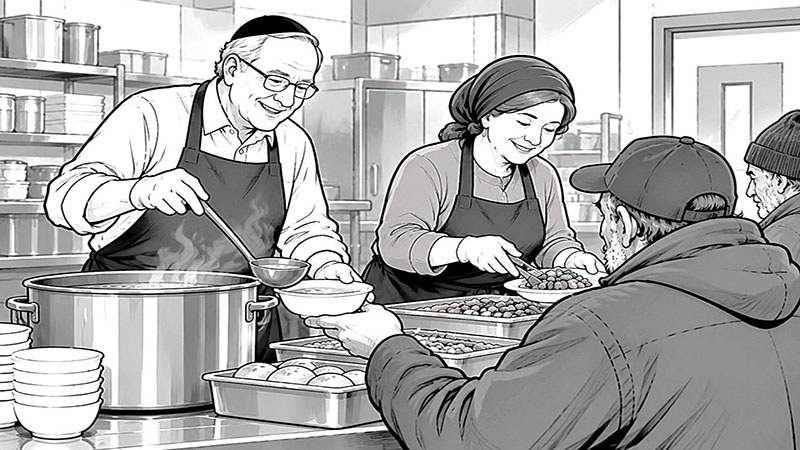
Interestingly, some of these clients eventually decided to "unretire." They returned to work part time, began volunteering, or took on more demanding leadership roles in shul or in the community. Once they did, much of their stress and preoccupation with small matters faded. Nothing about their finances had changed. Everything about their sense of purpose had.
The Torah Never Invented Retirement: Jewish tradition recognized the importance of work long ago. Before Adam ever sinned, he was placed in Gan Eden "l'ovdah ul'shomrah," to work it and to guard it. Work was not a curse imposed after the sin. It was part of the original design, a way to partner with Hashem in perfecting the world. Even the mitzvah of Shabbat opens with the words "Six days you shall work."
Our greatest Sages lived this ideal. Hillel chopped wood. Rabbi Yochanan HaSandlar made shoes. Towering scholars earned their living as farmers, merchants, and physicians, and they continued working throughout their lives.
The closest the Torah comes to retirement is with the leviim, who stepped back from the heavy labor of the Mishkan at age fifty. Yet the Torah immediately adds that they continued to serve alongside their brothers, guarding and assisting. Their role changed, but their contribution did not end. That is precisely the model worth following.
Here are six steps to help you retain your sense of purpose in retirement.
1. Rebuild Your Identity Before You Lose the Old One: After four decades in the workforce, the question "What do you do?" has an easy answer. The day after your retirement party, it does not.
Start by writing down what genuinely matters to you: the causes, people, skills, and ideas you care about most. Then ask how each can become part of your weekly life. Look for projects where your experience is truly needed. A retired accountant can transform the books of a struggling yeshiva. A former executive can guide a young entrepreneur. Being needed is a compelling reason to get out of bed each morning.
Countless individuals and organizations are searching for exactly this kind of help and guidance. Devoting a few days a week to them can make a meaningful difference for the frum community at large.
2. Consider Working Part Time: There is a strong case for part-time work in retirement, and it has little to do with money. The real prize is autonomy. You choose your clients, your projects, and your hours, keeping the parts of your career you love while shedding the stress you will never miss. You also stay current in a changing world and gain younger colleagues who benefit from your hard-won wisdom.
For many people, the goal is not to stop working. It is to leave behind the pressure and rigidity of a full-time job. Staying connected to your industry through consulting or a part-time position can be immensely rewarding.
3. Design a Routine Worth Waking Up For: We spend our careers complaining about meetings, commutes, and deadlines. Take them away, and many retirees discover the hidden gift they provided: structure. Without it, the days blur together.
Thankfully, a frum lifestyle offers a ready-made framework. A daily minyan anchors the morning. A regular shiur or chavrusa gives the week its rhythm. Add volunteering or other activities on set days, and your calendar will feel purposeful rather than empty.
4. Guard Your Friendships Deliberately: The Gemara in Taanit puts it starkly: "O chavruta o mituta," either companionship or death. Modern research supports this teaching. The Harvard Study of Adult Development, which has followed its participants for more than eight decades, found that the quality of close relationships is among the strongest predictors of long-term health and happiness. The people most satisfied with their relationships at fifty were the healthiest at eighty.
Many work friendships quietly fade once the shared office disappears. Do not leave this to chance. Invest in your shul, chesed organizations, learning groups, and regular Shabbat meals with friends old and new. A vibrant social life is one of the secrets to good health and a long life.
5. Use It or Lose It: A mind and body left idle will deteriorate. Find a physical activity you enjoy enough to do consistently. Walking, swimming, and biking are all excellent options. Some of my retired clients complete triathlons, and others have biked across the country.
Challenge your mind as well. The Mishna at the end of Kinnim teaches that elders immersed in Torah grow more settled of mind as they age. Learning Gemara, mastering a new language, writing, or teaching at a local high school or community college will all keep your mind sharp. The best mental exercise is the one you enjoy enough to continue for years.
6. Rethink Where You Live: Housing needs change more than people expect. Is there a primary bedroom on the main floor for when stairs become challenging? Will you be within walking distance of shul when long walks become harder? How close will you be to your children and grandchildren? Will your neighbors be at a similar stage of life?
Before selling the family home or relocating, test the waters. Rent for a season in a retirement community that appeals to you and spend a few Shabbatot there. A decision this significant deserves a trial run. A vibrant community and a home designed for aging make life easier and more enjoyable.
Many of my clients have retired to Florida. Those who fare best generally choose a smaller home with few or no stairs. They also live in buildings with residents of all ages, from young married couples to people in their nineties. That mix brings a special vitality to daily life.
Start Now, Not Later: We are constantly reminded to save years in advance so our nest egg is ready. Your life beyond finances deserves the same foresight. In the five to ten years before retirement, explore communities, take up a hobby, begin a fitness routine, and join groups you can continue with afterward. By the time you leave your job, your new life should already be underway.
The leviim set down their heavy burdens, but they kept serving. That is the goal: not the end of work, but its transformation. Our purpose has always been to make this world a dwelling place for Hashem. Retirement is simply a new chapter in which to fulfill it.