יום שישי, י״ב חשוון תשפ״זFriday, October 23, 2026



Follow Us


Rabbi Aryeh Klapper, a musmach of Rabbi Isaac Elchanan Theological Seminary (RIETS) is dean of the Center for Modern Torah Leadership, which develops creative, rigorous, and humane halachic scholars and scholarship. Much of his popular and academic writing is archived at www.torahleadership.org.
Read More
For those focused on contemporary issues, Rabbi Mordechai Willig’s “Confronting the Pandemic in the Community: A Rabbi’s Memoir” offers unprecedented insight into the way halachic decisions were made for our community during COVID.
Rupture was intended as a description of the development of Ashkenazic, mitnagdic post-migration Orthodoxy. It was never actually about 1990s American Modern Orthodoxy and its anxieties, or about how to resolve them.
Dr. Sokol presents Rabbi Yochanan’s refusal to make the first move toward reconciliation as a “heroic choice” to “valorize respect for Torah’s masters over his own search of Torah truth.”
Rules for true leadership by the greatest leader of all.
Seems men are puppets and women pull the strings.
Constitutional democracy is a better form of spiritual government than either anarchy or totalitarianism. G-d wanted intellectual diversity and as close to universal accountability as possible.
Considering tzanua and achieving a balanced version of it in order to walk with G-d
Some argue that when a Talmudic rabbi declares that a law “never was and never will be”, he is actually signaling a moral shift in which a Torah law is quietly put out to pasture. I am not convinced by this argument.
“Remove the blasphemer to outside the camp. All those who heard will rest their hands on his head. The entire congregation will pelt him.” I suggest that the blasphemer was not executed. Rather, he was taken to the scaffold and pelted with a single rock.
A healthy religious society has room for both chakhamim and chasidim, but knows that the latter are generally more to be admired than imitated.
Why is the act of sacrifice so powerful psychologically? Why do human beings naturally express themselves religiously through sacrifice, whether they are expressing fear or gratitude?
Torah thoughts on this week's parsha, Vayakhel-Pekudei
One can claim with regard to specific halakhic issues that a tradition is binding even though it is not intellectually or spiritually compelling.
The path from moral principle to moral policy is rarely straightforward. But the path from lack of moral principle to immoral policy often is straightforward.
The religious state of nature does not enable the building of a religious society. Since human beings are social creatures, it follows that the state of nature does not enable human fulfillment. We therefore need a religious social contract. Cue Sinai; enter, the Torah.
How seriously should we take frogs as halakhic authorities? On one level the answer is clear: not at all. Frogs do not have free will, or moral responsibility, and anyone one who thinks this midrash believes otherwise defames Chazal. Froggish martyrdom cannot teach us proper Jewish behavior, any more than froggish diet can teach us that insects are kosher.

Imagine that the book of your life has already been written – and that you’ve read the chapter headings. How would your life be different? This issue is addressed by J.K. Rowling in the Harry Potter series. Not surprisingly, Rowling was preceded by the Torah
Human interpretation of G-d’s work is always reaching beyond ourselves, and we should be suspicious of any theory that successfully explains everything in Torah – more likely we are imposing our own vision on the text.
It is unwise to see contemporary events as exact replays of Biblical history, but it is valuable to recognize that Torah and tradition offer narratives of hop--as well as gloom--about Jewish national relationships
Religion must face the question of how its followers should behave while members of a corrupt society. How should they relate to the norms of that society, especially when those norms are embodied in law?
But the question of Noach and global warming can be understood as a theological rather than a factual question: Are there any circumstances under which G-d would allow the human race to be destroyed?
What is the difference between religion and magic? Each makes the claim that events in the physical world can flow from metaphysically effective language. Mages recite spells; sages recite prayers. So why is it that the Torah bans magic yet mandates prayer?
Rabbi Aryeh Klapper on parshat Nitzavim-Vayelech
There is a natural temptation to explain away the nasty and intemperate statements of the side we identify with, while setting upon the other side’s gaffes with ferocity. But in the end this asymmetry undermines our reputation for justice, and thus our capacity to persuade rather than overpower.
A society that structures its economic institutions to make all genuine partners fulfills the mitzvah of tzedakah. A society that institutionalizes dependence, no matter how reliably it provides for its dependents, has turned them into pierced slaves
The questions have thus led us to at least two major hashkafic issues: the status of Jewish life outside Israel, and the connection between virtue and success in this world.
This week’s parshah, Matot-Masei- provides a powerful lens from the past to train on current events.
Why did G-d use Bilaam to bless the Jews, if by doing so He enabled Bilaam to learn how best to attack us?
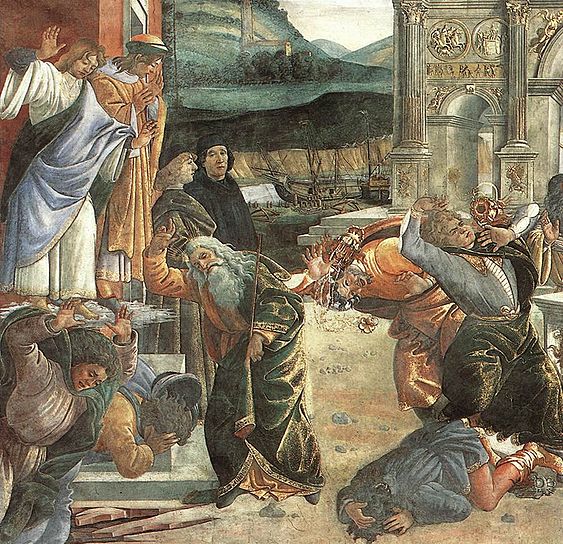
Korach assembles the people against Moshe - but did they actually engage in, or threaten to engage in, disobedience? The text as we have it records NO active illegality.
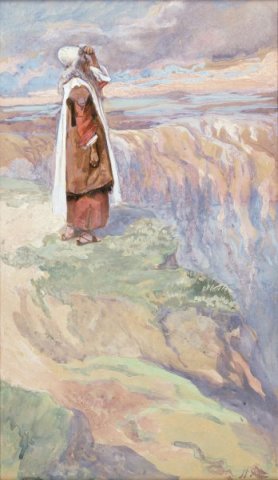
Did Moshe go to Ethiopia as an accepted Egyptian prince, or as part of his escape after killing the Egyptian? Was his marriage a genuine and consummated relationship, or a purely political alliance?
Humility, as embodied by Hilel, should be among our community’s priorities as we develop the educational policies and personnel that will shape the next generation of halakhic leadership.
Granting that bodies and souls are sometimes mismatched, are we comfortable saying in absolute terms that sheker hachein v’hevel hayofi (grace is falsehood and beauty is meaningless)? Are bodies and souls assigned to one another at random?
. . Few texts seem less philosophically promising at first glance than a pasuk in this week's parsha “anything that a zav lies on becomes tamei” (Vayikra 15:4)
A halakhic perspective on the Exodus
Orthodoxy should celebrate the instinctive liberalism of non-Orthodox Jews as a profound religious fulfillment of their human and Jewish nature without endorsing the policies of American liberalism


 October 23, 2026


