יום שבת, ו׳ חשוון תשפ״זSaturday, October 17, 2026



Follow Us


Sivan Rahav-Meir is a primetime news anchor with weekly broadcasts on television and radio. Her “Daily Thought” has a huge following on social media, with hundreds of thousands of followers, translated into 17 languages. She has a weekly podcast on Tablet, called "Sivan Says" and has published several books in English. Sivan was recognized by Globes newspaper as Israel’s most popular female media figure and by the Jerusalem Post as one of the 50 most influential Jews worldwide. She lives in Jerusalem with her husband Yedidya and their five children.
Read More

On that Simchat Torah morning, Mom had set out to bring treats to the children. And now, in her backpack, we had found a small way to finish what she had started.
Most of us will never be called upon to take control of an airplane cockpit. But there is much we can learn from this story about resourcefulness, alertness, and stepping outside our comfort zone.
"What amazes me is that there are also travelers in the middle of their journey who don’t always realize that it’s Sukkot. But the moment they see us and remember, they get excited."
I had just given an entire talk filled with ideas for Rosh Hashanah – about the media, social networks, self-improvement – and somehow I had failed to explain the most basic thing of all.
Even children raised on cell phones and computer screens are thrilled by the experience of hearing – and sometimes even blowing – a real shofar, or shaking an actual lulav.
Last week, quite literally, a lost brother came home, to be buried in the soil of the Land of Israel. That moving commitment to those who are missing should shape the way we approach every area of life.
When we devote our time to what is meaningful and worthwhile, we add life to our lives. We bring the time we have been given to life.
First and foremost, this is a command to establish a functioning system of courts and law enforcement. But the verse also speaks to each of us personally. Every one of us needs to appoint our own “judges and officers,” to develop a system of self-awareness and self-scrutiny.
Moshe urges those who will have the privilege of entering the Land of Israel to understand that this is no ordinary place. It is precious and sacred, and we must live here accordingly.
We talked about Rebbe Nachman’s Stories, in which there is always something lost that must be found. Noam, too, set out on horseback in search of something precious that had been lost – and he found it.
“And in Jerusalem you shall be comforted.” Jerusalem itself offers comfort. It does not erase the pain or the challenges, but it gives them meaning.
“Seventy-five years have passed since our parents founded this kibbutz, and this week, for the first time, a synagogue was inaugurated here. We decided that we are coming back, but that we also want to come back stronger.”
Mazal tov on the new school year which begins this week! According to Rabbi Yaakov Edelstein, the former chief rabbi of Ramat HaSharon, although summer vacation starts now, this is when kids’ education truly begins.
As the Jewish people mark 50 years since the miraculous rescue operation, Shai says it is important to pay attention to the dates and events that shape our lives. That is why he held a special kiddush of thanksgiving in his home last Shabbat.

"Arnold is a 101-year-old member of our community. In just a few weeks, we will be celebrating his 102nd birthday. On the last day of Pesach, he woke up, noticed the weather outside, and said to his wife: “I’m worried that there won’t be a minyan today because of the weather." So, he walked in the rain to join our minyan.

Our Sages ask us to note that most of the time during our journey through the desert, the problem is not an external enemy but our internal state: our unity, our faith, our motivation. When these are absent, it is impossible to keep moving forward.
On Shavuot it is customary to make a new commitment to Torah study. Our Sages explain that Shavuot is considered a “Rosh Hashanah” for the Torah, and that a new year of Torah study is about to begin.
The Torah begins with the most universal and global message: G-d created the world. But it ends with the most Jewish, national, and personal story: that same G-d, who gave King Cyrus dominion over all the kingdoms of the world, wants one House in Jerusalem, and wants us, with G-d’s help, to go up there.
If we could teach ourselves to stop feeling as if we’re waiting for our “real life” to begin, but focus, instead, on what is happening here and now, not only will we, with G-d’s help, eventually reach our destination, but we will also benefit from all the gifts that await us along the way.
The way we respond to every wounded soldier, every fallen life, every hostage – that is the real story. These murders were a desecration of human life, but the national response was not apathy. It was sensitivity.
The children in the building hope to learn the laws of Shavuot at home. But this week, they taught me a lesson, too.
Between Holocaust Remembrance Day and Memorial Day, Odelia reminds us that this is not only a private story. It is also a choice about how we tell our shared national story.
A year ago, we left an empty chair at the Seder table, waiting for the hostages. This was the first Seder after they emerged from darkness into light. Together with them, we have all received another layer in the story of our national freedom.
Think about all the hostages who have returned from captivity and who will be eating matzah, the bread of liberation, as free people. Think of the pilots who succeeded in eliminating those who “in each generation rise up against us to destroy us,” sitting down at their own Seder tables.
The choice is ours. When the siren goes off, should we read frightening news updates or a chapter of Tehillim? As we prepare for Pesach, should we communicate a sense of depression and despair, or try our best to create a cheerful atmosphere in our homes?
Yet within the total destruction, a great miracle occurred: their beloved mother had been inside the house and survived. And it happened precisely on the yahrzeit of their father. In the midst of everything, the family felt they had received the greatest gift of all: life.
The test facing the Biton family is unimaginable. Yet many people in the room yesterday nodded in agreement. Each person drew strength for the challenges in his or her own life.
Intellectually, of course, I always knew this. But suddenly, that day, I felt it in my heart as well. Fourteen-year-old Matania, with his gentle smile, interpreted reality for me better than any seasoned commentator could.
Joy is not a fleeting pleasure that fades as quickly as it appears. Real joy connects us to something eternal. It is grounded in simple, practical actions: mitzvot and good deeds that anchor us in purpose.
A Guinness World Record has recently been broken in Israel. It’s a record of generosity and kindness. Last week, 2,000 kidney donors posed for a group photo at the International Convention Center in Jerusalem, forming the largest gathering of organ donors in history.
It’s overwhelming, in the best sense. How do you even sum it up? And what does it mean for ordinary people like us, who aren’t heading out this morning to rescue Israeli backpackers lost somewhere in the Far East, but are simply trying to manage the morning rush at home and at work?
It is an important call for individuals and humanity as a whole to exercise self-control, restrain impulses, and manage a world that has boundaries and red lines.
Alexander was a man of integrity and a proud Jew. He loved the Land of Israel and the Jewish people.
Rabbi Yeruchom Levovitz (1873–1936) of the Mir Yeshiva in Belarus told his students: Woe to the one who does not know his weaknesses, for he does not know what to fix.
Ran went out to confront absolute evil. And it is the same evil we see today, asserting itself in Iran against its own people and elsewhere against anyone who stands for freedom and truth. We pray that this too will fall, that another hateful regime, another Jew-hating empire, will be thrown onto history’s scrap heap, just as others before it.
According to Kabbalistic teachings, there are four levels in Creation: mineral, vegetable, animal and human. In one of our Mitchadshot workshops, Rabbi Michi Yosefi applied these four categories to the dynamics in a marriage.
I had the privilege of speaking on stage, and of speaking with these young people afterward. Their eyes shine as they talk about aliyah, about pro-Israel activism on campus, about a Jewish identity that is awakening.
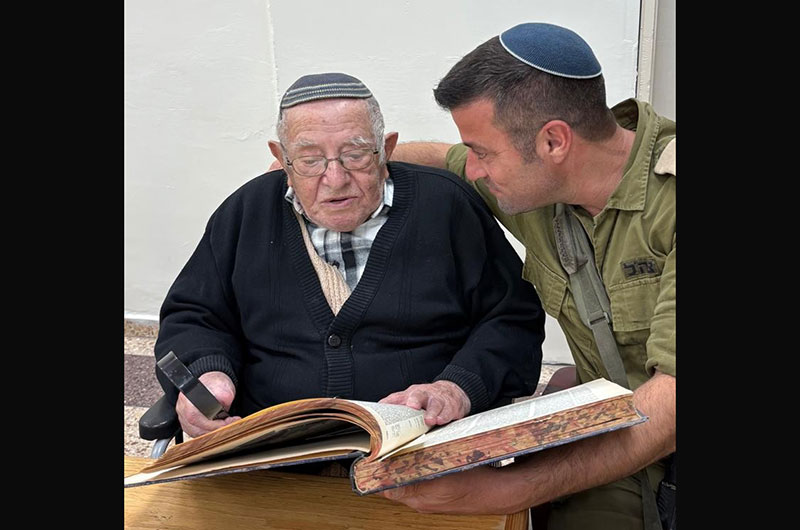
If you ask me how it is that every empire, without exception, ended up in the trash bin of history while the Jewish people continue to flourish despite continued persecution, I think this picture explains everything.

Just as I passed, the body of Manny Godard was returned to Israel, and only three photographs of fallen hostages remained. Many people stopped there, just as I did.
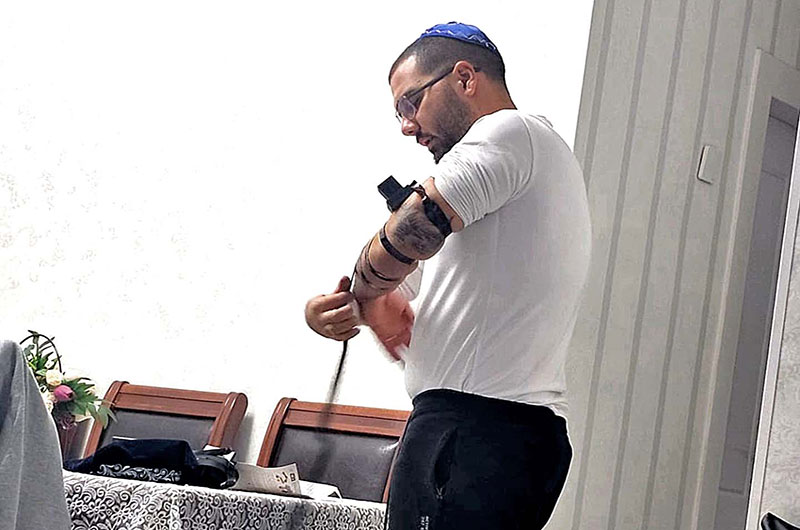
Maybe each of us really should be asking ourselves that very question: Who am I, and where am I a shaliach? Because in a deeper sense, every one of us is an emissary.
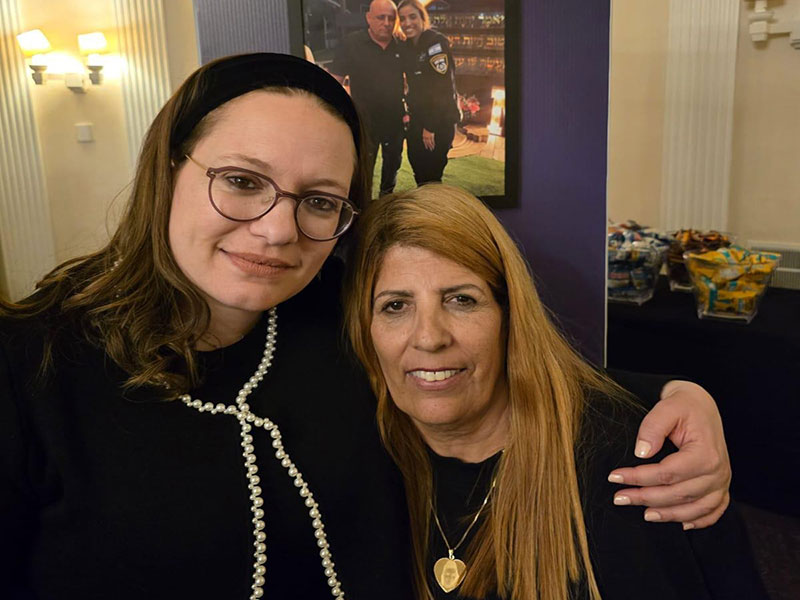
My answer to this double loss is one thing: do, do, do – and then do some more. Choose life. Hold on to routine. Act. Work. Wake up each morning and take on the day’s tasks.
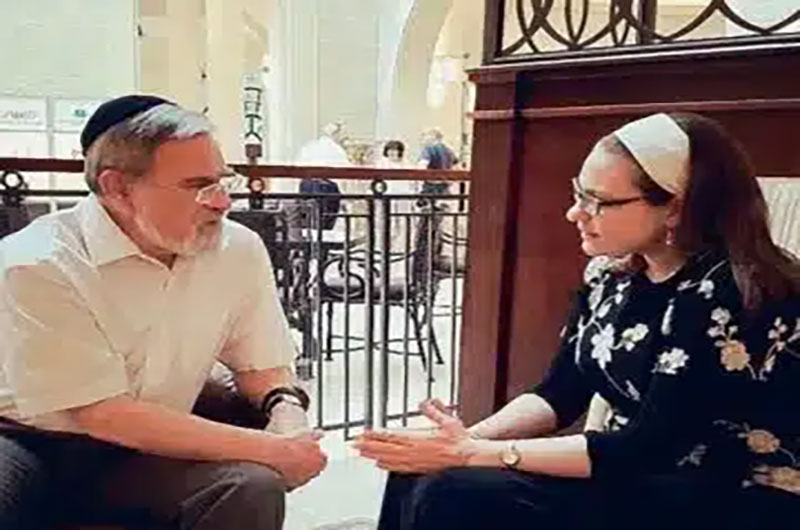
Sometimes our deepest spiritual experiences come when we least expect them, when we are closest to despair. It is then that the masks we wear are stripped away. We are at our point of maximum vulnerability – and it is when we are most fully open to G-d that G-d is most fully open to us.

We should not feel like we are martyrs suffering for our children, for, after all, Judaism opposes human sacrifice.

It’s sad. Our political-media discourse is stuck, narrow. A person is shaped by the landscape of their feed.
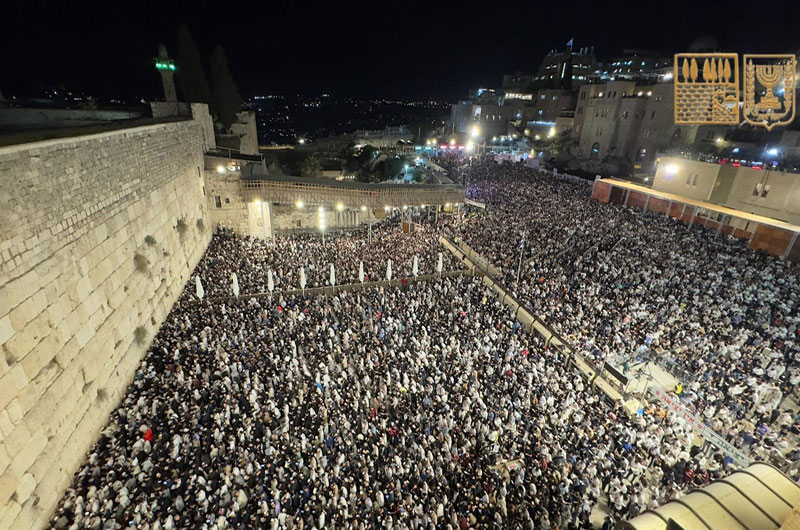
Ma’oz’s soul brought you together. He was your matchmaker. You studied in the same school for twelve years without ever having a real conversation. And yet, here you are – connected because of this Jewish hero, and through your shared love of Torah. This is not only Benji and Eliana’s private story. We are all part of something much greater.
One of the hardest feelings, especially now, is uncertainty. We don’t know what tomorrow will bring, and so many people search for answers that can guarantee the future.

All her life, from early childhood, Grandma has been meticulous in living a fully observant Jewish life. Her devotion to mitzvot was such that at age 99, when the U.K. was in full lockdown during Covid, she cleaned and kashered her home for Pesach entirely on her own – just months before her 100th birthday.
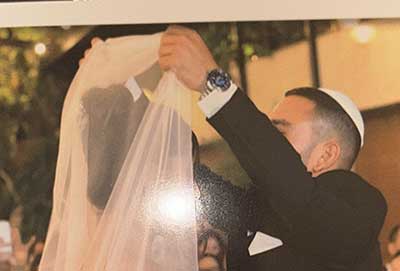
Eliyahu shared his own pain. I’m Elyakim’s father, he said. He was a security guard at the Nova festival. He saved lives and was killed doing so. And you, Nachman, you survived. Tell me, why did you survive? Nachman had no answer.

Our justice and our morality are the truth. I’m learning Torah now – chassidut, parashat hashavua. How did I not know about this treasure until now? You shouldn’t have to lose a child, or turn 57, to begin asking who you are and why you’re here.
We live such public and exposed lives today, yet in this week’s parsha we are reminded to seek the blessing of privacy.
I’m not sure whether people fully grasp the magnitude of the miracle. Just the day before, the floors of the building that was hit had been cleared. Entire departments had been relocated to reinforced areas.

Some 200 years ago, Rebbe Nachman of Breslov wrote a statement that I find amazing: The time will come when being an upright and simple person will be as revolutionary as being the Baal Shem Tov.
We ate matzah – boom! We received an injection of faith for the entire year. This dose of faith is absorbed into our bodies and souls. It doesn’t matter how we felt. Consciously or unconsciously, we have been transformed by this experience.
In everyday life we frequently meet people who seem to be walking around in disguise. One is disguised as someone arrogant, another as someone vulgar, and a third as someone apathetic – but what we see is not a true reflection of who these people really are.
For 210 years, they labored in Egypt under extremely harsh conditions. But like a small child with a dirty shirt, they didn’t even realize how inappropriate it was for them to be slaves.

It was difficult for him to write without errors, but his ambition was so extraordinary. It would have been worth it to me to stand there for hours in the sun or the rain just for the opportunity to help him in his quest.
There have been many events expressing unity and support that have taken place in the Jewish world in recent days, but many of them have not been reported in the press. It seems that only a rowdy demonstration, a fight on Twitter, or a sharp exchange in the Knesset are considered newsworthy.
Indeed, this enemy gives Yaakov an enormous blessing. He bestows upon him a new and much more powerful name: ‘No longer will it be said that your name is just Yaakov, but also Yisrael.’ And this is our name until today.
If Sandberg symbolizes what is happening now to our brethren in the Diaspora, we are on the right path. This phenomenon has already been given a name: The Jews of October 8, the Jews who woke up the day after.
In these turbulent times, we can only imagine the wisdom he might have shared, the guidance he would have offered. His voice is profoundly missed, especially now when his words could have offered clarity and hope.
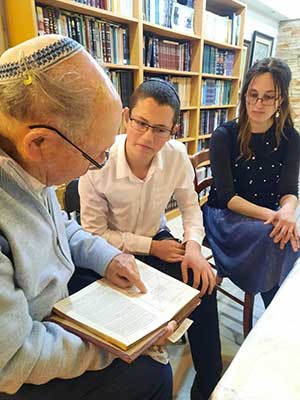
After the Nazis failed to murder them, Hezbollah tried to do so, but they won’t succeed either, wrote Yaron.
We must continue to dream big: The magnitude of the evil perpetrated against us on October 7 was shocking. It turns out, that we can also be surprised by the good.
Israel will be the source of light, Jews from around the world will return to the Land, and the humiliation and hatred Israel once suffered will be replaced with universal admiration.
The mitzvot enable us to take the most basic things of all: our bodies, our possessions, our most physical parts, and to sanctify them.
Rachel spoke: I want to thank G-d right now in front of all of you for giving me this magnificent present of my son Hersh. For 23 years I was privileged to have the most stunning honor to be Hersh’s mama. I’ll take this moment to say thank you.
As this period of Kaddish comes to a close, one bereaved family asked me to thank the general public on their behalf.

The Book of Devarim describes the great danger of living in a prosperous society that offers people everything they desire and in large amounts. It’s challenging to live in poverty – but it’s also challenging to live in wealth.
This year, Tisha B’Av was not just symbolic, but painfully real. It is not a coincidence that our enemies are threatening to attack us on that day, G-d forbid.
When you feel that the world is going mad, it is important to return to our sources. Our Torah portion this week reminds us that what we are experiencing today has occurred before.
In America, where he arrived from Europe in 1941, mitzvah observance had become moribund, increasingly disconnected from the modern world. The Rebbe reversed this trend by demanding more Torah, more Jewish brotherhood, more Jewish education.
Who are the sources of our information regarding the war? After five get-togethers and lectures in the United States that included difficult questions on the situation in Israel, I understood how important it is to check our information sources.
When faced with uncertainty, confusion, or disillusionment due to current challenges, turning our thoughts positively towards the past and the future can empower us with perspective and inner strength.

A Jewish student from MIT visiting Israel told me, after describing the hypocritical protests on behalf of Hamas that took place on her campus: What our world needs the most now is faith, vision, and a clear moral compass.

May you and all the wounded have a speedy and complete recovery, Michael. We can only imagine how many wonderful heroic acts like this are taking place each day in rehabilitation clinics throughout Israel.
The UN security council stood for a moment of silence in his memory. What exactly were they thinking about during that moment of silence, which was also observed by the U.S. Deputy Ambassador to the UN?

In a Tel Aviv train station, I stood looking at the stickers on the walls. A common theme emerging from these stickers? The importance of remembering to smile.
This past week in Israel we marked Holocaust Remembrance Day. Only three years following the extermination of one-third of our people, the Jewish nation rose from the ashes of the camps to declare an independent state. Such a revival needs to be our focus at the present time.

This is the skyline of Sderot today. We are building and winning and being renewed.
Avi took one line from Ka Echsof (a song that many sing during the Shabbat dinner) and sang it slowly, over and over again: May your mercies spread over your holy people.
Esther wore royalty. When she acted with self-confidence, with true conviction and devotion to her people and to G-d – everything began to fall into place and to turn around for the good.
I saw in the eyes of the mourners how Jerusalem consoles. One of the grieving fathers left the Kotel tunnels in tears and said: I connected with all of our past and all of our future and to the historic task of our family within all of this.
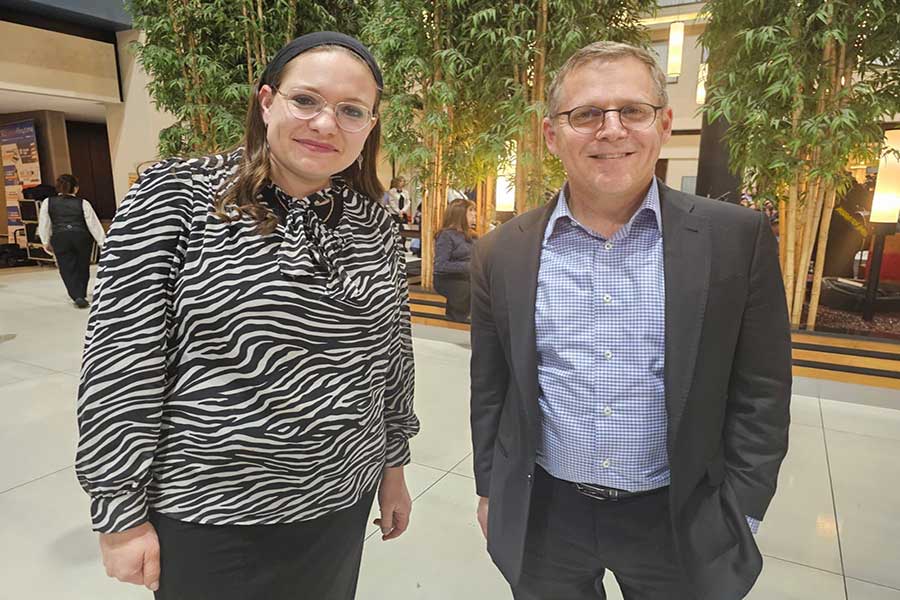
The time has come for us to make aliyah. I’ve already purchased a home in Israel. I did not merit for my children to be born there, but I do hope that my grandchildren will.
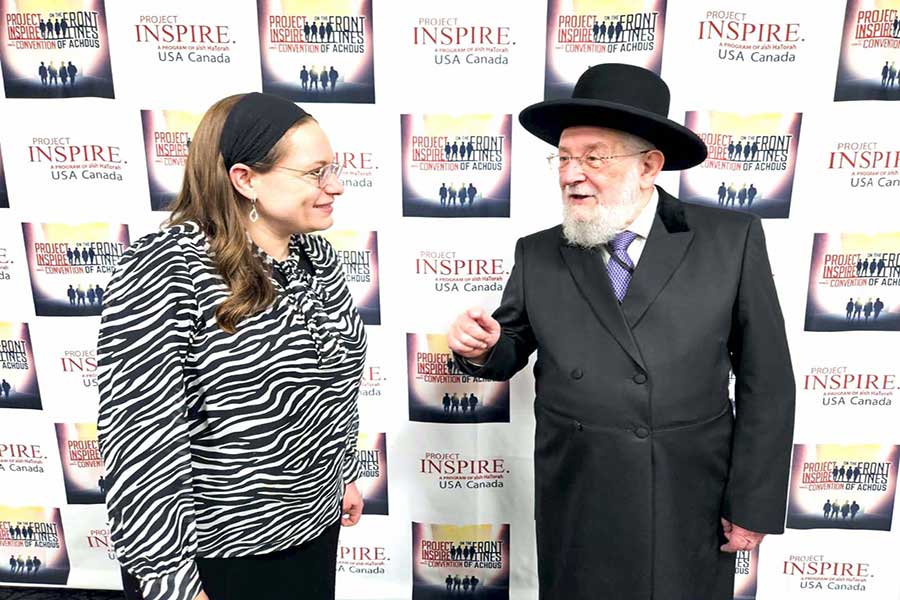
Let us hope that children from Be’eri, Sderot, and Kfar Aza can gain strength from his story. This is not only a personal story of Yisrael, the orphaned child. This is the story of the nation of Israel.
The Mishkan’s construction is described at length, down to the finest detail. What, in fact, is the importance of these small details?

They are a reminder that everything can suddenly be turned upside down – and turn out for the best.

One example of the special evaluations that school children in Israel have received in recent days is a Certificate of Heroism.
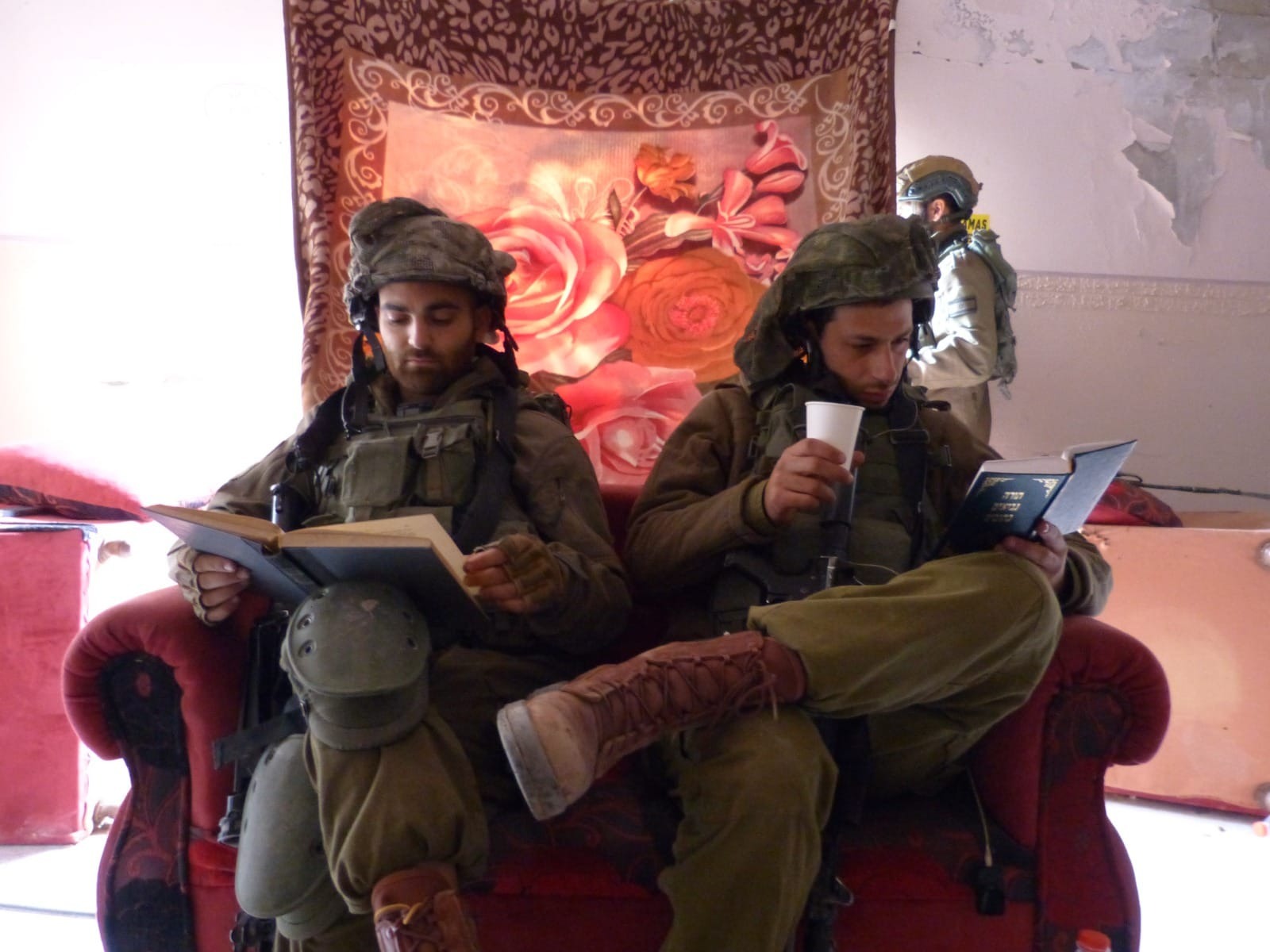
He related that when he was called up for reserve duty, he tried to think of something that would be spiritually fulfilling, and decided that whenever he’d have some spare time, he’d study Tanach with the commentary of Rabbi Adin Steinsaltz.
This is not only about resiliency or a return to the routine of daily life and normal functioning. It is rather growth as a direct, beneficial consequence of the trauma itself.


 October 16, 2026