 October 16, 2026
 Categories: Headline / Parsha / Torah
First Things First


Parshas Ki Savo
Bereishis – In the beginning,the worldwas created for the sake of the Torah which is called reishis, as it is written, G-d created the Torah at the beginning (Mishlei 8:22). The world was also created for the sake of the nation of Israel, who would accept and cherish the Torah. The nation of Israel is also referred to as reishis, the first fruit of G-d’s harvest (Yirmiyahu 2:3 and Rashi, Bereishis 1:1).
This special relationship between G-d and the people of Israel was not rooted in favoritism. Like every love relationship it was grounded in mutual belief and trust. There was a reason why G-d chose Israel. It was because the people of Israel chose Him and because they chose His Torah. “I remember how faithful you were in your youth, your love as a bride, how you followed Me in the wilderness, a land not sown” (Yirmiyahu 2:1). G-d offered the Torah to every nation, but they did not accept it until He came to the Jews and they accepted it (Avodah Zarah 2b; Rashi, Devarim 33:2).
So love is based on compassion for the other. Indeed the Targum consistently translates the word ahavah, love, as rachamim or compassion (6:5, and Bereishis 29:18).
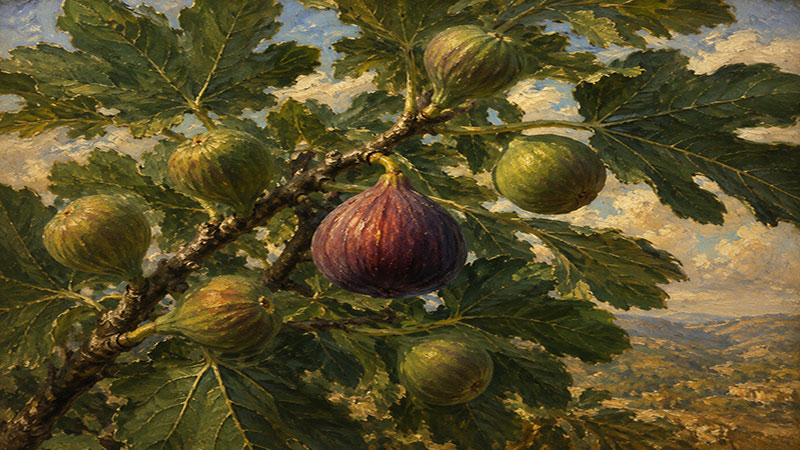
How do we define the essence of love? “Love your friend as you love yourself” (Vayikra 19:18). Love is giving. You have worked hard. You have sown the seeds, tilled the soil, waited the whole winter and behold, just before summer you walk out to inspect the fate of your investment. You cry out in joy as you see the first fruit of your labor budding into life. What is the instinctive human reaction to that yearned-for encounter? It is to grab that first fruit and swallow it. “Like a fig ripening early, before the harvest, whoever sees it will swallow it while it is still in his hand” (Yeshayahu 28:4). But no, says the Torah: “When you come to the land that G-d is giving you…you shall take the reishis kol pri, the first fruit produced by the land, place it in a basket and give it to G-d’s agent, the priest who will place it before the altar of G-d” (26:1-2).
It is all about giving. G-d is giving you the land and you are giving Him its first fruits. That sets the tone of life, the purpose of creation. The world stands on three legs – on Torah, on hard work and on loving kindness.
The key words in that first sentence of Ki Savo are the following: “the land that G-d is giving you.” “It is not a land you have conquered yourselves by dint of your power and the might of your own hands, You should remember that it is G-d who gives you the power to accumulate prosperity” (8:17). He provides the batteries without which we cannot move.
There was no commandment to bring Bikurim in the desert. There was no need. Everyone knew where their bread and water came from. But once the people of Israel left that enchanted desert and came into their own land where they had to work for a living, it was very easy to forget and to credit themselves with their success. That is why the mitzvah of Bikurim was linked to coming into land, coming into wealth.
And after the Kohen has taken that basket of the first fruit from your hand, you make a confession. “ve’anita ve’amarta,” you shall declare and say. There are two meanings to the word ve’anita. First, the word comes from the root “oni” which means poor. You must first acknowledge that without the help of G-d, we are all poor. We don’t consider ourselves rich just because our investments flourish. We are nothing without G-d, poor as a dormouse. The word ve’anita also means to declare out loud for all to hear (Rashi, 26:5). It is not enough for us to internalize this message. We must admit it to others too. There is no social climbing on the rungs of self-made wealth. There is only a level playing field where we must all wait for G-d to throw us the ball.
And in our confession, we must acknowledge our weakness, our Achilles’ heel.
“An Aramean destroys my father” (26:5). Rashi tells us that these words refer to Lavan, one of our ancestors, a conniver, who tried to turn Yaakov from an honest man into a cheat. But why does the Torah use the word “oved,” destroy, in the present tense? Why does is not say “avad” in the past tense?
The point is that the influence of Lavan is present in each generation. It is unfortunately part of our genes, this need to be wealthy even at the cost of honesty. It is the perennial reason for our exile. Had Joseph and his brothers not fought and been jealous of each other, we would never have found ourselves in Egypt. Had we resisted the temptation of being befriended by the Egyptians (“vayareu otanu Hamitzrim”), from the word “re’yah” which means a friend, and remained poor shepherds in rural Goshen, we would never have been enslaved.
But instead, we hung up our shingles in the business capital of the world and became more numerous and stronger that the Egyptians who hosted us (Shemos 1:7). That is how the first persecution began and the pattern has repeated itself ever since.
It is this confession which, if we take to heart, will keep us alive. There is no point in striving to outdo your neighbor. It would not lead to enrichment. It all comes from G-d anyway. It only leads to exile. Sit back, do your best and remember that what you do really doesn’t make much of a difference. As Ben Azai said in connection with those who were envious of the family business of Avtinas, who kept to themselves the secret formula of mixing the incense for the altar, which made its smoke rise shaft-like to heaven without dispersing and for which they charged a fortune: “By your name they will call you, and in your place they will seat you and from what is destined to belong to you they will give you, and no person can encroach upon what is set aside for his fellow” (Yoma 38b).