יום שלישי, כ״ו אלול תשפ״וTuesday, September 8, 2026



Follow Us


The purpose of the eruv is to enclose on all sides the area in which one wants to carry, so that it becomes a private domain, a reshut hayachid. If the area in question is a karmelit, a space that qualifies neither as a public domain nor as a private domain, gaps in the eruv structure may be bridged by means of a constructive or symbolic doorway called tzurat hapetach. A tzurat hapetach is made up of two posts, each called a lechi, and a crossbeam or overhead wire called a korah.

The winter was over, and the days began to get longer and warmer. The sun shone brightly in clear skies, grass and flowers were blooming, and the trees were producing layers of green foliage.
Question: Upon the birth of a son, common custom is to hold a Shalom Zachor on Friday evening for family and friends. But what about the birth of a girl? Some Modern Orthodox families hold a Simchat Bat on Friday night, but there doesn’t seem to be a source for this in Jewish literature. Are these Jews acting properly?
By Rabbi Yaakov Klass and Rabbi Gershon Tannenbaum
A Sage View ‘It Needs A Partition To Divide It’ (Eruvin 47b-48a)
Pleasantville was a quiet suburban town with large properties and curving roads that wound around them. Mr. Feder lived just behind the local shul. Since the road wound around his property, people coming to shul on Shabbos would often take a shortcut through his property to walk to shul. The treaded area of earth marked the place where people made their way weekly. The through traffic did not bother Mr. Feder, as his house was on the other end of the property. He never made a fuss about it, but had never officially sanctioned this public shortcut.
By Rabbi Yaakov Klass and Rabbi Gershon Tannenbaum
Twin Cities ‘A City Is Given A Karpif’ (Eruvin 57a)
Betzalel was a "fix-it" man who enjoyed carpentry as a hobby. He did many home improvements himself, which he found both economical and enjoyable. He was now building a swing set for his children, happily sawing, drilling, hammering, and bolting the pieces.
Question: Why do we interrupt sefirah mourning on Lag B’Omer? When a person observes a personal mourning period (for the loss of a loved one), he never takes a “break” no matter what. Why should sefirah be different?
“On Shabbat, every person must remain in his residence,” said Moshe to the people, forbidding them to walk more than a certain distance beyond their desert encampment. This distance, which measures two thousand amot – about two thirds of a mile – is known as techum Shabbat. It is the same distance that stretched from the perimeters of the Levite cities to their outlying suburbs.
Question: Why do we interrupt sefirah mourning on Lag B’Omer? When a person observes a personal mourning period (for the loss of a loved one), he never takes a “break” no matter what. Why should sefirah be different?
By Rabbi Yaakov Klass and Rabbi Gershon Tannenbaum
An Early Navigational Instrument ‘Rabbi Gamliel Used His Tube To Measure…’ (Eruvin 43b)
In the movie “The Paper Chase,” a Harvard student rips out a page of the law report so that his fellow student will be unable to read it and will come to the lecture unprepared. About 2,000 years earlier a student lay feverishly ill in the academy of Rabbi Akiva in Bnei Brak. So caught up were the other students in the competitiveness of their learning that they found no time to visit him or take care of him. As the student lay dying, Rabbi Akiva himself entered the sick room, fed him, made him comfortable and swept the dust from the floor. The sick student survived. His peers did not.
For a number of years Mrs. Baum hadn't worked but instead stayed home watching her young children. As their youngest child approached pre-school age, she decided to enter the work force again. Half a year before she planned to return to work, she began sending out resumes, networking and speaking with potential contacts.
"Tonight is Bernie's birthday," Jeremy said to his friend, Adam. "We're planning a surprise birthday party for him. Would you like to join?"
By Rabbi Yaakov Klass and Rabbi Gershon Tannenbaum
Just Like Carrying In A Karmelis ‘Tithing When Night Falls’ (Eruvin 36a)
Question: Is it preferable to pray at great length or with much brevity?
Football’s 49ers rarely drop the ball. But how many of us make it through 49 nights from the second night of Pesach all the way to Shavuot without losing count? Sometimes we never even make it to the first yard line. We are so busy preparing for second night Seder that we miss evening prayers in shul and forget to count Day One.
By Rabbi Yaakov Klass and Rabbi Gershon Tannenbaum
Ready And Able ‘Unripe Dates Are Unsuitable For An Eruv’ (Eruvin 28)
Question: When a person buys tefillin, the shel yad often comes with a cover within the cover, which many people leave on during davening. Is this proper?
Congregation Toras Yisrael decided to hold a learning program on Friday morning, Chol Hamoed Pesach. Two weeks before Pesach, the gabbai in charge of the program discussed possible guest speakers with the shul rabbi, Rabbi Brick.
What is chametz? What are the various categories of chametz? Does the prohibition of chametz on Pesach apply also to non‑food products? Can medication containing chametz be taken on Pesach? Can vitamins produced with no Pesach supervision be used? What about liquid medicine such as cough mixture? Can non- supervised body soap or liquid detergent be used? What about toothpaste? May one use rubbing alcohol? May one eat egg matzah?
Taste is everything – ta’am ke’ikar. The taste of forbidden food is treated in halacha as the forbidden food itself and is equally forbidden. If the taste of forbidden food has been absorbed into a cooking vessel, such a vessel may not be used on Pesach unless it undergoes a process known as hechsher or hagalat keilim - popularly referred to as kashering.
By Rabbi Yaakov Klass and Rabbi Gershon Tannenbaum
A Gadol’s View Confirmed ‘Majority Rules’ (Eruvin 16a)
Question: May one use grape juice for the arba kosos?
Mr. Lazer ran a successful restaurant. He employed close to twenty people: a chef, cooks and a baker; waiters and waitresses; supply and maintenance personnel; and two cashiers. At the end-of-year accounting, something seemed amiss. There was a small but noticeable discrepancy in the cash receipts of his enterprise. In the following semi-annual account, a similar discrepancy was noted.
By Rabbi Yaakov Klass and Rabbi Gershon Tannenbaum
The Kotel And The Mall ‘Sratya u’Platya’ (Eruvin 7a)
Question: Does it matter where one pauses when one recites the daily prayers?
“You must sanctify yourselves and be holy,” the Torah tells us, “for I, the Lord your God, am holy.” The service of God in our lives should simulate the service of God in the Temple. Just as the kohen, the priest, was required to enter God’s Temple in a state of taharah, spiritual cleanliness, we are required to enter God’s world in a state of taharah.
Visiting the sick, bikur cholim, is one of the mitzvot listed in the prayer “Eilu devarim she’ein lahem shiur” – “These are the things that have no measure.” According to our sages, the Torah itself stresses the importance of bikur cholim in several places.
By Rabbi Yaakov Klass and Rabbi Gershon Tannenbaum
Waiting For Kiddush ‘Mazal Bears No Influence…’ (Shabbos 156a)
Question: Must a Jew’s tzitzit strings hang on the outside of his pants?
"Look at this sefer," Yoel said to his friend Menashe. "It's written by Rav Mordechai Eliyahu, zt"l." "I've seen that sefer," replied Menashe. "It's very good. I was thinking of buying it." "That's not all," added Yoel. "Look inside..." Menashe opened the sefer. Inside he saw a signed inscription by Rav Eliyahu. "Wow! How did you get an inscribed copy?" he asked.
If you took a bus to synagogue on a rainy Shabbat or Yom Tov day, with umbrella in hand, would that be OK? There is no melachah involved because you are not driving. There is no amira le’nochri (asking a non‑Jew to perform a melachah on your behalf) involved because you are not asking the non‑Jew to drive for you. He is driving of his own accord for other non‑Jews. There is no violation of techum Shabbat (the prohibition not to travel on Shabbat or Yom Tov more than 2,000 amot beyond one's residence), because the bus travels only in the city.
The Golds were planning a two-week vacation. Mrs. Gold did not want to travel with her jewelry, but was concerned about leaving it in their apartment while they traveled.
Question: The Talmud (Ta’anit 29a) notes that we should be more joyous starting from the beginning of Adar. Does this period of joy continue after Purim?
By Rabbi Yaakov Klass and Rabbi Gershon Tannenbaum
Out On A Limb ‘One May Reset A Fracture’ (Shabbos 148a)
Question: Why did Mordechai refuse to bow to Haman, thus endangering the entire Jewish people? Couldn’t he have simply fled Shushan?
By Rabbi Yaakov Klass and Rabbi Gershon Tannenbaum
Treifa Cow’s Milk? ‘A Toldah Of Dash’ (Shabbos 144a)
If you eat mayonnaise with everything, or you attended Breuers, or you wash your hands before Kiddush, you are probably of German Jewish descent. The first two inferences are understandable. Where does the third one come from?
"Today we will continue learning about oaths," Rabbi Dayan began his shiur. "Does anyone remember what we learned last lesson? How many cases are there in which the Torah imposes an oath in beis din?"
Just because God has given us a weekly lifetime subscription to paradise, we should not take Shabbat for granted. No gift should go unacknowledged and no giver should go forgotten.
"Today we will learn about oaths," Rabbi Dayan announced to his shiur. "There are many sugyos [passages] in the Gemara that deal with imposing an oath."
By Rabbi Yaakov Klass and Rabbi Gershon Tannenbaum
Circumcised At The Hand Of Heaven? ‘A Drop Of Blood Must Be Taken’ (Shabbos 135a)
Question: When may a Jew rely on Hashem and when must he engage in activities to secure his own needs?
By Rabbi Yaakov Klass and Rabbi Gershon Tannenbaum
Damsel In Distress ‘A Woman In Labor Is Considered Critically Ill’ (Shabbos 129a)
Avrumi perused the signs posted on the bulletin board of his yeshiva. He had seen most of the notices before, so he glossed over them quickly. Then he saw a new sign posted by the office: "We have arranged a 10% discount for our talmidim at the local seforim store. Please register at the store to get your discount card."
Question: What should someone do if he forgot to say Ya’aleh V’yavo in Shmoneh Esreh?
If you yourself may not perform a melachah, you may not ask a non-Jew to perform it for you. This is true both for biblically prohibited acts, melachot de’oreita, and rabinically prohibited acts, melachot de’rabbanan. This applies even if the non-Jew was instructed before Shabbat to perform the melachah on Shabbat.
Question: Is it proper to recite prayers for a non-Jewish government during davening?
A group of fifth-grade boys was playing ball in the park one afternoon. Yosef zoomed into the park on his rollerblades, with a broad smile on his face.
By Rabbi Yaakov Klass and Rabbi Gershon Tannenbaum
Neighbors To The Rescue ‘He May Tell Others: Come, Save For Yourselves’ (Shabbos 121a)
There is also an additional category of muktzah, applicable mainly to food on Yom Tov, known as muktzah mechamat hachana, which means muktzah because one had no intention on Erev Yom Tov to eat such food on Yom Tov.
"We're flying to Israel tonight for a month to visit our children who live there," Mr. Hirsch told his neighbor, Mr. Feiner.
Sunday. Many of us do not go to work. There is, however, so much to do at home. How many of us have the self-control to make Sunday a voluntary day of rest and refrain from balancing our checkbooks, paying our bills, clearing out the attic, or mowing the lawn?
Question: Many chazzanim say the words “ga’al yisrael” before shemoneh esrei quietly. Is this practice proper?
By Rabbi Yaakov Klass and Rabbi Gershon Tannenbaum
The Carpenter’s Folly ‘All Holy Writings…Require Geniza’ (Shabbos 115a)
Whereas a person may not cook food on Shabbat, there is no biblical prohibition against food cooking itself on Shabbat. Therefore a person may place raw meat in a pot on Friday afternoon Erev Shabbat before sunset and allow it to cook through until the following day for the Shabbat lunch meal.
By Rabbi Yaakov Klass and Rabbi Gershon Tannenbaum
By All Means Rescue! ‘If One Removes A Fish From The Sea’ (Shabbos 107b)
Outside the beis medrash of Yeshiva Gedolei Yisrael, Mr. Gross sold framed pictures of many gedolim. Dani loved to stand and admire the pictures as he walked in and out of the beis medrash. Looking at him were the Sages of the previous generation: Rav Moshe Feinstein, zt"l, Rav S.Z. Auerbach, zt"l, Rav Y.S. Elyashiv, zt"l, and many others.
Question: Should one stand or sit during chazarat hashatz?
Dan and Shai were standing in the train station. They had just finished a shopping spree and each carried a bag, which they put down next to them. "I got a gift for my parent's anniversary," said Shai. "It cost quite a lot, but it's a very special occasion."
By Rabbi Yaakov Klass and Rabbi Gershon Tannenbaum
A Murky Dispute ‘Water Does Not Affect Its Status’ (Shabbos 100a)
Question: Must one wear a hat during Shabbat meals?
One may not bathe in, wash or shower with water heated on Shabbat. Whether one may perform these activities with water heated before Shabbat is debated by Rav, who maintains that one may wash one’s entire body, limb by limb, in such water, and Shmuel, who maintains one may only wash one’s face, hands and feet in such water.
Rabbi Dayan received a phone call from his nephew, Rabbi Federman, who had recently taken his first position as a pulpit rabbi. "Sholom aleichem," Rabbi Dayan greeted him. "How is the new Rav managing?"
Question: What is the purpose of reciting korbanot in the morning?
By Rabbi Yaakov Klass and Rabbi Gershon Tannenbaum
Satisfaction Guaranteed ‘The Divine Presence Rests Only On One Who Is Wise, Strong…’ (Shabbos 92a)
Mr. Farber looked out his kitchen window and admired the snow all around. It had piled up during the night, covering everything with a beautiful blanket of white. While he was eating breakfast, Yaakov and Elisha knocked on his door. "Do you want your snow shoveled?" asked Yaakov.
By Rabbi Yaakov Klass and Rabbi Gershon Tannenbaum
Size Is Indicative Of Importance ‘He Took Out Wood to Cook an Egg…’ (Shabbos 89b)
Question: Must a bar mitzvah boy buy a mirror to ensure that his tefillin are perfectly center on his head?
Yaakov had spent Shabbos at his yeshiva for a few weeks running. "Don't forget to bring your suit in to the cleaners," said his mother, before he returned home. "It's been a while since it was cleaned."
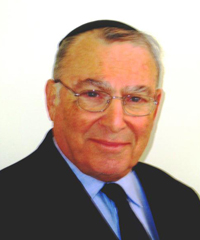
Many years ago, I was offered two rabbinical positions. One was to serve as assistant rabbi at a prominent congregation in Manhattan. The other was to start a new Orthodox congregation in West Orange, New Jersey.
By Rabbi Yaakov Klass and Rabbi Gershon Tannenbaum
Sow The Seeds Of Repentance ‘This Potted Plant’ (Shabbos 81b)
"A bunch of us are getting together on Motzaei Shabbos for a Chanukah party," Shraga told his friend Pinchas. "Would you like to come?"
By Rabbi Yaakov Klass and Rabbi Gershon Tannenbaum
A Matter Of Intention? ‘The Primary Labors Are Forty Less One…’ (Shabbos 73a)
Using one’s creative powers seven days a week may lead one to believe in oneself as a Creator. This danger is averted in Judaism by the institution of Shabbat, during which one refrains from melachot. Melachot are defined by my father, Dayan Grunfeld, zt”l, in his book on the Sabbath, as acts that demonstrate one’s mastery of the world by means of the constructive exercise of one’s intelligence and skill. For just one day a week, we are asked to lay aside our skills and acknowledge the real Creator.
Question: Why does Al HaNissim not mention the mitzvah to light nerot Chanukah?
By Rabbi Yaakov Klass and Rabbi Gershon Tannenbaum
For Whom The Bell Tolls ‘Royal Children May Go Out With Bells’ (Shabbos 66b)
Certain activities – such as building, tying, weaving, writing, dyeing and sewing – are not prohibited on Shabbat unless they are made to last. For example, one may tie a knot that is not tied in a professional manner and will be untied within seven days, such as shoelaces or the ribbon around the Torah scroll, on Shabbat afternoon. So too a safety pin may be used on Shabbat since it is not a form of permanent sewing.
Yosef, Gad and Benjy headed down to the dining hall in their high school. As they walked along the corridor they noticed a new vending machine had been installed. The three admired the machine, and eyed its beckoning display of treats.
By Rabbi Yaakov Klass and Rabbi Gershon Tannenbaum
Do Not Add To Them! ‘Shabbos is not a Time for Tefillin’ (Shabbos 61a)
"Hi, Levi," said his friend Moshe. "I've got a project to work on for the next two months. By any chance, do you have a spare laptop you're willing to lend for the duration?"
You arrive home after shul on Friday night. All the dishes washed before Shabbat are locked in the dishwasher. You have no other eating utensils and you want to retrieve them for the Friday night meal. In order to take them out you have to unlock the door by turning the lever lock to the left. The action of the lever to unlock the door automatically turns off the panel indicator lights that advise you the dishwashing cycle is complete. So you cannot open the door without turning off the lights. What do you do?
A week after Hurricane Sandy, the Blums still had no electricity. They had run extension cords to a neighbor's house to power some basic items, like the fridge and telephone, but the protracted living without power was taking its toll on the family.
By Rabbi Yaakov Klass and Rabbi Gershon Tannenbaum
Ball And Bat Substitutes 'Cut Palm Branches' (Shabbos 50a)
The link between the laws of Shabbat and the Mishkan not only defines the 39 Melachot but also determines the conditions for liability. One of these conditions is intent. The other is purpose.
The juxtaposition in the Torah of the laws of Shabbat and the Mishkan, the Sanctuary, not only serves to identify the 39 melachot prohibited on Shabbat but also determines the conditions that must exist before one can be held liable for performing a melachah. One of these conditions is intent.
By Rabbi Yaakov Klass and Rabbi Gershon Tannenbaum
Children And Corpses ‘A Body Lying In The Sun…’ (Shabbos 43b)

Hurricane Sandy had knocked down the power lines to Noach's house. After three days with no electricity, he heard that a neighbor had a spare generator.

Hurricane Sandy ploughed through the eastern seaboard, leaving devastation in its wake: mandated evacuation, flooded houses, power outages, uprooted trees, and smashed cars. The storm also raised serious questions regarded rented properties: Does a tenant have to pay rent for the time his house was affected by the storm?
By Rabbi Yaakov Klass and Rabbi Gershon Tannenbaum
Enjoying A Hot Dish ‘What Was Really Meant Was Replacing It…’ (Shabbos 37a)

“G-d formed man from the earth and breathed into him a living soul.” The greatest achievement of the biological sciences since that moment in creation has been the Human Genome Project, a massive effort by thousand of biologists, chemists and physicists who isolated and identified the 24,000 genes that Hashem placed in Adam and Eve, […]

Rabbi Feld headed out to the airport early in the morning. He was flying to the wedding of one of his congregants, Mr. Krauss, who had purchased him a complimentary ticket. Although the wedding was scheduled for late afternoon, they had booked an early flight to allow ample time.
When Rabbi Yehuda HaNasi, the redactor of the Mishnah known as “Rebbi,” lay dying, he made his sons promise him that after his death they would set the Shabbat table and light the candles for him every Friday night.
By Rabbi Yaakov Klass and Rabbi Gershon Tannenbaum
For Appearance’s Sake ‘Moving Forward At The Word Of G-d’ (Shabbos 31a)
By Rabbi Yaakov Klass and Rabbi Gershon Tannenbaum
Triple Pray? ‘If He Did Not Say He Must Repeat’ (Shabbos 24a)
Question: What is unique about Modern Orthodoxy?

"I arranged with Simon Cooper, the plumber, to clear the blockage in the kitchen sink this morning," Mr. Laks told his wife. "Oh, great!" she replied. "I'll clean the kitchen before he comes."

Shabbat candles must be lit by (and preferably 18 minutes before) sunset. Once it is twilight, the time between sunset and nightfall known as bein hashmashot, it is too late to light. Bein hashmashot begins when the sun sets below the horizon and is no longer visible.
 September 4, 2026