יום חמישי, י״ח חשוון תשפ״זThursday, October 29, 2026



Follow Us


By Rabbi Dr. Mordechai Schiffman
Time drags on when we are afraid and really does fly when we’re having fun.
The very first lesson is that we must be very careful not to hurt someone’s feelings. Sometimes, hurting someone deeply can have a long-lasting effect and impede us from success in our own lives.
Reb Yosef went over to him and gave him the 200 golden coins. The man looked at him incredulously and said, “I don’t even know you. Why are you doing this kindness?”
To their amazement and astonishment, they began to realize the bounty of blessings that they had and the appreciation that they should show Almighty G-d for these gifts.
Since we can’t see it, Covid-19 fatigue has caused us to want to believe that it’s not a problem anymore, notwithstanding the fact that all of us know people are still being hospitalized and even dying.
By Rabbi Dr. Mordechai Schiffman
Avraham is a paradigm of alacrity and productivity. We are awed at how this pillar of kindness swiftly tends to the needs of his guests.
Over the years, I’ve convinced many people to try out Daf Yomi with my advertising. That’s why I carry such a heavy Gemara and that’s why I don’t go by way of the back roads.
As with any program, if you can involve the parents as active participants, then the chances of success increase exponentially.
By Rabbi Dr. Mordechai Schiffman
In some children, embellished praise can lead to narcissistic tendencies. Praise is essential, but it is essential for praise to be tempered, not extravagant.
In Yiddish, there’s a word “eidelkeit.” There’s no similar word in English. “Eidelkeit” is a synthesis of gentleness, refinement, and nobility of spirit. It’s a crowning virtue for man.
By Rabbi Dr. Mordechai Schiffman
The snake’s incitement and the aesthetic enticement of the fruit led to Chava’s and then to Adam’s self-control failure.
Life is a series of tests. Yet, every day we ask Hashem in the morning, “Al tivi’einu lo lidei nisayon – Do not lead us to a test.” What kind of a request is this? Isn’t that avoiding the purpose of life?
While this story carries a painful and penetrating message, you might ask, “Rabbi Weiss, what are you advocating? That we shouldn’t dance on Simchas Torah?” Of course not!
The Torah completely blows us away with the statement that the enemy will come “ka’asher yideh hanesher – like the eagle sweeps,” a perfect description of the sudden attack of the two huge airliners.
When one reads the commandments of Shabbat as they appear in the books of Shemot and Devarim, two divergent formulations appear: “Zachor” and “Shamor.” Which one appeared on the Ten Commandments?
Only once a year, during these 10 days, is Hashem is available to everyone no matter how sullied he or she is.
By Rabbi Dr. Mordechai Schiffman
We all sometimes think in warped and twisted ways. ... As an example, control fallacies can lead us to believe that we have absolutely no control over our lives.
Hashem won’t punish someone if the punishment will indirectly harm innocent people who depend on him.
Before we put on tefillin, we should keep in mind that we are putting it on our heads because the neshama is in our head with the rest of our senses and strengths.
By Rabbi Dr. Mordechai Schiffman
The curses that Moshe delineated in Parshat Ki Tavo were meant to deter those who would consider abandoning faith in G-d and turning to other gods.
The Chofetz Chaim writes that a person isn’t rewarded with reward unless he gives in proportion to his means.
To see a person as good despite his/her past actions; To give them a second chance knowing full well that they might ultimately fail again.
By Rabbi Dr. Mordechai Schiffman
One of the reasons we may have trouble noticing blessings is that there’s a human tendency to always want more. Yes, I have some money, but I could always have more.
Elul, as the last month of the year, is a time to show Hashem that we are ending the year with the same hopes and aspirations we had in the beginning of the year, putting our best foot forward before the Day of Judgment.
By Tzvi Fishman
According to the Rambam, it is forbidden to leave the Land of Israel, even temporarily, except for three reasons: to study Torah, to find a wife, and to do business.
By Rabbi Dr. Mordechai Schiffman
What are the parameters and guidelines for fulfilling this commandment? How should we remember and how do we ensure not to forget?
What if you find it difficult to forgive someone?... How can you sincerely forgive someone who hurt you in such a terrible way?
There is no question that the congregation of Israel at the time of the giving of the Torah was comprised of divergent views, and that the people who were transgressors and who later would be singled out as sinners were present as well.
Shimon HaTzaddik likely spent a lifetime educating the masses, yet Pirkei Avos contains just one mishnah that records his teachings.
When we hear that Teflon pots may cause cancer or that the surgeon general warned of the possible dangers of a product, we become very wary. So it goes without saying that when the Torah cautions us about something, we should be very concerned.
By Rabbi Dr. Mordechai Schiffman
The Talmud presents an enigmatic aggadic dialogue between G-d and the angels in which the angels ask G-d how He can show favor to the Jewish people (as is implied in the Priestly Blessing) when fairness and justice usually preclude showing favoritism.
This lashon hara led to Bnei Yisrael crying over nothing, which in turn resulted in the divine punishment of bechia l’doros, crying throughout the generations over the destruction of two Temples and many other Jewish calamities.
I have always believed that the guarantee that G-d presented to Abraham was never said to him directly.
By Rabbi Dr. Mordechai Schiffman
In Parshat Vaetchanan, we learn that someone who kills another by accident must flee to a city of refuge for protection. The Talmud contains a fascinating addition to this law: If a student is forced into exile, his teacher must go with him.
There is more to be learned from Hashem’s diagnosis. A blessing is critical in helping us properly focus when we do a mitzvah.
Any generation in which the Temple was not rebuilt is a generation in which it is considered to have been destroyed.
By Rabbi Dr. Mordechai Schiffman
As an example, consider a person who, after being insulted, takes a vow to avenge the slight. Over time, his anger subsides, and he no longer feels the same intense feelings toward the perpetrator.
Every infectious disease doctor – without exception – has stated that keeping apart from one another and wearing masks will significantly decrease the spread of this horrible disease.
By Rabbi Dr. Mordechai Schiffman
Even a single negative word or phrase, when focused on for extended periods of time, can damage key brain structures that regulate memory and emotion.
Our shuls and yeshivos were closed for three months and, even now, we can only enter them with masks. Perhaps Hashem is telling us, “Things are not in order with your relationships.”
Despite the fact that Abraham had not been prepared to entertain guests, he approached the opportunity with zeal and love and quickly went about the task of making his guests feel comfortable.
Relationships are reciprocal. If we demonstrate to our children how to find something to respect in every person, they will reap the reward of being loved in turn by everyone around them.
By Rabbi Dr. Mordechai Schiffman
Fights and disagreements often feel sweet and right in the moment but lead to bitterness and regrets in the long run.
We have to be very mindful of the lashon hara pitfalls and traps that the yeitzer hara cleverly sets for us during this pandemic.
By Rabbi Dr. Mordechai Schiffman
It’s not entirely clear within the narrative what the spies did wrong. They were asked to scout the land and report back, and that’s what they did.
Some people are returning to shul after enjoying casual porch minyanim and are bringing the cavalier attitude they had on their porches with them.
One can recognize a gadol, a leader of our people, in how that person respects and values all people. A gadol doesn’t judge or offer a disparaging word against people who are not religious, nor does he degrade a non-Jew.
We’re expected to take massive precautions when it comes to chillul Hashem. In our world of instant viral media, we cannot afford to make a misstep when it comes to misbehaving in the eyes of the non-Jews.
The meraglim were worried about losing their elevated stature upon entering Eretz Yisrael and thus said the chances of conquering the land were low.
Or the shul rabbanim who find their source of income dwindling but must still feed their families.

By Rabbi Dr. Mordechai Schiffman
The greatness of man manifests itself in his inner contradiction, in his dialectical nature, in his being single and unrelated to anyone, as well as in his being thou-related and belonging to a community structure.
Enthusiasm and delight are contagious. If we are excited to study Torah and do mitzvos, so will our children.
Introspection is good! Teshuva is good! But to blame anyone is downright sinful. Only G-d judges people. We don’t have that right.
It is in our DNA to valiantly risk everything to congregate together to talk to Hashem... But then came Covid-19 and we had to make a huge adjustment in our behavior.
By Rabbi Dr. Mordechai Schiffman
One important lesson that several positive psychologists make is that relentlessly pursuing happiness usually does not lead to happiness.
Remember, Moshe Rabbeinu, David HaMelech, Avraham Avinu, as well as Yaakov Avinu all opted to be shepherds so they could have time to be alone and contemplate. It’s a lost art.
I started keeping such a diary recently and found doing so truly fascinating.
By Rabbi Dr. Mordechai Schiffman
Oneg is a spiritual pleasure, which doesn’t completely negate pain, but alleviates it by infusing meaning.
By Rabbi Ron Yitzchok Eisenman
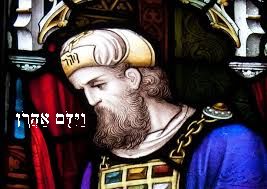
Let us take encouragement from the way Hashem responds to Aharon in reminding us that our children have the right to make their own decisions, and we are not to be blamed for these decisions.
Haman assassinated Daniel, one of the great gedolei ha'dor, and it's very likely that his death atoned for the nation.
They were taught that a congregation can only pray for relief from one disaster. Which one should they pray for G-d to stop: the plague or the famine?
How do we defeat a yetzer hara that has the power to make us believe that aveiros are really missions of righteousness?
If it was beyond Moshe Rabbeinu’s comprehension, it is certainly beyond ours. We do know, though, that the passing of a tzadik, lo alenu, sometimes serves as atonement for many other people.
By Rabbi Dr. Mordechai Schiffman
Rashi, quoting the midrash, takes the discussion in another direction by noting that “asher” doubles as an allusion to “ashrei,” meaning happy, praiseworthy, or fortunate.
Now is not the time to be talking disparagingly about Torah leaders, roshei yeshiva, and rabbanim.
We feel so fragile and minute, as the entire world is sent into literally a total state of panic and frenzy.
The media has succeeded in whipping us into a frenzy. I heard someone suggest humorously that we should quarantine the media for 14 days.
By Rabbi Dr. Mordechai Schiffman
While Shabbat is in theory emblematic of tranquility, it often does not translate well into practice.
Those who don’t own smartphones, in contrast, are mostly living their lives normally and are surprised at the alarm and fright on others’ faces. They say, “It’s just like the flu, right? What’s all the hype?”
By Rabbi Dr. Mordechai Schiffman
Regardless of which approach we take, it is evident that there is an inherent value in magnifying and glorifying physical beauty as it relates to deeply sacred rituals.
We live in a society where people gauge success by the number of possessions, but we need to realize that flaunting our successes puts us in grave danger.
Why was it so important for Moshe to enter the Land? Certainly he had accomplished so much during his lifetime for the Jewish people!
By Rabbi Dr. Mordechai Schiffman
Even the greatest sage, who has amassed encyclopedic knowledge and can plumb the depths of Talmudic analysis, is still called a student.
Why should someone who curses a parent be punished more severely than one who hits a parent?
Daf Yomi is not about looking back; it’s about looking forward. There’s plenty of exciting terrain and exhilarating fulfillment ahead.
By Rabbi Dr. Mordechai Schiffman
The Sanhedrin tended to be a group of like-minded individuals who were in charge of making very important decisions in high-stress situations, many of which had life and death consequences.
Rashi states that the fire was a sign that G-d would be with the Jewish people even in hard times when they were slaves in Egypt.
By Rabbi Dr. Mordechai Schiffman
This theory can be both empowering and (interpreted as) anxiety-provoking, as it makes each of us responsible for our own emotions.
In Egypt, we were forced to do all the 39 labors that we abstain from doing on Shabbos. And that’s why Shabbos commemorates the Exodus, as stated in the Ten Commandments.
Learn with your own Gemara so that you can write notes in it. Your Shas will become an important heirloom in the future if you do so.
By Rabbi Dr. Mordechai Schiffman
When people change and “fake” their body posture from reflecting being closed off and timid to an open, power posture (think a Superman pose), they feel more confident and are more willing to act courageously.
If the shiur has a set time – for example, 40 minutes before Shacharis or 45 minutes before Maariv – it’s imperative for you to keep your questions to a minimum.
By Rabbi Dr. Mordechai Schiffman
While the Midrash does not state explicitly what caused this anger, perhaps they were upset that they had been promised redemption but nothing subsequently changed.
I remember learning the daf in the emergency room of Maimonides Hospital as I stayed with a choleh. The daf followed me as I flew on planes and when I went on vacation.
Just as Aharon had no envy toward his brother, Moshe, so Moshe had no resentment about the job given to Aharon.
By Rabbi Dr. Mordechai Schiffman
When everyone else was a bystander, Moshe takes action and defends the Ivri.
Rav Shimshon Pincus informs us that for every blatt we make an attempt to study, we will be allowed to master it in the yeshiva shel maalah.
By Rabbi Dr. Mordechai Schiffman
Instead of focusing on the trauma, he should have realized that Hashem saved him from Esav and Lavan, and returned Dinah and Yosef.
We wish to express our desire to achieve closeness with Hashem as we approach Him to ask for our daily needs and requests.
By Rabbi Dr. Mordechai Schiffman
The act of lighting the menorah is an expression of gratitude.
The heart is the repository of one’s feelings and emotions. If we act toward our spouses with feeling, not only with a sense of duty and quid pro quo, we create a sanctuary.
How unlikely that these kohanim, whose sole job was ministering to Hashem and to the spiritual needs of our people, would all of a sudden become masters of artillery.
By Rabbi Dr. Mordechai Schiffman
The Torah shows us the genius of Reuven’s strategy in stopping his brothers from committing murder.
The character trait that makes me personally identify with Judah – is his humanness and the fact that he makes mistakes in his lifetime but has the strength and ability to own up to his wrongdoings and start over.
When we avoid talking poorly about other people – whether at our Shabbos table, in the coffee room at the office, or at the dinner table with a spouse – we are helping our brethren in Eretz Yisrael.
By Rabbi Dr. Mordechai Schiffman
Like the Slonimer Rebbe, Rabbi Yerucham Levovitz (Daat Torah p. 205-206) does understand "levado" as meaning alone. But based on the Midrash, he assumes that being alone is constructive. How can it be constructive?
By Rabbi Dr. Mordechai Schiffman
In a brilliantly creative rereading of the pasuk, Rabbi Shimshon suggests that alluded to in Yaakov’s word choice is this discovery of self-efficacy.
The Gemara (Meseches Megillah) wonders why Esther invited Haman to a private feast. How could she have sat at a private meal with such a monster?

Rabbi Mecklenburg notes that another cognate, “sha,” means “closing one’s eyes” (Isaiah 6:10 and 32:3) since when a person closes his eyes, it appears as though he attaches his upper eyelid to his lower one.
“Abba,” he said. “How can we believe our gedolim and their decisions when there are so many examples of corruption and abuse amongst them?”
 October 30, 2026