יום חמישי, י״ח חשוון תשפ״זThursday, October 29, 2026



Follow Us


Question: I have a number of questions about praying for rain. Is there really a need to do so when rain generally comes in the fall and winter seasons? When is the proper time to begin praying for rain – December 4or December 5? Also, if one forgets the request for rain in davening, must he repeat the Shemoneh Esrei? Additionally, what if there is a severe need for rain before that time? Sam Cohen Via email

While Avraham represented spirituality that is deeply connected to the physical world, Shem and Ever represented a spirituality that transcends this world, a spirituality that Yaakov needed to connect to before continuing on his journey.

Rather than “Vayeira” being understood as a new topic, the use of eilav points us back to the end of Lech L’cha and the episode of Avraham’s circumcision.
By Moshe Gantz and Joseph Miller
In its discussion of “Zeh Keili v’anveihu,” beautifying mitzvos, Chazal say that a Sefer Torah should be written with beautiful ink, a beautiful kulmus, and by a skilled scribe.

“Wouldn’t it be special if your brother performed the bris?” she suggested. “He’s traveling all that way, and it’s his own nephew!”
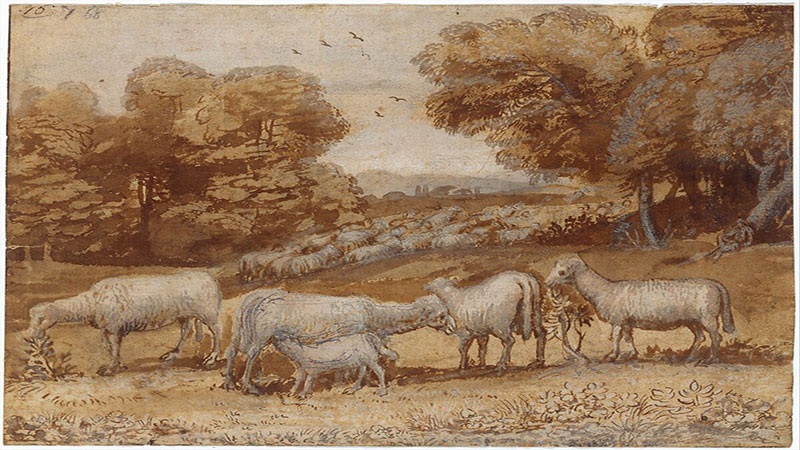
What Is a Sheep? “If It…Does Not Possess Three Vertebrae” (Bechoros 40b)

Question: I have a number of questions about the Prayer for Rain. Is there really a need for a prayer for rain when rain generally comes in the fall and winter seasons? When is the proper time to begin praying for rain – December 4 or December 5? Also, if one forgets the request, must he repeat the Shemoneh Esrei? Additionally, what if there is a severe need for rain before that time? Sam Cohen Via email

The blessing that we have been given and that will never fade is on two levels – the spiritual and the physical. On the spiritual level, the Torah, which has been given to us, will never become old... And on the physical level, the blessing of prosperity G-d gives will also not become a gift of the past.
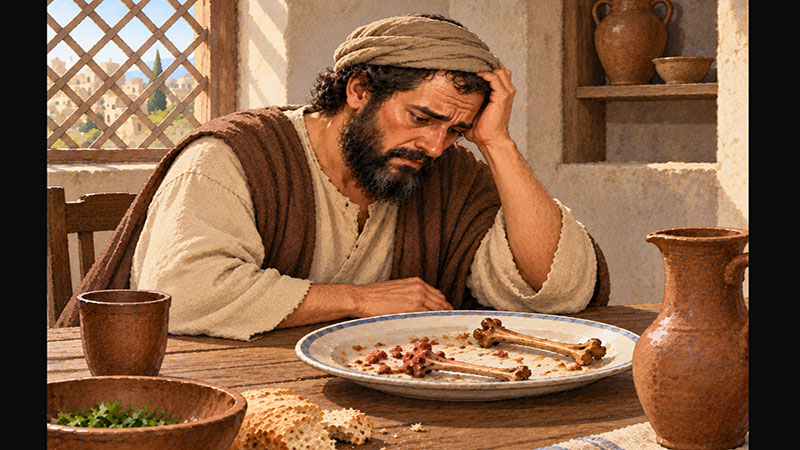
Even if we were to argue that your average Jew would find violating a Torah law so disturbing that he could not enjoy the food, why would this apply retroactively?
By Naama Klein
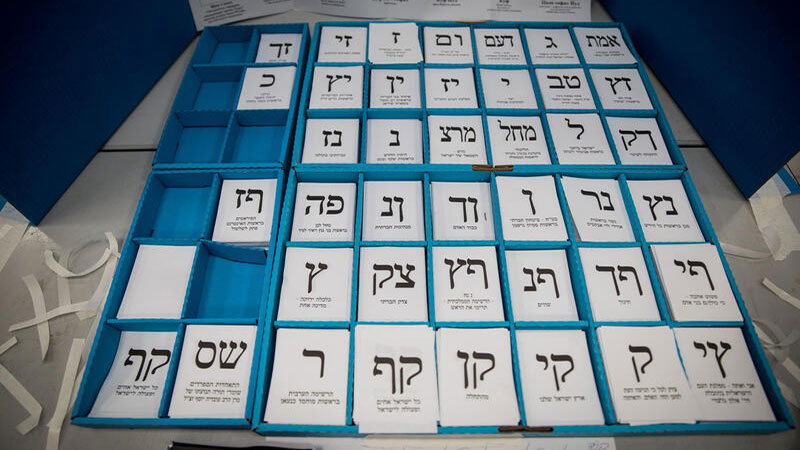
I conscientiously and proudly vote in every major election, both in my native alter heim, the U.S. of A, and in my adopted beloved home, the Holy Land.

Upon entering the Land that will be promised to him, Avraham (then still Avram) builds an altar, a mizbe’ach, in the vicinity of Shechem in honor of the Hashem who had appeared to him (Bereisheit 12:7).

Pharaoh’s behavior is all too familiar. It is the quiet entitlement of a man who assumes access, assumes compliance, and assumes that others will adjust around his decisions. He sees Sarai and decides she will be taken.
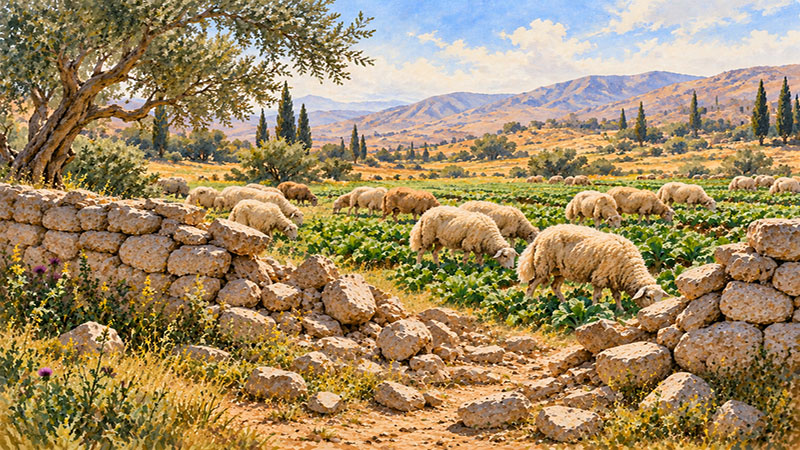
What did the thievery of Lot’s herdsmen have to do with Avraham’s herdsmen? Even if we say that there is a mitzvah to reproach someone who is doing something wrong, the pasuk tells us that they were quarreling.
Why is there a different starting date for T&M in the Diaspora? Why is the date in Israel on the Jewish calendar and in Chutz LaAretz on the secular one?

Was there no one else in the world who was able to see through Nimrod’s charade? Couldn’t any mature human being see through the shallow façade of Nimrod’s claims?
Although the physical body and the spiritual neshama are made from different "matter," they have the ability to communicate with each other, in both directions.
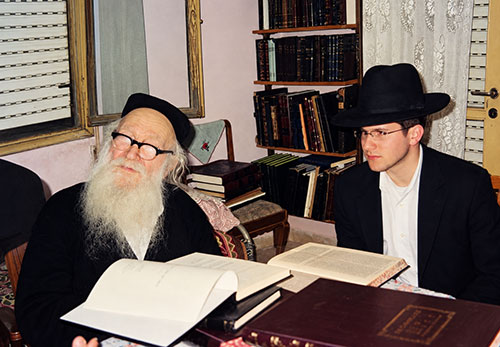
We are deeply influenced by who we consider our heroes. We want our children to recognize the difference between wanting to be athletic and play like the pros versus wanting to be like them in other facets of life.

By Moshe Gantz and Joseph Miller
If two letters touch, they can remain perfectly readable and still be invalid. The problem is not simply that the reader can no longer tell them apart.

“I left my towel in the mikveh last week,” Aryeh explained. “Now there’s a similar towel here, but I can’t definitively identify it as mine.”

Beware Big Brother! “All the Defects Which Come About by Man…” (Bechoros 35a-b)

As a final note to consider, this kind of loyalty – making peace with who your spouse is and finding and supporting their good qualities – does not have to be limited to women.
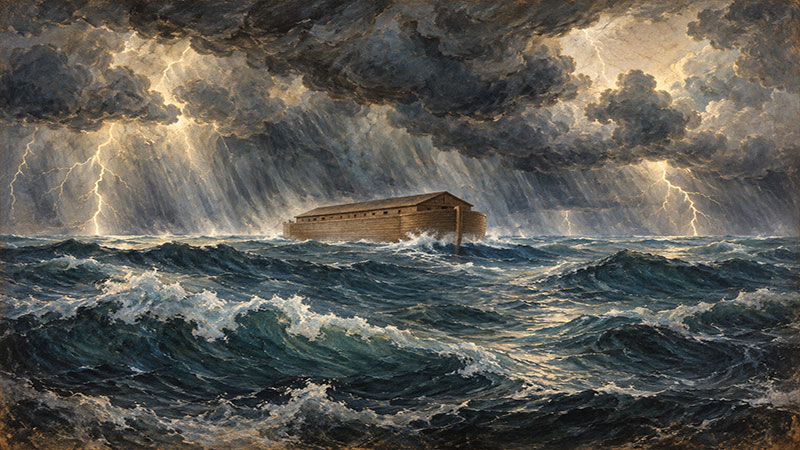
Noach expected justice. He walked in tandem with a G-d of justice, Et haElokim. If he obeyed G-d’s command not to steal, he expected to be rewarded with food to eat. That’s justice. If that bargain was broken, he felt he would be justified in stealing.

The Lev Eliyahu says that the impurity that man created in the world was so great that it even affected the animals and the vegetation. They had no choice in the matter; the impurity adhered to them and caused them involuntarily to corrupt their ways.

The Torah describes Noach as a righteous man, perfect in his generations. That description is not only about his personal character – it is about his role.

On that Simchat Torah morning, Mom had set out to bring treats to the children. And now, in her backpack, we had found a small way to finish what she had started.

We consisted of twelve tribes, each with its own identity, its own flag, and its own character. The tribes undoubtedly had different customs, perspectives, and approaches to life. Yet they were all part of one nation.

Question: Is one obligated to stand while the shaliach tzibbur repeats the Shemoneh Esrei? I have observed that some people stand during the whole repetition of the Amidah while others sit most of the time. Menachem Via Email
We tend to think of the generations of the Flood and the Tower of Babel as "primitive" civilizations, but the opposite is true.

Humanity is not designed to progress through large leaps – at least not as an expression of our nature.

It is interesting to note that the Hebrew word for mouse, achbar (spelled ayin, chaf, beis, reish), is the same letters as the words ra bach, meaning, “There is bad in you,” for lashon hara is the essence of bad.
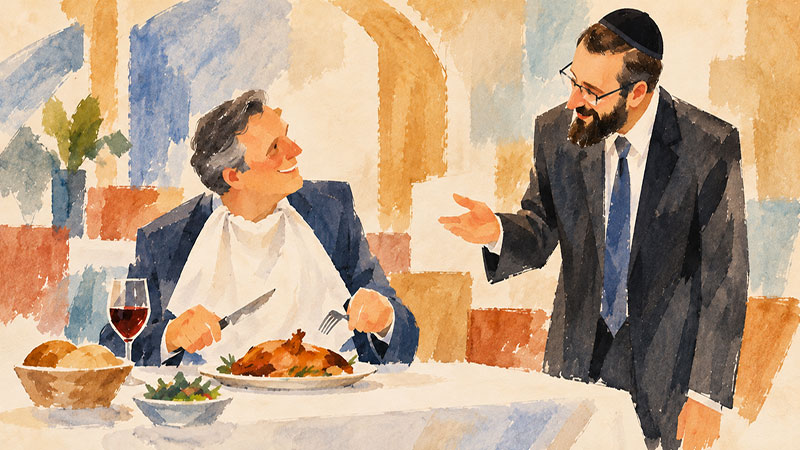
When I finished davening this morning (Sunday, the first of the two days of Rosh Chodesh Marcheshvan), I got curious about how many times we say Hallel in a year like this one with the largest number of days.

What if Yaakov and Eisav were never meant to be rivals, but partners?

The irony is that the more we step into the world and appreciate the vastness of G-d’s creation, the more humbled we become.
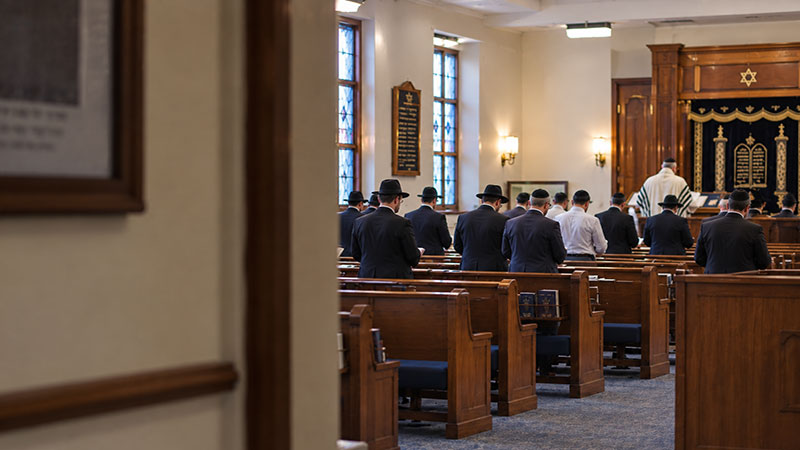
Question: Is one obligated to stand while the sheliach tzibbur repeats the Shemoneh Esrei? I have observed that some people stand during the whole repetition of the Amida while others sit most of the time. Menachem Via Email

By Moshe Gantz and Joseph Miller
Another crucial feature: the writing must endure. The general laws of writing recognize a difference between something that leaves lasting writing and a substance that merely creates a temporary mark.
Not Good for the Goose, Nor for the Gander “On the Festival, Plucking the Wool is Permitted…” (Bechoros 25a)

The message implicit in the primacy of Rosh Hashanah and of Bereishit is that it is only through the embrace of beginnings – of renewal, of originality – that we can truly embody the G-dly form and consciousness that it is our lot to achieve.
Most of us will never be called upon to take control of an airplane cockpit. But there is much we can learn from this story about resourcefulness, alertness, and stepping outside our comfort zone.

Shabbat B’reishit is always the Shabbat M’vorchim of Marcheshvan. It is the only sedra that is always read on Shabbat M’vorchim.

And yet, we know this moment does not define David's entire life. In time, his circumstances transform completely, and he emerges from hiding to accomplish extraordinary things: composing the Psalms, waging victorious battles against Israel's enemies, unifying the fractured kingdom, and establishing Jerusalem as its center.

The very survival of the Jewish people hinges upon Shabbos observance. When a family is so assimilated that they don’t even observe Shabbos, intermarriage is sadly only a few steps away. Thus, Bereishis is also an acronym of yorei Shabbos, meaning “be ever mindful of the Shabbos.”
Click on the image below to view a full-page version.

Assessing a Newly Presented Argument Introduction "More than the Jews have kept the Sabbath, the Sabbath has kept the Jews." Ahad Ha'am, a secular Jew, was speaking of Shabbat's role in preserving Jewish life. For those who observe it, that protection is also spiritual: Shabbat gives us time to step back from daily demands and […]

Why is the Torah telling us this? What difference does it make what name G-d gave them? After all, the Torah is not a vocabulary book?

He saw his brother was pained. How could he turn away from Kayin at such a time? Why didn’t he at least try to alleviate his distress?

The inability to fully understand the destination of one’s own growth can be compared to a child’s inability to grasp a complex scientific or spiritual concept.
Twin Firstborn Sheep – Which Is the Bechor? “It Is Impossible to Ascertain Exactly” (Bechoros 17b-18a)

“When I took my sukkah out from the storage room, one of the beams was missing,” he said to Mr. Baum. “It seems that you must have taken it by mistake.” He pointed to the beam with the string.

Question: May one eat etrog jelly on Simchat Torah? A Reader Miami, Fl.

Even though the fortunes of other nations may be determined by the stars, the fate of G-d’s holy nation is in His hands (33:3). The Jewish nation has earned His protection because they squeezed themselves around the base of Mount Sinai and accepted the yoke of G-d’s Torah (33:3).

Sukkos teaches us the value of each individual. Consider this contradiction. The walls of a sukkah can be built from pieces of wood and boards that have been discarded as rubbish. Broken tree branches can be used for the schach.
The Malbim is teaching us that each person has a different capability of perception, and overstepping the limits of their perception can have disastrous results.

By Moshe Gantz and Joseph Miller
We should be careful not to confuse a hiddur with basic kashrus. A beautifully smooth sheet of klaf is not automatically more kosher than a less attractive one. Likewise, white parchment is not inherently superior simply because it looks cleaner.
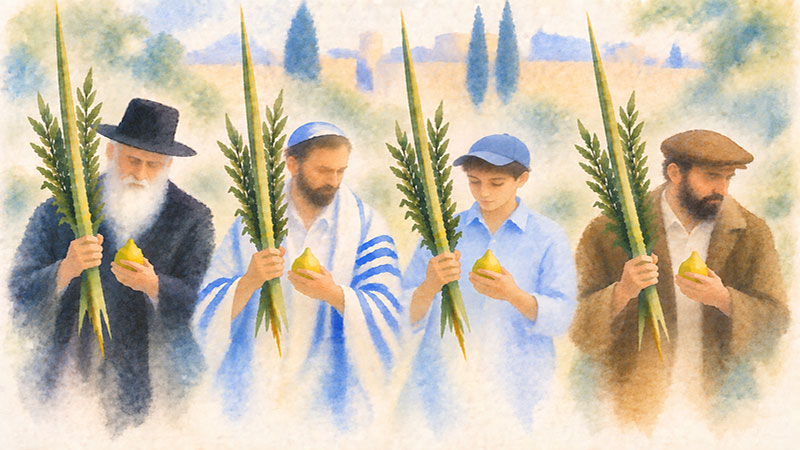
The Shela explained that one’s ability to draw close to Hashem and receive messages from Him is correlated to that person’s refinement of his own character to more closely resemble the Divine.
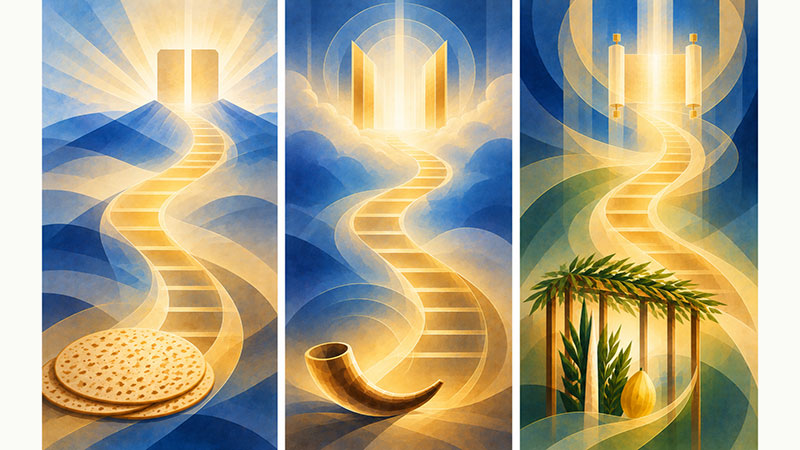
Reading Torah, learning Torah, studying Torah – even living Torah – is not the whole picture. It is the love of Hashem, who gave us the Torah and mitzvot, that completes the picture.

A mashal is the only tool a teacher can use to teach spiritual truths; the learning and understanding must be done within the inner mind of the student. If this is true, how can we relate to and understand the spiritual world?
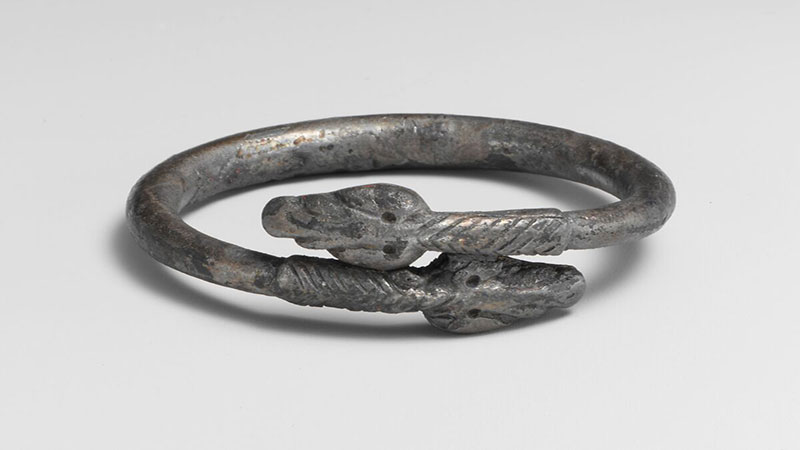
I would like to share some observations on parts of these dialogues which are relevant in our modern times.

As I am writing this column, the appropriate greeting to offer you is G’mar Chatima Tova. But since you will be reading these words after Yom Kippur, let me use the more common greeting of G’mar Tov. And at the end of the column, I will wish you a Shabbat Shalom and a Chag Samei’ach. […]

Question: I know that the Simchat Beit Ha’sho’eva is a significant but not very popular ritual on Sukkot. Is it possible to elaborate on its significance? Menachem Via Email

By Moshe Gantz and Joseph Miller
the parchment maker is not simply producing a nice piece of leather for the sofer. The thickness of what remains and the surface upon which the writing will eventually be placed can themselves have halachic consequences.

Every morning of Sukkos begins with taking the lulav and esrog and shaking them in six directions. The movement is simple, but it carries a weight that feels ancient.
Rare and Difficult to Perform “If He Has No Lamb with Which to Redeem It…” (Bechoros 11a)
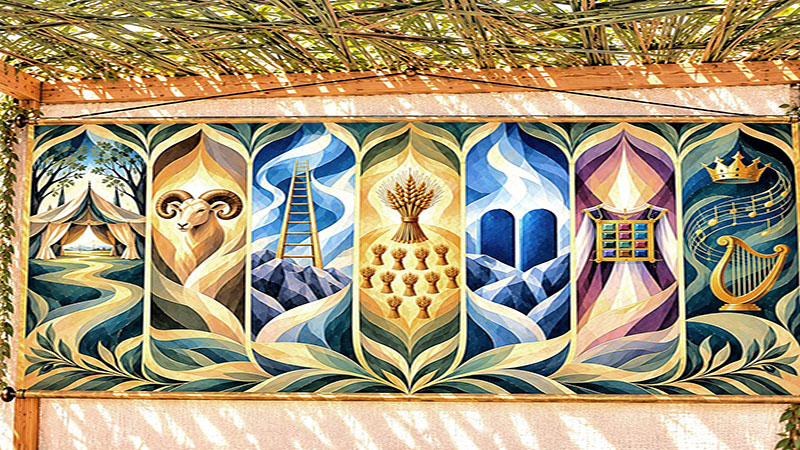
One of the great character traits we know about Hashem is that He is “Oseh shalom bim’romav – He makes peace in the Heavens.” Hashem is described as the Great Peacemaker. Therefore, throughout our stay on earth it behooves us to pursue peace in every area of our lives...
That kind of honesty is rare and refreshing because we often do the opposite. When confronted with the questionable behavior of a great person, we instinctively search for an explanation. We find a reason why he must have been justified.

Some ideas appeal to us because they resemble an etrog: they promise comprehensive solutions. They seem to address several competing concerns at once rather than advancing one narrow interest.
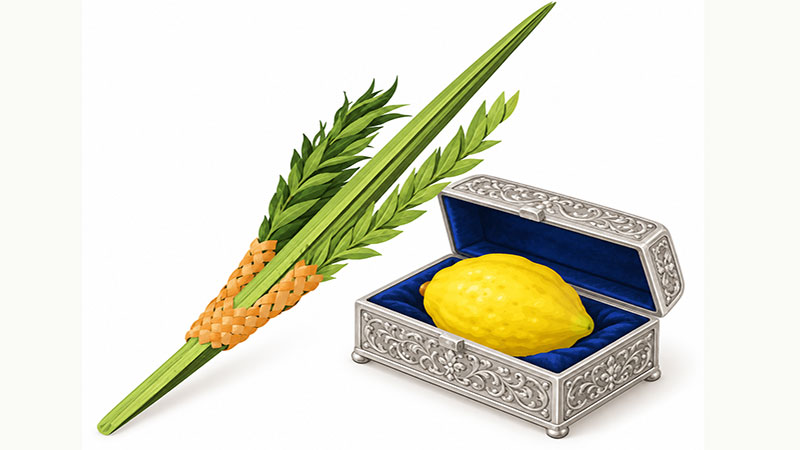
After Yom Kippur, when we have attained atonement for all our sins, we now prepare to do mitzvos that will continue to keep our heart pure.
Today, we have no understanding what true joy is. We fervently pray that HaKadosh Baruch Hu should restore us to the days of old so that we may partake in the Sukkot celebrations in the Beit HaMikdash and truly merit Zman Simchateinu, the time of our rejoicing.

Chazal enigmatically compare the schach of the sukkah to the ideal form of beauty. What does this mean?

Sukkot is the only pilgrimage festival that doesn’t commemorate a major historical event. Instead, it marks a paradox: G-d protected us in fragile huts during the most destabilizing period of Jewish history, our forty-year wilderness journey.
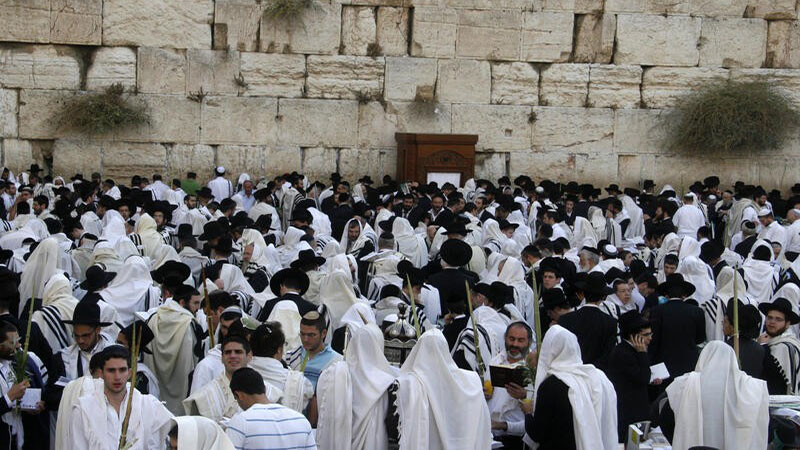
“You shall take for yourselves (lachem) on the first day…” that on the first day a person cannot fulfill the mitzvah with a borrowed set of four minim, only with a set that is granted to him as a gift (Sukkah 41a-b; O.C. 658:3).
"What amazes me is that there are also travelers in the middle of their journey who don’t always realize that it’s Sukkot. But the moment they see us and remember, they get excited."
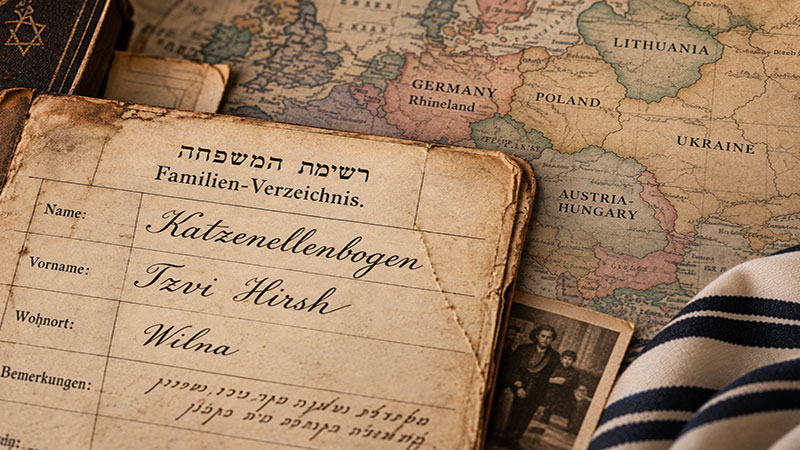
Trends in Ashkenazi naming conventions tell this story of eastward migration, as even when Ashkenazi Jews settled in Eastern Europe (in areas like Poland, Ukraine, Lithuania), their names often point back to their origins in Western Europe – particularly in Germany.
Sextuplets: No Other Solution “A Levite Exempted an Israelite, His Animal Exempted…” (Bechoros 4a)

In the case of a single victim, if a person stole and is uncertain whether he returned the money but the victim claims definitively that it was not returned, the thief is required by law to pay, like other cases in which there is a definite debt and uncertainty about whether the money was returned (C.M. 75:9).

By Adina Broder
Hashem was teaching Yonah that forgiveness is not based on justice, but rather on compassion. Justice looks to what you deserve according to your past actions.

We are blessed to live in a land of plenty. Pleasures and enjoyment abound, and there is little to stop us from indulging. This is not only true about sinful and forbidden pleasures, but even regarding enjoyments that are acceptable within reason.

When you state a person is “born that way,” it reduces moral accountability, which, for whatever reason, is a trend today that is highly destructive.

For those who have climbed the ladder of spirituality and find themselves closer in devotion to heaven than to earth, the harsh word Va’adabera is not an alienating phrase. That the good life as we know it can devolve into a life of misery, if we ignore the Torah, is a fact not a threat.

The Torah is poetically called a shira, a song. In the context of the mitzva to write a Sefer Torah, the word shira refers to the whole Torah.
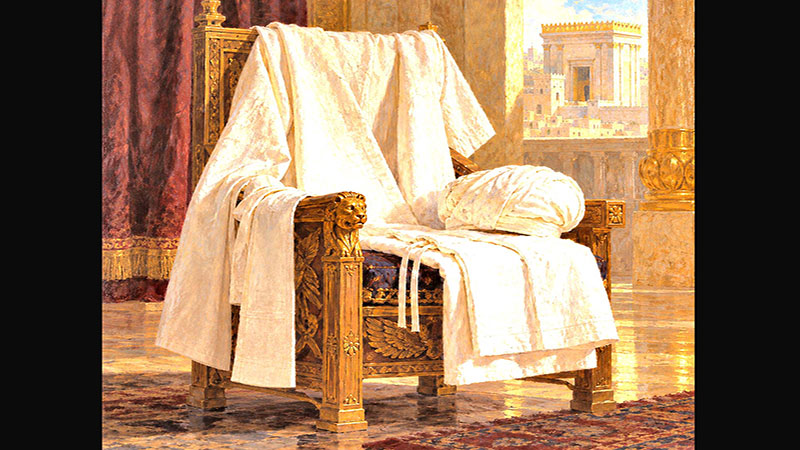
Rav Moshe Cordovero (RaMaK), in his commentary on the Yom Kippur service, associates the two sets of garments – each comprising four pieces – with the four-letter Divine Name.
Question: What is the reason for the unusual practice of the chazzan reciting Shehecheyanu on Yom Kippur night? Elimelech Feldman Via Email
After a person has already fallen into sin how does he rectify it? How does he become meritorious? We all seek the antidote that will cleanse us from our sins and transgressions.

While teshuvah is important throughout the year, at no time is it as urgent and as effective as during the Ten Days of Repentance, for currently, Hashem stretches out His Hand, welcoming our overtures of repentance.

Yom Kippur is the night journey of the soul. For one day, distractions recede and we confront who we are, what we have failed to become, and the brevity of our lives against the backdrop of eternity.

As we approach Yom Kippur, we recognize that it is unquestionably one of the most important days of the year. And yet, in many ways, it is a mystery.
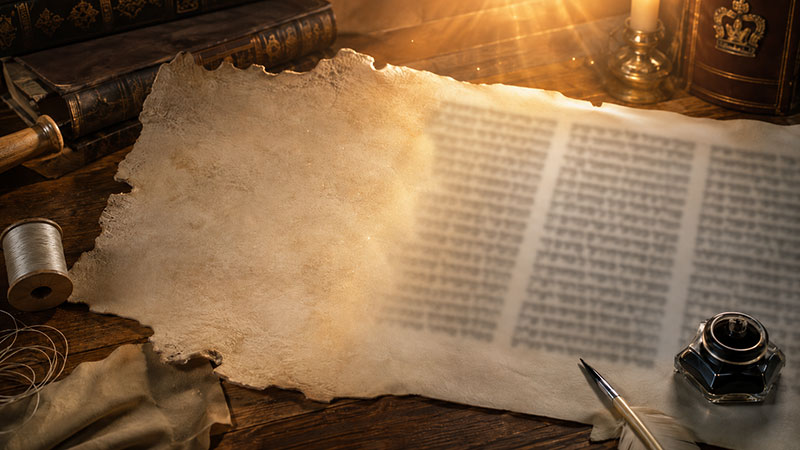
By Moshe Gantz and Joseph Miller
Klaf for STaM is not prepared like ordinary leather. Halacha requires the parchment to be processed lishmah, for its sacred purpose.

Question: What is the reason for the unusual practice of the chazzan reciting shehecheyanu on Yom Kippur night? Elimelech Feldman Via E-Mail

By Yigal Gross
I am a Jew because I believe in G-d’s presence, not simply as history’s initiator but as its continuing driver. I believe that reality reflects design rather than randomness.

By Moshe Gantz and Joseph Miller
We do not generally find holiness by abandoning the physical world. We sanctify time through Shabbos, food through mitzvos and berachos, money through tzedakah, and our homes through the Torah life lived within them.
 October 23, 2026