יום חמישי, י״ג תשרי תשפ״זThursday, September 24, 2026



Follow Us



They are combined almost 90% of years in Chutz LaAretz, and almost 80% of years in Eretz Yisrael. This year, Matot-Mas’ei (M&M) are combined all over the world.

One of the greatest tragedies is when a new inductee stands at his/her bar/bas mitzvah smiling for pictures and enjoying the “induction ceremony,” but in reality, has absolutely no idea how to be a soldier or how to “handle” the weapons.
Because the words of Torah gladden the heart, studying Torah is forbidden when Tisha B’Av is on a weekday, except for passages in Scripture that deal with the destruction of the Temple and other calamities.

The flight went smoothly. After checking in to his hotel, Mr. Fine placed the phone on the desk in his room until Mr. Neuman’s son would collect it. That evening, he went out to dinner with several business associates. When he returned, the phone had vanished!

An Argument with Karaites “A Fetus that Partially Left the Womb” (Chulin 69a)

This idea is one of the most comforting themes in Judaism. The Almighty is not merely present during moments of triumph and celebration. He is present during moments of anguish and despair.
How can Torah Jews see the return of the Jewish people to Eretz Yisrael as negative?

Question: Have any of the Gedolei Torah of the religious right been supportive of the Jewish State – Medinat Yisrael – even though it is not completely religious in nature and in fact governed as a secular state? Joseph Borkovich Via email

It is the job of the kohen to appease G-d’s anger even as it is stoked by the infidelities of His people.
Am Yisrael have full control over the determination of the festivals, which may also be influenced by their behavior! the good and the … bad.

I don’t know what the state of the world will be in by the time you read these words. I do know that every day brings more confusion, more anxiety, loss of trust, and even loss of life. What can we do? What must we do?

It seems to be pretty clear that although the war with Iran went basically as anticipated, from the point of view of the Americans and the Israelis, the peace “agreement” is not quite what was anticipated.

Hashem wanted to glorify both Moshe and Aharon, who would, through the power of their speech, reveal the hidden power within the material world. At the same time, He wanted to highlight His own Creation of a world of true essences locked within the symbolic framework of the physical universe.

I think we can use the rule I once heard from the late Telzer Rosh Yeshiva, Rav Chaim Dov Keller, zt”l, zy”a: If something will not bother you three hours from now, just be quiet and forget about it. If, however, the issue is of a more lasting nature, you must discuss it at a time when everyone is more level-headed and not so defensive.
The Talmud (Brachos, 20a) discusses the reality that the earlier generations were wholly dedicated to the sanctification of the Name of Hashem, unlike the later generations.
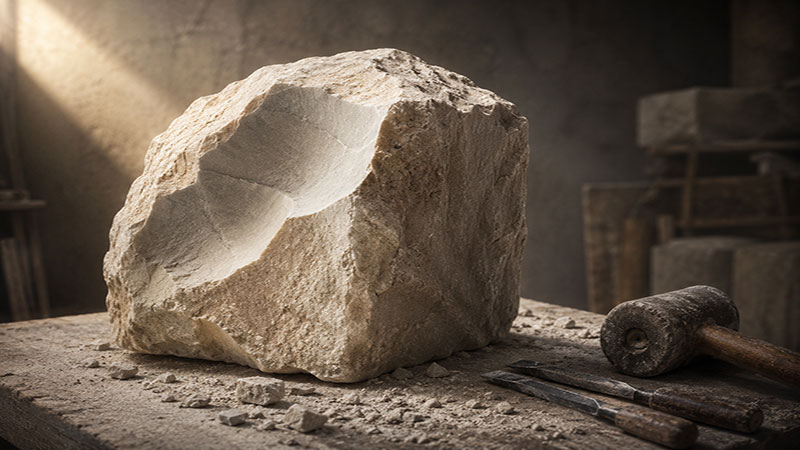
The goal of life is to come into this world and rebuild all that you experienced and understood while in the womb.

Furthermore, the two sides – sharpness and softness – represent a unification of two opposite but necessary features that it takes to fulfill the Torah: humility and brazenness.

Parshat Pinchas contains six of the 613 mitzvot, all positive; it is one of only six sedras that have only positive mitzvot.
There’s something nice about getting a haircut. For a few days the person looks put together and fresh.
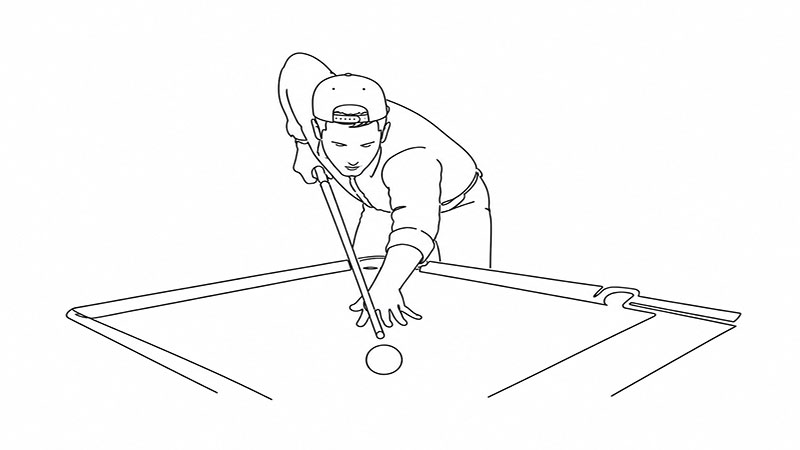
We feel guilty and want to help them, but we also feel frustrated because we might know that their pattern is self-destructive or that somehow, they’re doing this to themselves.

We pray for the hasty coming of Mashiach but might not return to the state of purity during the usable lifetime of this calf.
Genetically Engineered Simanim “A Bird with One Siman” (Chulin 62a)
The Torah gives one the energy to get up each morning and enjoy the day. Learning Torah, keeping it and loving it is the key to life.
As the Jewish people mark 50 years since the miraculous rescue operation, Shai says it is important to pay attention to the dates and events that shape our lives. That is why he held a special kiddush of thanksgiving in his home last Shabbat.
Question: We see numerous instances in Scripture where a person’s name was changed. Notably in the recent parsha, Shelach, it says, “And Moses called Hoshea son of Nun, Joshua.” Some people are then always referred to by their new name, while others are not. A case in point is the way we refer to our Patriarchs in the daily Shemoneh Esrei. Why is that so? Abraham Goldman Jerusalem
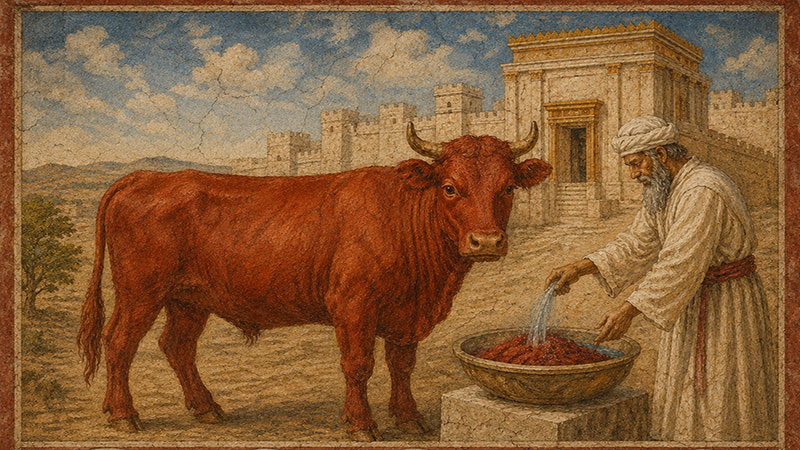
The purpose of the ashes of the red heifer is to purify someone who has come into contact with a dead body. The origin of death in the world was the result of Adam and Chava's sin.

It strains our credulity to imagine that such tremendous tzaddikim, especially after everything they have already seen and led us through, would be in any way lacking in belief.

If Korach was so great yet he nevertheless succumbed to the yetzer hara of machlokes, of fighting, what chance do we have?

Words don’t just leave our mouth and evaporate into thin air. They create a reality. They are keys that open the doors of blessing or can, G-d forbid, close them. A good word brings good.

The aloneness we experience today as a consequence of the wars being fought in Israel, and by those who defend and support Israel abroad, is built into Jewish history.

When it feels dark and all inspiration seems lost, remember the first stage, remember that spark. If you can’t find the light in the darkness, create it.
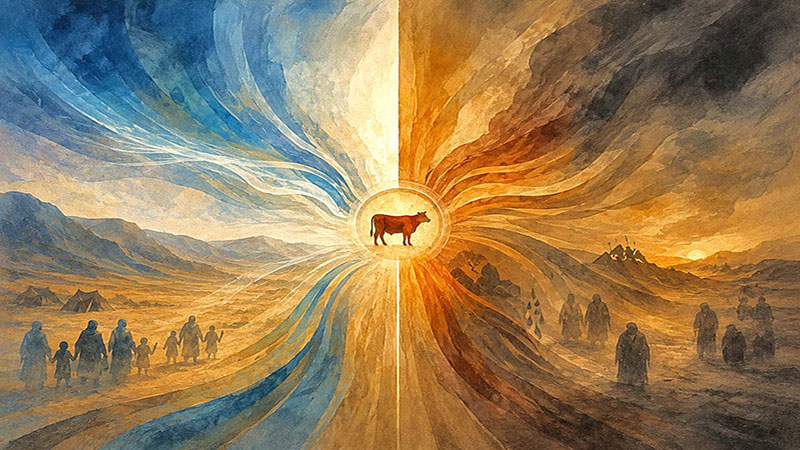
Let me summarize the out-of-sync sedra situation (again). Out of the seven pairs of sedras that are sometimes read separately and sometimes combined, three of the pairs serve to bring Israel and Chutz LaAretz back into sync.
Unlike grass which any child can nonchalantly rip out of the ground, chopping down a tree is a great challenge, and uprooting all the branches beneath is an even greater challenge.

When the seller wants to leave the area, if we would require notifying the bar metzra initially, the prospective buyer might retract in the meantime and delay the move, adversely affecting the seller even if he did not have a defined prospective option elsewhere.
Eternal and Immutable “Only Those Enumerated by the Sages” (Chulin 54a)

Question: Is the prohibition of living in the land of Egypt equally applicable to travel there as well? I know people who go there to see the pyramids. Zelig Aronson Via email

"Arnold is a 101-year-old member of our community. In just a few weeks, we will be celebrating his 102nd birthday. On the last day of Pesach, he woke up, noticed the weather outside, and said to his wife: “I’m worried that there won’t be a minyan today because of the weather." So, he walked in the rain to join our minyan.
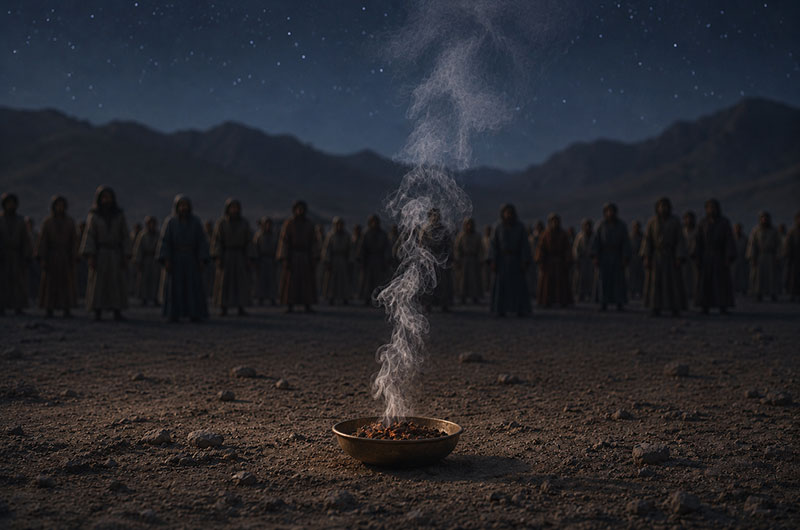
What Korach failed to understand was that both Moshe and Aharon were reluctant leaders. Moshe argued with G-d when G-d picked him as the leader.

Ramban notes that Korach’s brilliance lay in his ability to gather discontent from every direction and bind it with the language of righteousness. It is a pattern as old as humanity. A unity built not on covenant but on negation. A gathering without a center. A movement that cannot endure because it has no soul.
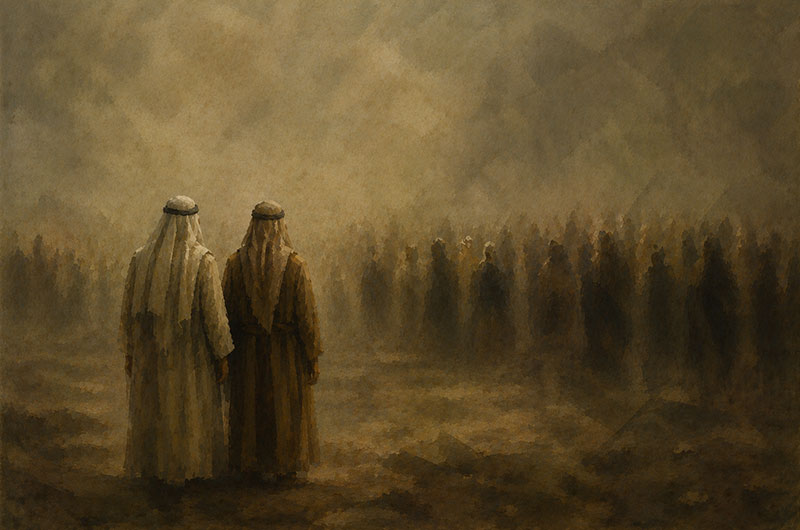
Only Moshe and Aharon are willing to sacrifice themselves and ignore their self-interest for the good of Israel.

Shmuel, who had devoted his life to shepherding the nation through its most turbulent years, may not have been able to invest with the same intensity in his own children.

Opposition to conscription on those grounds is understandable and coherent. But the call for broader charedi participation is not rooted in a sinister desire to weaken Torah study or undermine religious commitment.
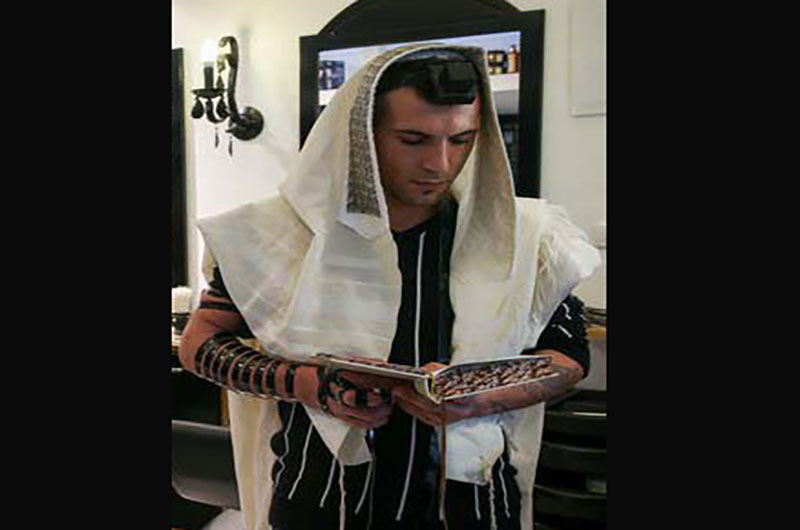
Rav Aharon Yehuda Leib Shteinman, zt”l, whimsically says that a better segulah against anger is simply to keep one’s mouth shut!

It is a fact that when someone envies another’s wealth or property he is tormented until he is able to attain that level of materialism.
Korach was part of the family of Kehat, the bearers of the Aron HaBrit. This task was not entrusted to anyone who was not of a very high spiritual level. It was an extremely hazardous task and Korach, who at this point was over 50, had already completed a successful "tour of duty" in the Mishkan and emerged intact.

Experiential knowledge is a type of knowledge that is known so deeply and powerfully that it becomes part of one’s very consciousness and self. This knowledge cannot be overcome, nor can one blind themselves to it, no matter how strong the competing desire.

Say “Tamuz” to someone and the immediate association is Shiv’a Asar b’Tamuz, the beginning of the Three Weeks and a period of mourning. Not wrong, but not the whole picture.

The reason for the celebration is that Torah is not merely a constitution or a book of the Rights of Man. “It is a Tree of Life for those who grasp it, and those who support it are blissful” (Mishlei).

If we are talking about the fact that he is afraid of being caught by the law and having to pay, it doesn’t make sense that he would throw it over the fence and cause damage.

Eli smiled sympathetically. Normally, you can’t take challah twice, he said. But I remember learning in kollel a famous Ketzos about someone who separated challah without the owner’s authorization. I don’t know what we rule in practice, though.

A Halachic Referral “It [the Lung] Erupted in Blisters” (Chulin 48a)

“I’m sorry” sometimes simply is not enough. These words echo painfully in my mind whenever I witness tragedy, cruelty, or human insensitivity. They reverberate whenever I see people throw words carelessly at one another, unaware that words themselves can become eternal scars.
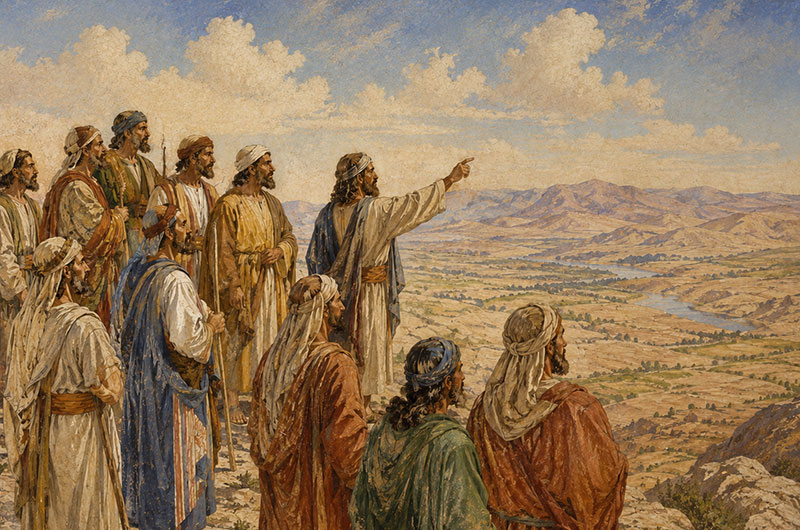
Chazal tell us that a person’s character can be found in his name. If one looks at the names of the spies, one can discern certain innate positive qualities, but one cannot be certain whether the bearer of the name will use those attributes for good or for the bad.
While we hope and pray for continued miracles, we of course have to do all in our power to make miracles unnecessary, and one way is to do a better job explaining to the world which people are interested in genocide and which people are interested in preventing it.

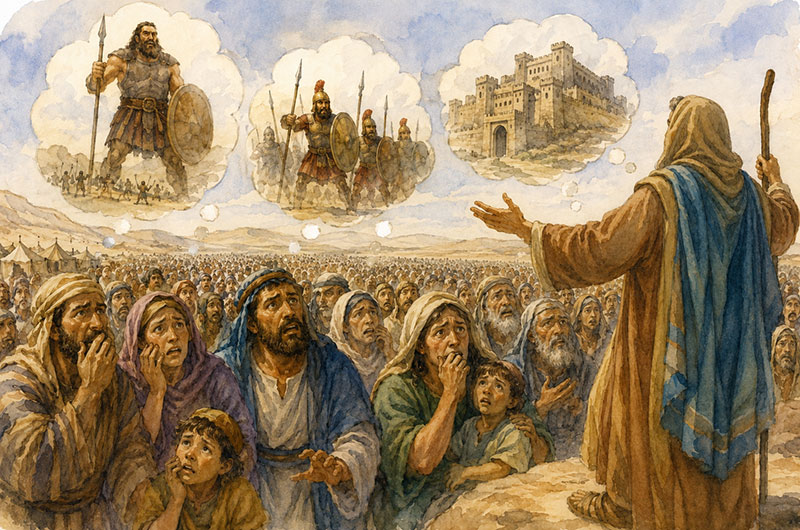
The words are brief, but they open a window into the inner world that shaped everything that followed. The land had not diminished them. The giants had not diminished them. They had diminished themselves.

Question: Is it prohibited to place a siddur or some other sefer on top of a Chumash? Menachem Kooper Via email
To whom is Hashem to show patience and slowness to anger if not to those who transgress against His commands?
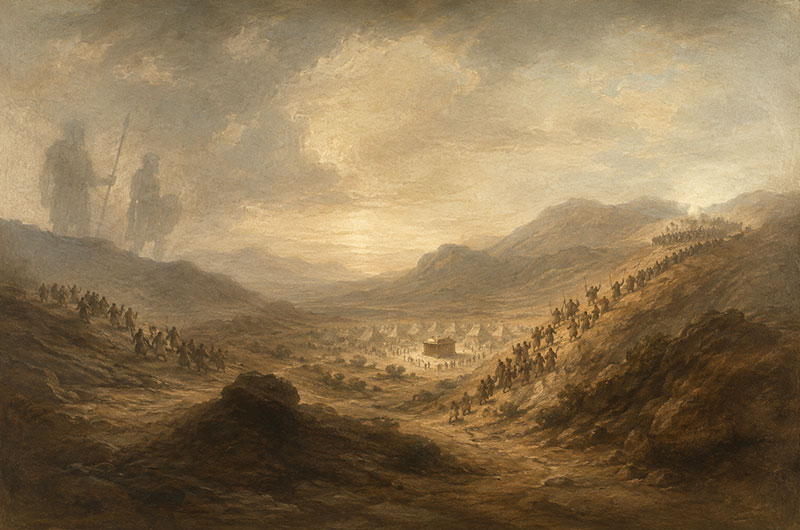
They were determined to reverse the tragedy. The land they had rejected only a day earlier now stood once again at the center of their hopes. Convinced that they could still set things right, they prepared to march forward.

To sum it up, if we don’t want Gehennom, if we want to avoid looking like a fool, if we don’t want to lose our wisdom, if we don’t want to render ourselves senseless, and if we don’t want to give ourselves over to an evil controller, we need to train ourselves that it shouldn’t be easy for us to get angry.
The question still remains: How can we equate slandering Moshe Rabbeinu, the greatest prophet alive, to maligning Eretz Yisrael, an inanimate object? Why would they take a lesson from Miriam’s fate?
The punishment for the sin of the spies was that the two future Batei Mikdash would be destroyed. What does the sin of the spies have to do with the Beit HaMikdash?
And what about the Rosh Chodesh we announce this Shabbat? It is always two days in our fixed calendar because Sivan always has 30 days.

The standard peshat of the words “The wise have their eyes in their head” is that they are introspective and consider the consequences of their choices prior to taking action.

And if we are commanded to have faith (emunah) in Hashem – to believe in something unknowable – how can we also be commanded to know Hashem?

When you owe money to someone, and a third party pays the creditor of his own initiative, you are thereby relieved of your obligation to pay, replied Rabbi Dayan.
Incubator Chicks: The Dispute “These Are the Living Things Which You May Eat” (Chulin 42a)
That life gave them all the time in the world to study the Torah free from the worries of a livelihood. Now, however, they were about to enter the real world, where the physical and spiritual juggle and compete for space.

Our Sages ask us to note that most of the time during our journey through the desert, the problem is not an external enemy but our internal state: our unity, our faith, our motivation. When these are absent, it is impossible to keep moving forward.

I wonder how many stood there, opening up their hearts and souls. How many knew that this would be their final prayer and yet they called out to Avinu Shebashamayim, ‘bring us home to Yerushalayim!’
Question: Is it prohibited to place a siddur or some other sefer on top of a Chumash? Menachem Kooper Via email

The Menorah teaches that outward illumination is the last step, not the first. That leadership begins with the quiet work of tending your own inner flame.

We are all living through a period of profound uncertainty, both globally and within the Jewish world. On a global level, it often feels as if we are living in the calm before a storm.

In this week’s parsha, we receive the command to raise up its candles, and of course on Shabbat Chanukah we are very involved with the mitzvah of lighting candles.
The study of Pirkei Avos contains lesson after lesson on how we can improve our daily behavior.

It is explained that before we received the Torah, we were comparable to animals, so we bring the offering from barley.

Let me make it clear that G-d does not get angry, nor does He have any other human emotion. However, the Torah speaks in language we can relate to. The Torah anthropomorphizes G-d so that we can understand things better.
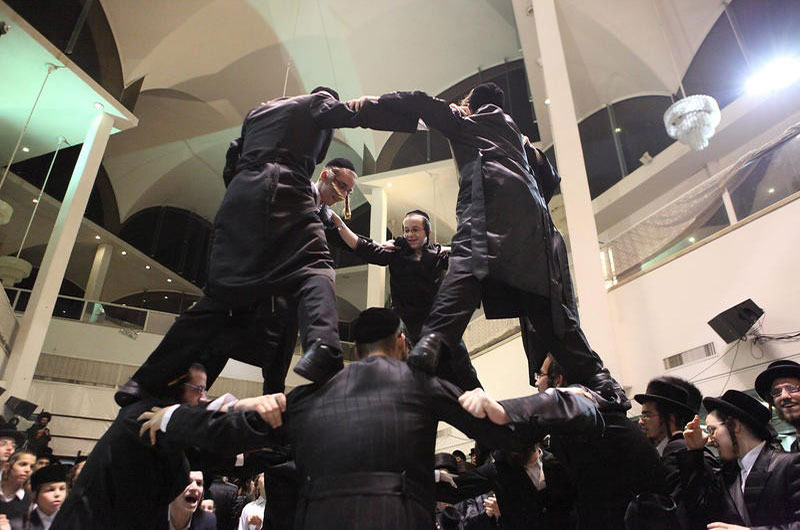
When a circle is merely cyclical, detached from growth, it represents spiritual death. This is the circle of routine, of habit, of endless repetition with no forward progress.

A person who constantly succumbs to his needs and urges without any intellectual thought or consideration is no better than an animal.
There isn’t an educator in any of our schools who isn’t a hero. Teaching is the most valuable and integral profession we have, despite the fact that teachers are often underpaid and underappreciated.
When complaints become constant, there is usually something deeper taking place. The words people use are not always the whole story. Sometimes the frustration we hear is only the outer layer of a more painful sense of loss.

Does buying jewelry now count for the mitzvah of simchas Yom Tov?
The Jew as a Gentile’s “Kashrus Certificate” “We Do Not Give Innards to a Gentile” (Chullin 33a)
f you just stated the details of the korban once, with Nachshon ben Aminadav, and then said that the others brought the exact same korban (without listing the elements), this could arouse jealousy between the tribes.
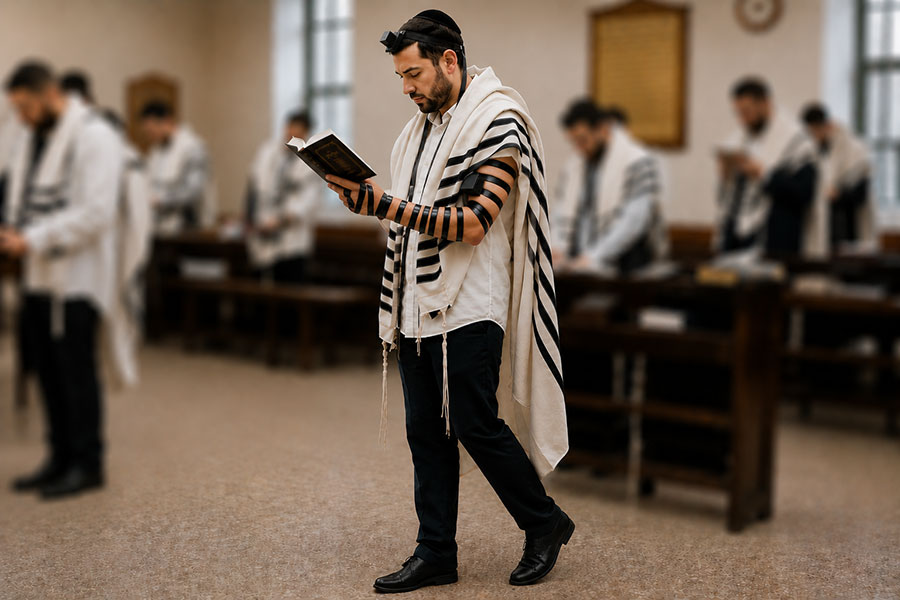
Question: Why do we take three steps back at the conclusion of the Amidah, and yet the chazzan is not required to do so when he concludes the Repetition of the Amidah – Chazarat HaShatz? Sam (Shnayur) Weiss Via email

It begins with counting. Order. Structure. Arrangement. But almost immediately the parsha shifts into the unpredictable terrain of human emotion.
On Shavuot it is customary to make a new commitment to Torah study. Our Sages explain that Shavuot is considered a “Rosh Hashanah” for the Torah, and that a new year of Torah study is about to begin.
At that moment, surrounded by song and holiness, Israel no longer felt like merely a country. It felt like destiny fulfilled.

Does Hashem desire that we sever ourselves entirely from the physical world, surviving on as little pleasure and comfort as possible? According to the Rambam, the answer is no. The Torah demands calibration rather than withdrawal.
The Aish Kodesh explains that in this world, a Jew can be identified by virtue of his rootedness in the supernal wisdom, but all the wisdom that reaches his consciousness comes through an extension of the Divine spirit into this material world.
When we follow their advice and pay attention to their criticism, they actually give us life in the World to Come.

When we fulfill the mitzvah of hachnosas orchim it doesn’t make a difference who the guests are. The halacha is to treat them like royalty.

Parshiyot come in two flavors: p’tuchot and s’tumot, open and closed. A parsha p’tucha begins on its own line, with a blank space on the line above from the end of the previous parsha to the end of the line. A parsha s’tuma begins after a blank space on the same line on which the previous parsha ended.

Time does not move along a continuous, straight line; it circles around in a repeating yearly cycle. As the Ramchal explains, Hashem created thematic cycles of time, and each point in the year contains unique spiritual energy.
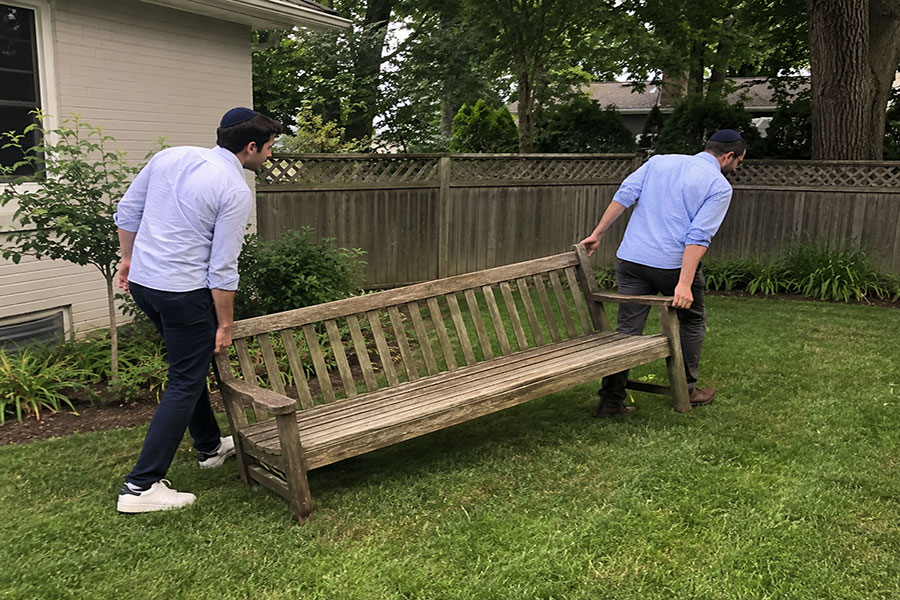
The ability to collaborate, connect, and negotiate between the built-in masculine and feminine traits and perspectives is what allows creation to occur, literally and figuratively.
 September 25, 2026