יום ראשון, ג׳ אלול תשפ״וSunday, August 16, 2026



Follow Us



Haman and Achashverosh have effectively lobbed a figurative grenade into the streets of Shushan, creating great consternation among the city’s entire population. The two architects of the impending horror, however, remain removed and unaffected by the turmoil in the streets. While Shushan is in an uproar, its king is busy drinking.

Individual humans upset the balance on their own, Rashi is saying, and thereby provide an opening for the enemy.
Because letter-based communication became so central to imperial rule, letter writing emerged as a prestigious craft. Composers of royal correspondence were trained in language, form, and official convention so that the king’s will would be expressed with clarity.

When I think of polarity, I think of a wife who wears a shmata when her husband comes home but gets dressed to the nines when she goes out with her lady-friends!

The Chofetz Chaim compares the rebuker to a merchant who is trying to sell his goods. Would the shopkeeper ever think that if he is hostile to the customers they would more readily agree to make a purchase?
The Chofetz Chaim compares the rebuker to a merchant who is trying to sell his goods. Would the shopkeeper ever think that if he is hostile to the customers they would more readily agree to make a purchase?
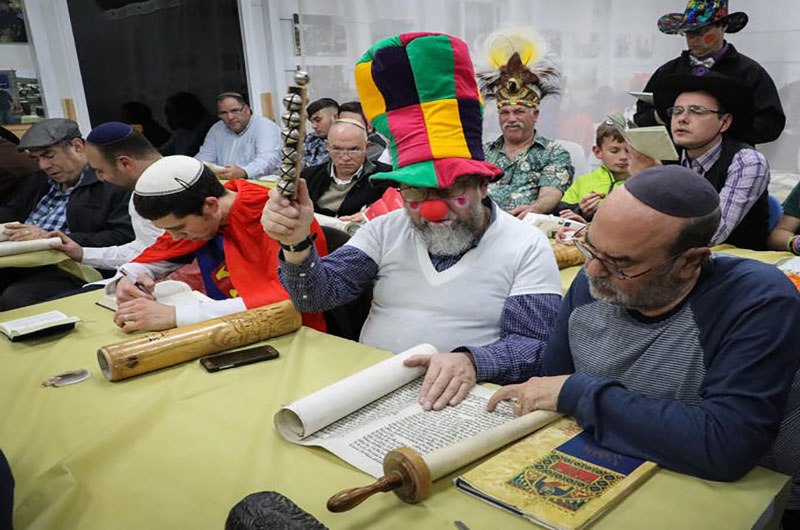
Our Sages wanted to make the connection between Amalek and Haman – who not only descended from Amalek but behaved in the particular style of Amalek in his desire and efforts to wipe out every man, woman, and child, the people of Mordechai.

At this point the Gemara assumes that it is improper to commit a sin even in order to achieve a higher purpose, such as fulfillment of the overall mitzvah.

The first fundamental principle of Jewish belief is that Hashem is the Creator of the world. He is the source of time, space, and all of existence.
Though Mordechai received no prophecy regarding the correct course of action – hence the term perhaps – this does not prevent him from issuing clear directives to Esther. He reflects on the situation and discerns what action Hashem expects from both of them.

Like people, relationships have ups and downs. They do not remain static and require constant nurturing and attention to maintain and enhance them.

He assumed it probably wasn’t a problem, but his uncertainty held him back. Was exchanging bills considered using company money? Was borrowing temporarily any different?

Something Borrowed, Something Blue “‘You Shall See It’ To Exclude A Nighttime Garment” (Menachos 43a)

Distinct. Individuals. Representing tribes. But in Terumah, at the moment of donation, before they are placed and named in detail, they are called something else. Avnei miluim. Stones defined not by their brilliance, but by their necessity.

What personifies G-d’s presence in the Mishkan most of all? It is the Torah, in the form of Tablets of the Law. The Torah is G-d’s representative on earth. We communicate with Him by studying His words.
Fundamentally, Judaism is a reality-based religion. We are enjoined to find G-d in our own lives and world, with our feet firmly planted on the ground.

The Mishkan gives Bnei Yisrael predictability through clear instructions, agency through voluntary offerings, collaboration through shared labor, embodiment through materials and craft, and containment through a defined sacred space. It is the Torah’s first blueprint for communal healing.

A Guinness World Record has recently been broken in Israel. It’s a record of generosity and kindness. Last week, 2,000 kidney donors posed for a group photo at the International Convention Center in Jerusalem, forming the largest gathering of organ donors in history.
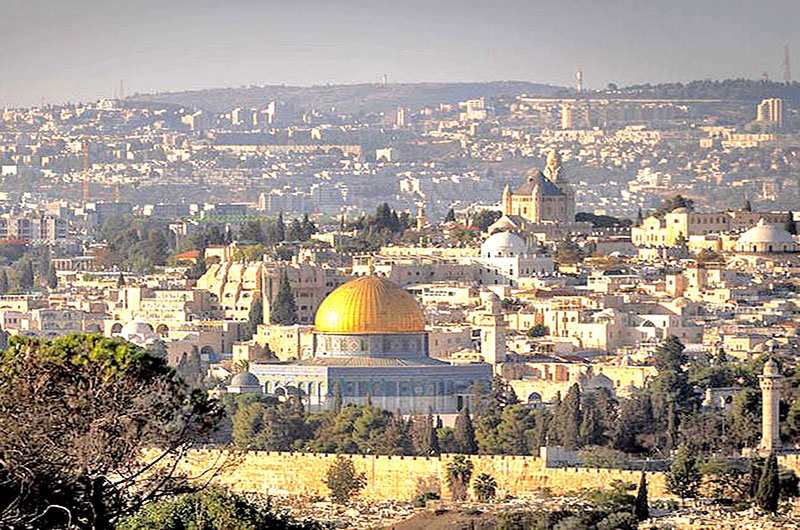
The reality of the Beit HaMikdash is very much alive and pulsating in our modern Jewish lives, we just don't acknowledge it as such. To us, it is just the normal Jewish routine.
Question: I am the gabbai in a large synagogue, where many people bring Divrei Torah handouts to distribute. As such, I am faced with disposing of the constantly growing accumulation of sheimot. How do I deal with these papers that include the names of Hashem in many substitute forms, mostly in English? No name please Via email

Our calling is not merely to take in and reflect surrounding culture, but rather to shape it, to serve as a light unto the nations by embodying and promulgating the Torah’s Divine values.

Human nature is fragile, and our avodat Hashem can falter. Living a commanded life does not mean that we always succeed. It means that we accept all of Hashem’s mitzvot, without selectively embracing those we prefer and discarding those we resist.
On the evidence of his writings, Philo was almost certainly a Torah-observant Jew who believed in the Divinity of the Torah and the uniqueness of Moshe’s prophecy.
We can make the startling conclusion that the entire event of Purim, the intended genocide of the Jewish people and the miraculous reversal that led to the downfall of Haman and the Amalekis, all hinged on the slander and the snitching of the noblemen at the king’s gate.
In assessing the potential of every Jew, Rabbeinu Yonah writes that even an individual who does not show great promise can achieve exalted heights and become a tzaddik. The simplest and most humble person can merit the Divine presence.

The most primitive form of leadership is selfish leadership, driven by the desire for power and self-gratification. In such a system, the leader represents only himself and his own selfish desires.
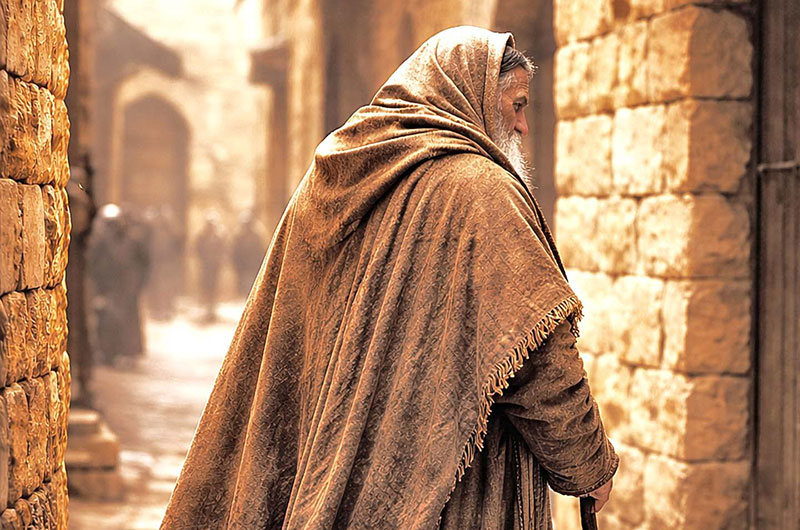
Our forefather Yaakov was described as a wandering Aramean (see Devarim 26:5 pashut p’shat, Ibn Ezra and Rashbam). The Jewish experience is to wander and spread out into the world, like our forefathers did. But the Jew maintains his identity and morals in the outside world by wearing tzitzis.

The message of the Aron’s inclusion of three half-measures is that on its own, it is incomplete. We, the Jewish People partner with it (so to speak) and become whole.
The truth is that much of life is spent waiting. On a simple level, when the world is functioning normally, we wait on store lines, in traffic, for packages to arrive, etc. But on a more significant level, we wait for all sorts of salvations and panaceas.

Miriam opened it slowly. Inside was the dress – her initial order. She stared at it, conflicted. After everything they put me through, she thought, do I really need to give this back?
Is a Shortened Lulav Kosher? “Remnants of Tzitzis are Kosher” (Menachos 38b)

A single decision, a single misstep, can eclipse decades of dedication.
We are also told that when we lend money, we may not charge interest. What? The whole banking system and world economy runs on interest. Why should someone else profit from my money free of charge?

The Torah’s language about the ger, the yatom, and the almanah is not sentimental; it is structural. These identities are not about eliciting pity but about embedding protection into the very framework of halacha.

Question: I am the gabbai in a large synagogue, where many people bring Divrei Torah handouts to distribute. As such, I am faced with disposing of the constantly growing accumulation of sheimot. How do I deal with these papers that include the names of Hashem in many substitute forms, mostly in English? No name please Via email
In addition to all the riches that each member of Am Yisrael carried out of Egypt on 90 Libyan donkeys, Am Yisrael started adding another layer of loot on the donkeys from the spoils from the Red Sea. The purpose of all this material wealth was to develop a lust for money within Am Yisrael, which they would later redirect into a lust to study Torah.
It’s overwhelming, in the best sense. How do you even sum it up? And what does it mean for ordinary people like us, who aren’t heading out this morning to rescue Israeli backpackers lost somewhere in the Far East, but are simply trying to manage the morning rush at home and at work?
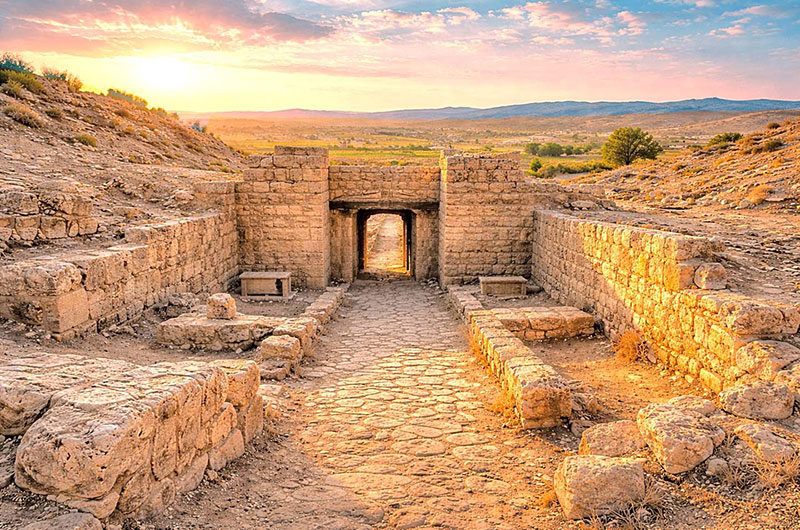
Because Mishpatim is the Torah code designed for living in the Land of Israel. Courts, damages, property law, social responsibility – these are not abstract ethics. They assume land, sovereignty, and society

The Torah deliberately places civil law alongside the drama of revelation. At the very moment when heaven meets earth – amid thunder, lightning, and awe – the Torah turns our attention toward human responsibility: how society is ordered, how power is restrained, and how justice is preserved.

Mystical Insights into the Redemptive Powers of the Half-Shekel.

The Medrash says that water is unique among beverages in that it is only beneficial if one is thirsty. With other drinks, we might enjoy them even if we’re not thirsty, such as a soda or juice. But water only has value when we are thirsty.
When a person is belittled and disparaged, his spirit is broken. He loses any hope of being able to atone for his wrongdoings.

Your job in this world is not to create yourself but rather to recreate yourself; to reattain your original state of perfection, as you were shown by the malach. This time, however, it must be done through free will, i.e., by choosing to become great.

Mishpatim-Sh’kalim-M’vorchim occurs in five of the seven Shana P’shuta year-types, with a frequency of 55.53% – by far, the most common situation for Parshat Mishpatim and Parshat Sh’kalim.

What does it mean to see G-d’s back? In Hilchos Yesodei HaTorah (1:10), Rambam explains that even when one does not see a person’s face, one can still recognize them by seeing their back, provided one knows them well.

There are many lessons and reflections to be gleaned from the surreal events that have taken hold of the world during the Coronavirus pandemic. One of those lessons is a reminder about the effect and influence of every single individual.

Someone called my mother, the oak tree. If you needed someone to lean on, my mother was there for you. She knew that people were different, and she accepted them as they were.

The wedding was beautiful, baruch Hashem, and the pictures came out nicely. Still, when the dust settled, the added expense lingered in Mr. Simcha’s mind.
A Sefer Torah That Fell “As Though Bitten by a Snake” (Menachos 32b)
The Jewish people did thank Hashem, but they waited. They waited for the sea to split, for the danger to pass, for the story to reach its resolution. And only then, in a powerful, collective, composed moment, they sang. It was magnificent. It was holy. It was exactly right.
It is an important call for individuals and humanity as a whole to exercise self-control, restrain impulses, and manage a world that has boundaries and red lines.

The Israelites have survived slavery, survived the plagues, survived the waters closing behind them. But survival is not the same as readiness. Freedom does not erase the patterns that oppression carves into the mind and heart. The Torah does not rush past this truth; it lingers in it.

The massive armada of vehicles and people to personally search for the remains of the last Israeli hostage – police officer Ran Gvili – will be forever etched into the minds and hearts not just of Jews but of people of good will throughout the world.
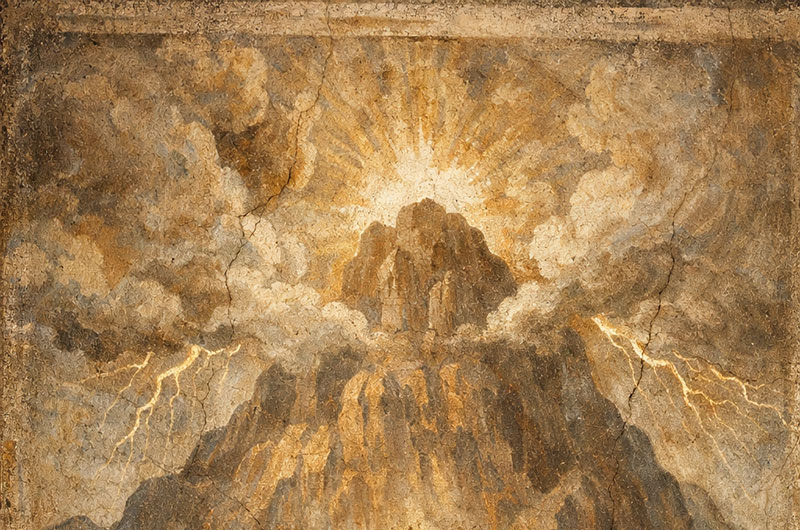
Yisro saw that the Jews were attacked by Amalek from behind, when they were weak and exhausted. The natural course of events should have resulted in their total defeat. But he witnessed G-d’s prescription for salvation.

Question: I am the gabbai in a large synagogue. Many people bring Divrei Torah handouts to distribute. As such, I am faced with disposing of the constantly growing accumulation of sheimot. How do I deal with these papers that include the names of Hashem in many substitute forms, mostly in English? No name please Via e-mail
I would like to explore the character that was R' Eliezer ben Horkenos, also known as R' Eliezer HaGadol, because of the important lessons we learn from him about Matan Torah.

Fathers must consider that beyond their financial inheritance, there is a spiritual yerusha that is their true inheritance. A life occupied with hours spent in the office or making deals but at the cost of family life is not a yerusha after all.

Would it not have been more striking to open the section of Yitro with the thunder and fire of revelation itself? More iconic, more symbolic, to move directly into the moment when Hashem speaks?
Until Israel had accepted our collective purpose and come to embody the Will of the Creator to have a nation among nations to perform His commandments and act on His behalf, there were only tribes and families.

Why do the Ten Commandments not include the most important of all mitzvos, the study of Torah?
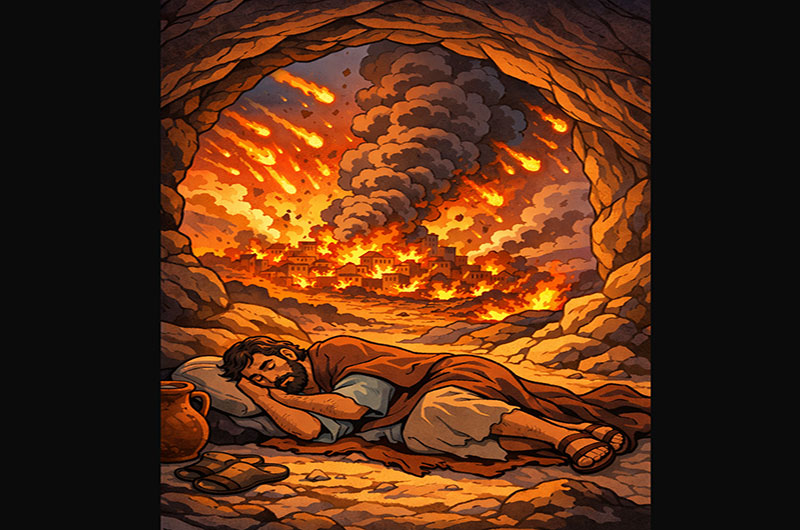
I will add a comparison between the altar and this stone. The altar represented service to G-d. In serving G-d, one goes gradually up and ascends a ramp. There can be no rush-jobs in approaching G-d – at least from our side of the relationship.

Let me break down the sedra into neat sections. We start with Yitro himself, identified as a Midianite priest and father-in-law of Moshe (a very odd combination of titles), coming to join Moshe and Bnei Yisrael. When did he come? What did he hear that motivated him to join our nation?

The feeling of making a great decision leads you to another great decision, and the cycle continues.
I have noted in this column that it’s a beautiful feeling to have nachas from one’s parents. I should add that the same is true about having nachas from one’s siblings.

By Naama Klein
We can generally guesstimate the time for Yizkor with an impressive degree of accuracy, but on Shavuos all bets are definitely off.

If I saw the hat, I could probably identify it, suggested David Baruch. I’m able to recognize it on the coatrack even though there are many similar hats.
Apples and Oranges “Two Menachos Were Mixed but the Handfuls Were Not Taken” (Menachos 23a)
Alexander was a man of integrity and a proud Jew. He loved the Land of Israel and the Jewish people.

There’s a reason the man arrives before the Aseres HaDibros. A people who have only known extraction cannot receive law until they first learn sufficiency.

They needed another forty years during which time G-d would show them more indisputable miracles like splitting the sea, extracting water from a rock and raining manna from heaven.
Question: The Written Law is there plain to see as it’s found in the five Books of Moses. However, from whence does the Oral Law come? I’m not asking as one who doubts its veracity – rather, I would simply like to know and not just follow blindly. Mark Grosz Via E-mail
There are different streams in the Torah world today regarding the Beit HaMikdash. The common denominator between them all is that they all want the third Beit HaMikdash to be rebuilt. The only question is how and when.
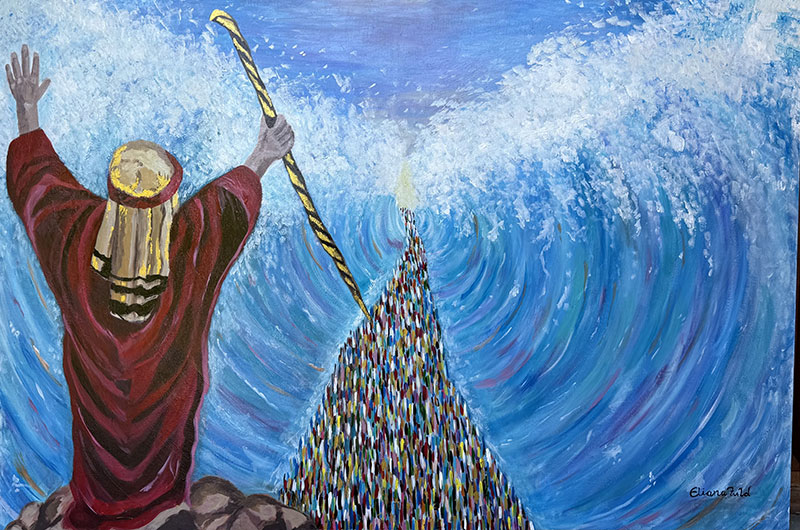
At the splitting of the sea, we learn that Hashem is willing and able to overturn the laws of nature as He sees fit to intervene on behalf of His chosen people.

His return was neither simple nor swift. It was not the result of chance, but of determination – quiet, disciplined, and relentless. Israeli Defense Forces soldiers, together with doctors, forensic specialists, and dentists, entered the heart of Gaza on a mission unlike any other.
This was measure for measure for the lachatzeinu, intense pressure, that the Egyptian taskmasters inflicted upon Bnei Yisrael nonstop.
One who finds it difficult to daven all the tefillos in the morning – from the berachos through Aleinu – if he can manage to recite the Shema that would be sufficient. If he cannot say all of the Shema, even the recitation of the first paragraph would be good, or at least the first two lines of the Shema could still be powerful.

Chazal mention a few cases of kefitzas ha’derech. One is when Yaakov travels from the house of Yitzchak, narrowly escaping Eisav’s clutches. Another is when Eliezer embarks on a journey to find a wife for Yitzchak. There are several others as well, but what do these cases have in common? Do they share any deeper connection?
Much of our reality is constructed by our personal beliefs. If we believe in forgiveness, we can be forgiving of others as well as ourselves.

When the Gemara in Kiddushin reflects on the value of honoring parents, it presents it not as a narrow religious demand but as a foundational moral duty. Kibbud av va’eim cultivates gratitude, disciplines the ego, and lays the groundwork for a value-driven society, built in layers and carried across generations. To underscore its universal […]

Most Torah scrolls today have 245 columns with 42 lines on each column. The first letter at the top of each column is a Vav (this is not a requirement, but is a common style of Sifrei Torah), with the exception of five columns.

Rabbi Moshe Weinberger notes that although to the uneducated person it seems that a tree’s entire growth is dependent on the nourishment it receives from its roots in the ground, that is actually not the case.

His chavrusa considered this carefully. A pledge to tzedakah is binding, he said. The question is whether placing money in the shul’s box is considered delivery to the shul – or if it’s still your responsibility until the shul’s treasurer actually receives it.
A Jew’s Altar “Or If He… Did Not Salt It…” (Menachos 18a)

Unlike Moshe’s previous meetings with Pharaoh in which he was instructed by G-d to ask Pharaoh to release the Jews and threaten him with plagues in the hope that he would comply, in the opening scene of Parshas Bo, G-d gave Moshe no such instructions.

What has always struck me is that the Torah does not erase the plagues. It does not soften them. It does not pretend that the suffering did not occur. Instead, it asks us to hold the full truth...
Question: The Written Law is there plain to see as it is found in the five Books of Moses. However, from whence does the Oral Law come? I’m not asking as one who doubts its veracity – rather, I would just like to know and not simply follow blindly. Mark Grosz Via E-mail

The two chapters he dedicates to Parshat HaChodesh, which is found in this week’s parsha, contain profound and beautiful insights into the nature of the Nation of Israel and our unique relationship to the moon.
Rabbi Yeruchom Levovitz (1873–1936) of the Mir Yeshiva in Belarus told his students: Woe to the one who does not know his weaknesses, for he does not know what to fix.

An integral component of the exile from Egypt included an unmatched zeal and enthusiasm to flee, so much so that there was not sufficient time for the dough to rise. So too must eagerness and ardor be essential elements in our fulfillment of Torah and mitzvos.

As we familiarize ourselves with the concept of middah k’neged middah, it should be an incentive for us to adopt certain behaviors and inhibitions to avoid other behaviors.
The mitzvah is to create a Jewish Calendar which is based on sanctifying each month by Sanhedrin’s declaration of kedusha of the first day of each month, and the periodic decision of Sanhedrin to intercalate the year (with an extra Adar) in order to adjust the years so that Pesach will always be in the spring season (and Sukkot in the fall).
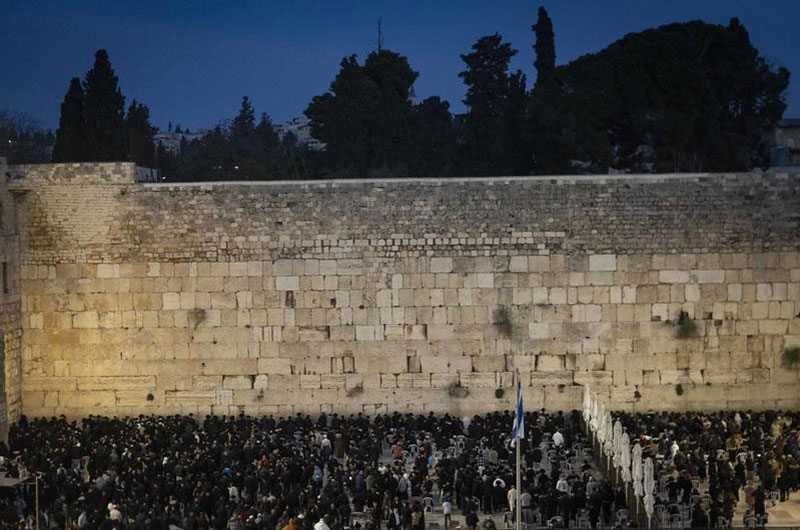
The Torah is replete with mention of Eretz Yisrael’s greatness and uniqueness. While we often hear about Eretz Yisrael’s unique kedusha (holiness), we must ask: What is the nature of this holiness, uniqueness, and greatness?

Tum’ah, representing death and the vacuum of G-d’s life-force, brings impurity. But humans have free will, and when it comes to our loss of connection to G-d, we must also reach out and cannot receive blanket dispensation.

When slavery began, we were cast as a threat to society. Pharaoh could only sell his genocidal policy to the broader public of Mitzrayim by turning us into a symbol of danger.
 August 14, 2026