יום שני, ד׳ אלול תשפ״וMonday, August 17, 2026



Follow Us



Eikev gives us the source of the mitzvah to daven. Once again, Rabbinic law has given us the how many times a day, at what times, and what to say. It should, however, never escape us that the Torah’s command to “Serve G-d with all our heart” is the core of our davening.
By not revealing the reward for (most of) the positive mitzvot, HaKadosh Baruch Hu prevented a situation where we would excessively observe only some mitzvot at the expense of others.
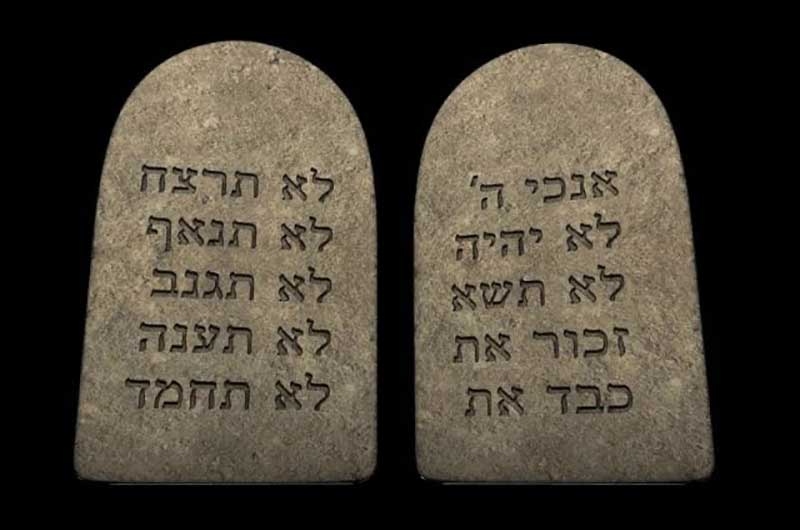
According to our Tradition, not only was it decreed that the adult male population of the generation of the Midbar should wander for 40 years and die out without entering the Holy Land (except for Yehoshua and Kalev), but they actually died on Tisha B’Av – about 15,000 each year.
This is why Rebbe Yossi ben Kisma rejected a substantial monetary offer to move to a city lacking a strong Torah presence. He explained that he prioritized Torah learning and good deeds over money because we take only the former with us to the next world (Avot 6:10).
The Churban “All the Roman commanders who saw the internal conflict among the Jews viewed it as a gift from heaven and urged an immediate attack. But Vespasian wisely counseled patience: ‘If we wait, we will find our enemy fewer in number, after they have worn themselves out through their internal struggle. It […]
The whole Book of Devarim takes place in one location – Arvot Moav – over just 37 days.
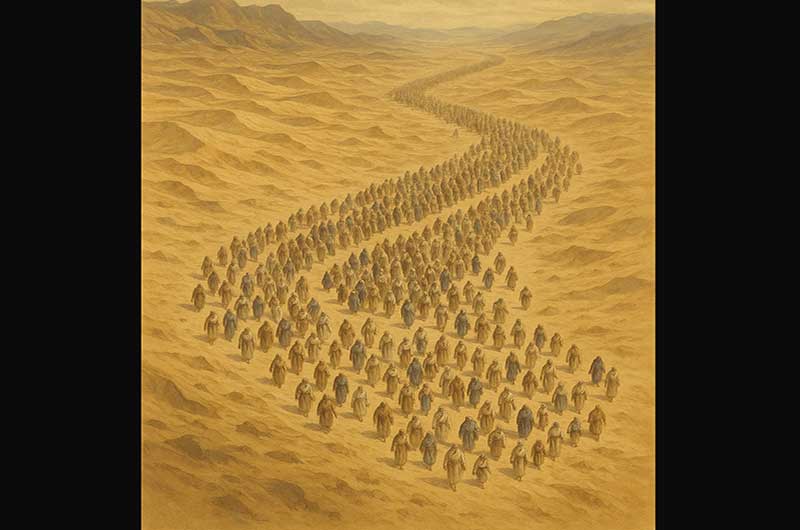
Each time a phenomenon appears in units of forty in the Torah text, a new reality is about to be born.

The first notable number is 42. That’s the number of places in which Bnei Yisrael encamped, from the time they left Egypt until they stood poised at the threshold of Eretz Yisrael. If you count the places, you will need to include the place they left Egypt from (Ra-m’seis) among the 42 places.
The fact that there are 42 journeys is not incidental, it corresponds to the name of HaKadosh Baruch Hu that has 42 letters.
As opposed to the word “peace,” which is related to the word “appeasement,” the Hebrew word “shalom” means whole or complete.

When someone makes shalom between rival parties, what does that mean?

We daven together in synagogues that feel familiar whether we’re in Toronto or Tel Aviv. We mourn together when tragedy strikes and we celebrate together when a lost hostage comes home or an aliyah flight lands in Ben-Gurion Airport.
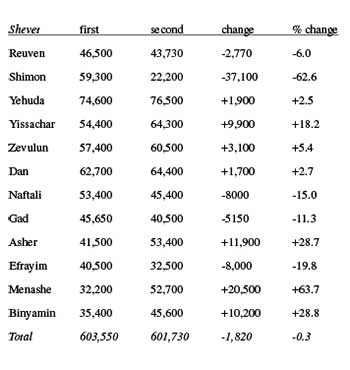
If Parshat Bamidbar showed why the Book of Bamidbar is called the Book of Numbers, then Parshat Pinchas confirms that name.
Working six days and resting on the seventh reminds us that Hashem did the same when He created the world. Shabbat is a weekly reminder of how the world came to be. It was created by Hashem, and is not just here on its own.
Balak precedes the Fast of the Fourth Month (that’s what the navi calls Shiv’a Asar b’Tammuz) almost 80% of the time. That includes, in Chutz LaAretz, the years when Shavuot is Friday-Shabbat and the sedra right before the fast is Chukat-Balak.
Balak was evil – he did not want to elevate himself to the level of Am Yisrael, he wanted to reduce Am Yisrael down to his level, or even lower.
It is impossible to reach an agreement with Amalek, because the only thing that will satisfy them is our obliteration and…G-d's name in the world can never be complete until Amalek is obliterated.

Unlike the two previous sedras of Shelach and Korach, each of which were two-thirds story and a third juxtapositional mitzvot, Chukat’s three mitzvot are part of the same mitzvah topic – namely, para aduma (the red heifer), with the bulk of the sedra being a string of episodes in the Midbar-wandering period.
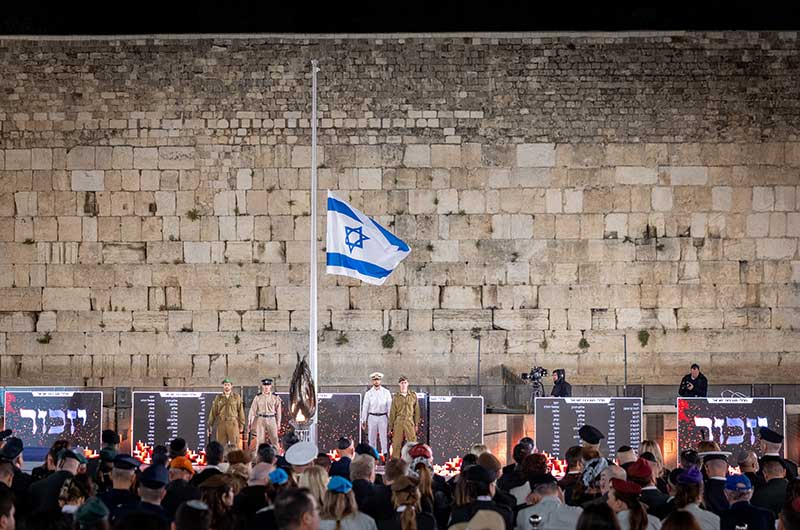
Perhaps the fullest picture of what is truly unfolding emerges only when we consider most, if not all, of these perspectives together.
In place of conventional warfare, terrorist organizations have emerged that have taken terrorist activities to a new level.

We can learn from people with good character. And we can even learn from people with bad character how not to live our lives. We can extract true lessons when we hear how an enemy criticizes us. We can learn from children and those in all strata of society.
Man’s fate is in his own hands – he decides for himself and for the world. Hashem did not create us as finished products, but with the need and responsibility to develop ourselves properly.

The rise in rank for words and letters is due to Korach being above average in words and letters per pasuk. Korach is a short sedra (in a sefer with many long sedras) with fairly long pesukim (in a sefer with lots of short-pasuk sedras).
[Democracy] is contingent on both sides respecting each other and not crossing red lines. When that breaks down, democracy ceases to function and it degenerates into illegitimate anarchy.
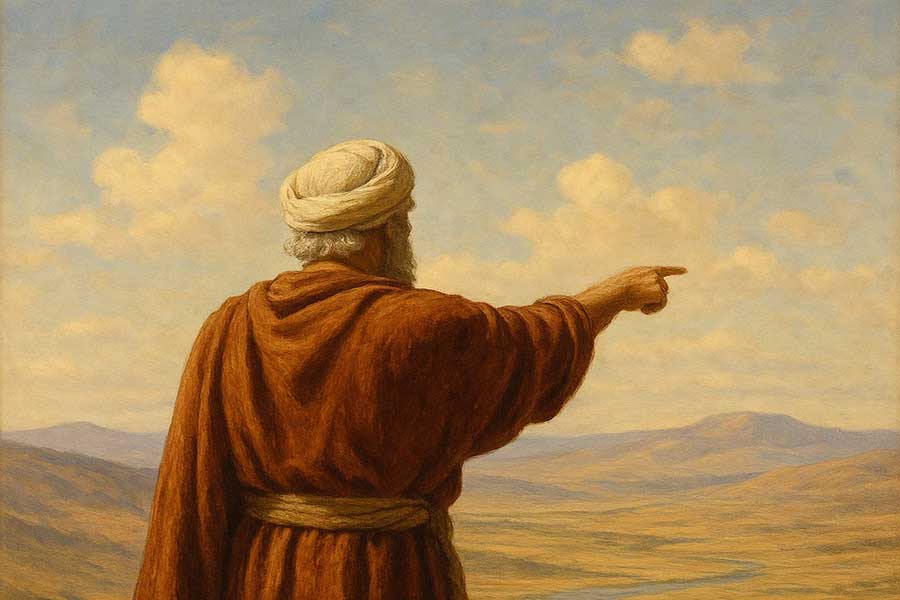
Shelach by the numbers: Total pesukim: 119, ranks 21st (of 54 sedras) Total words: Ranks 27th Mitzvot: 3, ranks 27th

This generation is truly remarkable. They do not flee from hardship. They strive for the elite units, the most dangerous positions, not because of ego or pride, but because they yearn to be protectors.

The last piece addressed our relationships with peers – including spouses, friends, and family. In addition to those relationships, we should also have meaningful relationships with the generations that precede and follow our own.
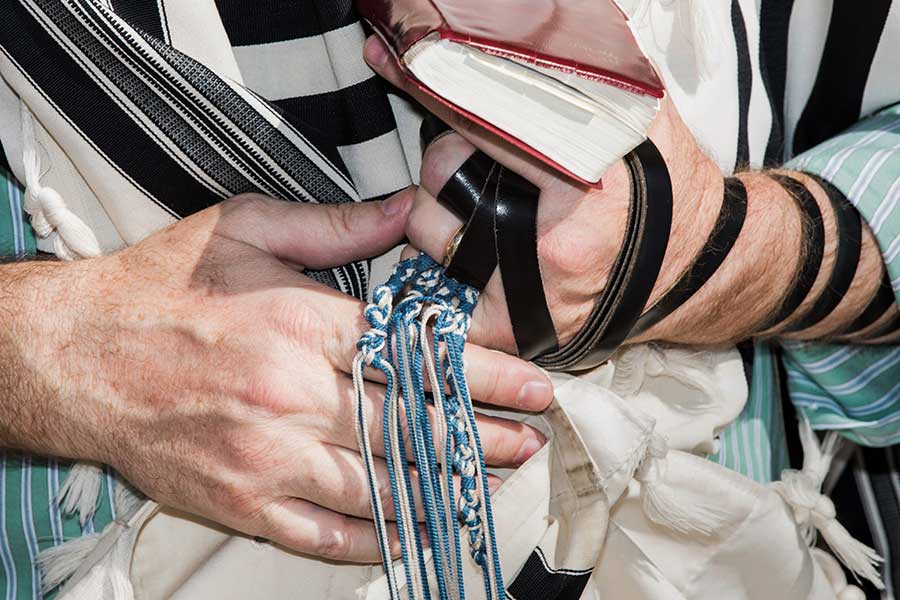
By Rafi Hecht
While a few, such as certain Amoraim and Natronoi Gaon, retained access, it became almost exclusive to non-Jewish royalty. The last known Jewish mention came from the Ramban in the 13th century, who noted that the Melech Goyim – possibly James I of Aragon – still wore it in his day.

Think about this for a moment. They were just about to enter Eretz Yisrael and Eldad and Meidad's prophecy revealed that Moshe would die and Yehoshua would lead Bnei Yisrael into the land flowing with milk and honey. Did this phase Moshe? Not in the least.

We cannot totally control our sustenance – not the food we eat, nor the money we earn.

In our time, back in 1982, the costliest battle of the war in Lebanon claimed the lives of about 30 IDF soldiers on this date. Thus, the 20th of Sivan is indeed a tragic day. You can find Selichot written for the day in some siddurim.

We have been here before. We have seen how quickly the world turns. How Jewish suffering is minimized. How our tears are measured against the political utility of those who hate us.

The sedra has 2,264 words and 8,632 letters. Even though Naso’s pesukim are well below average in length (in number of words or letters), it still ranks #1 in all categories.

Parshat Naso, as you know, is the longest single parsha in the Torah. In most years, Naso follows Shavuot, which is appropriate – once we receive the Torah, the next thing is to dive straight in and begin reading the longest parsha in the Torah. There are 176 pesukim in Parshat Naso. An interesting […]

Just as Hashem spoke the world into being, perhaps He wrote His will into our very cells.

To deserve the name Numbers, this week’s sedra contains numbers galore – starting with a count of the adult male population of each of the 12 tribes, with a total of 603,550 men age 20 and up.
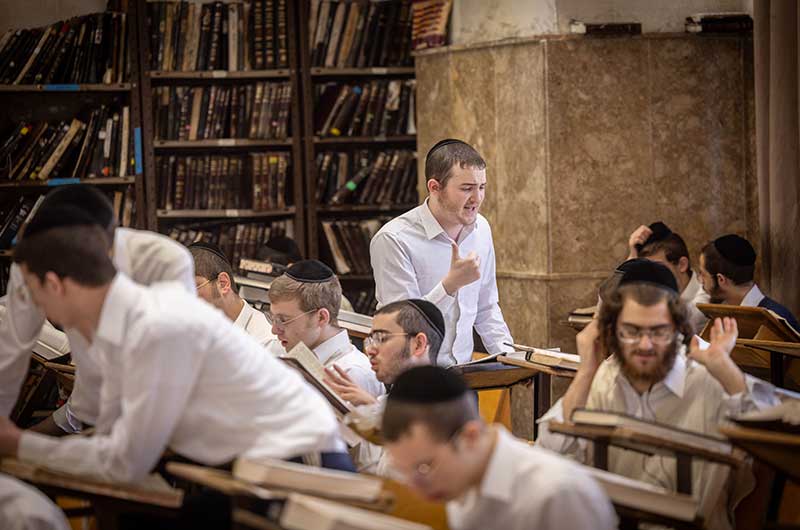
Shouldn’t Shavuot’s commemoration of Matan Torah mandate a spiritual celebration?

The total weight of the shulchan with the lechem hapanim was over 551 pounds.

In a city torn by conflict, we remember: Yerushalayim is meant to unite us – with each other, and with Hashem.
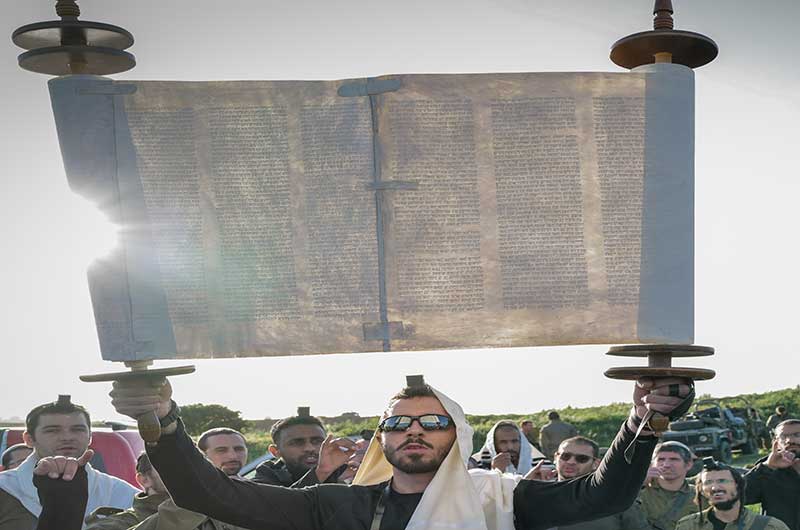
With the third double sedra in four weeks, it’s a good time to take a closer look at the double sedra story.

Detach yourself from the illusions of this world and focus on the true realities of the world and Who determines them…. Today you do not take care of yourselves, I take care of you.

One who truly loves Hashem, loves everything He creates. By loving and showing respect to His creations, we, in essence, show respect to Hashem Himself.

In Pirkei Avot, we find the statement, Schar mitzvah, mitzvah – the reward for doing a mitzvah is the mitzvah itself. Or perhaps it means that the reward for doing a mitzvah is another mitzvah to do.

One might say that the menorah and the ketoret were temidin, while the lechem hapanim was only switched once a week, on Shabbat. However, although it was only switched once a week, the lechem hapanim was on the shulchan every day, a korban in itself, a repeating miracle that occurred each day anew.

When we are tired and hungry, we are anxious to revive and sustain ourselves. This anxiety can cause us to lose sight of our life’s bigger picture and purpose, and eat like animals rather than human beings.
The Ramban says that the word se'ir (goat) is also reminiscent of Eisav, who Yaakov describes as sa'ir (hairy).
While our primary obligation is to ourselves, Hillel reminds us of our obligation to the broader community and the world.

G-d does not immediately punish us or strike us down with a bolt of lightning if we speak lashon hara. He warns us in stages.
Of course, Hashem wants us to fight for ourselves and blesses us with the physical strength and heavenly assistance we need. We see this at the end of Parshat Beshalach in the wake of Amalek’s attack.

According to one opinion, the second keruv on the parochet was not a lion but had the face of an eagle! This eagle was present in both the first and second Batei Mikdash, until they were destroyed.
Often, people use hashkafa to refer to what distinguishes between different hashkafot (Litvish, chassidishe, modern Orthodox, religious Zionist, etc.). People are eager to understand and appreciate their unique approach. That said, most hashkafic issues, including most central ones, are things all Torah Jews agree upon.

Fire is something that belongs in Heaven, that is its place. It is therefore not difficult to understand that fire came down from Heaven onto the mizbe'ach. What is difficult to understand is the mitzvah for us to add our own fire.

The servitude we experienced in Mitzrayim should sensitize us to human suffering. We know what being a foreigner feels like and should thus care for those in similar situations.

The Rambam (Sefer HaMitzvot, negative commandment 99) says that it is not permitted to bring a Korban that has no taste, it has to have an intrinsic taste and flavor that is not just palatable, but an honor to the King to Whom it is sacrificed, it has to be delicious.
The first generations of men made such sinful choices. Eventually, their sins corrupted the entire world. When man lost his way, other creatures followed suit. This man-induced reality caused Hashem to wash away all living beings.

Chazal tell us that every component in the earthly Beit HaMikdash is paralleled by a "twin component" in the Heavenly Beit HaMikdash. Just as there is a Menorah down here, there is a Menorah up there. Just like there is a Shulchan down here, there is a Shulchan up there, etc.

The women had to be there and also the babies, not simply because that was how it was at Matan Torah, but for another reason. Neither the women or the babies were complicit in the sin of the eigel, they didn't have anything to atone for – it was the men.
The righteous women not only saved Moshe; they also inspired him. And they inspired many others as well – including their own husbands.

Of all the vessels in the Mikdash, the kiyor is something of a conundrum. Is it one of the main vessels in the Mikdash, like the Menorah, Shulchan, etc., or not?
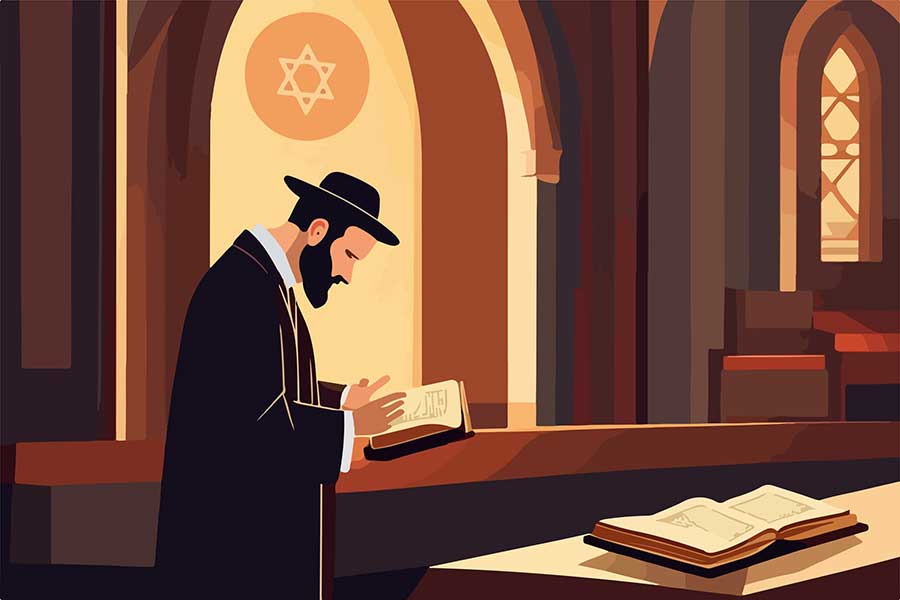
Tefillah is central to our identity. It is an essential reflection of the human soul and part of what characterizes man as distinct from animal. Hashem provides for the whole world; only man appreciates and prays for it.
Israel’s mourning is not just for Kfir, Ariel, and Shiri – it is for every victim of terror, every life that was cut short in the name of hate and destruction.

If Esther failed to act, Hashem would find another way to save the Jews, but she and her family line would be lost.
Assimilation was quite prevalent at the time with many prosperous exiled Jews preferring a liberal, cosmo-political approach as opposed to a conservative, separatist approach. Very few remained true to the old teachings and values, like Mordechai, the former head of the Sanhedrin.

When G-d created the world, He did it with words. Every action of creation was accomplished using words. And G-d said, Let there be light. And G-d said, Let us create man. Creation is realized by G-d using words.
Over the past century, the desert has become an oasis, and the desolation a blessing. Israel has developed innovative agricultural expertise and water conservation technologies and has planted over 250 million trees. Eretz Yisrael is the only country that entered the twenty-first century with more trees than the century before.
If you analyze the overall structure of the Mishkan (and Beit HaMikdash) you see that it is layered according to the level of holiness.

If you think that wealth is limited to your investment portfolio, you are very much mistaken (although money is one form of wealth). There are other forms of wealth, which many tend to regard as mundane, but which are often more valuable than all the money in the world.
We have spent most of our history as oppressed people. For almost two thousand years, we were scattered across the world; in over one hundred countries. Despite all this, we survived and continue to identify with our people and heritage.
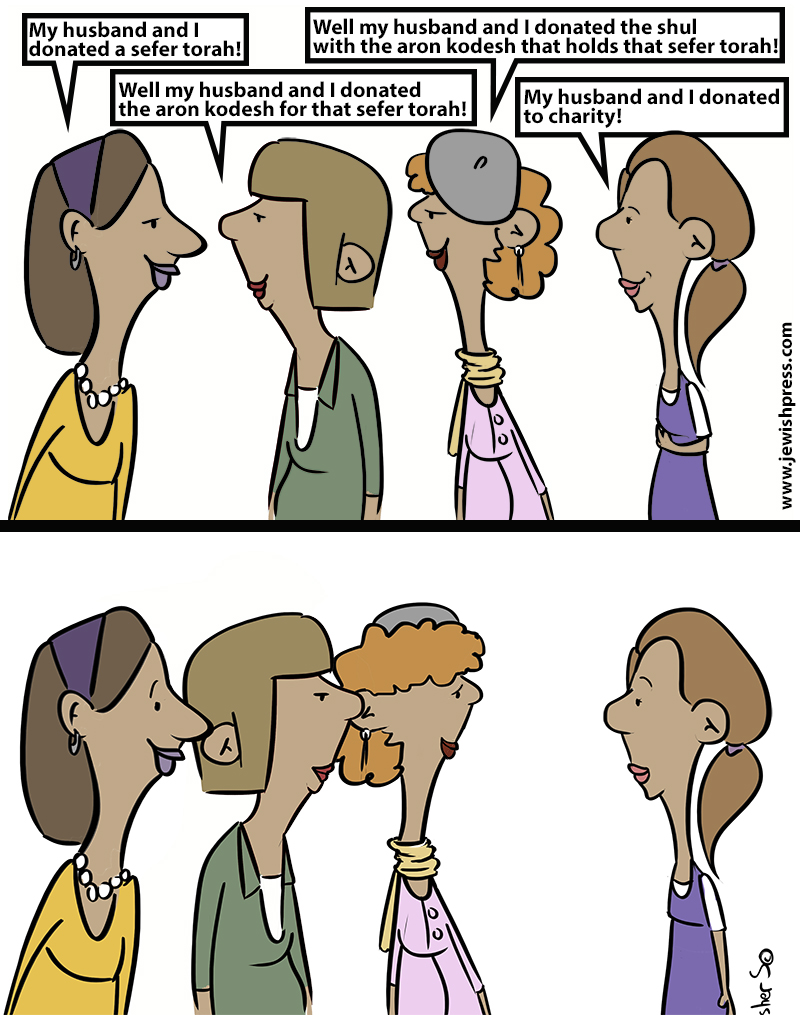
By Rabbi Dr. Mordechai Schiffman
The failure to observe the agricultural laws such as tithes, challah, and the Sabbatical year reflects an unbridled acquisitive drive and a failure to care for the poor and needy. G-d provides the antidote to this disease of greed through the laws of charity.

Midyan therefore embody a double-edged sword. On the one hand, being descendants of Avraham with the attribute of controlled chesed, they are attracted to Am Yisrael, out of love. On the other hand, they are not Am Yisrael and do not have our Torah values – so they potentially pose a threat.

The Jewish people possess unique resilience. While all nations experience decline, Jews are distinguished by their ability to recover and rebuild. Unlike other civilizations that fade after their historical peaks, the Jewish people have consistently risen after setbacks.
It is critical to understand that Israel did not seek out this conflict... The objective has always been clear: a stable, peaceful region where Israelis and Palestinians can live side by side, with dignity and security.
By Rabbi Dr. Mordechai Schiffman
Wisdom is not conceptualized here in any form of abstract internal intellect. Everything revolves around active listening, relevant and organized speech, and intellectual humility.

Even the animals have been singing to G-d every day, since Creation. Every time you hear a bird chirping, a rooster crowing, a donkey braying etc., they are singing praise to G-d. If you want to know what they are singing, refer to Sefer Perek Shira.

The universe is impressive on two levels: the macro and the micro. Its sheer size, even of the relatively small amount we know, is massive. Within just our planet, the number and diversity of creations and creatures are incredible.
By Rabbi Dr. Mordechai Schiffman
While the commentaries analyze each miracle on its own, the overall thrust of the presentation seems to be that G-d showed an added level of care for the continual functioning of the Temple.

According to Meir Panim, the entire episode of Am Yisrael in Egypt and the Exodus, was to atone for this sin. This is why we are commanded to eat matzos when we left Egypt, to atone for the chametz bread baked by Chava.
According to the Midrash (Bereishit Rabbah 93:10), Aba Kohen Bardela says that the shock and shame of the brothers is nothing compared to what each and every one of us will experience on the Day of Judgement, when we go up to Heaven after 120.
The entirety of the Gaza population, under Hamas’s rule, has become part of this deadly philosophy. One cannot ignore the reality that Hamas, as the governing body, has indoctrinated its people with a worldview that is grounded in violence.
The very experience the Avot lacked, their descendants had. The Jewish people in Egypt had the history of Hashem’s interactions with the Avot to build upon. He had fulfilled His promise to give the Avot the land of Israel, and they had successfully inhabited it.

This staff was given by G-d to Adam HaRishon. It was then passed down from generation to generation, to Shet, Chanoch, Metushelach, Noach, Shem, Avraham, Yitzchak, Yaakov and then to Yosef.
In Israel, elections are held on a national level with voters casting ballots for political parties rather than for individual candidates. This system, while effective in ensuring that political parties gain power based on their collective support, undermines individual representation.
The Torah’s claim about the revelation at Har Sinai also reinforces our belief in Hashem (in addition to our faith in the Torah’s Divine origin). The claim that an entire nation (as opposed to a limited group) consisting of millions of people (as opposed to a small group) is hard to fabricate, as people would wonder why they had not heard about it from their own ancestors.
When Yosef entered, Pharaoh tested him – he said hello to him in Dutch, Greek, and Danish and each time Yosef conversed with him fluently in each language and ascended another step until finally he was on the top 70th step together with Pharaoh.

Physical and political sieges are the results of spiritual separation. They are a continuation of the ancient pre-Churban siege and are due to and reflective of Hashem’s separation from us.

There is no question that they lied, but incredibly, the Gemara above says that they were right to lie because there is a special circumstance when one is permitted to lie and that is to make peace, what is known in English as a white lie.

Serving in the IDF can provide personal development opportunities for charedi men. Many who have enlisted report a newfound appreciation for civic duty and a broader understanding of Israeli society.
Because G-d-consciousness is central to the Torah, it commands us to create and interact with objects that remind us of Him.

After Yosef reveals himself to them and they get over their initial shock, the Midrash says – they wanted to kill him! Kill him? Just a few hours earlier they were intent on rescuing Yosef, and willing to pay any price to do so. Now that he is standing in front of them, they want to kill him?

Today, amid the suffering caused by the war, we can sometimes feel callous if we take our minds off those most affected. However, a lesson of Chanukah is that there remains space for gratitude, even in the face of ongoing grief.

Where grains abound, so does baking knowledge and Egypt was also the first baking superpower. Much of our modern baking science is derived from the ancient Egyptians.
Hashem equated His relationship with us to that of a father with his son. Though Hashem created all human beings in His image, He chose us as His children (Avot 3:14). All humans resemble G-d; we, the Jewish people, have a personal relationship with Him.
By Rabbi Dr. Mordechai Schiffman
Rabbi Elazar’s frank realization that from the time we are born we are destined to die frames the entirety of the Mishna. This knowledge is meant to instill our awareness of G-d and His judgment, informing our religious decision-making.
Yaakov knew even before Yosef was sold that he and his family would go down to Egypt. If not, why would he buy a future burial plot for Yosef – the first thing he did before settling in Eretz Yisrael?
By Rabbi Dr. Mordechai Schiffman
Desire, Maimonides notes, will interfere with a person’s mission in life to strive for knowledge and pristine character. This will automatically negatively impact his well-being in this world.

We all know that sibling relationships reenact themselves when in the presence of parents. Even when we are older and married, we slip back to the times that we were children.

Let us assume for a moment that the Avot knew for certain what the repercussions of rejecting Timna would be and that they were faced with a dilemma. If they accept her as a convert, it would conflict with the halacha, because she had an agenda.
It is not only our land and our money that belong to Hashem; everything was created by Him and thus belongs to Him. This is why we are prohibited from benefiting from the world before we recite berachot, which recognize Hashem as Creator (Ber. 35a).
Rabbeinu Yonah (Avot 1:1) adds that siyagim are essential not just because they protect us from sin but also because their enactment expresses our commitment to and concern about avoiding sin.
 August 14, 2026