יום שבת, ט׳ אלול תשפ״וSaturday, August 22, 2026



Follow Us


After Yosef reveals himself to them and they get over their initial shock, the Midrash says – they wanted to kill him! Kill him? Just a few hours earlier they were intent on rescuing Yosef, and willing to pay any price to do so. Now that he is standing in front of them, they want to kill him?

Today, amid the suffering caused by the war, we can sometimes feel callous if we take our minds off those most affected. However, a lesson of Chanukah is that there remains space for gratitude, even in the face of ongoing grief.

Where grains abound, so does baking knowledge and Egypt was also the first baking superpower. Much of our modern baking science is derived from the ancient Egyptians.
Hashem equated His relationship with us to that of a father with his son. Though Hashem created all human beings in His image, He chose us as His children (Avot 3:14). All humans resemble G-d; we, the Jewish people, have a personal relationship with Him.
By Rabbi Dr. Mordechai Schiffman
Rabbi Elazar’s frank realization that from the time we are born we are destined to die frames the entirety of the Mishna. This knowledge is meant to instill our awareness of G-d and His judgment, informing our religious decision-making.
Yaakov knew even before Yosef was sold that he and his family would go down to Egypt. If not, why would he buy a future burial plot for Yosef – the first thing he did before settling in Eretz Yisrael?
By Rabbi Dr. Mordechai Schiffman
Desire, Maimonides notes, will interfere with a person’s mission in life to strive for knowledge and pristine character. This will automatically negatively impact his well-being in this world.

We all know that sibling relationships reenact themselves when in the presence of parents. Even when we are older and married, we slip back to the times that we were children.

Let us assume for a moment that the Avot knew for certain what the repercussions of rejecting Timna would be and that they were faced with a dilemma. If they accept her as a convert, it would conflict with the halacha, because she had an agenda.
It is not only our land and our money that belong to Hashem; everything was created by Him and thus belongs to Him. This is why we are prohibited from benefiting from the world before we recite berachot, which recognize Hashem as Creator (Ber. 35a).
Rabbeinu Yonah (Avot 1:1) adds that siyagim are essential not just because they protect us from sin but also because their enactment expresses our commitment to and concern about avoiding sin.
The more that Jews around the world internalize that their continued support is a fulfillment of this mitzvah, each small act is imbued with meaning.

If you think Lavan was an arch-villain swindler, he had nothing on the serpent. The serpent was the inventor of swindling, using wiles and deception to trick Chava into eating from the Tree of Knowledge.
By Rabbi Dr. Mordechai Schiffman
As we know from educational psychology, it is not just cognitive ability that impacts learning. Emotional and motivational factors are essential as well.
If we see mitzvot as a burden, we are missing the point and cannot forge a meaningful relationship with Hashem.

If the rest of the world is to survive, you cannot bequeath the blessing of wealth to evil people. Only if you place it in the custodianship of Am Yisrael, will the rest of the world prosper – because of Am Yisrael.
By Rabbi Dr. Mordechai Schiffman
If we want to assist a friend in need, we must know how emotions impact not just ourselves, but other people. When someone else is emotionally hijacked, our well-intentioned methods can potentially exacerbate the situation.
Torah learning and mitzvah fulfillment are life's purpose and essential content. Though we need food and water to survive, mitzvah observance and Torah learning are why we are here and what give our lives meaning. A life without Torah learning is not an authentic life.
The field of Efron had a bad reputation; it was said to be haunted. Anyone happening to wander into the field reported encountering a demon wielding a sword. As viable real estate it was worthless.
According to the Rambam, mitzvot contribute not only to our spiritual development but also to our personal growth.
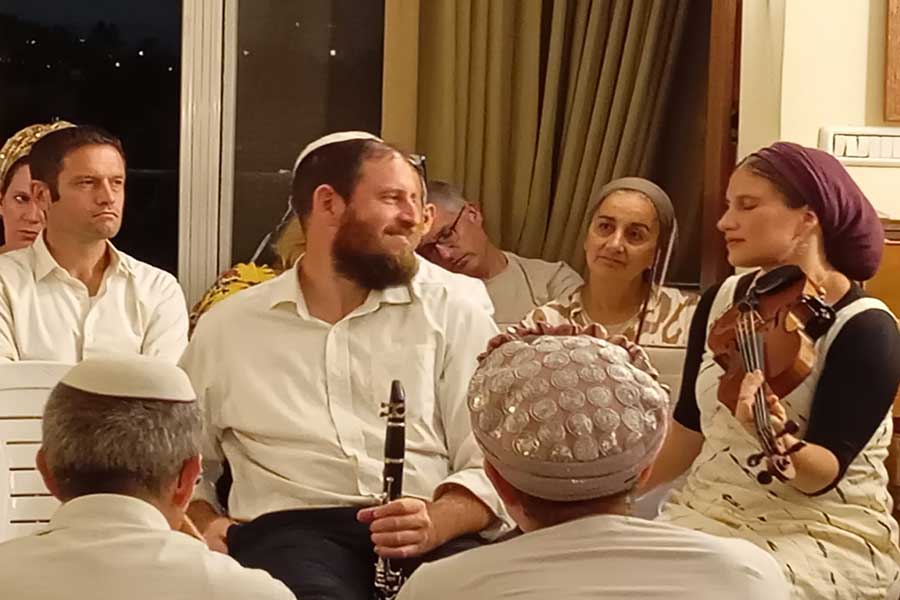
In these difficult times, we, too, turn to Rachel Imeinu and her contemporary namesakes, the two Rachel Goldberg mothers, and ask them all to keep crying on our behalf.
Who said anything about tying Yitzchak up? Hashem certainly didn’t tell Avraham to tie Yitzchak up, He told him to offer Yitzchak as an olah.
Though we fulfill mitzvot for Hashem’s sake, He does not need our fulfillment, and it does not help or contribute to His existence in any way.

By Rabbi Dr. Mordechai Schiffman
When people use visualization to think about their future selves, they are able to make better long-term choices in the present. The results are stronger when the conjured image is related to a specific goal and the image is vivid and realistic.
The former kind of humor that simply makes one laugh, without denigrating anyone or anything is OK and more than that, it is encouraged.
This ability to show respect for the entire life and accomplishments of an individual is essential if we want our children to have respect for our history and our past leaders.
Practically, denial of the mitzvah means that one will never come to fulfill it. Even tzaddikim make mistakes from time to time, but because they recognize their sin as such, they eventually repent and repair their ways.
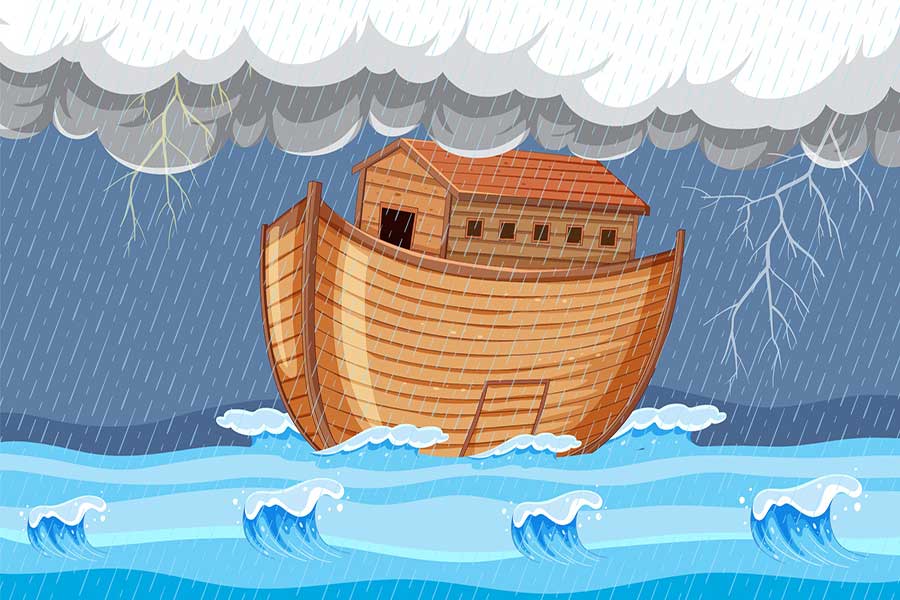
Why did G-d decide to bring a flood? Why not an earthquake, a tornado, a solar flare?

By Rabbi Dr. Mordechai Schiffman
While being cordial to everyone is important, Rabbi Mathia ben Harash closes with advice as to who it is best to associate with over longer periods of time. It is better to be a tail unto lions, and not a head unto foxes.

What emerges from these Acharonim, especially Magen Avraham, is that the regular proximity to one’s spouse, even if physical contact is prohibited, is comforting, and losing that proximity is discomforting – and this discomfort might be sufficient to exempt a person from sukkah!
We all know the verse "Serve Hashem in joy" (Tehillim 100:2), which seems to indicate that there is a positive commandment to serve G-d in joy. However, if you search Sefer HaChinuch, which lists and discusses all 613 mitzvot, for this specific mitzvah, you will not find it.

This successful symbiotic cohesion between the “all,” the “one” and the “One” – the collective, the individual and G-d – was the real secret formula of the Ketoret.
For soldiers and other personnel returning from combat zones, exposure to the scenes of war can also lead to post-traumatic stress symptoms, even if these personnel were never in a life-threatening situation themselves.

We are taught in Judaism to temper each of these areas and to walk the middle road. To create a balance between these two seemingly opposing forces. Too much materialism is no good. Too much spiritualism also misses the mark.
Mitzvot call upon us to recognize our dependency upon Hashem and subjugate our will to His.

By Rabbi Dr. Mordechai Schiffman
If we want to learn effectively, we need to relocate ourselves to a better learning environment. Knowing how to choose the right environment to learn and avoiding distraction is known in educational psychology as self-regulated learning.
Like our forefather Avraham, our national and communal origins are also rooted in our mitzvah observance. We transitioned from a family to a people in Mitzrayim, which we entered as a family of seventy and exited as millions.
By Rabbi Dr. Mordechai Schiffman
Managing a good reputation is an essential value, particularly for a spiritual leader. Maintaining a good name enables the values he or she embodies to be respected and internalized.
The concept of the Twelve Tribes and mutual responsibility is a “collective” concept, in which the individual appears to be secondary, however the opposite is the case.
Our life includes more than just fulfilling mitzvot. We also have goals we aim to achieve.
We are not only able to help ourselves, we are also responsible for doing so. Though many assist us throughout our lives, in the end, we are responsible for ourselves.
By Rabbi Dr. Mordechai Schiffman
By honoring our teachers, we learn through the interpersonal social dynamics how to revere G-d as well.
When Moshe uses this phrase to rebuke Am Yisrael in parshat Ha'azinu, he states this as a fact, not as a conditional statement...Moshe is saying – it is for sure going to happen!
There is no question in my mind that we as a nation have improved in becoming more sensitized to the plight of our Jewish impoverished and in general to providing chesed, kindness, to people in need... But there is something more that is wholly missing!

How can we reconcile the fact that the pasuk says that the mitzvos are both tov and yashar are in Hashem’s eyes while Rashi says that yashar refers to the way man views the mitzvos?

Halakhic man’s goal is to bring G-d down into this world by first understanding the blueprint He created for this world – the Torah, and its practical expression through halacha – and then striving to align this world with that ideal system.

Hashem taught Moshe and us this lesson through the construction of the Mishkan and the giving of the luchot. When Hashem told Moshe to assemble the Mishkan, Moshe protested that it was too heavy for him to lift. Hashem told Moshe to do what he could: Make it look like you are trying to erect it.
By Rabbi Dr. Mordechai Schiffman
Noted marriage therapist Dr. John Gottman also contends that each marriage has perpetual, unsolvable problems. The goal is not to resolve those conflicts but to know how to relate to those conflicts in healthy ways.

Sometimes the soldier and his family are most bothered by the worry that their difficulty adjusting is not normal and reflects severe psychological distress.

Unlike all the other types of Korbanot that are offered to atone for a sin, the Shelamim is offered purely out of love for Hashem.

Rabbi Shmuel bar Nachman said: When Hashem created the world, He desired to have a dirah b'tachtonim, a place for Him to reside below the way He had above.
On the most basic level, challenges inspire reflection and appreciation. The need to work hard to regain something lost or return to a previous position deepens our appreciation for what we had and where we were beforehand.

Eretz Yisrael is blessed with seven species of food. One of the joys of living in Eretz Yisrael is having the privilege of eating these special foods.
By Rabbi Dr. Mordechai Schiffman
If left to our own merit, the rabbis presumed that divine justice would demand punishment.
Because the great sound that did not falter was simultaneously a great sound that would never be repeated, no navi sheker could ever produce evidence that could rival Sinai.

The Sforno says that the essence of the sin of the golden calf was the dancing, without the dancing the sin would not have been so severe.

Suffering may be painful, but when we realize that Hashem is behind it, the month truly becomes Menachem Av.
Many of us have lost it because we don’t see the true value of it. What would having the Beit HaMikdash add to my life that I don’t have already?
By Rabbi Dr. Mordechai Schiffman
Learning how to politely say no to opportunities that take us away from our top priorities and goals is essential for fulfillment and success. Moreover, once we neglect studying Torah, writes Arvei Nachal, we will lose motivation to study, leading to even more idleness.

Older Americans may remember one of the great betrayals felt by American military service members upon their return from fighting in Vietnam, when many were greeted with jeers and accusations. Indeed, the type of homecoming a soldier receives was found to predict PTSD up to 40 years later (Steenkamp et al, 2017).

The Land of Israel is the most desirable of all lands. Hashem watches over the Land constantly and more closely than any other land.
Getting up from a fall can often feel very difficult. Understandably, many think that after falling, they cannot rise again.
The last time the Torah mentions Aharon actually saying anything of his own volition, is when Miriam speaks lashon hara against Moshe. Aharon’s words are a plea for Moshe to pray to G-d to heal their sister.

By Rabbi Dr. Mordechai Schiffman
Generalizing from judges to general ethical advice, the Lubavitcher Rebbe suggests that getting another’s perspective is essential for self-improvement. We tend to have self-serving biases in either positive or negative directions that distort our self-assessment.
An Egyptian whose ancestors committed genocide against our people may be accepted as a convert after three generations, but a Moabite and Amonite – who never gave us bread and water, they may never be accepted?

Even those less academic and studious can master the Torah and even those less disciplined have the capacity to fulfill all of their mitzvot.

Part of what makes each of us so important is that we are all unique... Hashem created us this way because we each have unique missions in this world.

Parashat Balak is a very interesting parasha in that it relates an incident that none of Am Yisrael observed directly.

Building a Mishkan, circumcision, tzedakah, and farming are not our only significant actions. Every good deed we perform, no matter how small, is important and impactful. Each of these deeds contributes to the betterment of the world and should be appreciated and recognized.
It’s time for all our people to stop using these rationalizations because any thinking Jew knows in their heart of hearts that every Jew should be in Israel, and these excuses have no basis. Our grandparents would have given everything that they own to have the opportunity that we have today to make aliyah and live in Israel.
We do not just resemble G-d. We also have a personal relationship with Him.
Angels emanate from and inhabit pure spiritual worlds above. G-d’s presence and their mission are both clear to them.
The Jews assumed that Hashem hated them because they saw themselves as unworthy of His love.

By Rabbi Dr. Mordechai Schiffman
Presumably, even the lowly of spirit according to Maimonides is not purposefully self-denigrating and contains a healthy sense of self-worth (contingent on an awareness of G-d, not one’s own accomplishments).
Some research indicates that heroism during war or, maybe more specifically, the acknowledgement of a soldier’s heroism, might be beneficial to the soldier himself, as it is associated with lower levels of post-traumatic stress symptoms (Stein et al., 2020).
Baruch Hashem, we are witnessing a revolution in this area. Though no soldier can match the Vilna Gaon’s or P’nei Yehoshua’s piety, we have thousands of IDF soldiers who are both deeply committed to halacha and Jewish values and are genuine talmidei chachamim.
By Rabbi Dr. Mordechai Schiffman
Even someone who openly performs wicked deeds should not be disparaged in totality.
Many associate the freedom Rebbe Yehoshua mentions with the exemption Torah scholars enjoy from taxes and other communal responsibilities (Avot 3:5 and Bava Batra 8a). We exempt scholars from these responsibilities so they can be free to focus on their studies.
By Rabbi Dr. Mordechai Schiffman
The reverse is true of sin, continues Rabbi Hirsch. It removes you from the pure and loving presence of your Father in heaven. It will awaken within you the torturing pangs of conscience...
Many interpret the word tza’ar in the literal sense – pain or suffering. Our reward is proportional to the pain we endure.
By Rabbi Dr. Mordechai Schiffman
We tend to define our own levels of wisdom, power, wealth, and honor by likening how much of these commodities we have in relation to others. According to psychologist Leon Festinger, when we make downward social comparisons, we tend to inflate our sense of self by reflecting on how much more we have than others.

Rebbe Yaakov’s teachings aim to help us develop the proper perspective on our world. We should realize that it and its pleasures are not the ultimate goal.

By Rabbi Dr. Mordechai Schiffman
Unlike niddah calculations, which may impact real-life halacha, the doubts and calculations in kinnim are generally removed from practical ramifications.
The Gemara comments that the prophet’s list increases in severity, making captivity the worst, even worse than death or famine.
Being up at night without learning Torah is a misuse of the night. We work during the day and have free time at night; we should use this time to sleep or to learn Torah.
Identification with Hashem’s will affects both the form and scope of our avodat Hashem.
By Rabbi Dr. Mordechai Schiffman
Wisdom is a broad term that can have numerous interpretations, including knowledge of Torah (Chazon Ish), spiritual ability to fulfill the Divine will (Rabbeinu Yonah), or a social intelligence wisdom (Sforno). Regardless of definition, wisdom needs the supplemental value of fear of G-d.
Torah is not the only pillar. Avodah is also important. Study alone is not enough to sustain the world and our existence.

We might ask, why are these two things – giving up hope and aveilus – connected? After all, the likelihood of whether the loved one has died, which may be the more intuitive factor for beginning aveilus, does not change based on the subjective metric of losing hope, so why should this determine the threshold for commencing aveilus?
Judaism is not just about individuals understanding and worshipping G-d. It is about belonging to a people who descend from and still identify with their avot and imahot.
Abarbanel’s unique method of Bible commentary is characterized by posing an extensive set of questions relating to a topical section.
When Moshe saw two Jews (Datan and Aviram) fighting and tried to stop them, they went and informed to Pharaoh that he had killed an Egyptian guard. Moshe then said, Now I realize why Am Yisrael are in exile in Egypt – it is because they speak lashon hara.

The Christian thinker Blaise Pascal was awed by the eternity of our people: “These people are not eminent solely by their antiquity, but are also singular by their duration, which has continued from their origin till now.
It is the notion that the Arabs, and in turn Hamas, cannot understand or accept that He hit me back. They cannot acknowledge the fact that the Israeli army is so powerful and is not subservient to them and that now they must recognize its superiority.
Sometimes, suffering is decreed from above – often as a punishment for sin. Hashem punished the first man and woman for their sins on their first day of existence and has continued to do so ever since.
Am Yisrael were desperately waiting for the Shechina to return after the sin of the Golden Calf. At the conclusion of the eight days of inauguration of the Mishkan, it finally happened. Moshe and Aharon entered and exited the Ohel Moed and blessed the people, and the Glory of G-d was visible to the entire […]
When man ate from the tree of knowledge of good and bad, he realized his full potential to pursue sin. This choice damaged both him and the world.

Why the different types of matzah and their symbolism? Each had to be offered for a different reason.
Though there would always be antisemites, we were confident that the educated and tolerant mainstream had learned the lesson of the Holocaust. We assumed we would never again be hypocritically singled out. We were wrong.
Forget about five-year-old kids; most adults are not overly attracted to Sefer Vayikra, with all its gore.
 August 21, 2026