יום שישי, י״ד תשרי תשפ״זFriday, September 25, 2026



Follow Us


Though Judaism attributes great value to Torah learning and accumulating wisdom (Talmud Torah k’neged kulam), actions are more important.

The sefer Ohel Yehoshua explains that in fact Hashem had two distinct plans for building the Mishkan. The original plan preceded the sin of the Golden Calf, after which a Plan B went into effect as a result of the Am Yisrael’s sin.
In addition to fulfilling mitzvot, we should want what Hashem wants, value what He values, and even feel what He feels.

By Rabbi Dr. Mordechai Schiffman
While the commentaries glean nuggets of wisdom from analyzing the various nuances in the metaphors and the word choice, the essential theme is that although we are free to choose how we act and what we consume, we must remember that there are consequences to our actions.

So, obviously, Hashem does not have a face and all the above descriptions are simply metaphors to simplify concepts to enable our human intellect to understand, even though the true reality is beyond our comprehension.
Mitzvot performed in Eretz Yisrael have far greater significance and impact. Living in Israel, as I do, one can feel the vibrancy of the Torah and how it relates to our daily lives.
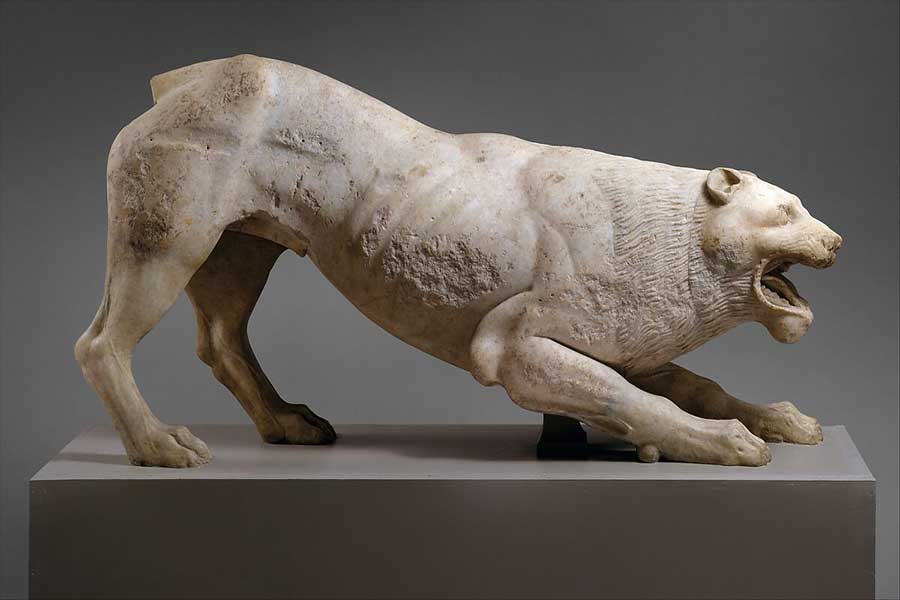
Somehow, what piques my interest about this more than anything else is how the King of the Jungle, symbolizing ferocity more than any other animal – or at least as much – could have possibly been relied on for protection, let alone could have reached an understanding about guardianship and payment for it.
Kavanah is also the great equalizer. Though we differ in terms of what we are able to invest and accomplish, we are all equally able to have the right kavanah.
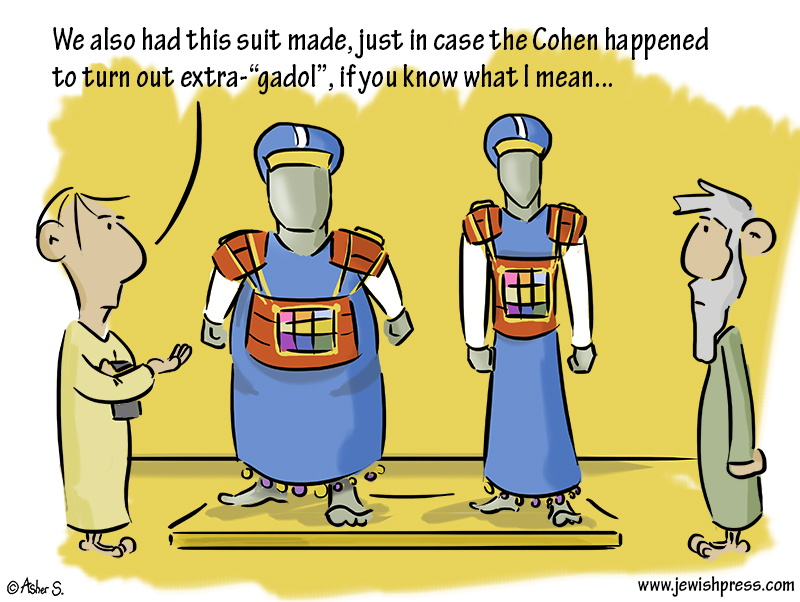
There are different opinions on how the Kohen Gadol would receive the answer to the question. According to one opinion, the letters on the stones were illuminated forming the words of the answer. According to another, the letters stood out and became extruded.
Why was it necessary to use specific wood from specific cedar trees? The other raw materials used in building the Mishkan were simply from the spoils that Am Yisrael took with them from Egypt – gold, silver, wool, linen, etc.
Like the prohibition against idolatry, chillul Hashem is one of the few aveirot we are commanded to sacrifice our lives to avoid.
Parents are often looking for guidance as to what defines a good Day School. Before registering a child, what should a parent look for in a school? What will determine the effectiveness of a school for their child?
The idea that our recognition and service to Hashem help us grow is emphasized by Moshe’s description of Yirat Shamayim (fear of heaven).
According to both schools of thought, the Ramban and the Rambam, illness and disease are the result of an imbalance caused by eating and drinking the incorrect food and drink, which upsets the biochemical balance in the body and lowers the immune system.
Our free choice includes not just matters of personal growth but also all decisions about how to live our lives.

Matan Torah on Har Sinai was the second time the Torah was given. It was the first time for Am Yisrael, but preceding this, Hashem gave the Torah to Adam HaRishon in Gan Eden – the Tree of Life, Eitz HaChayim.
By Rabbi Dr. Mordechai Schiffman
According to Rabbi Yom Tov Lipman Heller, Beloved is man because he was created in the image of G-d refers not just to the Jewish people, but to all humanity.
Though our work does not determine how much we earn and we should avoid overworking, we are meant to work hard.

What happened between the high point at the Red Sea and the low point in Refidim?

Tree planting in the modern state of Israel also embodies and expresses our appreciation of our return to Eretz Yisrael.
Unlike the Egyptians, who couldn’t see and couldn’t move, for Am Yisrael there was light in their places of dwelling (Shemot 10:23).

Happiness is a natural result of living life the way it should be – of being the people we ought to be, following the road map provided by Torah and halacha. It cannot be a destination but is instead a result of the journey of an inspired life process.
We should try, to the best of our human ability, to grasp the essence of Hashem and emulate it.
Prayer is part of how we express this faith. Turning to Hashem in difficult times expresses our belief that Hashem is the One behind our suffering as well as the solution to it.
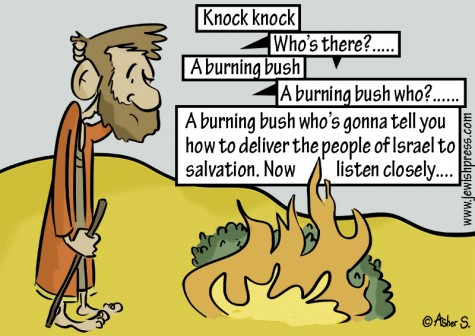
According to some opinions (Zohar, Va'eira 25b), Moshe was cured of his speech impediment, along with the rest of Am Yisrael who were cured of their ailments, before Matan Torah.
By Rabbi Dr. Mordechai Schiffman
Silence has a role in the learning process that leads to wisdom, and is also a signal that one has obtained wisdom.
Experiences that seem negative can do more than just protect. They often enrich.
Our Sages tell us that when Hashem creates something or someone, at the same time He creates their opposite.
During difficult times, we should remind ourselves that everything, including suffering, emanates from Hashem. Though Hashem is the ultimate good and wants the best for us, we know that grief also comes from Him: A person does not stub his toe below unless it was declared above (Chullin 7b).
Our sages tell us that there is no calamity that befalls the Jewish people that does not carry within it the sin of the Golden Calf. So devastating was this incident that it was never forgotten in all the succeeding persecutions of the Jewish people.

What was the difference between Leah’s crying and Rachel’s crying? Leah was weeping for her own misfortune... Did Rachel cry over her own misfortune?
Yosef was a living Shulchan Lechem HaPanim; through him Hashem channeled sustenance and prosperity to the entire world.
Hashem’s first words to the first Jew direct him to move to Israel. Though Avraham’s religious quest and commitment began decades earlier, the Torah skips those stories and begins with his move to Israel. Judaism begins with the arrival of the first Jew in Israel.
Before one prays, one must prepare for the experience. There must be a meditative time in which the individual focuses on the significance of the act that he is about to perform.
We often choose to avoid confronting those who offend us. We are too hurt to speak it out, and doing so is uncomfortable. Unaddressed, though, our feelings fester and grow, and the hatred, distance, and demonization intensify.
From the outset, there was seething sibling rivalry that eventually erupted explosively. The sons of Leah regarded the sons of the maidservants Zilpah and Bilhah with disdain, and they hated Yosef.
You may be a wonderful, accomplished, and successful individual, but as long as you are not on speaking terms with your own sibling, you will not be whole. As long as a family is torn by mistrust and conflict, none of its members can be whole.
Tens of thousands of us studied Mishnayot in memory of those killed on Simchat Torah. Acheinu allowed us to do so together with Jews around the country and the world.
Nebuchadnezzar, the warrior king, has been likened to an ox, whose intent was to cause damage and mayhem, not merely to satisfy personal desires, akin to Hamas.
We are meant to realize that our success hinges on working together – not just to defend ourselves but also to realize our joint mission in Hashem’s world.
You may have students who bother you, who have messy hair or unkempt clothes. Maybe a kid who has a disorganized backpack. You might have a student who has an annoying habit. That student is someone’s entire life.
The October 7th massacre and the subsequent attacks on and demonization of Jews worldwide have reminded us that we are one big family who are all in the same boat. The external enemy and threats have galvanized and unified us.

In this epic reunion, you have two multi-billionaires, each with a different life philosophy. Eisav’s is rav, a lot; Yaakov’s is kol, everything. How do they differ?
If you look beneath the surface of the story of the three angels visiting Avraham and the feast he served them, you will see it is a replica of a korban todah.
Rarely in the history of our people have we seen such unity and caring for one another. No division here! It doesn’t matter what your level of observance is. We are all one now. Religious or not, we embrace each other. We support each other.
By Rabbi Dr. Mordechai Schiffman
No matter which approach we take, the underlying message of Rabbi Dosa’s teaching is that there are certain habits that can derail us from our larger goals and values.
Why is Lot so important that Avraham took him along and risked his life to save him?
By Rabbi Dr. Mordechai Schiffman
Wisdom must be manifested through deed. It cannot be relegated to a purely intellectual exercise but must be supplemented with and evident through moral and spiritual action.

How could it be that the animals did not attack Noach and his family, or kill each other? They comprised all different rungs in the food chain.
It is not that I don’t want to or that I don’t force myself to make time to. Sleep just won’t come. I lie in bed and even shut my eyes, but what’s supposed to happen next just doesn’t.
Just as the essence of Shavuot is completely different from the essence of Pesach, so too the essence of Shemini Atzeret is completely different from the essence of Sukkot.
Though it is always easy to focus on what we are missing in our lives, we must use Chag HaSukkot to focus upon and celebrate Hashem’s great blessings that we often take for granted.
By Rabbi Dr. Mordechai Schiffman
Another factor that negatively impacts memory is not properly understanding the material when originally learned. When the information is not encoded properly, later retrieval is unlikely.
Most of us are familiar with the process and stages of teshuva. But how do we purify ourselves?
By Rabbi Dr. Mordechai Schiffman
Whether nature is vanity or just lower on the values hierarchy than Torah study, both of these approaches seem to agree that nature disrupts the learning process, and presumably, if possible, learning should be done inside, with minimal distractions from the natural world.
Hashem wants us to visit Him every day, to have a loving daily connection with Him and to ask Him for what we need. A relationship that even when we have what we need, we continue to visit the palace.
By Rabbi Dr. Mordechai Schiffman
We can express gratitude for a benefit bestowed by a friend, but that gratitude can also have a spiritual component if we also thank G-d for helping to orchestrate the place of this friend or the significance of the gift in our lives.
Though the Yamim Noraim should also be a time when we draw close to and strengthen our love of Hashem, they begin with recognizing that He is judging us and determining our fate for the upcoming year.
I just want to ask a simple question. Who said anything about tying Yitzchak up? Hashem certainly didn’t tell Avraham to tie Yitzchak up; He told him to offer Yitzchak as an olah.
Difficult times should inspire reflection and improvement. This is why the word we use to describe life lessons – mussar – shares a root with the word yisurin (suffering). Yisurin should inspire us to learn and internalize mussar lessons.
By Rabbi Dr. Mordechai Schiffman
Commentaries are bothered by two main questions. First, what is the symbolism of Torah being referred to as a yoke? Second, what exactly is the mechanism behind what seems to be guaranteed removal of these other responsibilities?
Hashem performs a miracle of accounting because if He did not, none of us would survive the coming year.
By Rabbi Dr. Mordechai Schiffman
The importance of not squandering opportunities to learn is not just an abdication of personal responsibility or failure of personal growth but has larger repercussions for the national survival of the Jewish people, and that is why Rabbi Chanina uses such strong admonishment.
Looking back at Jewish history, we see that periods of suffering were always followed by periods of success and growth.
Actually, happiness is not necessarily the correct English translation for the word simcha.
We must remind ourselves that everything, including suffering, emanates from Hashem. Though Hashem is the source of ultimate good and wants the best for us, we know that grief also comes from Him: a person does not stub his toe below unless it was declared from above (Chullin 7b).
When a person leaves pe'ah in the corner of his field, he does so knowingly and even willingly, wanting to give to the poor as Hashem commanded. But it is impossible that this mitzvah can be performed 100 percent altruistically.
By Rabbi Dr. Mordechai Schiffman
Learning alone is valuable, but not ideal. Words of Torah are enhanced through social interaction and social interactions are enhanced through words of Torah.
One would think that the Shulchan, a symbol of royalty and material wealth, is there to serve the Menorah, the light of the Torah. However, this is not what the Torah tells us.
By Rabbi Dr. Mordechai Schiffman
While we can be hopeful and optimistic that people will express their naturally benevolent and compassionate sides, we also need powerful external systems in place to curb the also natural human tendency towards maleficence and cruelty.
We are meant to work hard to support ourselves, and the amount we earn seems proportional to the effort we invest. This leads many to assume that their efforts determine their success.
This is the way Hashem wants us to serve Him, not just according to the letter of the law, but beyond that, out of love, and not only because we are obligated and commanded to.
By Rabbi Dr. Mordechai Schiffman
These negative visualizations can be particularly important when the long-term consequences of our actions are not immediately resonant.
Though we occasionally face difficult situations, we should be optimistic about our future.
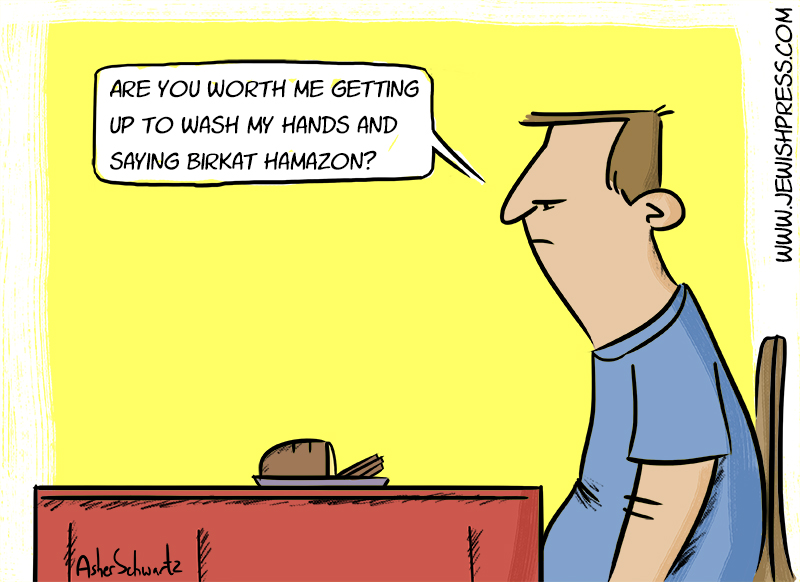
The first to fulfill the mitzvah of Birkat HaMazon, according to our Sages, was Avraham Avinu.
By Rabbi Dr. Mordechai Schiffman
The second chapter of Pirkei Avot ends with two related teachings from Rabbi Tarfon, both centering around procrastination and productivity.
Because Hashem directs the world, things that happen to and around us are more than just coincidental.
Though the Torah commands many mitzvot that guide our relationship with Hashem, the mitzvot that govern interpersonal relationships are the most important. Disregarding them causes churban and subsequent mourning.
By Rabbi Dr. Mordechai Schiffman
Following his approach that each element of this mishna relates to advice for Torah study, Rabbi Lipschitz explains that knowing before whom you toil will also help with effective learning.
By Rabbi Dr. Mordechai Schiffman
When someone considers himself as a wicked person, there is a strong likelihood that will lead to him sinning even more.
The very fact that the Haggadah that we recite on Pesach speaks to four distinctive personalities is proof that our Sages realized that people are different and they articulate their belief in G-d in many ways.
The Chafetz Chaim explained that it took him a long time to complete his Shemoneh Esrei because of the time he spent reciting the Modim beracha. (He was shocked that others could say the beracha so quickly.)
Although men are also obligated to do so, this mitzvah is primarily incumbent on women and they are given preference in performing it. Sarah was the first woman in history to perform this mitzvah.
By Rabbi Dr. Mordechai Schiffman
The better self-awareness we have, the better our relationship with others will be, and the stronger connection we will have to G-d.
Each day we set and realize many goals. As these goals seem naturally within our grasp, we assume that we accomplish them on our own. We set our mind to something we are capable of accomplishing and we succeed in doing so.
The Korban Sotah in Marah removed all doubts from the minds of Bnei Yisrael regarding the integrity of their families.
By Rabbi Dr. Mordechai Schiffman
From ancient times, the idea that animals and people can affect their surroundings with their eyes was considered perfectly normal, and even to have a scientific basis.
As opposed to Yosef who saw Hashem’s Hand in determining the results of our decisions, Dovid saw Hashem as behind the decision itself!
With this in mind, let us contrast two iconic figures in the Torah, both with donkey-related incidents.
By Rabbi Dr. Mordechai Schiffman
There is a philosophical debate as to whether it is possible to completely excise anger from our emotional repertoire. This debate plays out within the Jewish ethical literature as well, with Rambam, at least in one place, indicating that one should never feel anger.
Hashem’s control over what happens in the world means that our lives and fate (even in this world) are fully in His hands.
Am Yisrael accused Moshe of murdering Korach and his followers by instructing them to offer a Ketoret offering outside the Mishkan, knowing full well what the consequences of such an action would be.
By Rabbi Dr. Mordechai Schiffman
What does it mean to have a good heart? It is common in the modern era to associate the heart with emotions, and contrast that with the mind, which represents thought.
The Chasam Sofer explains that a Jew who learns Torah is likened to a Sefer Torah...
As part of the world Hashem constantly recreates, our existence also hinges on Hashem’s continuous constant renewal.
As a result of eating from this tree of disparate parts, Adam and Chava themselves became split into disparate parts, the physical and the spiritual, and were no longer the integral unit that Hashem had intended.
By Rabbi Dr. Mordechai Schiffman
Without denying the importance of tradition in determining ethical obligations and norms, Pirkei Avot in chapter 2 seems to offer a complimentary method.
When we donate our money, time or effort to Hashem, we naturally assume that we are giving Him something that is our own. In truth, we are merely giving Him what is (already) His.
I often sit at the opening of the Old City of Jerusalem witnessing the prophecies of the prophet Zecharya and others come to fruition, and I wonder why others don’t see what I see.
We are not created as a finished product, but, rather, with the need and responsibility to develop ourselves properly.
 September 25, 2026