יום שבת, ט״ו תשרי תשפ״זSaturday, September 26, 2026



Follow Us


Parshiyot come in two flavors: p’tuchot and s’tumot, open and closed. A parsha p’tucha begins on its own line, with a blank space on the line above from the end of the previous parsha to the end of the line. A parsha s’tuma begins after a blank space on the same line on which the previous parsha ended.
Time does not move along a continuous, straight line; it circles around in a repeating yearly cycle. As the Ramchal explains, Hashem created thematic cycles of time, and each point in the year contains unique spiritual energy.
The ability to collaborate, connect, and negotiate between the built-in masculine and feminine traits and perspectives is what allows creation to occur, literally and figuratively.

If a father embarrasses his son in shul because the latter was talking during davening, he may get his son to stop talking in the moment, but in the long term he has not taught him anything about kavod ha’tefillah

From a philosophical perspective, many Jewish thinkers have focused on the unique role of speech as a defining element of humanity. Speech, at least in its fully realized form, distinguishes Man from the animal; for humans, speech expresses thought, making this distinction especially profound.

It is not fear of having to account for one’s misdeeds after one dies that should be the motivating factor. It is the love of life that should inspire him, the love that is generated by keeping the daily mitzvos and learning His Torah.

The Siren’s Wail “If a Festival Falls on the Eve of the Sabbath…” (Chullin 26)

Laban wasn’t the only person in history whose given name means “white.” In fact, names meaning “white” or “bright” have a storied history, particularly in European nobility.

How do we present our leaders? Do we portray them as flawless beings, untouched by error, existing on a plane so elevated that they bear little resemblance to the people we are raising? Or do we present them as the Torah itself does: as extraordinary individuals who nevertheless grappled with very human struggles?

An inheritance is yours by default. It comes whether you asked for it or not. A heritage becomes valuable only when you claim it.

You are in the middle of work, replied Rabbi Spitz. I assume that Rabbi Dayan also taught you the importance of having a good work ethic and not wasting time as an employee.

The Torah begins with the most universal and global message: G-d created the world. But it ends with the most Jewish, national, and personal story: that same G-d, who gave King Cyrus dominion over all the kingdoms of the world, wants one House in Jerusalem, and wants us, with G-d’s help, to go up there.

Ruth’s story is not about conversion as a moment. It is about covenant as a life. Her geirus is not described as a ceremony. It is described as a relationship.

Of course, we know without a doubt that Hashem is One and His Name is One – and thus there is no question as to who spoke to Israel from out of the flame (ibid. 4:12) – but there is a question as to the mechanism by which the message was communicated and how it was experienced by all of us at Har Sinai.
Eliezer got up to speak and his shiur was so sublime and uplifting that angels descended from Heaven to listen to the incredible insights that Eliezer expounded.
Question: was Ruth converted before a beth din? Did she formally convert before she married Mahlon, or did she convert only before her marriage to Boaz? In general, what is the earliest reference to a formal conversion process? Lazar Rozenblat Brooklyn, N.Y.

The obvious question is that our commitment seems to be in the wrong order. Wouldn’t it be more sensible to say Nishmah v’Na’aseh, first saying “Let me hear,” after which I could then responsibly say, “I’ll be able to do it.”

What benefit was there then to all the miracles of Matan Torah, if everything returned shortly to the way it had been?
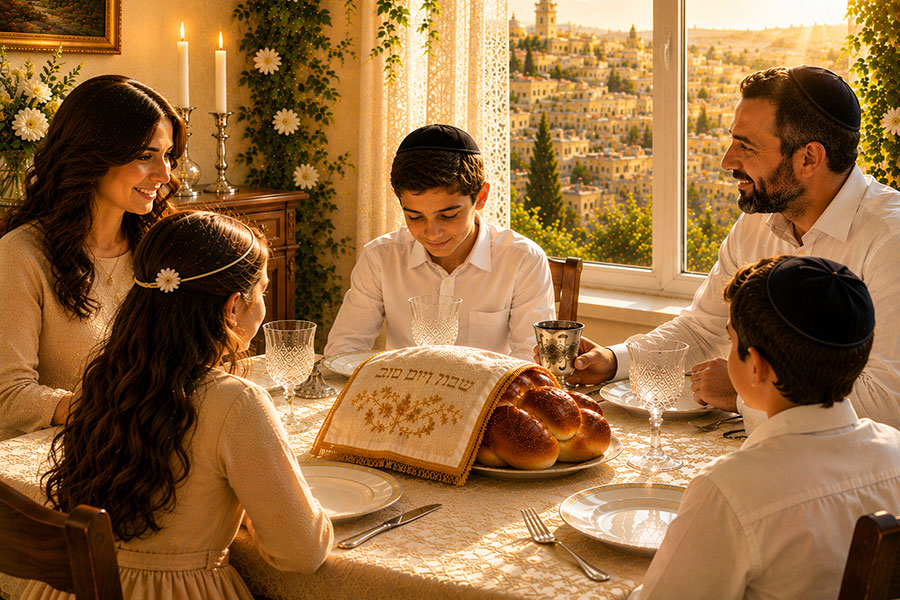
It is surprising, then, that this practice is so entrenched, especially since it has no basis in Chazal or the Rishonim. … In the late 16th century, however, two Eastern European authorities record a tradition not to recite Kiddush on the first night of Shavuot until nightfall.

Slaughtering with shechita represents an orderly process; while it is still death, it is via the approved process and represents the appropriate connection to G-d and transition from this world to the next through death.

Once we understand the concept of time, and the distinct opportunity and importance of tapping into the unique theme of each point of time in the systematic process of ascension, we must delve into the specific theme that Shavuos presents.

In the daily grind, we often forget about the thunder and lightning and the excitement of Torah. It becomes just another part of our day, and we forget that its message is eternal and all-encompassing.
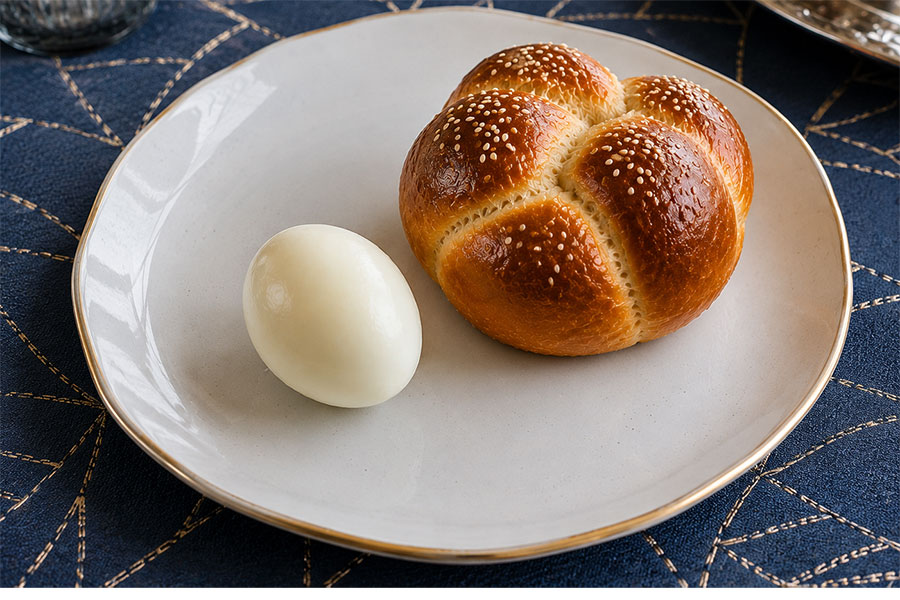
The point is that an Eiruv (any of the three kinds) cannot and does not permit something that is forbidden by Torah Law. It redefines a situation so that which was technically forbidden turns out not to be forbidden.

By Adina Broder
People may have varied religious practices, ideologies, or political views. They may come from different backgrounds, affiliations and persuasions. But this doesn’t mean that there needs to be strife between us.

If someone sold defective merchandise and was aware that the customer intended to take it elsewhere, the seller is liable for the return expenses.
Meat from Heaven? “Only Young Ones Are Acceptable…” (Chullin 22a-b)
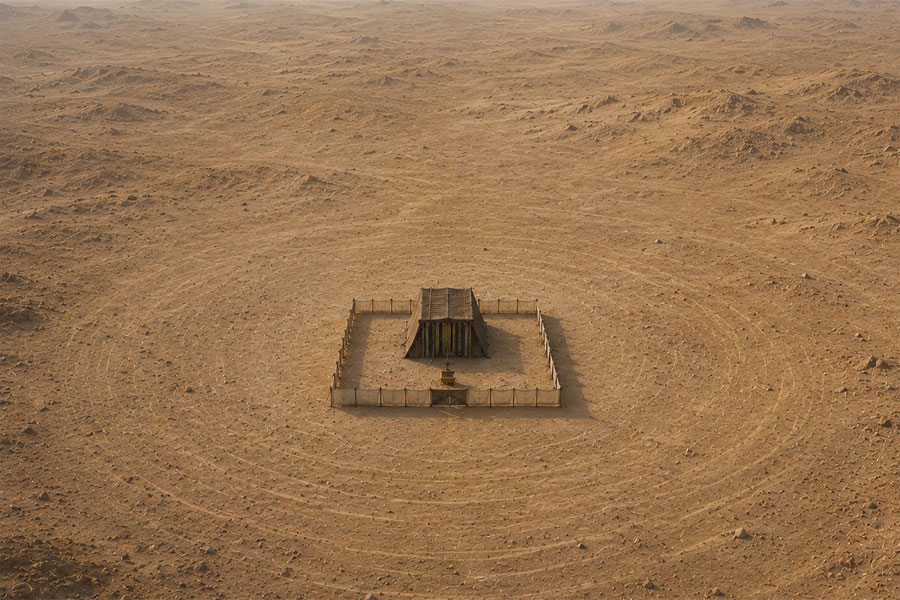
The midbar is often imagined as a place of danger and emptiness. The Torah presents it differently. The wilderness is not chaos. It is unwritten space.

It is this choice that everyone has between faith and cynicism, between optimism and pessimism that the opening words “in the wilderness of Sinai in the Tent of Meeting” address.
If we could teach ourselves to stop feeling as if we’re waiting for our “real life” to begin, but focus, instead, on what is happening here and now, not only will we, with G-d’s help, eventually reach our destination, but we will also benefit from all the gifts that await us along the way.
Question: Many people are accustomed to staying awake on Shavuot night and learn Torah. Is this recommended even at the expense of proper kavana during tefillah the next morning? Would it not be far better to get a good night’s rest and then learn with more fervor the next day? No name please Via e-mail
If the census was a labor of love, the term Beka Lagulgolet seems incongruous. A Beka also means a crack, a rift. How does HaKadosh Baruch Hu count Am Yisrael? By counting how many "cracks in the skull" they had?! It just doesn't seem fitting.

Religious perfection requires transcendence, an encounter with the Ribbono Shel Olam, a presence that does not conform to human categories.
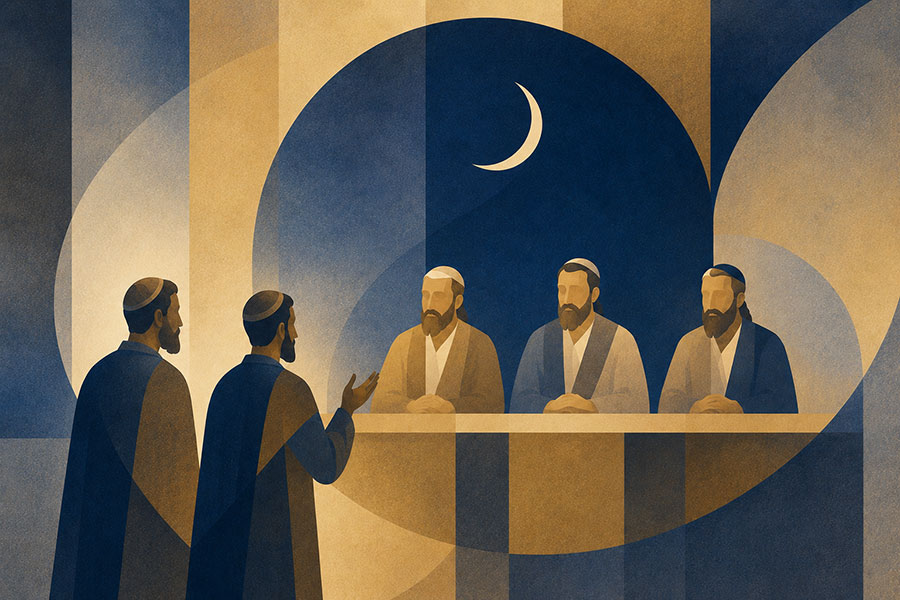
Although as a festival, Rosh Chodesh is not dressed in much external pomp and circumstance, it determines the timing of all the other festivals in our calendar and thus enables our annual spiritual and ritual rhythm.

The mitzvot are acts that we perform to refine ourselves and achieve our own potential, while the true object of our mental striving is to understand the acts that He performs and in what ways His greatness is made manifest.

Reb Eliezer tells us that on Pesach and Sukkos it is perfectly all right for one to devote the whole of the Yom Tov to learning Torah. One is excused from the celebration of the chag if he immerses himself in Torah study.

When the Satan intercedes, he is only successful when there is conflict, when everyone is confused and doesn’t know his place.
To put our calendar into perspective: We, the People of Israel, left Egypt on Pesach. We miraculously crossed the sea on the last day of Pesach. We arrived at Har Sinai on Rosh Chodesh Sivan. Before we even got there, we were blessed with miraculous a water supply, food from Heaven, and a military victory (not complete) against Amalek.
Hashem not only willed the world into existence at one point in the past, but continues to do so every instant.

Just because it is a clever derush, does it really make sense that one should merit something as grand as being revived from the dead for eating this final meal?
Is living in a confined area always a bad thing? Is living a metaphorically confined existence always restricting?
At a time of rising antisemitism and deep polarisation, Rabbi Goldstein, who serves as the Chief Rabbi of South Africa, believes the proclamation offers a rare opportunity for national unity: "Shabbat is above politics. Whatever our differences, whatever our background, whatever our level of observance, Shabbat belongs to all of us."
Rava permits the borrower to offer money to a third party to secure him a loan. Although the borrower pays, the lender does not benefit from him; the third party just receives his broker’s fee (Y.D. 160:16).
Aiding or Abetting? “However,…Due to Suspicion, We Check…” (Chulin 12a, Rashi)
If our chosenness is not rooted in our righteousness, then what is expected of us? Are we merely beneficiaries of a legacy, or are we meant to rise to meet it?

It is not passivity; it is a form of faith. It is the willingness to maintain the shape of a relationship even when the relationship itself is paused. It is the refusal to force a timeline that is not ours to set.

On Yom Kippur we ask G-d to waive the rights He has over us to exact retribution for our sins. Have we done for others what we are asking Him to do for us on this day?
The way we respond to every wounded soldier, every fallen life, every hostage – that is the real story. These murders were a desecration of human life, but the national response was not apathy. It was sensitivity.
Question:Is there a specific reason that the last chapter of Pirkei Avot is read on the Sabbath before Shavuot, or is this just a quirk of the calendar? Zvi Kirschner Via Email
We mistakenly think that Avraham's final test was sacrificing only Yitzchak, but it was not like that at all.
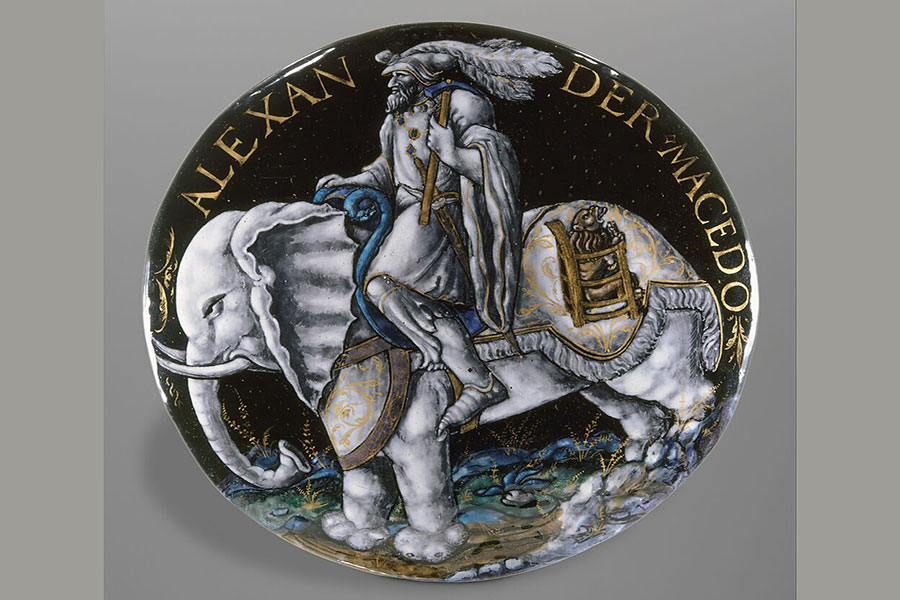
The whole topic of premonitions took on added twists and turns with the most recent Trump near assassination.

Creativity is natural to the human condition. When we create, we reflect our Creator. That impulse is not marginal; it rises from a deep place within the human spirit.
Even when we are in the darkest places and suffer terrible abuses that no other nation has ever endured, our concern first and foremost is for His Name and His Holy Shechinah, and that He should emerge from the darkness of exile that we precipitated.
One of the great lessons of Shavuos is for us to reaffirm our commitment to being a kind, loving people.

When the Jewish people received the Torah, they had risen to a very elevated level of emunah in Hashem. Hashem revealed Himself and opened the Seven Heavens, and everyone saw that “Hashem is G-d and there is no one but Him.”
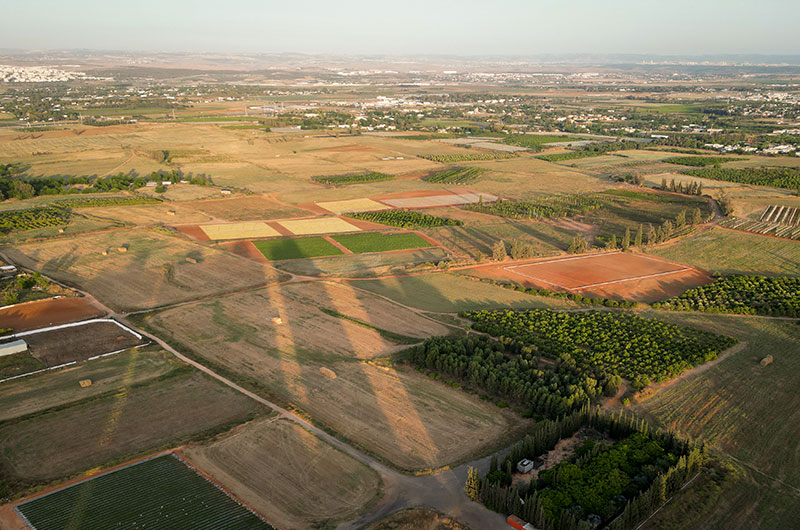
What does the Land of Israel have to do with Har Sinai? Indeed, it has everything to do with it. Many Jews today know that connection well. And sadly, many don’t.
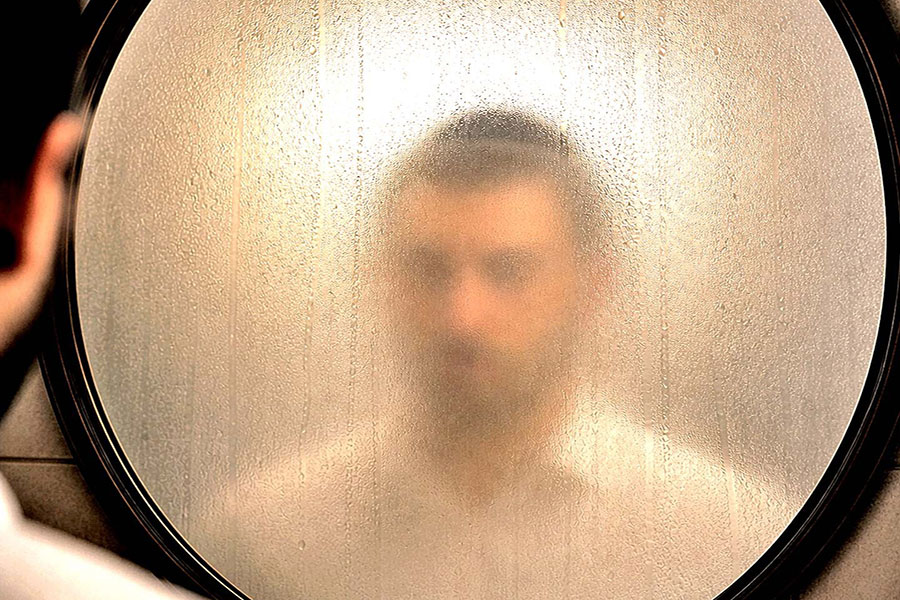
Having forgotten our true selves, we are born with the illusory belief that we are only that which we can see. When we look in the mirror, we see only flesh and bone, and we believe that this is all that we are.

Since the Torah itself permits substances that may be unkosher if they are nullified or subject to certain assumptions, in effect they become kosher. The same law that prohibits can also permit. However, poison is poison and will not change due to legalisms.
In the most painful times, we walk ahead in darkness with the light of our faith. Sometimes that light may seem to dim, but we seek to fan its flame and strengthen it within us.

By Bracha Gold
How could something I had once chosen so carefully simply… slip away? I searched my memory, trying to reconstruct that moment. But the truth was, there were several couples within my own family who were in need of such tefillot at the time.

The Rosh (Responsum 68:24) upholds the practice of Ashkenazic communities to require granting a copy of the document to enable the borrower to identify possible forgery or similar issues in the document.
A “Heated” Discussion “The Place of Shechita is Hot” (Chullin 8b)
The tragedy of the mekallel is not only that he sinned. It is that his outcry came from a place of fracture that the community never addressed. He stands as a cautionary figure, a reminder of what happens when we fail to make room for those who are already inside our gates but do not yet feel fully held.
Why is Shabbat listed as the first mo’ed before the mo’adim of Pesach, Shavuos and Sukkos. which we usually associate with the word chagim (23:3)?
The children in the building hope to learn the laws of Shavuot at home. But this week, they taught me a lesson, too.
Question:Is there a specific reason that the last chapter of Pirkei Avot is read on the Sabbath before Shavuot, or is this just a quirk of the calendar? Zvi Kirschner Via Email
To be a student of Rebi Akiva, you had to be extremely gifted and super intelligent. There were other yeshivot, other rabbanim, but none matched Rebi Akiva’s for level of study and for number of students.

Scattered among the peoples of this earth, we spent two thousand years wrestling with history. Stripped of almost every public expression of Jewish life, we clung to the word and will of Hashem and proved more resilient than history and more faithful than our enemies presumed.

Ultimately, the wisdom, might, and wealth of an individual are only aspects reflecting his stature, but not essential to his character; the celebrated aspect may reveal itself in some situations to be superficial and not substantive.
We need to teach our children to honor the shul rabbi. The one who, on a regular basis, warns them about the evils of lashon hara, the dangers of smoking, vaping, gambling, and addictive gaming.

In addition to the opportunity we have of doing teshuvah when we know we have sinned – by acknowledging the transgression, regretting having sinned, admitting that we have sinned, making a commitment not to repeat the sin in the future, prayer and charity – we are fortunate to be able to attain atonement even when we are unaware that we have sinned.

The purpose of rebuke is simple: Rebuke helps us see where we have gone wrong, clarifying what we must change and improve in order to fulfill our purpose and actualize our true potential.
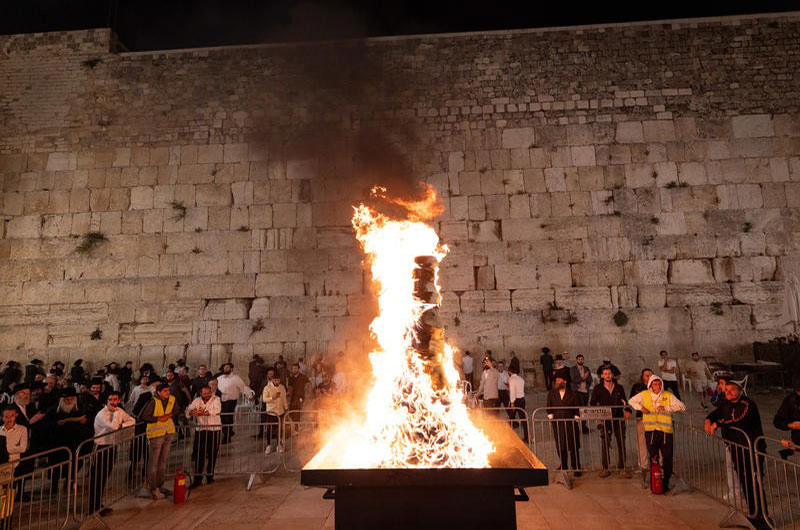
Pesach Sheni is counterintuitive because the Korban Pesach is very much a time-related mitzvah. And actually, it is not considered a make-up for the Korban Pesach. That Korban is brought only in the afternoon of the 14th of Nissan. Pesach Sheni is its own mitzvah.
Eating itself is to be viewed as a form of sacrifice. The consumption of food to empower the body to serve G-d can be as symbolically and intentionally powerful as offering a sacrifice on the altar. It depends on the person’s kavana.
As one educator once said, “Every child has gifts. Some discover them later than others.” Very often, those qualities and talents remain latent and need to be recognized.

By the time Mr. Weiss headed home, his satisfaction had dimmed. While the stay had been pleasant, he felt that he had been cheated.
Anticipating the Rebuilt Temple “One Who Engages in the Study of the Chattas…” (Menachos 110a)
Judaism is not like other religions – there is no turning the other cheek. You are allowed to pursue any legitimate recourse stipulated by the Torah for protection/justice/restitution.

Mussar teaches that character is not an accessory. It is a discipline. It is the daily work of noticing your impulses, your blind spots, your ego, your capacity to harm without meaning to.
Between Holocaust Remembrance Day and Memorial Day, Odelia reminds us that this is not only a private story. It is also a choice about how we tell our shared national story.
There was another way of explaining why the Jews resorted to worshiping the golden calf so soon after witnessing the presence of G-d at the Revelation. It was not that they had become Bible critics. They were simply giving in to their human urges, even as they believed in G-d and His Torah.
There is something uniquely powerful about the prayers of a child. Watch a young child daven, and you will see a kind of purity that is difficult to replicate in adulthood.
Question:Is there a specific reason that the last chapter of Pirkei Avot is read on the Sabbath before Shavuot, or is this just a quirk of the calendar? Zvi Kirschner Via Email

The more subtle point is an ego defense known as Reaction Formation. That is when a person is conflicted and feels that he should conform to an internal or external expectation, but deep down, does not want to.

Avodas Hashem is shaped not only by obligation, but also by how we understand the human being, by the moral awareness embedded within us and by the way we see the world and our place within it.
It is interesting to note that all of these ideas really complement one another, and there is a unifying perspective where we can see that Nadav and Avihu did not really “fit” into the mold of their generation and to the needs of the moment.
Shimon HaTzaddik was so called because he was the most righteous person of his generation and yet, in Pirkei Avos, there is but one Mishna recording his teachings.
One who foregoes his calculations with others for injustices done to him, the Heavenly Court, in turn, foregoes punishment for all his sins.

An interesting feature of the Omer is the emphasis on counting each day. This suggests that Sefiras HaOmer is one long mitzvah, complete only if each of the forty-nine days are counted. However, l’halacha, we make a beracha on each individual day of the Omer, suggesting that each one is a mitzvah in its own right. How can we reconcile this apparent inconsistency?

G-d never said that great moments of Jewish redemption would only be brought about by tzaddikim. The State of Israel is not the realization of The Dream. But it is a major step towards the Complete Redemption.
These days it’s not hard to understand how a few nonchalant and effortless clicks can have tremendous consequences. Clicking on one part of the computer screen may be completely innocuous, while clicking an inch over, into a little box on the screen can cost you big time, in more ways than one.

Tests, consultations with doctors, and anxious waiting continued for hours. Thank G-d, it turned out that there was nothing seriously wrong, but it was now too late for the family to make it home for Shabbos.
What About the Blood? “They Were Not Really Babylonians…” (Menachos 100a)

Many people fault the United States and Israel for “initiating” a war (or trying to end it?) when they did, not because they think their opponent should not eventually be fought but because they feel that the threat from Iran was not imminent.
A year ago, we left an empty chair at the Seder table, waiting for the hostages. This was the first Seder after they emerged from darkness into light. Together with them, we have all received another layer in the story of our national freedom.
 September 25, 2026