October 2, 2026
 Categories: Featured / Headline / Parsha / Torah
Parshas Terumah: Crafting Holiness from What We Carry


There is a moment in the Torah that feels almost like an exhale. It is a softening after a long stretch of tension. Parshas Mishpatim ends with laws that confront the rawest edges of human experience: harm, injury, slavery, vulnerability, the fragile fabric of a society still learning how to be free. It is a parsha of boundaries and consequences, of what happens when people fail one another or when power is misused. It is the Torah’s first sustained attempt to teach a newly liberated people how to live together without replicating the violence they endured.
And then, without warning, the tone shifts.
“Daber el B’nei Yisrael,” Hashem says, “v’yikchu li terumah… mei’eis kol ish asher yidvenu libo” – Speak to the Children of Israel, and let them bring Me an offering… from every person whose heart moves them.
It is one of the most surprising pivots in the Torah. After pages of legal detail, the people are suddenly invited into a project of beauty, generosity, and sacred craftsmanship. The Mishkan emerges not as a command but as an invitation; not as punishment or obligation, but as possibility.
This shift is not incidental. It is the Torah’s first model of trauma‑informed communal repair. It is also its first meditation on lineage, memory, and the materials a people carries with them. Terumah is not simply about building a structure; it is about building a people, and how a people rebuilds itself after rupture.
This is the crux at the heart of the parsha: the Mishkan as a trauma‑responsive project, and the Mishkan as a material archive of lineage. Together, they teach us how to build sanctuaries – personal, communal, and spiritual – from the fragments of our histories.
The First Trauma‑Informed Project in Torah
To understand the Mishkan, we have to understand what comes before it. Bnei Yisrael has just come through two overwhelming experiences: the crushing brutality of slavery and the seismic experience of Har Sinai. For generations, their bodies were used as instruments of someone else’s will. And then, at Har Sinai, the boundaries between heaven and earth dissolved, and the voice of Hashem thundered into their bones.Trauma researchers often note that trauma is not only what happens to us but what settles inside us. The way the body stores memory, the way the nervous system learns to brace, the way the world becomes unpredictable. Bnei Yisrael carries all of this. They are a people whose bodies remember what their minds cannot yet name.
And then the Torah does something extraordinary: It gives them a project that is structured, collaborative, embodied, and voluntary.
The Mishkan is not only a makom for Hashem. It is a makom for Bnei Yisrael. It is a place where experience is shaped into form, where the scattered is gathered, and where HaKadosh Baruch Hu is encountered through structure.
Midrash Tanchuma teaches that the Mishkan was Hashem’s response to the Egel HaZahav. It was a way to repair the rupture between Hashem and Bnei Yisrael. But even before that aveirah, the people needed a structure to hold the intensity of their experience. Ramban famously writes that the Mishkan is a continuation of Sinai, a portable revelation. What happened on the mountain now happens in a tent, in a form the people can approach without being undone.
Long before we had the language for it, the Torah offers a model of trauma‑responsive design. The Mishkan gives Bnei Yisrael predictability through clear instructions, agency through voluntary offerings, collaboration through shared labor, embodiment through materials and craft, and containment through a defined sacred space. It is the Torah’s first blueprint for communal healing.
A Willing Heart: The First Act of Sacred Choice
The phrase that anchors Terumah is “nediv lev” – a willing heart. This is not a poetic flourish. Instead it marks a radical shift in the spiritual life of Bnei Yisrael.After centuries of forced labor, the first sacred act they are invited into is consensual contribution. The Mishkan is built not from command but from choice. Sforno notes that the holiness of the Mishkan depends on this voluntariness; a coerced sanctuary is no sanctuary at all. Holiness cannot be extracted. It must be offered.
This is the Torah’s first articulation of agency as sacred.
Bnei Yisrael, who once built storehouses for Pharaoh under the crack of a whip, now build a sanctuary for Hashem with open hands and open hearts. The contrast is deliberate. The Torah is teaching them (and us) that the foundation of sacred life is not obedience but willingness.
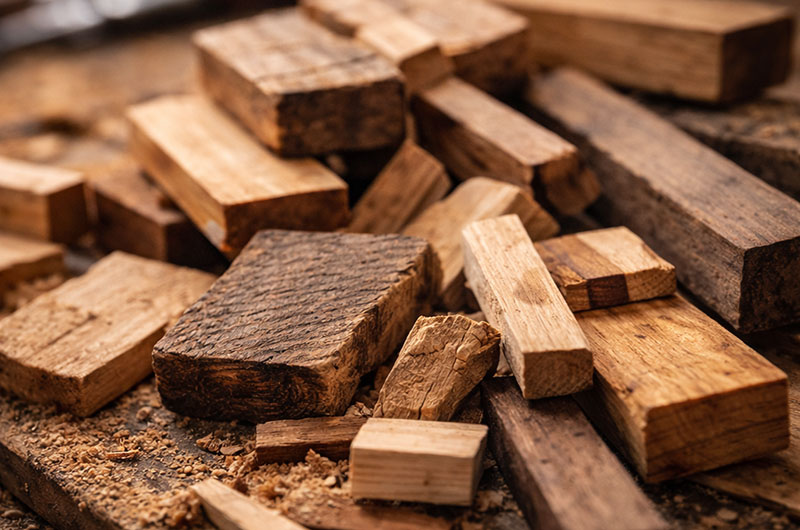
Two of my uncles, both carpenters, had a gift for turning what others discarded into something enduring. One would gather scraps from his building sites. Taking odd cuts of wood, leftover panels, pieces no one else wanted, he would shape them into hope chests and jewelry boxes that families would keep for generations. The other saved sawdust, mixing it into the hard, uninhabitable dirt behind his house until the ground softened and bloomed. What had been barren became a garden overflowing with food and flowers.
Their work comes back to me when I read Parshas Terumah. The Mishkan is built from remnants of what Bnei Yisrael carried out of Mitzrayim, from materials with history and memory embedded in them. Nothing is wasted. Nothing is too small. Kodesh emerges not from pristine beginnings but from the willingness to transform what we already hold. My uncles understood this intuitively: Beauty is built from scraps, and nourishment grows from what we once thought was useless. The Mishkan teaches the same truth. We build sanctuaries from what we carry, and sometimes the most sacred things begin as leftovers in someone else’s hands.
The Mishkan as a Material Archive of Lineage and Memory
If the Mishkan were simply a structure, the Torah could have described it in a few lines. Instead, it offers a careful catalogue of materials – gold, silver, copper, blue and purple and crimson wool, fine linen, goat hair, ram skins, acacia wood, oil, spices, precious stones. Each item is named with almost curatorial attention, as though the Torah is inviting us to walk through an exhibit rather than a construction site.This is not incidental.
The Mishkan is a material archive, and every object carries a story. The gold and silver were taken from Mitzrayim, reparations for generations of unpaid labor. The acacia wood, according to Midrash, came from trees planted by our Avos and carried through the wilderness as a promise of future building. The dyes and textiles reflect women’s craft traditions passed down quietly through generations. The precious stones were gifts from the nesi’im, each one representing a lineage.
The Mishkan is not built from new materials. It is built from what the people carry – historically, emotionally, generationally. This is where Terumah becomes a parsha of lineage. The sanctuary is not a break from the past – it is a transformation of it. The materials of oppression become the materials of holiness. The objects of memory become the objects of presence. The fragments of history become the architecture of the future.
This is the work of genealogical storytelling. It is restoring overlooked voices, honoring the women and thinkers whose contributions shaped our families and communities, and turning inherited material – intellectual, emotional, and spiritual – into something that holds and heals.
The Mishkan teaches that holiness is not found in escaping our past but in transforming it.
Building from What We Carry
Terumah is not a parsha about architecture. It is a parsha about becoming. It teaches that sanctuaries, whether personal, communal, or spiritual, are never built from perfection. They are built from what we carry: our histories and our wounds, our inherited materials and our reclaimed agency, the gifts we bring and the longings we refuse to abandon.The Mishkan is the Torah’s way of saying that holiness is not found in escaping our past but in transforming it into a dwelling place. We build sanctuaries from fragments. We build them from memory. We build them from choice. We build them from one another.
And when we do, something unmistakable happens: Hashem dwells not in the structure but in the people who dared to build it.
A Sanctuary Built Together
One of the most striking features of the Mishkan is that no single person could build it. The Torah lingers over the contributions not to overwhelm the reader but to make a point: Every member of Bnei Yisrael brings something different. Some bring materials, some bring skill, some bring presence or intention. The Mishkan emerges only because these offerings converge.It is the first communal project in our Jewish history, and the first model of collaborative belonging. Each contribution is incomplete on its own, but together they create a sanctuary. The Torah offers a quiet counter‑narrative to the myth of solitary genius. Sacred work, it insists, is always collective. It is always relational. It is always built from the differentiated gifts of many.
The Mishkan stands as a reminder that holiness is not the product of a single vision but of a shared one. It is a structure shaped by many hands, many hearts, and many forms of giving.
Craft as Commentary
When the Torah introduces Betzalel, the artisan charged with translating the Mishkan from Divine concept to reality, it describes him as filled with ruach Elokim – a Divine spirit expressed through wisdom, understanding, and knowledge. It is the same term used to describe the creation of the world, a quiet signal that Betzalel’s work is not merely technical but creative in the deepest sense.Chazal add that Betzalel “knew how to join the letters with which Heaven and Earth were created.” In other words, he was not simply a craftsman; he was an interpreter. His work became a form of commentary, shaping meaning through structure rather than through words.
Betzalel becomes the Torah’s first theologian of form. His presence reminds us that the way we shape space shapes the way we experience the sacred. Architecture becomes a kind of midrash; design becomes a mode of interpretation. The Mishkan elevates craft to the level of revelation, teaching that building is not only construction, it is a way of reading, responding, and making meaning.
Where Holiness Lives
One of the most radical lines in the parsha appears almost quietly: “They shall make for Me a sanctuary, and I will dwell within them.” Not within it but within them. The Mishkan is not simply a structure in the wilderness; it is a metaphor for the interior life of a people. The sanctuary is not a place where Hashem resides but a place that teaches Bnei Yisrael how to make space for the sacred within themselves. The architecture of the Mishkan becomes the architecture of the soul.The haftarah widens this frame. It describes Shlomo HaMelech building the Beis HaMikdash, the permanent Temple in Jerusalem. The contrast is striking. The Mishkan is built from what the people carry; the Beis HaMikdash is built from what the people become. One is portable, flexible, and responsive. The other is stable, rooted, and enduring. Together they form a lineage of sacred architecture, a reminder that sanctuaries evolve as people evolve. What begins as a trauma‑responsive structure becomes, generations later, a symbol of our national identity and spiritual aspiration.
This is the arc of healing: from survival to stability, from fragmentation to form, from carrying to becoming. The sanctuary moves from the outside in, and then from the inside out, until holiness is no longer a place but a way of being.