September 11, 2026
 Categories: Headline / Parsha / Torah
Parshas Va’era and the Four Pillars of Redemption
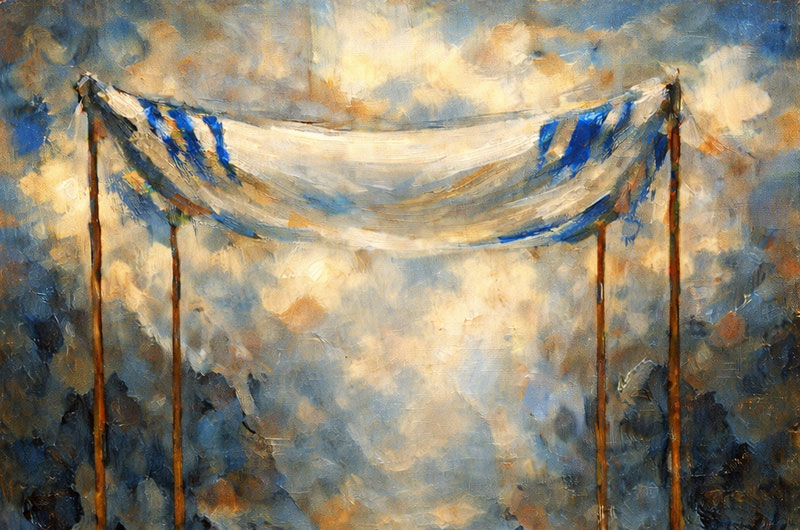


There is a moment from under the chuppah that I return to again and again: four brothers‑in‑law standing around me, each holding one of the poles. I remember feeling gathered in, held up by my four new brothers. I was being carried into a family by the very pillars who stood around me.
At the time, it felt like simple kindness, the quiet choreography of a Jewish wedding. Only later did I understand how deeply that moment echoed the four expressions of redemption in Parshas Va’era – four human pillars mirroring four Divine movements that have held our people since the beginning of our story.
When Hashem Steps into History
Parshas Va’era is the moment the world shifts. Not because the suffering ends or because the people suddenly rise with new strength, but because Hashem steps forward and speaks into history. For generations, the promises to the Avos lived in the realm of hope. They were whispered, inherited, and believed, but not yet fulfilled.Hashem moves from memory to action, revealing a dimension of Himself that had not yet been experienced. “I appeared to Avraham, Yitzchak, and Yaakov as ‘Kel Shakkai,’” He says, “but by My Name ‘Hashem’ I was not known to them.” This is not a linguistic nuance – it is a theological turning point. The Avos knew HaKadosh Baruch Hu as the One who promises. Their children will know Him as the One who keeps those promises.
And into that revelation, Hashem places four movements: v’hotzeiti, v’hitzalti, v’ga’alti, v’lakachti – bringing out, saving, lifting, and taking as a people – the very architecture of deliverance. These are not poetic flourishes but the blueprint of how Hashem carries a people from constriction into covenant. Only much later did I realize that this same structure had been quietly mirrored under my own chuppah, held in the hands of my chosson’s four brothers who stood around us like human pillars.
Four Expressions, Four Pillars
Under the chuppah, that moment revealed itself as more than a family gesture or the choreography of a Jewish wedding. I saw four figures standing at the corners of my world, echoing the very structure Hashem lays out in Va’era. The Torah does not describe deliverance as a single act but as a sequence of movements – a journey that carries a people from the confines of Mitzrayim into the embrace of belonging.
V’hotzeiti: The First Movement Out of Constriction
The first movement, v’hotzeiti, is not yet freedom. It is the moment before freedom. When Hashem reaches into a place of constriction and begins to loosen what binds us. The people are still in Mitzrayim, still bent under labor, still unable to imagine anything different. Yet something shifts. Hashem begins by widening their horizon, offering the first crack in the walls that have pressed in for too long.One of the brothers around me carries this energy so naturally. He has the ability to open space, to make room, to ease the edges of any moment. He is the one who lifts the world just enough for light to enter. In Va’era, this is the first Divine movement: not escape, not salvation, but the gentle beginning of breath.
V’hitzalti: The Movement of Protection
If v’hotzeiti is the widening of breath, v’hitzalti is the shielding of it. “I will save you from their labor” is not a promise of escape but a promise of protection. Hashem is placing Himself between His people and what crushes them. It is the movement of defense, of intercession, of standing in the breach.Another brother embodies this instinct with ease. He is the one who steps forward when things turn sharp, who shields without fanfare, who carries a quiet readiness to protect the people he loves. His presence is steadying, like a hand on a chuppah pole. In Va’era, this is the second stage of the journey: the sense of being held safe enough to begin again.
V’ga’alti: The Movement of Restoration
Restoration is not complete with protection alone. V’ga’alti – “I will redeem you” – is the movement of reclaiming what was lost, the return of dignity, agency, and identity. Geulah is not an escape; it is a return. It is the moment when a person remembers who they are and who they were meant to be.A different brother carries this restorative presence. He is the one who brings things back to center, who repairs what has frayed, who restores possibility when it seems the story has already been written. His steadiness is its own kind of healing. In Va’era, this is the Divine movement that lifts the people from being objects of history to subjects within it.
V’lakachti: The Movement of Belonging
Then comes the final movement: v’lakachti – “I will take you to Me as a people.” This is the heart of the journey. Not freedom, not escape, not even restoration. Instead, it is belonging. Hashem does not simply remove the people from Mitzrayim – He brings them into relationship, into covenant, into identity.The final brother radiates this movement. He is generous, warm, funny – the one who folds people in without effort, who makes you feel like family. Under the chuppah, he held a pole, but in truth he held something larger: the ease of being taken in, claimed, woven into a people. In Va’era, this is the culmination of geulah. The journey is not complete until we belong.
The People Who Could Not Listen
What makes the four movements of geulah even more striking is that they are spoken to a people who cannot hear them. The Torah tells us that Bnei Yisrael do not listen to Moshe “because of shortness of breath and hard labor.” That is one of the most heartbreaking verses in the parsha. They do not listen not because they are stubborn, but because they are exhausted. They are too crushed to imagine a different future.The journey begins in a place where hope is not yet possible. Hashem does not wait for the people to rise; He rises for them. He does not wait for them to believe; He believes for them. This is the quiet mercy of Va’era: Geulah begins even when we cannot lift our heads.
This, too, was already present in that moment under the chuppah. I knew what it meant to belong in Klal Yisrael – that was familiar. What I was stepping into was something different. I was joining a large, loud, passionate, brilliant family whose way of holding each other has its own kind of architecture. The hands were already there. The steadiness was already there. The shelter was already there. Some truths arrive in the body before they settle into words.
Belonging as a Communal Architecture
The four movements are not only a sequence; they are a structure. They are the foundation of our national identity, the way Hashem shapes us into a people.V’hotzeiti brings us out of constriction. V’hitzalti shields us from harm. V’ga’alti restores what was lost. V’lakachti binds us into belonging.
These movements illustrate our relationship with Hashem. A partnership in which Divine action and human hands work together. We live that partnership through each other. Every generation has people who widen our breath, who protect us, who restore us, who gather us in. Every family has its own pillars. Every community has its own four corners.
At our wedding, I saw that partnership made visible. My four new brothers‑in‑law stood around me, each with his own way of showing up in the world – steady, protective, grounding, welcoming. They weren’t performing anything; they were simply being themselves. And yet, without naming it, they were embodying the same movements that have carried our people since Va’era.
At that moment, I was not only entering a marriage – I was entering into a family. I was stepping into a structure that has held us since Va’era. Built not only by Hashem’s promises but by the hands of those who stand beside us.
The Return: Four Pillars, Then and Now
Looking back, I no longer see that moment as a private memory but as a small window into a larger truth: that the work of lifting one another is often carried by pillars we only recognize with time. My four brothers‑in‑law were not consciously reenacting the four movements of geulah, yet each revealed a different facet of that promise. What I saw then was only the surface; time has shown me how those same qualities sustain our family every day.I’ve observed how deliverance lives in ordinary days. It’s in the way someone shows up without being asked, in the way a burden is shared, in the way belonging is offered quietly, without ceremony. Their unspoken steadiness gave me a glimpse of the architecture Hashem reveals in Va’era – the way He lifts us, stage by stage, into covenant; the way He surrounds us even before we can hear the promise; the way He holds us until we can stand on our own.
Belonging as Redemption
The Lubavitcher Rebbe, zt”l, taught that the four expressions of geulah rise in a deliberate ascent, each one drawing us closer, until v’lakachti. This is the moment Hashem takes us to Himself as a people. Geulah is not only about leaving Mitzrayim – it is about entering into a relationship. Hashem does not stop at liberation. He does not stop at protection. He does not stop at restoration. The culmination is belonging. It is the moment we are no longer alone.
Carrying the Blessing Forward
When I think back to those who held the poles of my chuppah, I remember the fourth movement taking root. With a quiet certainty of belonging, I could finally trust in my own body. That moment wasn’t symbolic; it was lived. It showed me what the movements of geulah look like in human hands.This is what we are asked to carry forward: to hold one another with the same steadiness that once held us, to make room for breath where it has tightened, to gather what has been scattered. To create the kind of belonging in which a life can root and rise.
The Call of Va’era: To Hold and Be Held
Va’era gives us a language for how geulah moves. Not only through Divine promise, but through the ways we carry one another. The four movements are not only what Hashem once did for us; they are a pattern woven into our spiritual DNA.To ease another soul out of a narrow place.
To stand as a buffer when the world turns sharp.
To mend what has frayed.
To draw someone back into the circle of belonging.
These are not grand gestures but the quiet, everyday ways geulah travels through us. It is the hidden architecture by which Klal Yisrael lifts one another from burden into belonging, generation after generation.