יום שלישי, י״ח תשרי תשפ״זTuesday, September 29, 2026



Follow Us


Rav Weinberg does not leave us feeling lacking. With each entry, he helps to instruct us how we can go about repairing our mistakes, be they between each of us and our fellow, between us and G-d, or between us and ourselves.

A book is successful if you care about the characters and you’re caught up in the plot. This book meets those and many other qualifications for a gripping mystery and a wonderful read!

By Ben Rothke
While these stores often have hundreds of shofars for sale, the book has stories about towns that lacked even a single shofar. And it was not that long ago that such things happened.

We need to understand that all the pain and anguish we experience is for the good. We then need to pave a path forward with this knowledge in our hearts.
Despite its somewhat technical subject matter, Divrei Soferim was a fairly easy book to get through. I found many of the questions raised and topics discussed fascinating even if I could not recall all of them several weeks after completing the book.
The reason the book carries this range of approbations is because it cuts across typical boundaries, blending traditional approaches to the development of the Oral Torah or Torah she-baal peh with up-to-date historical and legal scholarship from the academy.
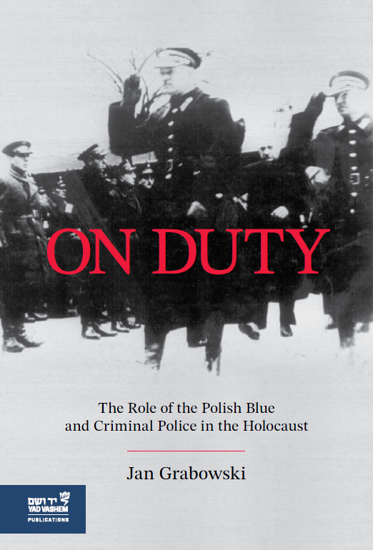
The book is a quest to explain how these Polish policemen transformed into lethally proficient cold-blooded murderers of their own countrymen,
Why are there still Arab “refugees” from a war that ended 70 years ago?
By Ben Rothke
The challenge in modifying halachic practices is that it can often be akin to modifying DNA. While the outcome can have horrifying consequences, Judaism has only survived by adapting to new circumstances while keeping its core the same.
This book is good for kids, and seems to be less good for adults. It has a lot of puns, and when I told some of them to my parents they didn't think that they were funny. (But maybe my parents just don’t have a sense of humor.)
By Bracha Goetz
This book deals with the great challenge we all face in grasping what is currently happening to the Jewish people. The author demonstrates the rare talent and sensitivity needed to lift the veils of confusion and elucidate both our spiritual and historical connection with the land of Israel from ancient times through the present.
By Ben Rothke
Within Judaism, there are necessary disciplines, ideas, and requirements. Yet, it's not uncommon for people to live their entire lives without genuinely understanding these fundamentals.
Bullying has become a scourge and is a topic that is not given enough attention, and I was happy to see that it was included here.
I did not recognize the rav’s greatness at the time, but the board was set for writing the book. I guess you could say that my mother introduced me to the rav. Regretfully, I never met him in real life.

By Ben Rothke
Weissman's book analyzes the dead and the afterlife as manifested in R’ Yehuda HaChasid’s thoughts and how he came to them. In a somewhat radical approach, the book shows the significant Christian influence on R’ Yehuda HaChasid.

A house filled with chutzpah is an unsafe home. The world is an especially frightening place these days; when you parent in unity, the whole environment feels good. The child will not have to look to the wrong outlets for love.
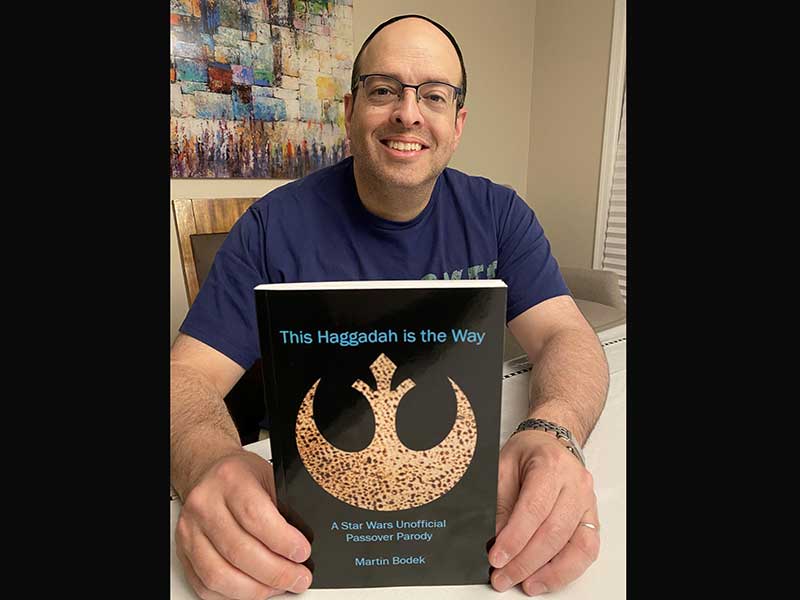
That feeling of freedom after years of emotional and physical torture can be felt even more fully when reading Bodek’s Zaidy’s War: Four Armies, Three Continents, Two Brothers. One Man’s Impossible Story of Endurance. He tells the shocking true story of his grandfather’s fight for survival during World War II.

The author’s treatment of Yom Kippur is surprising. Rather than define the day in its more familiar sense, as a day of atonement, Rabbi Fohrman focuses on the language around the fact that Aharon’s sons die as a result of their sin at the beginning of the parsha.
I greatly enjoyed studying all of these works, and I especially enjoyed reading them together. Each offers something important that the others do not, and each is an outstanding example of a different subgenre within contemporary halachic/Talmudic literature.
The source of each quote, paraphrase or inspiration in each chapter is cited in a lengthy appendix at the end of the book. And the sources extend beyond the usual ones, even to Rambam's extensive medical writings and letters.
Kaufman, a nonagenarian, still exercises every day and limits the time he spends sitting. He devotes a great amount of time to staying healthy, so that he lives a long life in which he can dedicate himself – body and soul – to serving G-d.
The first thing to say about this book is that it is a fantastic, fun, interesting read. I cannot wait to share this with my preteen son.

History is both broad and deep at the same time. One with a broad knowledge of the subject probably prefers more depth on a topic, while one with less background probably prefers something broader in its scope.

A rollicking story with a happy ending, children aged 6-12 will understand that they have a choice when faced with any difficult situation.
Her book, or rather her slim booklet of around 20 pages, does not come to teach, prescribe or preach how Jewish prayer should look. Plenty of other books have been written for that purpose.

Not only are these 30 plus stories amazing because of the lengths that a Jew will go to say Kaddish with a minyan wherever he happens to be, but the Hashgacha Pratit that enables him to do so is clearly miraculous.
By Ben Rothke
The rabbis understood that ha'aramah was a mechanism that could be used well or poorly.

Within the context of Shabbos and each festival, Muskat-Brown discusses many important issues such as education, parenting, relationships, and lifestyle and, more importantly, gives us points to ponder and discuss.
By Ben Rothke
Rabbi Bezalel Naor has masterfully taken Rav Kook's commentary and made it readable and comprehensible to the English reading audience in The Legends of Rabbah Bar Bar Hannah with the Commentary of Rabbi Abraham Isaac HaKohen Kook.
The fact that some of Rabbi Brevda’s followers turned to chassidus did not bother him; in fact, he even encouraged them. He said that one can learn from everyone. There is no one right way.
The Hebrew font is definitely clear and readable, but I do wish the endnotes would have been included on the Hebrew side as well.

Philosophical and humorous, intellectual and spiritual, Gruen discusses many important topics of the day, both personal and universally relevant, as she muses over the changes in her life and the changes in the world and how they overlap.
If we are to consider what the future will bring, we must take account of the reception history of this work not only in its early decades but also in more recent years.
Sometimes the best thing you can do is the Hippocratic Oath of parenting: just try not to make things worse.
By Ben Rothke
In this readable and engaging book, Pilichowski has 101 brief essays of 2-3 pages that explain the many aspects of Zionism. A critical point that he makes is that Zionists don't need to justify their existence.
We all want to be happy. Not only because it’s a great mitzvah, but because we enjoy being happy. No one wants pain, worry, affliction, despair or despondency in their lives.

Even after the reader sits back contentedly on the couch with a smile, mystery solved, he is left with much more than a typical fast-paced kid’s read because the book contains very gripping and relevant information about the historical events and sites on which the stories are based.
The book offers a compelling and accurate description of the challenges the Zionists faced between 1945–1949

Each chapter focuses on a unique aspect of temple service and how it relates to a unique aspect of our daily prayers.
By Levi Morrow
Ettinger wants to tell a broader story than that, however, including not just questions of the Israeli Rabbinate but also more broadly of rabbinic authority in Orthodox Judaism.

It is appropriate that Rabbi Kelemer, who seemed bigger than life in his piety, modesty, and sensitivity, should be commemorated by someone who writes such that alliteration, personification, onomatopoeia, and metaphor are all present in one sentence.
Other topics discussed in this section are bat mitzvahs, women and prayer, Jewish divorce, and Torah education for women.
It offers an insightful exploration into the intricate realm of tzimtzum, providing invaluable snippets of historical context that enrich the understanding of its diverse integrations across various contexts.
By Ben Rothke
What makes the book unique is that while he may have been a shochet, he was also a fantastic storyteller, which makes this such an interesting read.
This is Rabbi Alt’s seventh book and it comprises 70 meticulously crafted essays, eloquently articulating the Torah's viewpoint regarding death and the afterlife, and the eternal value of a mitzvah in this world and the next.
I had VERY high expectations for this book. I’ve been parenting kids with ADHD for 22 years, and I have a lot of theories and workarounds and opinions. My expectations were exceeded.

By Ben Rothke
In a little over 100 pages, Friedman does a good job detailing the myriad tensions in the Israel secular and religious divide.
By dvora
What motivated the Zlotnicks to write this book? We need only to look at its title, Brick by Brick: Building an Ahavas Yisrael Mindset One Story at a Time, to answer this question. It suggests that no effort, big or small, to reach out to our fellow Jews is insignificant.
With seven previous books to his credit, this is not the first time Rabbi Bernstein has covered the holiday of Sukkos.
By Ben Rothke
Thousands of pages have been written explaining why Maimonides didn't include dwelling in Israel in his list of 613 mitzvot. Notwithstanding that, the book shows that irrespective of whether it is a mitzvah, the land of Israel and the Torah are one.
Among the delights of this book is the joy he takes in his family – his wife Sharon, their son Yosef and his wife Hillary, their grandchildren – and in observant Jewish life.
Dee shows us that the very foundation of our lives and the precepts we live by, our ethics, morals, and culture, our education, the worlds of physics, and science all emanate from the foundations of the Torah...
By Sandy Eller
A well-chosen book can bring a kid hours of pleasure and also instills a love of reading, an activity that will serve them well in the years ahead.
Each section of the book begins with a map and some history, followed by a walk that features unique sites, conversations with people on the street, and a wonderful array of quirky facts that only someone who gets into granular local history would discover.
Rav Chaim was not bound by the dictates of this world; he was heard to recite Torah passages in his sleep.
By Baruch Lytle
A Brief and Visual History of Antisemitism is thoughtfully written and designed to appeal to young readers, the smart phone-obsessed, and anyone else with a short attention span, all while being researched and thorough enough to keep the methodical reader clinging to every page.
By Ben Rothke
Rabbi David writes how he was completely taken aback by how this giant of a Torah scholar would treat a very young boy with such respect and friendship as if he were talking to one of his peers.
One particularly fascinating recurring question described in the book is that of a symbolic re-conversion as an apostate returns from Christian ideals to Jewish ones.
Interwoven in this biography are the political, religious, historical, and cultural background events marking Wiesel’s extraordinary life trajectory, which the author expertly and entertainingly describes with his reporter’s eye.
Short stories are developed one by one… Each story reflects something I was responding to in the world. It’s deeply immersed in frum culture, and our unique challenges and approaches.
Aside from lessons related to chronological structure, the overview concludes with a summary of themes. It is here that Rabbi Arenias urges the reader to engage with the Chumash as a complete text and not just a pasuk to study for a dvar Torah for the Shabbos table.
One particular incident that stood out was when the protagonist casually partook in a meal consisting of potatoes and lard... The protagonist seemed to disregard fundamental principles of Jewish dietary observance without hesitation.
Miller makes his readers work hard, but he rewards them with startling insights, such as the idea that Ruth’s relationship with Boaz was a double yibum – for Ruth’s deceased husband Machlon but also for Elimelech and Naomi, who is too old to bear a child in her dead husband’s name.
A quick survey of these essays reveals how the overriding medical and halachic concern of certain pikuach nefesh for the individual patient is weighed so very carefully against potential or probable pikuach nefesh and the general health and welfare of the community at large.
Full disclosure: I’m a geek. By that I mean that I read math theory books for fun. And, having a long career in kiruv, I have used metaphors from quantum mechanics in my presentations, to varying degrees of success.
The Maharal is classically celebrated for taking deep Kabbalistic and mystical ideas and bringing them down to Earth, writing in a deep and beautiful style.
My only criticism is that it isn’t longer. Maybe there’ll be a sequel.
Resnick’s book brings to light much nuance that has been lost in discussions about the Holocaust and who acted nobly. Indeed, the whole topic is a bit murky, but Resnick provides the reader with enough information to make his own informed decision.
To analyze the entire book in such a short review is to attempt the impossible, so I will instead focus on a particular question that arises throughout: What, exactly, is teshuva?
It turns out that this book is so remarkable it works for all levels of learning.
Ungar’s book makes the Torah Giant relatable to young children so that they can imagine themselves imitating his ways.
By Ben Rothke
Those who abstain from using newer methods will often cite the much quoted, and much misunderstood quip from the Chasam Sofer that chadash assur min haTorah – new is forbidden by the Torah. Yet the danger of using that approach is that they do miss out on the new approaches that do work.
The medium is the message is an expression, coined in the last century, that argues that the way in which a message is conveyed communicates as much as the message itself.
He begins with a general overview of Teshuvah discussing topics such as Teshuvah rooted in fear vs. that rooted in love, how we establish our true identity through the process of Teshuvah, the need to maintain a positive attitude through the process, and creating a real connection with Hashem.
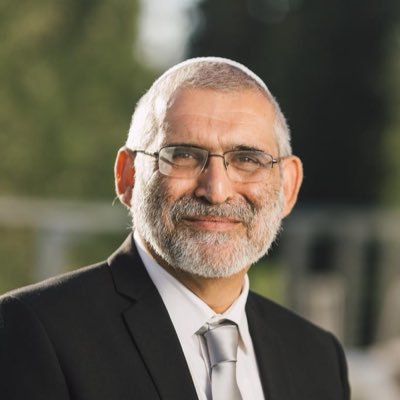
By Forest Rain
The winners write the history books
Oren asks rhetorically why is it that Israeli leaders “rarely articulate a vision of Israel’s future?”
By Ben Rothke
The importance of having the embassy in Jerusalem is not just a real estate decision. It is about the very core of the State of Israel and its legitimacy.
I knew she must be a fascinating person, and reading the biography only opened my eyes to just how complex and varied a life she led. I’d never guessed, however, the personal family connection we would have.
By Rabbi Yitzchak B. Rosenblum
The reader will both enjoy and benefit from the clear organizational structure of each chapter which starts with an introduction that provides historical context as well as an appreciation for the educational and sometimes polemical mission and style unique to each commentator.
By Aryeh Wiener
This series wasn’t conceived in a vacuum. A cluster of converging phenomena have contributed to the vibrant interest in Tanach among North American modern Orthodox Jews.
In the book, Resnick argues that both Bloom and Roosevelt deserve credit for possibly saving British Jewry from extermination.
America First explores the life of one of the most colorful Jews to ever grace the halls of Congress.
By Ben Rothke
Goldman states that not only have we failed to make progress in Rav Soloveitchik’s program, but in some ways, we have lost ground.
Living in the Land of Israel is the ultimate mitzvah, the reason the Torah was given. Every four cubits you walk in the land of Israel is a mitzvah.
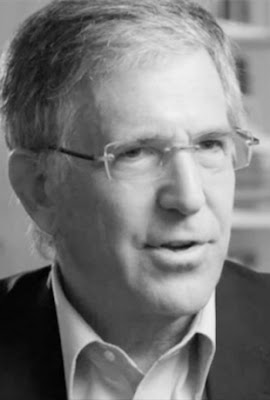
By Bennett Ruda
An interview with the author
By Yael Zoldan
In Judaism, love is always related to knowing and being known.
By Aryeh Sklar
Those who know Shadal’s commentary on the Torah know that Dan Klein is uniquely fit for the job.
We see that the Pope’s agenda was to protect the Church and its status from being attacked by the Germans or Italians, and to only attempt to protect baptized Jews, whom he considered to be Catholics.
By understanding the domestic politics of Italy and Germany vis à vis the Vatican, as well as how the United States, Britain, and the French government in exile fully comprehended the Pope’s duplicity,... we may understand, but never accept, the horrific and unforgivable conduct of the Pope.
By Ben Rothke
As an organization, it's just a matter of time until United Hatzalah of Israel will have saved six million lives.
Rabbi Spero reminds us that we have to stand up for our beliefs. This is the only way to garner respect.
Towards the end of the introduction the author pens I was raised in a home that believed in and practice Torah V’Avodah and thus the main theme of this book – the integration of Torah with the State of Israel – from the inspiration and education I received from him.
In addition to a similar phrase-by-phrase explanation, Rabbi Adler also devotes another lengthy chapter to comparing and contrasting differences in the Rosh Chodesh text with the Musaf text from other yomim tovim.
Since each page is something that we do with our hands, I do each action to or with my granddaughter. She copies me or she participates.
While anyone can find Rav Schuster’s story inspiring, I think shy children will get an extra dose of inspiration.
Besides the occasional massacres in which English Jews were actually killed, the author provides detailed accounts of the "punishments" levied against Jews for simply being Jewish...
The only real reservation I would have about this book is that there is sometimes what seems to be a confusion between what the Sages or midrashim say on the one hand and what the Tanach says on the other.
Pathways to Their Hearts is the logical fruit of Rav Rabinovich’s unique personality, pen, and work. It is everything you might expect from the rosh yeshiva: Optimistic and patient, full of simple faith and intellectual curiosity.
By Rabbi Yitzchak B. Rosenblum
One of the strengths of these biographical vignettes is that they are represented through the eyes of people who are deeply vested in the subject – be they actual talmidim of the gadol when they were alive...
Despite his traditional upbringing, Jellinek began to question some of the traditional practices of Judaism, particularly the emphasis on ritual and the strict adherence to Jewish law.
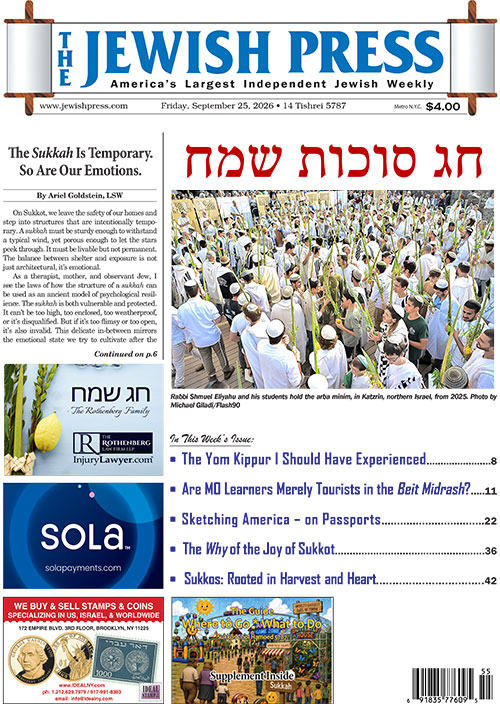 September 25, 2026