יום חמישי, י״א חשוון תשפ״זThursday, October 22, 2026



Follow Us


Ben Rothke lives in New Jersey and works in the information security field. He reviews books on religion, technology, philosophy and science. Follow him on Twitter at @benrothke. And look for his latest book, “The Definitive Guide to PCI DSS Version 4: Documentation, Compliance, and Management,” online.
Read More

By Ben Rothke
Although many of the essays in this volume have appeared previously, readers encountering them for the first time will find Angel to be a writer of considerable depth, sophistication, and clarity.
By Ben Rothke
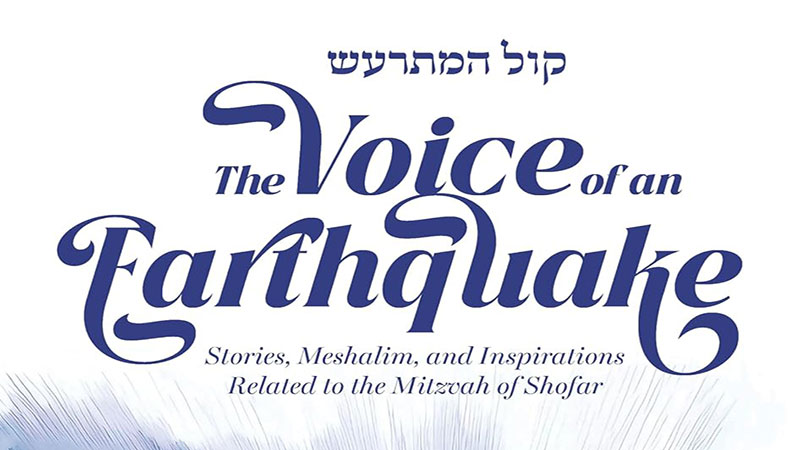
While the shofar is one of the most familiar sounds in Jewish life, it is perhaps one of the least understood.

By Ben Rothke
Amital taught his students that true strength lies not in unyielding rigidity but in the courage to adapt while remaining deeply anchored in one’s essence.

By Ben Rothke
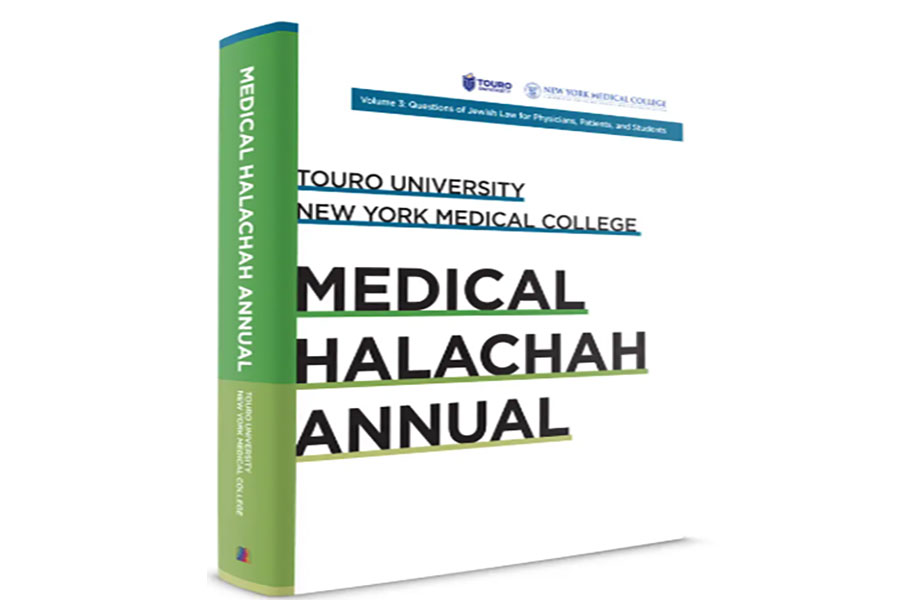
He writes that smoking is a significant risk factor for vision loss in most retinal diseases, particularly in diabetes and macular degeneration.
By Ben Rothke
The topics are all real, important, and relevant in this significant work.

By Ben Rothke
Despite having died nearly a century ago and with many of his writings over 150 years old, Rav Kook's exceptionalism lies in the fact that his ideas remain relevant even in 2026...
By Ben Rothke
When one learns Mishnah, it is assumed that the reader already understands the essential background.
By Ben Rothke
Another core trait of his was his ability to change his opinion, which was grounded in his inner strength and confidence.
By Ben Rothke
With each passing year, more and more Haggadahs are being printed – and that trend continues in 2025. Here are a few that can enhance your Seder.
By Ben Rothke
The book opens with Rav Shlomo Yosef Zevin's observation of the Rogatchover. He writes that the Rogatchover was made of a completely different mold and material, and notes that no one was like him in his generation or in many generations before or after him.
By Ben Rothke
Cursory glances at Talmudic texts are prone to misunderstanding and misreading, which is why many view the Talmudic rabbis as misogynists. Fine is a close and astute reader of these Talmudic texts and shows how many initial Aggadic impressions of these women can often be misread.

By Ben Rothke
While these stores often have hundreds of shofars for sale, the book has stories about towns that lacked even a single shofar. And it was not that long ago that such things happened.
By Ben Rothke
The challenge in modifying halachic practices is that it can often be akin to modifying DNA. While the outcome can have horrifying consequences, Judaism has only survived by adapting to new circumstances while keeping its core the same.
By Ben Rothke
Within Judaism, there are necessary disciplines, ideas, and requirements. Yet, it's not uncommon for people to live their entire lives without genuinely understanding these fundamentals.

By Ben Rothke
Weissman's book analyzes the dead and the afterlife as manifested in R’ Yehuda HaChasid’s thoughts and how he came to them. In a somewhat radical approach, the book shows the significant Christian influence on R’ Yehuda HaChasid.
By Ben Rothke
The rabbis understood that ha'aramah was a mechanism that could be used well or poorly.
By Ben Rothke
Rabbi Bezalel Naor has masterfully taken Rav Kook's commentary and made it readable and comprehensible to the English reading audience in The Legends of Rabbah Bar Bar Hannah with the Commentary of Rabbi Abraham Isaac HaKohen Kook.
By Ben Rothke
In this readable and engaging book, Pilichowski has 101 brief essays of 2-3 pages that explain the many aspects of Zionism. A critical point that he makes is that Zionists don't need to justify their existence.
By Ben Rothke
What makes the book unique is that while he may have been a shochet, he was also a fantastic storyteller, which makes this such an interesting read.

By Ben Rothke
In a little over 100 pages, Friedman does a good job detailing the myriad tensions in the Israel secular and religious divide.
By Ben Rothke
Thousands of pages have been written explaining why Maimonides didn't include dwelling in Israel in his list of 613 mitzvot. Notwithstanding that, the book shows that irrespective of whether it is a mitzvah, the land of Israel and the Torah are one.
By Ben Rothke
Rabbi David writes how he was completely taken aback by how this giant of a Torah scholar would treat a very young boy with such respect and friendship as if he were talking to one of his peers.
By Ben Rothke
Those who abstain from using newer methods will often cite the much quoted, and much misunderstood quip from the Chasam Sofer that chadash assur min haTorah – new is forbidden by the Torah. Yet the danger of using that approach is that they do miss out on the new approaches that do work.
By Ben Rothke
The importance of having the embassy in Jerusalem is not just a real estate decision. It is about the very core of the State of Israel and its legitimacy.
By Ben Rothke
Goldman states that not only have we failed to make progress in Rav Soloveitchik’s program, but in some ways, we have lost ground.
By Ben Rothke
As an organization, it's just a matter of time until United Hatzalah of Israel will have saved six million lives.
By Ben Rothke
While books like this are great introductory texts, the cursory overview of the topics, many of them which warrant numerous volumes on their own, can give the reader too far a superficial view of the topic.
By Ben Rothke
If you have heard any of her speeches, Rahav-Meir is very big on keeping it real and current. She writes that Judaism has so much to offer to the world, and the world wants to hear from the Jews.
By Ben Rothke
While Grade never mentions who Rasseyner is, later research showed that the character is based on Rabbi Gershon Liebman, who headed up the group of Novardok-based yeshivas in France after World War II.
By Ben Rothke
While books like this are great introductory texts, the cursory overview of the topics, many of them which warrant numerous volumes on their own, can give the reader too far a superficial view of the topic.
By Ben Rothke
As a pulpit rabbi, Friedman said that he found that the biggest obstacle for most people is that they struggle to find meaning in their Torah learning.
By Ben Rothke
While the Talmud is 2,711 pages, in a little over 200 pages, Kirsch does a good job of detailing the main topics and themes of the various tractates.
By Ben Rothke
When Rashi wrote in his commentary that he had to stop writing to go to his vineyard, it did not mean that it was his profession. He writes, Rashi may have been a vintner, but by the same token, he may have been an egg salesman.
By Ben Rothke
It is clear from the start that this is not your bubbe's Haggadah.
By Ben Rothke
The book's purpose is to lay out the legal claim to the territory formerly known as Mandatory Palestine.
By Ben Rothke
The authors have isolated these principles, namely: respect for tradition while encouraging independent thinking; a precise system of logical reasoning in pursuit of the truth; and a universal and never-ending education.
By Ben Rothke
While the Rav may have been slightly hyperbolic with his comparison, what can’t be denied is that the genius and brilliance of Rav Chaim was, in part, bringing a scientific sophistication to the Talmud.
By Ben Rothke
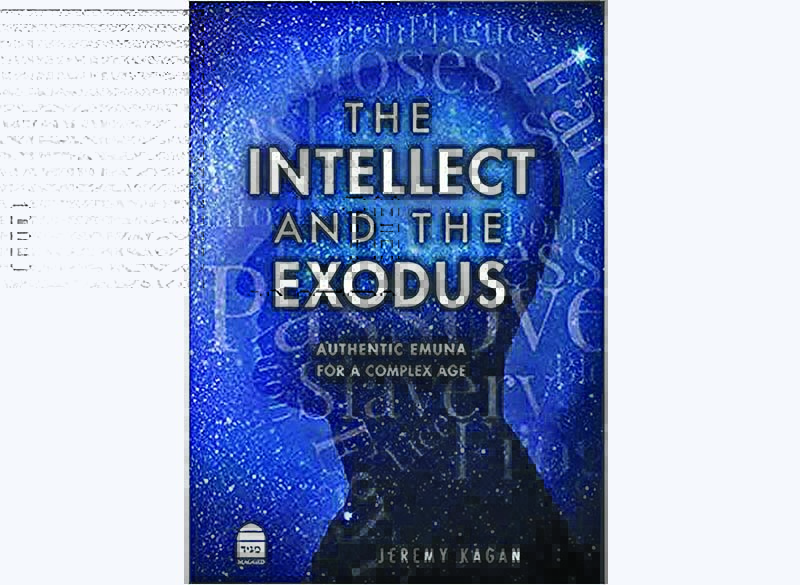
In The Intellect and the Exodus, Rabbi Jeremy Kagan attempts to reconcile the rationality of western thought and culture, with religious faith.
By Ben Rothke
There are so many this year that it would take months to go through all of them. For 2019, I found the following 5 haggadahs to be noteworthy.
By Ben Rothke
The word snowflake is a term for a person with among other things, an unwarranted sense of entitlement.
By Ben Rothke
And suddenly, it was all gone. Idolatry and the temptation for it abruptly exits.
By Ben Rothke
Marcus observes that we tend to superimpose our understanding of authorship, and think that authors write a book in a linear manner, and that it is ultimately preserved in one or more manuscripts.
By Ben Rothke
Achieving a deep-level reading of the Chumash requires an understanding of the syntactical relationships.
By Ben Rothke
The astute reader that he is, Cohen teases lots of insights into these nuanced differences.
By Ben Rothke
As to the lack of written work by Rav Soloveitchik, Rabbi Shatz notes that this was a common lament during the Rav’s lifetime.
By Ben Rothke
A superb essay which illustrates Angel’s approach is the story of Yakov and Esav, and Yakov’s seeming deception to obtain the valuable blessings from this father.
By Ben Rothke
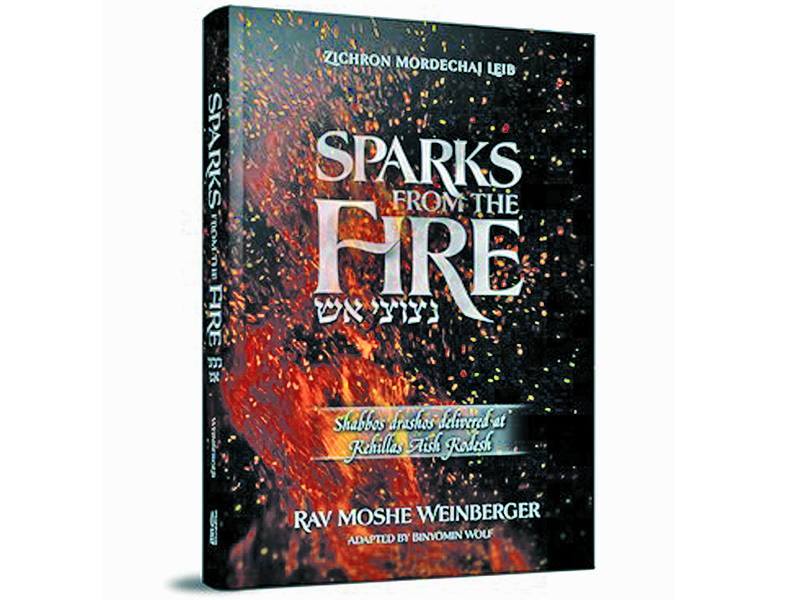
A recurring theme in the book is that life has its challenges, and struggling with those challenges is what life is about.
By Ben Rothke
Nechama was a dedicated and tireless teacher who spent decades creating and disseminating her gilyanot (worksheets).
By Ben Rothke
The Rav astutely notes that the story of Esther tells us in the most lively, realistic fashion, with a tinge of refined yet biting sarcasm, about paradoxical, absurd events, which are both tragic and comical at the same time.
By Ben Rothke
It quotes stories and lessons from the Lubavitcher Rebbe, The Rav, Rav Kook, Rabbi Shlomo Carlebach and many other luminaries.
By Ben Rothke
Halevy was a man of myriad talents. Be it a noted author, significant talmid chacham, master of kabbalah, gifted speaker and more.
By Ben Rothke
In the preface, Rabbi Menachem Genack writes that halacha, in the Rav’s analysis, transforms eating by means of a new institution, the se’uda.
By Ben Rothke
Weinreb shares with us his personal triumphs and tribulations, and lessons from his many travels across the Jewish world.
By Ben Rothke
One of the more forceful and vital chapters is towards the end of the book when Rabbi Bleich discusses vaccinations.
By Ben Rothke
Written in somewhat of a raw, clipped style, Goren holds no punches for those whom he admired, and those whom he scorned.
By Ben Rothke
Ultimately, the essays show that there does not have to be serious contradiction between Torah and western thought.
By Ben Rothke
While the subjects are often dense and abstract, Rabbi Pick is able to provide an extremely clear overview of the topics...


 October 16, 2026