September 11, 2026
 Categories: Headline / Features / Book Reviews
Timeless Torah, Contemporary Medicine
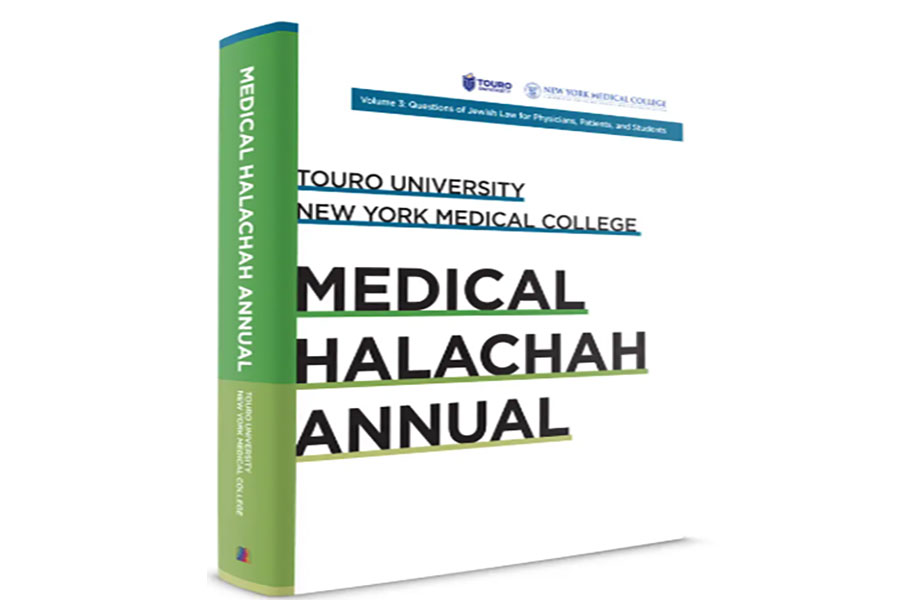


Title: Medical Halachah Annual, Volume 3: Questions of Jewish Law for Physicians, Patients, and Students
Edited by Dr. Edward Lebovics
Mosaica Press, in partnership with Touro University and New York Medical College
Now in its third volume, the Touro University New York Medical College journal Medical Halachah Annual (Mosaica Press) continues, as in the previous two volumes, with 16 essays from a variety of medical and rabbinic figures.
Volume 1 addressed topics related to the COVID pandemic, while Volume 2 examined the application of classic principles to contemporary practice. Volume 3 covers a wide range of contemporary topics.
Rabbi Joseph Soloveitchik said that if he were to add to Maimonides's 13 Principles of Faith, his 14th principle would be that the values and legal constructs of the Torah are timeless. They have absolute relevance to every generation and location. In each of the fascinating essays in Medical Halachah Annual, Volume 3, as in the previous volumes, the authors show the enduring relevance of halacha to medicine.
While it’s a medical journal, its readership is not limited to medical and rabbinic professionals. Those outside those areas will find the many fascinating and engaging articles quite readable.
Volume 3 opens with an article by Dr. Yonah Rubin, MD, and Rabbi Shlomo Brody, PhD, on Must Every Jew Die with Chest Compressions? A Halachic Approach to Code Status and Do-Not-Resuscitate (DNR) Orders.
In movies and TV, CPR is often portrayed as something that often works. The authors share research indicating that the overall survival to discharge is about 18%. A staggering low statistic. They also note that patients surviving CPR but left in vegetative or other states of suffering do not exist in Hollywood, but are unfortunately common in hospitals.
Transitioning from end-of-life care discussions, there is a chapter on reproductive medicine. A topic that existed only in the realm of theory until about 15 years ago was womb (uterine) transplantation. The first womb transplant in modern times was carried out in Saudi Arabia in 2000, but did not become realistically feasible until the mid-2010s.
Zvi Ryzman has a chapter on uterine transplantation from a halachic perspective, in which he examines several significant halachic issues. While transplants such as heart, kidney, and retina have halachic concerns, uterine transplantation has significant repercussions to the nature of family and identity. It raises halachic issues such as who is the mother, what is the yichus (lineage) of the baby, putting oneself in danger to donate their uterus, and more.
Ryzman cites a number of poskim and their approach to the permissibility of uterine transplantation. On the more restrictive side, Rav Shmuel Wosner, one of the most prominent recent poskim, ruled, consistent with his general negative position regarding many fertility procedures, on the grounds that they will lead to the breakdown of the purity of Jewish families.
While uterine transplantation is a fascinating topic, it’s limited to a very small subset of people. On the other hand, in the U.S., about 40 million people (12% of the population) have diabetes as of 2023. Type 2 diabetes has increased nearly 20% in the last decade, driven by obesity and aging, with 1.5 million new cases diagnosed annually in the U.S.
In a chapter on Diabetes Management and Shabbos Observance, Rabbi Moshe Rotberg and Dr. Martin Grajower, MD, detail classic issues around diabetes and Shabbos (drawing blood, assembling a syringe, and more) as well as new issues, such as using smartphone apps for glucose monitoring, insulin pumps, and more.
Editor Dr. Edward Lebovics, MD, has assembled an all-star cast of medical and rabbinic professionals in this engaging and timely book. The topics are all real, important, and relevant in this significant work.