יום שני, ט״ו חשוון תשפ״זMonday, October 26, 2026



Follow Us


I strongly urge parents to research the value, or non-value, of the school credits their children are taking. Successful research will enable their children to receive a better education.

In fact Hashem sets up couples that have opposite traits as an opportunity for each to help, learn, and heal the other.

Humor is also a great tool to use. If your daughter says no when you ask her to do something, smile and say, “Oh, is it opposite day? I guess this means that you will do it with pleasure. Thank you, my beautiful mitzvah girl.”

By Leah Field
We peel away one layer after the next, our eyes tear up and it becomes harder and harder to see as we get closer to our innermost insecurities and fears.

Dear Dr. Yael: My heart is breaking; my husband’s friend has gotten divorced. While this type of situation is always sad, here I do believe it could have been avoided.

I agree with the letter writer that a shadchan should respectfully and graciously accept a negative response to a shidduch offer.
Your husband seems to have experienced what we have described as the Ambivalent Attachment.
The budget allotted to shelters by the Welfare Department is configured by a set criteria for every family nucleus. The difference is that while a non-religious family averages 2.3 souls, the families at Bat Melech average 4.6.

By employing this new countermove, the scenario will likely change.

I bring the results of this study to demonstrate that although in a frum world we should rise above the gashmius, unfortunately, we still live in a secular world in which we are affected by that gashmius.
The obstacles the religious woman faces upon deciding to leave the house are much more difficult to overcome than those of her non-religious counterpart.
It is a shame that when one sincerely wishes to help another person, he or she often must avoid telling the truth.
They arrive here in a blind rush, at times in the middle of the night, wearing nothing more than pajamas, an attempt to escape years of sadistic abuse.

Dear Anonymous: Thank you for your amazing letter. I wish you hatzlachah in your new marriage, and may your letter bring more sensitivity to others regarding this issue.

JetBlue flew an empty aircraft from Boston to JFK to assist us. The care and concern of the flight attendants was amazing. They were astounded by our group, so much so that at the end of the flight, the captain related for all to hear that he was truly impressed by the care that the HASC counselors provided for the special-needs campers – all of whom have physical, mental, or emotional disabilities. We did our best to demonstrate a true kiddush Hashem.
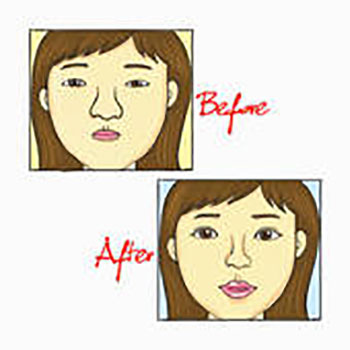
I had a great figure and dressed well, but the only thing wrong with me was that I had a very long nose with a huge bump.
I know of all Dr. Yael's techniques and I will tell the people in front of me, with derech eretz, that it is my turn.

Who created the current rules of dating? Why must the guy always pick up the girl by car, and pay for tolls, gas, etc., if things are not guaranteed to work out? After all, I may not be attracted to the girl, or our personalities may not click; thus, it turns out to be a waste of money and time for me.

When adults cut in front of my child, they are stealing from her and me, as her delay in returning home affords me less help.
By Alanna Fine
I once commented during a lecture that so many guys are just looking to play and not get serious. The speaker responded, “You’re not looking for a guy, you’re looking for a husband.” He was right. Making general statements about all men or women does everyone a disservice.
She should be grateful that her father is at least talking about his past and that he appears to be taking an active part in his daughter's and her family's life.
Many times when a couple is arguing they may, unconsciously, trigger childhood anger. So much so, that if we would stop and listen to what they are arguing about, it would sounds like two eight year olds fighting in the back yard.
But people who are very embarrassed about their issues will sometimes be more open over the phone.
It is possible that your father is attempting to transfer his wartime experiences in the direction of your 11-year-old grandson since he was the same age when he endured them

Spoiler Alert: Going to see the movie “Saving Mr. Banks”, starring Tom Hanks is not like going to Disney World. Well, it is like going to Disney World if you go mid-August with your triplet toddlers, feed them all cotton candy, and lose your car because you forgot you parked in Pluto 7.394. It's not a happy Disney movie.

Sleep Terror Disorder generally occurs early in the sleep cycle, usually in the first third of the night during stage 3 or 4 NREM (non-rapid eye movement) sleep – during delta waves, the slowest and highest amplitude brain waves, as opposed to during REM (rapid eye movement) sleep.

My experiences with weight loss programs have made me see that the focus is all on the wrong aspect of "fat".
If someone is acting different and no significant outside stressors are apparent, I would advise the individual to go for a check-up to ensure that there is no medical reason for the change.
Everything with my wife is an issue. If one of our young children spills something or accidentally breaks something, she screams uncontrollably. She is always angry and moody, which terrifies the children. I try to act lovingly toward her, but after an outburst she will often find a reason to blame me for what happened.
Think of your issues this way: due to those different backgrounds, you have a "shovel" to deal with difficulties while he has a "spoon".
Keep in mind that people sometimes distance themselves from family in order to - in their view - protect their marriage.
I am a 27-year-old married woman with three children. I love my husband but I’m very nervous about where our marriage is headed. The reason why I am nervous is not because we don’t care about each other, but in my heart I fear that he’s not really frum.
Her actions and advice told them that they didn't know how to raise their children and as a child-rearing expert, she was showing them how to do it correctly.
How do I continue to be happy in my marriage while maintaining my inner sense of modesty? How can I relay this message to my husband without hurting him or our relationship?
Make sure to keep things light when you're out together, and maximize that limited time by participating in fun and mutually enjoyable activities.
Dear Readers: We often hear about the difficulties so many of our wonderful singles face in finding their basherts. Our community is always seeking new methods and initiatives to make the process of introduction easier and more efficient. Here are two letters – the first from a woman, the second from a man – both of whom met their spouses with the help of an innovative frum dating website, ZivugZone.com.
Stacy and George walked out of the marriage counselor's office angrier than when they arrived. It was their third session and this last fight over his ex-wife wasn't going away. The fifty minutes spent embroiled in a detailed account of their battle only fired up their anger – and the counselor's request to remember how much they love each other wasn't helping. It would be a week before the next session and both of them were already talking about not coming back.
Converting to Judaism through an Orthodox rabbi is an excruciatingly difficult process, not for the faint of heart. It’s a very lonely road and nothing short of a true commitment to Torah can provide the resilience, bravery and fortitude to go through this process. Although some converts are indeed blessed with supportive, understanding families, many aren’t as lucky. And the isolation is part of the many sacrifices made to be closer to Hashem.

Most people are not aware that anxiety disorders are the most common mental illness in the United States, affecting 40 million adults age 18 and older (18% of U.S. population).
Tell her that you know how much effort she puts into raising her children and that you never meant to criticize her.
Dear Dr. Yael: Unfortunately, for the last several years our beloved son (we will call him Shmuel) has become estranged from us. This occurred immediately after his wedding in Israel.
The therapeutic alliance has always been about a firm connection between patient and counselor. There has always been one primary standard - physically meeting in an office setting. There might be some phone calls in between sessions or to bridge some vacation gap. But therapy has always been about a feeling of connectivity and there is no better way to do this than face-to-face.
Dear Dr. Yael: How do I express my opinion in an appropriate way? There are some aspects of my sister’s parenting that I do not agree with, and feel that her methods in these areas are harming her children. I do not claim to be the best parent in the world, but I am confident that my instincts in my sister’s situation are correct.
If all of us recognize that any oversights or unintended slights are just that, a huge step toward practicing ahavas Yisrael would be taken.
Cindy is 43, successful, attractive, a dedicated mom, extremely caring... and she hates herself. She doesn't readily admit this, but spend a minute inside her head and you’ll discover the resounding messages revolving around negative rants – everything from "I failed" to "I should've done better." You wouldn't know it from her behavior. She's a high functioning, regular member of society.
Parental conflict affects children in varying ways, depending on their age. For example, teenagers around the age of fifteen or sixteen are most likely to involve themselves in their parents’ battles. Younger children may keep their feelings hidden inside and may only show signs of depression in late childhood or early adolescence.
Dear Dr Yael: I loved your answer to Confused Mom (“Should Children Voluntarily Help Their Parents,” August 23). It was a bit unrealistic of the writer to expect her children to do things voluntarily for her and her husband. Even my husband, a good and loving man, does not do anything unless I ask him to, several times. I have spoken to my friends, and this seems to be the norm. This woman is blessed with an amazing marriage, but her daughter is correct: al pi halacha a child gets more sechar if he or she is asked by a parent to do something and then fulfills the request.
Dear Dr. Yael: I am sending my oldest son to a Pre-1A this year and am very anxious about inappropriate touching. I do not know if I should speak to my son about this and, if I choose to, I do not know what I should say. I want to protect my son from any kind of inappropriate situation, but I also do not want to scare him. My goal is for my son to have a warm and loving relationship with his rebbe. How do I balance my wish to protect him with the desire to provide him with a successful school year? An Anxious Mother
When parents come to talk to me about a troubled child or teenager, I often find it helpful to explore whether or not their marriage is causing their teenager to be at risk.
Baruch Hashem, my husband and I have a marriage in which we constantly anticipate each other's needs and usually try to help the other even before being asked. We, of course, did the same for our children.
As adults who were children of divorce know, healing does not occur through time alone. In fact, my research found that only 46% said they had a positive relationship with their fathers as adults.
Dear Dr. Yael: Like the seven-year-old daughter of A Heartbroken Mother, last week’s letter writer, my somewhat socially awkward nine-year-old son is also being bullied.
There is a huge difference between standing up for oneself and retaliating against others.
Caring gestures like a homemade, baked item, a small gift, or a card are very appreciated and leave an extra-special warm feeling - that someone with whom you are not particularly close is thinking of you. It also takes away the lonely feeling of being "failures" or "ones who are different."
Be careful to avoid arrogance by not extensively discussing the virtues of your family members to those who are prone to jealousy. This can only fuel more envy.
Active listening is only one part of the marriage equation; learning what to say and what not to say is the other half. And, it’s not just about expressing your feelings, but doing it in a way that avoids hurting the other person.
Dear Dr Yael: My husband and I have seven children; three are married, and our 19-year-old son is currently looking for a shidduch. We are chassidish, so we check out every girl very thoroughly before our son meets her.
Dear Dr. Yael: I found your June 28 column, The Challenge Of Remarrying, to be very true. I too lost my husband and was encouraged by my married children to remarry. I was reluctant to do so, but since the man I was considering seeing was a friend who knew my husband and I had known his deceased wife, I felt there was a real potential. Thanks in great measure to my children’s pressure, we are very happy together.
Dear Dr. Yael: My in-laws have a wonderful reputation in our community. They are looked upon as truly charitable and giving people. However, charity should begin at home. My in-laws never helped us financially, even when approached gracefully and tactfully. But they often give generously to their shul’s tzedakah funds, among other charities – as long as the public recognizes their contributions.
It may be difficult to let go of your husband’s memory, but please realize that marrying again will not mean that you must forget your late husband or your beautiful marriage with him.
Dear Dr. Yael: I admired your very appropriate reply to Anonymous about being careful what you say to others (Nishmah Vena’aseh: Think Before Speaking – 6-7). I painfully lost a son more than 15 years ago due to a drug overdose.
Stacy and Michael walked out of the marriage counselor's office angrier than when they arrived. It was their third session and this last fight over his ex wife wasn't going away. The fifty minutes embroiled in a detailed outline of the battle only fired up their anger and the counselor's request to remember how much they love each other wasn't helping. It would be a week before the next session and both of them were already talking about not returning for therapy.
Due to her family situation, it is understandable that she will have more responsibilities than other girls her age, but she would benefit from having some free time and receiving more appreciation for her hard work.
Dear Dr. Yael: My husband and I are married for three years and want to have children. Thus I’m undergoing fertility treatment, and gaining weight as a result. At a wedding I recently attended, everyone was looking at my stomach. Someone actually approached me and said, smiling, “I see that you put on some weight, so when is the baby due?”
Control may be the most destructive force influencing a marriage. Let me illustrate this point with the following story. About two years ago a woman named Bracha, 47, came to speak to me about her husband’s controlling behavior. This is how she described her precarious situation:
I read the May 10 letter in your column from H.S. (Depression: Not A Hopeless Malady) regarding her husband’s rabbi’s view about depression, and your response to it.
Dear Dr. Yael: Do you really believe that the Internet is the reason why the divorce rate is so high among young couples? This may be so in some cases, but what about the fact that many singles are pressured to get married at a young age despite not having any idea what they are looking for in a mate? And add to that the fact that many are pressured to make a decision about marriage after dating for a very short period of time.
From the moment they stand under the chuppah, newlyweds have two years to enjoy the special bliss that new love brings. This new finding, reported by the New York Times, is based on a study undertaken by American and European researchers. 1,761 people who got married and stayed married over 15 years were followed. The research shows that after two years the couples moved into a more companionable state in their relationships.
The two proceeded to talk about everyday things and surprisingly her mother-in-law did not find anything else to criticize. This occurred a few more times, with my client changing the topic every time by complimenting her mother-in-law or mentioning something positive about her.
Dear Dr Yael: During a shiur on Pirkei Avos, a rabbi admired by my husband spoke about how some people begrudge others certain things. He mentioned the “D” word (without saying the word itself), and I think he said it was an illness talked about in the Gemara. He said that people suffering from this “machalah shachor” (dark illness) should live in a desert with the wild animals. My assumption was that the person would be left to die there.
Controlling behavior may be the number one reason that your marriage needs first aid. If you are unfamiliar with the topic of control, it’s no surprise. Most people are unaware that control is a major issue for counselors, therapists and psychologists-at-large.
Instead of putting it all on the men, saying for example that they are "trained" by "society" to feel, think and behave as they do, perhaps you could have encouraged these self-described happily-married women to look in the mirror and try to figure out why their husbands seem to act insensitively toward them.
My friend forwarded this letter and I am sharing it with you, my readers as it concerns an issue that affects many in the “sandwich generation.”
Dear Dr. Yael: I am trying, over the Internet, to find programs for my son that are geared toward helping people strengthen their emunah and bitachon. Thus far, I have been unsuccessful. Do you know of any sites I can visit? Anonymous
He needs to have a different ring for his work number in order to be able to ignore all other incoming calls and message alerts. This will give him the opportunity to only speak on the phone or retrieve texts when it is absolutely necessary to do so.
No, the above title is not a misprint of the ubiquitous, “If you see something, say something” campaign encouraging citizens to report suspicious packages and behavior to the police. In these ads, often found in public places and synagogues, one sees a photo of a passenger with an unattended package nearby.
To this day, all the returned items remain in my parent's possession. Baruch Hashem, this was the beginning of a very close and wonderful relationship between my parents and these machatanim - on that continues until today.
We recognize that the Exodus story in the Torah, like all biblical narratives, is more than just a historical or political tale of physical bondage and ensuing liberation, it is also a spiritual and psychological drama. The exodus represents the human potential to liberate itself from slavery -- be it physical, mental, or spiritual.
Just like Aharon HaKohen promoted shalom bayis by sharing with couples all of the good things that his or her spouse said, a therapist can encourage shalom bayis in this same way.
I often write about Oppositional Defiant Disorder (ODD) because it is a pervasive and problematic issue in our community today. Recent surveys suggest that ODD affects between two and sixteen percent of children. Children with ODD are often classified as “explosive” because of their severe and sudden outbreaks.
There are millions of adults today who experienced the trauma of their parents’ divorce 20, 30, 40 or more years ago. Some have found closure, but many more have not. Regrettably, it is a time in a child’s life that is never forgotten. It stays with you; it is part of who you are.
Dear Dr. Yael: I recently concluded that I don’t believe in G-d. One day, while davening with kavanah for yiras Shamayim, I found material flaws in my reasons for believing in G-d and Judaism. I have felt this way for pretty much my whole life, with much introspection and debate. Finally, in one instant, my entire belief system fell away.
It’s inevitable that sometimes couples will step on each other’s toes; especially during the first year of marriage, where newlyweds find themselves tip-toeing around their spouse’s emotional roadblocks. Don’t forget that it takes time to learn about your spouse’s idiosyncrasies and how to respond in a way that makes him or her feel at ease.
For instance, if a woman had a very warm and loving father and then marries a warm and loving husband, she may continue to have a positive imago and enjoy an excellent relationship with her husband.
My father-in-law spent over thirty-five years as a circuit court judge. He noticed that some clients paid teams of lawyers only to be poorly represented. He noted in these cases that, "the lawyers are so busy arguing with each other that nobody's arguing the case." There was an absence of cohesiveness and the ego driven fighting rendered the team ineffective.
While understanding the situation will hopefully make it easier for you to handle it, it is important to speak with your mother - respectfully - about what is bothering you.
To feel loved and nurtured your spouse needs to feel that you empathize with his or her emotions. The key is empathy. Empathy isn’t the same as sympathy or pity. It means being able to put yourself in another’s position, to feel what he feels and see what he sees, without losing yourself in the process.

By dvora
The term Renaissance Man is defined by Wikipedia Encyclopedia as “a person whose expertise spans a significant number of different subject areas.” Many of us might think we know someone of that calibre, but does the person really have such a span of knowledge and impact on others?
Dear Dr. Yael: Your recent column on “The Burden Of Feeling Overwhelmed” (Dear Dr. Yael, 2-8-13) made me very upset. Instead of feeling overwhelmed, this woman should feel blessed. After all, she has over 10 children, four of whom are married and living near her. Additionally, they are financially comfortable with a large home and full-time help.
Mirroring is a good way to start actively listening. To mirror, you simply paraphrase or repeat back to your spouse what he or she is saying to you.
The difficulty lies in how teenagers perceive their surroundings. They often see the world as revolving around them and cannot understand why parents are always asking them to do things.
Explain to them that you'll try to be there for them when they "need" your help, but that you may have to sometimes take a rain check when they simply "want" your help.
Dear Dr. Respler: The letter from the husband lamenting his family’s difficulties brought on by his wife’s physical impairments (“For Better Or Worse – Or Bailing Out,” 1-11) brings back memories of my experience. I was the wife who one day found herself physically incapacitated and unable to do the simplest acts.
David and his wife had been married for 15 years and believed they knew what each other really wanted. While attending a marriage seminar on communication, David and his wife listened to the instructor declare, “It is essential that husbands and wives know the things that are important to each other.”
Dear Dr. Yael: I have, Baruch Hashem, a beautiful family with children and several grandchildren. I am fortunate to be close with all of them. I also work and take care of my parents, like many others in the “sandwich generation.” While I love my life, I am constantly exhausted and overworked.
Dear Dr. Yael: Your recent column on “The Wrongs Of Onas Devarim” (Dear Dr. Yael, 12-28-2012) was, for me, the worst column ever. Here’s why:
Dear Dr. Yael: A few years ago, our family went through a very traumatic period of time when my wife was diagnosed with a brain aneurism. She has suffered through so much pain and rehabilitation, and things have not returned to normal.
Recently, there a number of articles dealing with the difficulties singles are having getting married have appeared in various publications. Unfortunately, many young people in their 20’s (and some even in their 30’s) are struggling to find their bashert.

Dear Dr. Yael: I am the oldest child in a family of seven; one of my sisters is a year younger than me. Even though we basically have the same responsibilities, somehow I always get stuck with all the household chores. My sister has a tendency to take her time, all the while doing one job. Honestly, sometimes it takes her three hours to do the dishes. She says it is because she is a “schlep.” She actually gets angry with her when I ask her to move quicker, saying that “I am not understanding of her feelings” and “she needs time.”

Dear Dr. Yael: I am part of the “over 50” crowd and am having a really hard time with computers, cell phones and the rest of the modern-day technology. I work as a well-paid secretary, but am stuck in the same position with little room for advancement due to my poor computer skills. All the while I see all of my younger colleagues, with less experience, getting raises because they are more technologically advanced. Despite taking courses to improve in this area, I am finding it hard to succeed.
 October 23, 2026