יום ראשון, י״ד חשוון תשפ״זSunday, October 25, 2026



Follow Us



Self esteem is one of the most important factors influencing human behavior. Despite what some people believe, self esteem can be a critical issue in marriage, where unresolved identity issues from childhood can place unwanted stress on a relationship.

Dear Dr. Yael: I am writing to you in regards to your article, “Easing The Trauma Of Divorce” (Dear Dr. Yael, 11-16). Now in my 30s, I am the product of a divorced home in which my parents made me, an only child, a pawn. Throughout my life the trauma and hatred I witnessed between my parents was unbearable. As a result, I am terrified to get married, despite the desire to do so in a normal and happy setting. I have gone for therapy, but this great fear is hard to overcome. I wonder if this feeling will ever leave me.

Dear Dr. Yael: I have an issue and it is causing problems in my marriage. The home I grew up was not a warm one and I never received much love. For that reason, showing love to others is difficult for me – and for my husband. He is a warm and caring person and does not deserve my lack of affection. While I am working hard to change, I was wondering if you could offer some suggestions that might be helpful to both him and me. Anonymous
Creating direction in a marriage is similar to going on a long journey. To get to where you want to go, you need to have a plan that includes directions, supplies and the ability to navigate along the way. You will also have to be prepared for many possible factors that may interfere with your trip, including wind, rain, unpredictable mechanical breakdown and human error. Most importantly you will need a map to guide and help reorient you in case you lose your way.

Dear Dr. Respler: I am currently involved in a yearlong custody battle over my three children, who are all under the age of 10. I did not want or provoke this situation. My wife – with limited success – continues to enlist the children over to her side in her declared war on me. I, […]
Sometimes you just have to wonder, "What were they thinking?" My wife and I speak on marriage-related topics to variant crowds. We know what we're going to say, but we have no idea what the audience may offer. So, when we speak publicly, before we open the floor to comments or questions (which we welcome), we always preface with a cautionary word not to make any personal or disparaging remarks about one's spouse.

Dear Dr. Yael: I am struggling in my marriage after just five years. I am, by nature, a very outgoing person. I love to go out with friends and have people over for Shabbos meals. My husband, on the other hand, is quieter and would rather be home and stick to our routine. This causes a great deal of friction; between work and the kids, I do not have much of a social life and always want to invite people over or go out with other couples.

“It is a truth universally acknowledged, that a single man in possession of a good fortune must be in want of a wife.” Thus begins Jane Austen’s classic marriage-themed novelwork of marriage, Pride and Prejudice.

Dear Dr. Yael: I feel extremely guilty about my elderly father and am filled with anger toward my sisters and brothers in regards to his care.

I often share with my clients a simple yet powerful analogy: think about your relationship as you do about your bank account. That’s because investing in your relationship is similar to saving money; the more you put into your bank account or relationship, the more you can take out when necessary.

Dear Readers: Much of my private practice is devoted to helping couples in conflict resolve their differences. I have discovered over the years that personality compatibility is an essential component of a happy marriage. Many of the couples I see in therapy struggle with reconciling radically different modes of communicating and coping with life’s issues. As a result, it is often the case that arguments ensue, empathy is strained and estrangement sets in. With that as a backdrop, here are several fictitious vignettes of couples that are personality incompatible.
A mother and father living in accord and harmony is one of the best presents that can be granted to a child. Yet what happens when G-d’s natural design of child rearing becomes stripped away from a family? What happens when the notion of enjoying quality time with both parents together becomes non-existent? I am of course referring to the ramifications of divorce. Divorce eradicates the stability of a traditional family unit and invites the inherent difficulties of single parenting.

Dear Readers: It is Motzei Rosh Hashanah as I write this letter. I have been a therapist for over thirty years and devote a large part of my practice to marital and pre-marital therapy. This year I have had many clients seeking my services after they sought help from other frum therapists. Regarding this, I wish to address the following phenomena:

Dear Dr. Yael: I am a man in my 50s who, Baruch Hashem, has had a good life. I am married with children and grandchildren and was always a happy-go-lucky person, thankful for all the berachot bestowed on me. This year, though, has been very difficult for me, with many family and personal problems. I have begun to experience something that I have never really had before: depression. Out of nowhere I begin to feel upset and anxious, and I do not know what to do to get rid of these feelings.

Mordechai, 36, and Chani, 35, were married for six years and came to me for advice on how to save their relationship. They seemed to have everything going for them. They were working professionals, successful and upwardly mobile; they shared many common factors including similar religious beliefs, intelligence levels, and were both pleasantly extroverted.

Feeling like a prisoner, I went along with a shidduch she wanted for me. Baruch Hashem, the girl was sweet and beloved. But I held out hope that after the wedding I'd be able to ask my wife to gradually change. I knew this could cause problems, but I was hopeful. Sadly, after 12 years of marriage and six children, my situation is the same; my wife is unwilling to change. As a matter of fact, contrary to what I had hoped for, the opposite is happening: my wife wants me to change. She says that I am too modern and should become more frum.

Dear Dr. Yael: My husband and I are, Baruch Hashem, happily married for five years. But there is a stumbling block constantly facing us.

If you would like to know if your marriage is relationship centered or not, the way to find out is to ask yourself about your core values. For example, what is the most important principle of your marriage? Is it your desire for money or pleasure? Do you dream about being comfortable, being honored by your spouse and having a lot of fun?
As we begin the New Year it is with a sense of hope that we can avoid the painful arguments, hurtful remarks and misunderstandings which have harmed our relationships in the past. We seek to make amends with friends and family over the High Holidays and resolve that things will be different in the future. But moving forward, we may also wonder if we can really change patterns of relating that have been perpetuated for years or decades.

Dear Dr. Yael: I am a 20 years old and dating. While I know that people consider me to be an attractive young woman, I have been getting rejected – quite a lot. This might be happening because I am painfully shy. For the most part I clam up while on a date; I become […]
Are you looking for emotional first aid for your marriage? If you are, you’re not alone. Today, engaged couples, newlyweds and couples who have been married for years are feeling insecure about their relationships and looking for advice on how to make their marriages work better or simply to heal their relationship wounds.

Dear Dr. Respler: In your August 24 column, What Can Prevent Marriage, you eloquently discussed how losing a parent at a young age may cause someone to have a hard time getting married. As you made clear this is because of a deep-rooted fear of getting closer to someone and facing the possibility of loss.


Dear Dr. Respler: Having enjoyed your column, The Benefits of Countermoves (Dear Dr. Yael, 8-17), I am now seeking your suggestions regarding my problem in this area. My husband practices the “silent treatment,” whereby if I tell him something not to his liking or if I do something that does not meet his approval (these acts are not meant to hurt him) he can stop talking to me for hours or even for one or two days. After awhile, he returns to his normal behavior and we never discuss the issue again.

Dear Dr. Respler: I notice a certain unfortunate trend. People who lose a parent at a young age often stay single for a long time – or, unfortunately, do not marry at all. This was first pointed out to me at a sheva berachos in the fall of 2011. My internal thought was that the person who lost his father when he (the son) was just 28 – which, in my opinion, is an age when one should be able to function on one’s own – was simply looking for an excuse to rationalize why he had not yet gotten married.

I am concerned about my daughter. She is dating a boy whom she is crazy about, but I see certain things in him that make me nervous.

Dear Dr. Respler: I wish to share with your readers and you what I did to enhance my marriage through the use of your suggested technique of countermoves. My husband is, by nature, a closed person and has a hard time paying compliments. Many people have advised me to accept him and love him just […]

Cheating on a spouse is a terrible betrayal. Yes, sadly, it is quite common, but that doesn’t erase the devastation and pain it causes. The discovery of cheating almost always comes on the heels of extreme lying. The big question always is, how can the one cheated on ever trust again? It is logical and practical to think that once a spouse has cheated, there is no reason to assume it would not occur time and again.

Dear Dr. Yael: I am convinced that my mother is clinically depressed, but she refuses to seek help or even admit that she has this problem. Instead, she blames all of her sorrows on outside sources.

Dear Dr. Yael: I am, Baruch Hashem a happily married woman of 10 years with two children. As I am trying to expand my family, it seems that Hashem has other plans for me (my husband and I have not been able to conceive another child). Of course we want more children, but we can only do our hishtadlus and leave the rest up to Hashem.
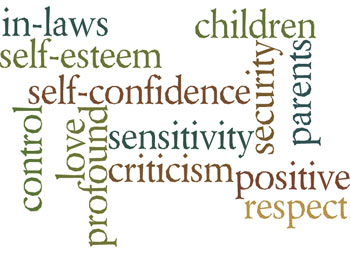
Dear Dr. Respler: My parents, who I love dearly, constantly contradict what I say to my children. They constantly interfere with the way my wife and I raise our children. For her part, my wife is very frustrated with this situation. What makes it harder for her, her parents live out of town while my parents live close by and are thus more involved with our children.

Not long ago, he was jumping on Oprah's couch like a lovesick teen, and now Tom Cruise faces a bitter divorce with Katie Holmes. Why is it that when a couple seems to have everything: fame, fortune, health, and an adorable child, it doesn't work? It's enough to make everyone else hopeless. After all, if celebrities have everything and can't make it, what are the chances for the rest of us?

Dear Dr. Yael: I am very happy and successful in my line of work. However, I am having trouble with a coworker and hope you can help me. A few months ago, a new woman began working at my office. We share a workspace and often have to work together on projects. This woman seemed nice, but there have been several awkward situations between us that are really bothering me.

Dear Dr. Yael: For the most part, my husband is a very good husband and father. He loves our children and will often go out of his way to make sure their needs are met. He is also loving and good to me. However, he often comes home with a very negative attitude. When he arrives home from work, he sees nothing good. He criticizes the children for not being in pajamas or for not finishing their homework. Even if he is right on both counts, he does not convey his criticism appropriately or at the right time.
Dear Dr. Yael: My wife, who takes good, loving care of our children and is very generous with her time, has a closed nature. It is not in her character to pay compliments or show appreciation. While she tries valiantly to never raise her voice to the children or me and works hard to always speak with derech eretz, I yearn to hear her tell me that she loves me – although I know that she does.

Dear Dr. Respler: When I read your May 25 column, Making Peace With Your Mother-In-Law, I started to cry, as I knew that the letter signer (Heartbroken Daughter-in-Law) was my daughter-in-law. We always discuss your column, and I guess it was her way of delivering a message to me.

Dear Dr. Yael: After 30 years of marriage, some things that bothered me before are now magnified. While my husband was trying to make a living I stayed home, doing the shopping and taking care of the kids. I never demanded – and still don’t require – vacations, fancy clothing and going out to eat. […]

I once heard a story about a single man struggling to find a spouse. His main challenge was his insistence that a potential mate permanently welcome his widowed mother into their marital home. A friend suggested that he speak with the great authority, Harav Shlomo Zalman Auerbach zt’l. The man shared with the Rav his delicate predicament. The Rav validated the man’s approach as acceptable. Sometime later, the man met his bashert, the special woman willing to live with his mom. They returned to Rav Shlomo Zalman for his blessing. Surprisingly, the Rav called the man aside and told him that they cannot live with his mother anymore. The young man was shocked. After all, on the previous visit, the Rav had supported his desire to find a woman who would accept their living with his mother.

Dear Dr. Respler: I have a problem with my mother-in-law. My in-laws and I have always had a good relationship, so this unexpected problem is really bothering me. Let me explain. Recently, my in-laws invited my husband to a baseball game; they had an extra ticket. My husband wanted to go, and it was our […]
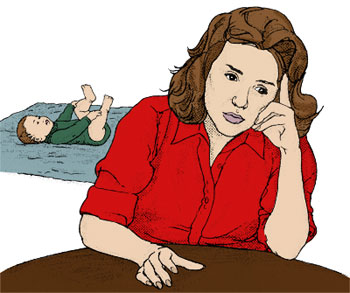
Dear Dr. Yael, I gave birth a little over a year ago and, even though it was not my first child, I felt differently this time around. I have always been a happy-go-lucky person, but after having this baby I could not seem to return to my previous self. I was moody, short-tempered and gloomy. While some of these symptoms could have been chalked up to normal baby blues, they persisted and I was becoming scared.

By Batya Jacobs
Rav Ezriel Tauber says that a husband and wife are like two rough diamonds. A rough diamond can become a priceless, pure jewel, but only if another diamond is used to remove the impurities. So HaKadosh Boruch Hu puts together two perfectly matched rough diamonds. He makes sure that they have their little differences. The friction from these differences scrapes away at their impurities so they gradually become multi-faceted, pure, shining jewels.

Frailty and differences in other people often scare us. Why? They scare us because we see a reflection of what we fear in ourselves or because we just don’t know how to respond. Since we can’t live with this discomfort for too long, we make assumptions about and apply labels to those we fear.

Beineinu and Choice of the Heart will be holding their annual Symposium this Thursday night, May 17th, at Heichal Shlomo in Jerusalem. The focus of the symposium is creating successful relationships through a combined spiritual and practical approach.

Dear Dr. Respler: The holidays are a great time to learn about ourselves – the good, the bad and the ugly – and then try to make lemonade from the lemons, turn the positive into building blocks, and generally create good things from the lessons learned. The Yamim Tovim are saturated with kedushah, leading to beautifully crafted creations from what one learned and experienced during these holy, spiritual days.

Dear Dr. Yael: Although I agree with your advice to A Passive Reader (Showing Respect Gets Results, 4-20) about how to deal with difficult people, I emphatically disagree with your decision to take the blame for the impatient frum guy who was honking his horn. If you saw him run someone over with his car, would you take the blame for that too? If you had gotten a ticket, would you have paid it? If the officer had arrested you, would you have gone to jail? I am not a rabbi, but I would be surprised if not informing means taking the blame as well.
About a month ago, we began the Passover Seder by asking “the four questions,” which led to a narrative explaining how the Jewish people were freed from Egypt. We are now in the midst of a forty-nine day process of spiritual growth in which we prepare ourselves to receive the Torah.

Dear Dr. Respler: At the recent wedding of my best friend’s son, I arrived for the chuppah early so as to secure a seat close to the front and by the aisle. I didn’t want to miss anything.

Dear Dr. Respler: I love my wife, who is by nature a difficult person. As a result, our seven children gravitate more to me than to her. She thinks she is always right, her favorite line being “I told you so.” This is annoying and drives all of us crazy.

Dear Dr. Respler: I am, Baruch Hashem, a healthy mother and grandmother who was recently trying to be helpful to my married daughter. After Shabbos my daughter, who has a large family, had many dishes piled in the sink. I planned on rinsing the dishes and placing them in the dishwasher, and then straightening up downstairs while she put her younger children to sleep. Aware of my plans my daughter, who loves me and means well, said, “Ma, please don’t work so hard. I will put the children to sleep, and then I can clean up and load the dishwasher quickly. I will do it quicker than you, and I want you to relax.” I was hurt. I know that she really wanted me to take it easy, but suddenly I felt like an old, useless woman. Do you think my daughter was right? How can I tell her how I feel without hurting her? My husband and I are planning to move in with my daughter, son-in-law and their children for Pesach. We always enjoy going there, but I do not feel good when I cannot be useful. I would like to help my daughter over Pesach, and would feel better if she allowed me to help her. Please advise me. A Healthy Grandmother

In our March 16 issue we featured The Tyranny of Beauty: A Plea to Mothers Of Girls In Shidduchim, in which the author described a “Meet and Greet” for young women in a certain age and mindset (looking for young men who are sitting and learning) and mothers of the young men they could potentially date. The article received a tremendous amount of comments on our website and via e-mail. Below are some of the responses.

Dear Dr. Respler: I recently lost my husband of 51 years, and I am very depressed. He was a true talmid chacham and a loving husband. Every morning when he was well, he went to shul early. He never missed a minyan and he learned every day. All his life he ran a business and, baruch Hashem, he worked hard and took excellent care of our children and me. I look at my grandsons and my grandsons-in-law and they don’t hold a candle to my husband. Even the children who learn in kollel are not as careful as my husband was about being on time for minyan. Everyone seems too busy for me, and I feel very lonely.

Dear Dr. Yael: I read the March 2 letter from A Lonely Wife who feels unappreciated and neglected as she seeks more attention from her husband. It is necessary for her to receive a reality check – in other words, mussar. While apparently having it all, she is unfulfilled. Well, how would she feel if […]

By Alan Magill
What's more important - love or money? Let's hear what a 90-year-old woman sitting in front of two elevators in a nursing home had to say. I asked her, "If both elevator doors opened at the same time, and out of one came the richest man in the world, and out of the other came the nicest man in the world, who would you want to marry?" She thought about it for a good while and then answered, "Both of them."
For most physicians specializing in the treatment of infertility, the subject of sexuality - and especially the "how to’s" of sex - are rarely a subject of concern.

Dr. Yael replies to a woman who feels like she's playing second fiddle to her husband's myriad phone calls, business deals, medical emergencies, and everyone else who needs him so desperately. Despite the fact that he buys her beautiful jewelry and gifts, that they live in a stunning house and have cleaners and babysitters, all this does not substitute for the intimacy and warmth that she craves from him.

Dear Dr. Yael: As a reader of all of your columns on hakaras hatov, here are my feelings as a child with loving parents.

A worried mother asks Dr. Yael how to deal with her two-and-a-half year old daughter's jealousy of her newborn brother.

Dear Dr. Respler: I disagree with the January 27 letter writer, Desperate Single Woman, who wrote that the frum, older singles scene is easier on the men. Well, I am a man who desperately wants to get married and start a family.

Dear Dr. Respler: I will never forget the following situation that happened to me in high school: Some of the boys picked on a boy who behaved inappropriately, causing the boy to feel terrible about himself. The rosh yeshiva, hearing about the situation, spoke to a few boys separately. I was one of those boys.

Dear Dr. Yael: I love your column, but I’ve read enough about the husband who wants to daven vasikin and the in-laws who feel that their married children do not express hakaras hatov to them. What about addressing the singles who love to read your column and want to read something about relationships? But instead of complaining to you, I would like you to answer my question.

Dear Dr. Respler: Although I am only 40 years old, I feel as if I have discovered the ultimate emotional healing remedy.

Dear Dr. Yael: As a husband and longtime admirer of your column, I respectfully submit that your answer to A Sleep-Deprived Wife (The Magazine, 12-23-2011) missed the mark. Your response begins as follows:
By Sam Krause
“Love means never having to say you’re sorry.” Remember that saccharine line from the famous 1970 movie “Love Story?” It sounded icky to us then, and it sounds icky to us now, but since, like us, many of you also came of age under the spell of that cloying mantra, we’d like to set the record straight once and for all: it’s a big fat lie that has nothing whatsoever to do with love.

Note from Dr. Respler: In A Plea To My Husband’s Ex (The Magazine, 12-9-2011), I mistakenly left out one important detail. Her husband has legally sanctioned visitation rights to his children, and despite this his ex-wife has largely prevented their children from having contact with their father. The father has been advised by his rebbeim and many legal experts to refrain from returning to court to fight for his relationship with his children. He is following this advice. This letter is in response to my reply to that letter.
By dvora
Psychologist David Richo defines love in terms of five A's: appreciation, affection, attentiveness (listening), acceptance and allowing (as in allowing others the freedom to fulfill their own dreams). Love is the opposite of control.

Whenever I speak at a shul or event I’m usually asked what I think are the vital aspects of good communication, and by implication, what makes for bad communication.
 October 23, 2026