יום רביעי, ה׳ תשרי תשפ״זWednesday, September 16, 2026



Follow Us


Dear Dr. Respler: My parents, who I love dearly, constantly contradict what I say to my children. They constantly interfere with the way my wife and I raise our children. For her part, my wife is very frustrated with this situation. What makes it harder for her, her parents live out of town while my parents live close by and are thus more involved with our children.

Not long ago, he was jumping on Oprah's couch like a lovesick teen, and now Tom Cruise faces a bitter divorce with Katie Holmes. Why is it that when a couple seems to have everything: fame, fortune, health, and an adorable child, it doesn't work? It's enough to make everyone else hopeless. After all, if celebrities have everything and can't make it, what are the chances for the rest of us?
Just a few days ago, I bumped into a former student in the supermarket. When she saw me, she stepped away from her shopping cart full of fruits and vegetables and warmly hugged me. “Mrs. Schonfeld, I wanted to tell you something that you said to me a few years ago that has stayed with me until today.” We had worked together on social skills to help her feel more comfortable when meeting new people. I tried to jog my memory and remember something specific I had said to bolster her confidence, but nothing particularly stood out. Instead, I smiled and said, “Yes, Sarah, what was it that I said?”

Dear Dr. Yael: I am very happy and successful in my line of work. However, I am having trouble with a coworker and hope you can help me. A few months ago, a new woman began working at my office. We share a workspace and often have to work together on projects. This woman seemed nice, but there have been several awkward situations between us that are really bothering me.

Dear Dr. Yael: For the most part, my husband is a very good husband and father. He loves our children and will often go out of his way to make sure their needs are met. He is also loving and good to me. However, he often comes home with a very negative attitude. When he arrives home from work, he sees nothing good. He criticizes the children for not being in pajamas or for not finishing their homework. Even if he is right on both counts, he does not convey his criticism appropriately or at the right time.

Dear Dr. Yael: I have five children, and am struggling with my oldest son. He can be so good at times, but then he will talk to me with such chutzpah. I want to have a good relationship with him, but I worry when he speaks to me this way – and therefore, I end […]

Dear Dr. Yael: My wife, who takes good, loving care of our children and is very generous with her time, has a closed nature. It is not in her character to pay compliments or show appreciation. While she tries valiantly to never raise her voice to the children or me and works hard to always speak with derech eretz, I yearn to hear her tell me that she loves me – although I know that she does.

By Chaim Sender
How do we teach our children to keep themselves safe from the adult predators in our midst? Are our schools teaching them what they need to know? Are parents teaching our youth what they need to know? Does your child feel safe enough to approach you if their personal space is being invaded? How do you know?
Parents often bring children into my office when they are already failing several subjects in school. These students are dejected, frustrated and often depressed. They believe that because of their past performance, they will never succeed in school. It is not strange that constant effort and subsequent failure have taught these students to believe that failure is their only option.

Dear Dr. Respler: When I read your May 25 column, Making Peace With Your Mother-In-Law, I started to cry, as I knew that the letter signer (Heartbroken Daughter-in-Law) was my daughter-in-law. We always discuss your column, and I guess it was her way of delivering a message to me.

Dear Dr. Yael: After 30 years of marriage, some things that bothered me before are now magnified. While my husband was trying to make a living I stayed home, doing the shopping and taking care of the kids. I never demanded – and still don’t require – vacations, fancy clothing and going out to eat. […]

I once heard a story about a single man struggling to find a spouse. His main challenge was his insistence that a potential mate permanently welcome his widowed mother into their marital home. A friend suggested that he speak with the great authority, Harav Shlomo Zalman Auerbach zt’l. The man shared with the Rav his delicate predicament. The Rav validated the man’s approach as acceptable. Sometime later, the man met his bashert, the special woman willing to live with his mom. They returned to Rav Shlomo Zalman for his blessing. Surprisingly, the Rav called the man aside and told him that they cannot live with his mother anymore. The young man was shocked. After all, on the previous visit, the Rav had supported his desire to find a woman who would accept their living with his mother.

By Tina Kahn
Menchlichkeit, good middos, patience and wisdom are the accolades I heard over and over again by stepchildren and stepparents when I asked them to describe the attributes of a good stepparent.
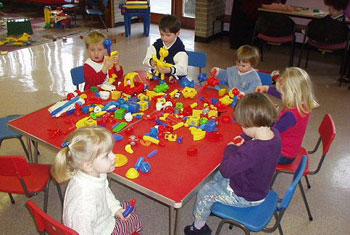
Dear Dr. Yael: I now see why so many children are insecure. I have been a day-care provider for many years. When parents initially consider day care they want a small group so their children will not be neglected. But problems arise when their children turn two, and nursery or playgroup becomes an option. All of a sudden a group of 20-25 children is not a problem because it is much cheaper. I refer to two-two and a half year olds, whose parents feel that they need to exclusively be with children their own age.

Dear Dr. Respler: I have a problem with my mother-in-law. My in-laws and I have always had a good relationship, so this unexpected problem is really bothering me. Let me explain. Recently, my in-laws invited my husband to a baseball game; they had an extra ticket. My husband wanted to go, and it was our […]

The alarm clock rings and Chaim pulls his pillow over his head to stifle the screeching noise. Mornings are Chaim’s least favorite part of the day; they always end in someone yelling. In truth, mornings are difficult for most of us, but particularly so for those who struggle with basic skills that are labeled “executive function” skills.
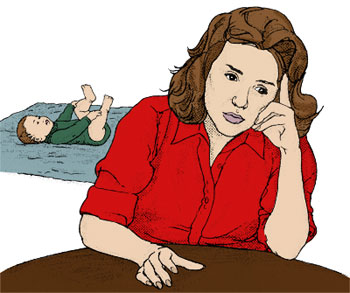
Dear Dr. Yael, I gave birth a little over a year ago and, even though it was not my first child, I felt differently this time around. I have always been a happy-go-lucky person, but after having this baby I could not seem to return to my previous self. I was moody, short-tempered and gloomy. While some of these symptoms could have been chalked up to normal baby blues, they persisted and I was becoming scared.

By Batya Jacobs
Rav Ezriel Tauber says that a husband and wife are like two rough diamonds. A rough diamond can become a priceless, pure jewel, but only if another diamond is used to remove the impurities. So HaKadosh Boruch Hu puts together two perfectly matched rough diamonds. He makes sure that they have their little differences. The friction from these differences scrapes away at their impurities so they gradually become multi-faceted, pure, shining jewels.

Frailty and differences in other people often scare us. Why? They scare us because we see a reflection of what we fear in ourselves or because we just don’t know how to respond. Since we can’t live with this discomfort for too long, we make assumptions about and apply labels to those we fear.

Beineinu and Choice of the Heart will be holding their annual Symposium this Thursday night, May 17th, at Heichal Shlomo in Jerusalem. The focus of the symposium is creating successful relationships through a combined spiritual and practical approach.

By Tibbi Singer
Students of Moriah Yeshiva of Englewood, NJ put together a Chessed project for children visiting New York Hospital Cornell

Dear Dr. Respler: The holidays are a great time to learn about ourselves – the good, the bad and the ugly – and then try to make lemonade from the lemons, turn the positive into building blocks, and generally create good things from the lessons learned. The Yamim Tovim are saturated with kedushah, leading to beautifully crafted creations from what one learned and experienced during these holy, spiritual days.


In all my years of teaching kriyah and English reading, I have encountered more boys than girls who struggle with the skill. We are even subconsciously programmed to think of reading as a female endeavor. Picture a reader in a comfy chair, thinking, “Wow, what a great book! I can’t wait to share this with my friends.” Was the reader you imagined male or female? Chances are, you envisioned a female reader. The idea that the majority of readers are female is consistent with reading scores around the nation.

Dear Dr. Yael: Although I agree with your advice to A Passive Reader (Showing Respect Gets Results, 4-20) about how to deal with difficult people, I emphatically disagree with your decision to take the blame for the impatient frum guy who was honking his horn. If you saw him run someone over with his car, would you take the blame for that too? If you had gotten a ticket, would you have paid it? If the officer had arrested you, would you have gone to jail? I am not a rabbi, but I would be surprised if not informing means taking the blame as well.
About a month ago, we began the Passover Seder by asking “the four questions,” which led to a narrative explaining how the Jewish people were freed from Egypt. We are now in the midst of a forty-nine day process of spiritual growth in which we prepare ourselves to receive the Torah.

By dvora
Dear Rachel, Since you helped me in the past with a really serious issue, I was hoping you’d have good advice for me again. This time the problem involves one of our children, and it’s become an exasperating and somewhat worrying situation. Let me explain. Our only daughter is ten years old, quite mature for […]

Dear Dr. Yael: I am having a very difficult time putting my children to sleep at night. My four-year-old son constantly barges out of his room after he has been put to bed. This usually goes on for about an hour - no matter how many times I put him back in bed or threaten to punish him. I also have an eight- year-old who is afraid of bedtime because she can't sleep.


After my recent article about the difficult trials divorcing couples face within the court system (Family Issues 1-13-2012), especially when there are children involved, I received a heartfelt e-mail from a grandfather in tremendous pain over the demise of his son’s marriage and the subsequent custody battle over his beloved grandchild.

Dear Dr. Respler: At the recent wedding of my best friend’s son, I arrived for the chuppah early so as to secure a seat close to the front and by the aisle. I didn’t want to miss anything.

By dvora
Reflection, Rebuke and Reverberations…An open letter to Deborah Feldman

Dear Dr. Yael: My five-year-old son is a very difficult child. Most of the time he will not do what I ask of him, and he has a tantrum when he does not get his way. Interestingly enough, he is much more obedient when it is just the two of us, but if the other children are around he is very hard to manage. I know that as he gets older, things will become more difficult. Thus, I want to help him change his middos now.
11-year old Avi was just awarded a trip to visit his cousins in Detroit – because he didn’t get into trouble in school or fight with his siblings for one week. The prize his parents originally had in mind was a new speed bike, but when that failed to motivate him sufficiently, they searched for a more appealing incentive.

Dear Dr. Respler: I love my wife, who is by nature a difficult person. As a result, our seven children gravitate more to me than to her. She thinks she is always right, her favorite line being “I told you so.” This is annoying and drives all of us crazy.
Mrs. D., the mother of two children under the age of four, came to see me – she was in the seventh month of her third pregnancy. This baby was unexpected. She had “difficulty” after her last pregnancy, and already tearful, she wanted me to get to know her now, so that I could help her later, when the depression hit. She was not sure she would be able to handle it all again.

Yes, beauty plays a role in courtship. But when we allow it to rule, then we – not beauty – become our daughters’ tyrants. We are fearful our daughters will remain single for too long, and so we grasp at straws – thin, brittle, unstable straws. But “extreme makeovers” and intensifying their already ample body-image anxieties are not the answer.

Dear Dr. Respler: I am, Baruch Hashem, a healthy mother and grandmother who was recently trying to be helpful to my married daughter. After Shabbos my daughter, who has a large family, had many dishes piled in the sink. I planned on rinsing the dishes and placing them in the dishwasher, and then straightening up downstairs while she put her younger children to sleep. Aware of my plans my daughter, who loves me and means well, said, “Ma, please don’t work so hard. I will put the children to sleep, and then I can clean up and load the dishwasher quickly. I will do it quicker than you, and I want you to relax.” I was hurt. I know that she really wanted me to take it easy, but suddenly I felt like an old, useless woman. Do you think my daughter was right? How can I tell her how I feel without hurting her? My husband and I are planning to move in with my daughter, son-in-law and their children for Pesach. We always enjoy going there, but I do not feel good when I cannot be useful. I would like to help my daughter over Pesach, and would feel better if she allowed me to help her. Please advise me. A Healthy Grandmother

Dear Gary, As Pesach approaches, I get worried because I want to have a great Yom Tov, and yet, every year, the seder ends in some sort of fighting and arguing. My husband wants the seder to be all about divrei Torah and so do I, but between the younger children (who we want to be awake for the whole seder) and guests, we somehow end up in stern looks and squabbles. I'm happy we have guests or else we'd probably start yelling at each other and even Eliyahu Hanavi would bail. I know everyone jokes about how tough Pesach is, but I can't see the humor anymore – and neither can my children. What can we do to manage a calm (I don't even wish for happy) seder? A Sad Mom

In our March 16 issue we featured The Tyranny of Beauty: A Plea to Mothers Of Girls In Shidduchim, in which the author described a “Meet and Greet” for young women in a certain age and mindset (looking for young men who are sitting and learning) and mothers of the young men they could potentially date. The article received a tremendous amount of comments on our website and via e-mail. Below are some of the responses.
Is this what three thousand and three hundred years of Jewish tradition has come to, that a nation that has always dared to walk alone, with different ideals and values from the wider culture, should so fully capitulate to the most corrupt, misogynistic values, that we would advocate that our young women have plastic surgery in order to get married?

Don't worry, Yitta, I'm not going to crucify you, as you feared. I actually agreed with the gist of your article, which was obviously heartfelt and well-intended. I just want to point out where you crossed a line...

Dear Dr. Respler: I recently lost my husband of 51 years, and I am very depressed. He was a true talmid chacham and a loving husband. Every morning when he was well, he went to shul early. He never missed a minyan and he learned every day. All his life he ran a business and, baruch Hashem, he worked hard and took excellent care of our children and me. I look at my grandsons and my grandsons-in-law and they don’t hold a candle to my husband. Even the children who learn in kollel are not as careful as my husband was about being on time for minyan. Everyone seems too busy for me, and I feel very lonely.

By dvora
In the first part of this article (Family Issues 3-2-2012) I shared the many memories resulting from my year of avaylus (mourning) for my mother. This week I would like to connect those memories to a better understanding of how good could potentially come from bad happenings in an effort to improve relationships.

By Yitta Halberstam Mandelbaum
I know I’m going to be crucified, but if the appeal I make below helps even one girl in shidduchim, then it will be worth all the fury and outrage that shall inevitably descend upon my soon-to-be beleaguered head.

It was Yehudah’s third birthday party. Instead of calmly interacting with his guests, he either ignored them or bossed them around with his limited vocabulary of ten words. He ran around nonstop and elbowed every person in his path. Then, his mother, Shoshana, decided he needed some time to himself so she asked him to play quietly in the den for a few minutes.

Dear Dr. Yael: I read the March 2 letter from A Lonely Wife who feels unappreciated and neglected as she seeks more attention from her husband. It is necessary for her to receive a reality check – in other words, mussar. While apparently having it all, she is unfulfilled. Well, how would she feel if […]

By Alan Magill
What's more important - love or money? Let's hear what a 90-year-old woman sitting in front of two elevators in a nursing home had to say. I asked her, "If both elevator doors opened at the same time, and out of one came the richest man in the world, and out of the other came the nicest man in the world, who would you want to marry?" She thought about it for a good while and then answered, "Both of them."

Dear Dr. Respler: I enjoyed your recent column concerning the jealousy a girl had toward her newborn brother.

For most physicians specializing in the treatment of infertility, the subject of sexuality - and especially the "how to’s" of sex - are rarely a subject of concern.
By dvora
In her ninety-eighth year my mother beat pneumonia twice. She always said that she would know when her time was up – and she did. People would ask her what she attributed her many years to. Though she was not raised in a religious home, she would always say that Hashem knew what He was doing. We learn in the Torah when one honors parents the reward is a long life. She was certainly proof of this.

By dvora
More Commentary On Bais Yaakov’s High School Education

Dr. Yael replies to a woman who feels like she's playing second fiddle to her husband's myriad phone calls, business deals, medical emergencies, and everyone else who needs him so desperately. Despite the fact that he buys her beautiful jewelry and gifts, that they live in a stunning house and have cleaners and babysitters, all this does not substitute for the intimacy and warmth that she craves from him.

Dear Dr. Yael: As a reader of all of your columns on hakaras hatov, here are my feelings as a child with loving parents.
Asperger’s Syndrome was first described in the 1940s by Austrian pediatrician Hans Asperger, who noticed that he had many patients who were deficient in social and communicative skills even though they had normal language development and cognitive abilities. Professionals still debate as to whether Asperger’s Syndrome is “high-functioning autism” or whether it is its own disorder completely. Regardless, in 1994, Asperger’s Syndrome was added to The American Psychiatric Association's Diagnostic and Statistical Manual of Mental Disorders (DSM-IV) as a separate disorder from autism.

By dvora
A Female Member of the Satmar Community in Williamsburg takes Deborah Feldman to task for her allegations in a recent newspaper interview…

Multi-generational families are making a comeback these days. For some the choice is made out of necessity because of the unstable economy, for others it is due to the physical needs of either the younger generation or aging parents. And then sometimes the decision to live this way is out of a mutual desire to be full and present participants in extended family life. For us it was a combination of factors that brought us to this point.

By dvora
Readers weigh in with their own viewpoints on the subject of the heavy curriculum that is par for the course in a Bais Yaakov high school.

A worried mother asks Dr. Yael how to deal with her two-and-a-half year old daughter's jealousy of her newborn brother.

Dear Dr. Respler: I disagree with the January 27 letter writer, Desperate Single Woman, who wrote that the frum, older singles scene is easier on the men. Well, I am a man who desperately wants to get married and start a family.
“Oh. I was just thinking about you. How was your day?” Ruti’s mother asked her the minute she walked through the door. “Fine, Mommy.”
A few weeks ago in these pages you were introduced to Menifa - Leverage for Life, a nonprofit organization based in Israel that works with youth at risk who have dropped out of high school.

By dvora
Readers weigh in on “A Well-Meaning Outsider” (Chronicles 01-06-2012)

Dear Dr. Respler: I will never forget the following situation that happened to me in high school: Some of the boys picked on a boy who behaved inappropriately, causing the boy to feel terrible about himself. The rosh yeshiva, hearing about the situation, spoke to a few boys separately. I was one of those boys.

In the previous two columns, we focused on phonics, sight-reading, comprehension and fluency. While phonics and sight-reading are different approaches to reading instruction, comprehension and fluency measure the level at which a student reads.

Father of three suffered burns on face and shoulders while extricating his family from danger.

Dear Dr. Yael: I love your column, but I’ve read enough about the husband who wants to daven vasikin and the in-laws who feel that their married children do not express hakaras hatov to them. What about addressing the singles who love to read your column and want to read something about relationships? But instead of complaining to you, I would like you to answer my question.

By Chaim Levin
It’s been more than six months since The Jewish Press published an op-ed titled “Orthodox Homosexuals and the Pursuit of Self Indulgence.” In the article, the writer, while not mentioning my name, calls me shameless and self-indulgent and suggests that I learn to suffer in silence.

Dear Dr. Respler: Although I am only 40 years old, I feel as if I have discovered the ultimate emotional healing remedy.

There was a time when I thought we would never reach this stage. However, I can now say that we are "courtroom-drama free" – at least in regards to our blended family. The scars remain, the experiences no doubt have changed us, but the constant upheavals no longer control our daily lives.

Like most first grade classrooms, the one I was observing had students with multiple reading levels. Accordingly, the head teacher had divided the students into different groups so that they could practice skills that were relevant to all members of the small group.

Dear Dr. Yael: As a husband and longtime admirer of your column, I respectfully submit that your answer to A Sleep-Deprived Wife (The Magazine, 12-23-2011) missed the mark. Your response begins as follows:

By Edward Villa
“One night before I went to sleep I spoke to G-d and asked him out loud the following request: “Please – give me one hug from Dvir so that I will know that it was not all in vain.”
By Sam Krause
“Love means never having to say you’re sorry.” Remember that saccharine line from the famous 1970 movie “Love Story?” It sounded icky to us then, and it sounds icky to us now, but since, like us, many of you also came of age under the spell of that cloying mantra, we’d like to set the record straight once and for all: it’s a big fat lie that has nothing whatsoever to do with love.

By dvora
I had just picked up my son from his first day of school, when this beautiful woman smiled at me, then at my children, and continued on her way. A flood of wonderful memories washed over me; this woman had been my first grade teacher.

Note from Dr. Respler: In A Plea To My Husband’s Ex (The Magazine, 12-9-2011), I mistakenly left out one important detail. Her husband has legally sanctioned visitation rights to his children, and despite this his ex-wife has largely prevented their children from having contact with their father. The father has been advised by his rebbeim and many legal experts to refrain from returning to court to fight for his relationship with his children. He is following this advice. This letter is in response to my reply to that letter.
By dvora
Psychologist David Richo defines love in terms of five A's: appreciation, affection, attentiveness (listening), acceptance and allowing (as in allowing others the freedom to fulfill their own dreams). Love is the opposite of control.

Whenever I speak at a shul or event I’m usually asked what I think are the vital aspects of good communication, and by implication, what makes for bad communication.

Peeking her head into her daughter’s preschool classroom, Shayna heard Morah Esther singing a melodic song while the children clapped their hands and stomped their feet.
 September 11, 2026