יום שלישי, ד׳ תשרי תשפ״זTuesday, September 15, 2026



Follow Us


In his best selling book, The Power of Habit: Why We Do What We Do In Life and Business, Charles Duhigg argues that most of the choices we make may feel like products of well-considered decision making. In reality, they are not.

David and his wife had been married for 15 years and believed they knew what each other really wanted. While attending a marriage seminar on communication, David and his wife listened to the instructor declare, “It is essential that husbands and wives know the things that are important to each other.”

I feel so much shame about my disease and the pain I have caused my family and friends. I am trying to make things better now, and hopefully I will be able to beat this disease for good. As they say in the meetings: “One day at a time!”
Dear Dr. Yael: I have, Baruch Hashem, a beautiful family with children and several grandchildren. I am fortunate to be close with all of them. I also work and take care of my parents, like many others in the “sandwich generation.” While I love my life, I am constantly exhausted and overworked.
Dear Dr. Yael: Your recent column on “The Wrongs Of Onas Devarim” (Dear Dr. Yael, 12-28-2012) was, for me, the worst column ever. Here’s why:
In the 1950’s, bestselling author Rudolf Flesch offered to give a friend’s son, who was a struggling reader, some help with reading. He soon discovered that the problem did not lie in the boy’s intelligence, but rather in the way that reading was taught to him in school. To set out his reading principles, Flesch wrote a now famous book entitled, Why Johnny Can’t Read – and What You Can Do About It. In it, Flesch outlined the basic approach of phonics, an effective and important manner of teaching reading.
I have been promising myself that I would write about the death of my twins when I was ready. Ever since that fateful day more than 11 years ago, I have tried to write, dozens of times, but my attempts have drawn many tears and very few words. I tried again very recently, but didn’t get very far. And then the school shooting in Newtown changed everything.
Avital walked into the test feeling great. She had studied the night before and she was sure to ace her grammar test. But, suddenly, when her teacher passed out the test paper, Avital found her palms sweating and her heart racing.
Dear Dr. Yael: A few years ago, our family went through a very traumatic period of time when my wife was diagnosed with a brain aneurism. She has suffered through so much pain and rehabilitation, and things have not returned to normal.
Dear Dr. Yael: My seven-year-old daughter is having a very difficult time socially in school. Another girl is making fun of her, and I do not know how to fix the problem. Because she wants to be friends with this girl (although I am not sure why), she puts herself in situations where she is the target of the girl’s ridicule.
Meet Noam, a ninth grader I worked with several years ago. Noam came to my office because he was struggling with his biology curriculum. Though Noam was extremely smart, he had ADHD, which made it hard for him to focus on all of the material presented during class. Before we even looked at the material together, I asked Noam how he learned best. His face was blank as he responded, “Um, Mrs. Schonfeld, I really am not sure.”
Recently, there a number of articles dealing with the difficulties singles are having getting married have appeared in various publications. Unfortunately, many young people in their 20’s (and some even in their 30’s) are struggling to find their bashert.
By Leah Rokeach
Ms. S. is 31 years old and has been hearing voices for the past 10 years. The voices come almost every day and they tell her that she is a failure, will never amount to anything, no one likes her or respects her. Ms. S. was diagnosed with schizophrenia. At the age of 21 she was told she has a disease of the brain and will need to take medication for the rest of her life.

Dear Dr. Yael: I am the oldest child in a family of seven; one of my sisters is a year younger than me. Even though we basically have the same responsibilities, somehow I always get stuck with all the household chores. My sister has a tendency to take her time, all the while doing one job. Honestly, sometimes it takes her three hours to do the dishes. She says it is because she is a “schlep.” She actually gets angry with her when I ask her to move quicker, saying that “I am not understanding of her feelings” and “she needs time.”

Dear Dr. Yael: I am part of the “over 50” crowd and am having a really hard time with computers, cell phones and the rest of the modern-day technology. I work as a well-paid secretary, but am stuck in the same position with little room for advancement due to my poor computer skills. All the while I see all of my younger colleagues, with less experience, getting raises because they are more technologically advanced. Despite taking courses to improve in this area, I am finding it hard to succeed.

When an opportunity for a fresh start is handed to us, when that new door opens, it is often viewed as a gift from Hashem. In most cases in order to completely realize it, we must fully embrace it. For people transitioning into marriage the second time around this is often the reality they face: a new opportunity seldom comes without a price, without us having to, in some way, compromise the life we were accustomed to. Seamlessly blending “pre re-marriage” life with “post re-marriage, new blended family” life is difficult at best and often times takes many years to sort its’ way out.
Dear Brocha, Hello! My name is Dovid* and I am a Gambling Addict. I am 37 years old, with bli ayin hara, three wonderful children, and a special wife who is the source of my strength and recovery.

One of the most powerful dimensions of a successful marriage is a couple’s ability to keep focused on each other's good points and unique personality traits. Too often, people become fixated on the negative, sweating “over the small stuff," and forgetting the positive points that brought them together in the first place.
Conversations in my head always there but never to be said, Can't escape my childish dreams, my fantasies, the unreal realities, Talking to myself again no one seems to be around, I hide myself inside myself, never thinking I'll be found… -Jamie Sue Reinhart

By dvora
In Part I of My Soul Is On Fire, I told my readers about Allan, a very distraught nineteen year old who, in a moment of dire pain, told me he felt his soul was on fire.

Dear Dr. Yael: I am a female driver dealing with challenges of derech eretz while driving in my community. Every time the light is about to turn green, the person behind me seems to immediately honk the horn, yet no one has a problem double-parking, making me feel as if I am driving on an obstacle course.
Self esteem is one of the most important factors influencing human behavior. Despite what some people believe, self esteem can be a critical issue in marriage, where unresolved identity issues from childhood can place unwanted stress on a relationship.

Dear Dr. Yael: I am writing to you in regards to your article, “Easing The Trauma Of Divorce” (Dear Dr. Yael, 11-16). Now in my 30s, I am the product of a divorced home in which my parents made me, an only child, a pawn. Throughout my life the trauma and hatred I witnessed between my parents was unbearable. As a result, I am terrified to get married, despite the desire to do so in a normal and happy setting. I have gone for therapy, but this great fear is hard to overcome. I wonder if this feeling will ever leave me.
Dear Brocha, Thank you so much for your column and for shining light on this matter. Addiction has been gnawing at the souls of our community for a long time. Yet, it still remains a disease that is swept under the table.
By dvora
Allan is a very troubled nineteen-year-old who has been coming to see me since August. Actually, I’m never sure if Allan will make it to the next appointment. Since we first met, I have been amazed at the amount of emotional turmoil and pain he is in. Every appointment seems to bring another “cry” for help. His anguish is noted by his constant crying and threats of harm to himself and others.

In a recent New York Times article, Robert Lipsyte, a sports author, posed the following question: “Boys and Reading: Is There Any Hope?” For years, I have been dealing with this question in my office. In fact, the U.S. Department of Education’s reading tests for the last thirty years show boys scoring worse than girls in every age group, every year.

Dear Dr. Yael: I have an issue and it is causing problems in my marriage. The home I grew up was not a warm one and I never received much love. For that reason, showing love to others is difficult for me – and for my husband. He is a warm and caring person and does not deserve my lack of affection. While I am working hard to change, I was wondering if you could offer some suggestions that might be helpful to both him and me. Anonymous
Creating direction in a marriage is similar to going on a long journey. To get to where you want to go, you need to have a plan that includes directions, supplies and the ability to navigate along the way. You will also have to be prepared for many possible factors that may interfere with your trip, including wind, rain, unpredictable mechanical breakdown and human error. Most importantly you will need a map to guide and help reorient you in case you lose your way.

Dear Dr. Respler: I am currently involved in a yearlong custody battle over my three children, who are all under the age of 10. I did not want or provoke this situation. My wife – with limited success – continues to enlist the children over to her side in her declared war on me. I, […]

Sometimes you just have to wonder, "What were they thinking?" My wife and I speak on marriage-related topics to variant crowds. We know what we're going to say, but we have no idea what the audience may offer. So, when we speak publicly, before we open the floor to comments or questions (which we welcome), we always preface with a cautionary word not to make any personal or disparaging remarks about one's spouse.
It still amazes me how the Internet has completely changed our lives and how we view communication these days. My children hardly believe me when I tell them that there was a time when being in touch with someone, meant we actually saw them, spoke to them on the phone, or wrote them a letter and mailed it.

Dear Dr. Yael: I am struggling in my marriage after just five years. I am, by nature, a very outgoing person. I love to go out with friends and have people over for Shabbos meals. My husband, on the other hand, is quieter and would rather be home and stick to our routine. This causes a great deal of friction; between work and the kids, I do not have much of a social life and always want to invite people over or go out with other couples.
Dear Brocha, As I write this letter I am overcome with emotions. Relief, fear, trepidation, elation…the feelings are all jumbled up inside of me. Please allow me to back track. My daughter, who recently turned 20, just left to rehab. After four years of denial, lies, manipulation, anger and chaos she finally admitted she has a problem with alcohol.

He recognized me before I recognized him. We were in Yerushalayim on different sides of the street. He was six foot two waving and yelling my name. “Noach, Noach, Noach Schwartz, the social worker! It’s me Yechiel Klein! Don’t you remember me?” He was wearing a hat, white shirt and suit and looked like a regular bochur from the Mir or Brisk. He did not look like the Yechiel I had met ten years earlier at a clinic in Boro Park.

“It is a truth universally acknowledged, that a single man in possession of a good fortune must be in want of a wife.” Thus begins Jane Austen’s classic marriage-themed novelwork of marriage, Pride and Prejudice.

Dear Dr. Yael: I feel extremely guilty about my elderly father and am filled with anger toward my sisters and brothers in regards to his care.

Dear Dr. Yael: I am married and have a two and a half year old son. He is a wonderful child, but when he does not get his way, he often has a tantrum. Sometimes, I just give him what he wants because we are in public and his behavior is embarrassing. But I cannot always give in, especially when what he wants is dangerous or unhealthy. It is then that I do not know what to do.
I have often been talking about parenting the “explosive child” or a child who struggles with Oppositional Defiant Disorder (ODD). In that context, I often mention Dr. Ross Greene’s groundbreaking work on using “Plan B.” However, recently, another approach has been gaining popularity. It is from Daniel J. Siegel, MD and is often used to promote “the whole-brain child.”

By dvora
Candies are given as rewards in school. I remember when we got stars and stickers. Why are the yeshivas – our "frum culture" – equating reward with gashmius (materialism), and unwholesome at that! Bad for mind and body. Stop it already!

I often share with my clients a simple yet powerful analogy: think about your relationship as you do about your bank account. That’s because investing in your relationship is similar to saving money; the more you put into your bank account or relationship, the more you can take out when necessary.

Dear Readers: Much of my private practice is devoted to helping couples in conflict resolve their differences. I have discovered over the years that personality compatibility is an essential component of a happy marriage. Many of the couples I see in therapy struggle with reconciling radically different modes of communicating and coping with life’s issues. As a result, it is often the case that arguments ensue, empathy is strained and estrangement sets in. With that as a backdrop, here are several fictitious vignettes of couples that are personality incompatible.

A mother and father living in accord and harmony is one of the best presents that can be granted to a child. Yet what happens when G-d’s natural design of child rearing becomes stripped away from a family? What happens when the notion of enjoying quality time with both parents together becomes non-existent? I am of course referring to the ramifications of divorce. Divorce eradicates the stability of a traditional family unit and invites the inherent difficulties of single parenting.

Dear Readers: It is Motzei Rosh Hashanah as I write this letter. I have been a therapist for over thirty years and devote a large part of my practice to marital and pre-marital therapy. This year I have had many clients seeking my services after they sought help from other frum therapists. Regarding this, I wish to address the following phenomena:

Dear Dr. Yael: I am a man in my 50s who, Baruch Hashem, has had a good life. I am married with children and grandchildren and was always a happy-go-lucky person, thankful for all the berachot bestowed on me. This year, though, has been very difficult for me, with many family and personal problems. I have begun to experience something that I have never really had before: depression. Out of nowhere I begin to feel upset and anxious, and I do not know what to do to get rid of these feelings.

Dear Brocha,... Today, I am a father of six bochurim b”ah. While I love and appreciate all of my children, unfortunately the Yomim Tovim aren’t filled with the good memories as in the days of yore. You see, one of my sons got involved with the wrong crowd, and at 16 he looks forward to Shabbos and Yom Tov as simply another opportunity to drink. Now that Sukkos is almost upon us, instead of joyfully anticipating, I am cautiously fearful about what Simchas Torah will bring.
I watched them tear a building down; A gang of men in a busy town. With a mighty heave and a lusty yell, They swung a boom and a side wall fell. I said to the foreman, "Are these men skilled As the men you'd hire if you had to build?" He gave me a […]

Mordechai, 36, and Chani, 35, were married for six years and came to me for advice on how to save their relationship. They seemed to have everything going for them. They were working professionals, successful and upwardly mobile; they shared many common factors including similar religious beliefs, intelligence levels, and were both pleasantly extroverted.

Feeling like a prisoner, I went along with a shidduch she wanted for me. Baruch Hashem, the girl was sweet and beloved. But I held out hope that after the wedding I'd be able to ask my wife to gradually change. I knew this could cause problems, but I was hopeful. Sadly, after 12 years of marriage and six children, my situation is the same; my wife is unwilling to change. As a matter of fact, contrary to what I had hoped for, the opposite is happening: my wife wants me to change. She says that I am too modern and should become more frum.
Parents often bring children into my office when they are already failing several subjects in school. These students are dejected, frustrated, and often depressed. They believe that because of their past performance, they will never succeed in school. It is not strange that constant effort and subsequent failure have taught them to believe that failure is the only option.

By dvora
Dear Rachel, As I write this letter, it is chaotic in many homes where children are between camp and school, which has not yet started. Kids running in and out of the house are always looking to munch on something, and exasperated moms let them raid the nosh cabinet. But it doesn’t start here. This […]

By Barry Katz
The spectrum of special-needs children ranges from mental to physical to psychological and sometimes all three. A 2008 study by the United States Department of Health and Human Services estimates that 14 percent of children in this country fit into this category, and about 20 percent of families have at least one special-needs child. The definition of a special-needs child can range from one who is diagnosed with a mild learning disability to one who has a life-threatening condition, such as cystic fibrosis. This article will focus on the more severe categories.

Dear Dr. Yael: My husband and I are, Baruch Hashem, happily married for five years. But there is a stumbling block constantly facing us.

Dear Brocha, I am married for 5 years and am unsure how to proceed with my husband and his behavior. Our religion incorporates alcohol throughout the year and during life cycle events. Purim, Pesach, bar mitzvahs, weddings and every Shabbos kiddush (not to mention the kiddush club) all seemingly require alcohol as an integral and necessary ingredient. For my husband, it seems like there is always a “good reason” to make a l'chayim.

If you would like to know if your marriage is relationship centered or not, the way to find out is to ask yourself about your core values. For example, what is the most important principle of your marriage? Is it your desire for money or pleasure? Do you dream about being comfortable, being honored by your spouse and having a lot of fun?
As we begin the New Year it is with a sense of hope that we can avoid the painful arguments, hurtful remarks and misunderstandings which have harmed our relationships in the past. We seek to make amends with friends and family over the High Holidays and resolve that things will be different in the future. But moving forward, we may also wonder if we can really change patterns of relating that have been perpetuated for years or decades.
By dvora
“She didn’t have to elaborate,” says Malka. “Not that she had ever gone into any detail, but I’d read and heard enough to know that she was reliving the horrors that she and innumerable others were forced to endure when they were mercilessly stuffed into the cattle cars… and I also understood that she was overcome with a sense of pride in her heritage that has miraculously survived despite the evil intent of a monstrous dictator that sought to annihilate us.”

Dear Dr. Yael: I am a 20 years old and dating. While I know that people consider me to be an attractive young woman, I have been getting rejected – quite a lot. This might be happening because I am painfully shy. For the most part I clam up while on a date; I become […]
Are you looking for emotional first aid for your marriage? If you are, you’re not alone. Today, engaged couples, newlyweds and couples who have been married for years are feeling insecure about their relationships and looking for advice on how to make their marriages work better or simply to heal their relationship wounds.

Dear Dr. Respler: In your August 24 column, What Can Prevent Marriage, you eloquently discussed how losing a parent at a young age may cause someone to have a hard time getting married. As you made clear this is because of a deep-rooted fear of getting closer to someone and facing the possibility of loss.

Dear Brocha, Thank you so much for being brave enough to share your story. I am getting chizuk just from reading about your journey. I know my husband and I need to go to a meeting, and we will. Let me tell you my story:


Dear Dr. Respler: Having enjoyed your column, The Benefits of Countermoves (Dear Dr. Yael, 8-17), I am now seeking your suggestions regarding my problem in this area. My husband practices the “silent treatment,” whereby if I tell him something not to his liking or if I do something that does not meet his approval (these acts are not meant to hurt him) he can stop talking to me for hours or even for one or two days. After awhile, he returns to his normal behavior and we never discuss the issue again.

Sixteen years ago, when I married my husband, I did not give much thought to whether he was Askenazi or Sefardi. Having grown up in what was then a small close-knit Jewish community, it held little importance; my concerns were focused around whether or not my bashert (intended) was Jewish according to halacha, someone who was upstanding in both ideals and actions, and a man solidly committed to a Torah lifestyle.
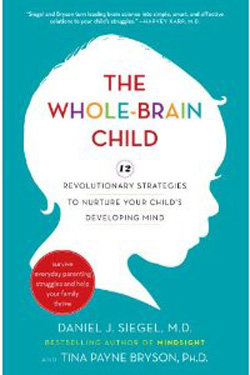
I have often talked about parenting the “explosive child” or a child who struggles with Oppositional Defiant Disorder (ODD). In that context, I often mention Dr. Ross Greene’s groundbreaking work on using “Plan B.” Both in my office and in my columns, I have great responses to my work with explosive children using Dr. Greene’s techniques. However, recently, another approach has been gaining popularity, both in my office and in parenting circles. This approach is from Daniel J. Siegel, MD and is often used to promote “the whole-brain child.”

Dear Dr. Respler: I notice a certain unfortunate trend. People who lose a parent at a young age often stay single for a long time – or, unfortunately, do not marry at all. This was first pointed out to me at a sheva berachos in the fall of 2011. My internal thought was that the person who lost his father when he (the son) was just 28 – which, in my opinion, is an age when one should be able to function on one’s own – was simply looking for an excuse to rationalize why he had not yet gotten married.

Dear Brocha, Hi, I'm not sure how writing to an advice column can help, but I feel so alone and have nowhere to turn. My 25-year-old daughter is addicted to prescription pain killers (Percocet), and so far she doesn't seem to want help or even acknowledge that she has a problem. About two years ago […]

I am concerned about my daughter. She is dating a boy whom she is crazy about, but I see certain things in him that make me nervous.

Dear Dr. Respler: I wish to share with your readers and you what I did to enhance my marriage through the use of your suggested technique of countermoves. My husband is, by nature, a closed person and has a hard time paying compliments. Many people have advised me to accept him and love him just […]

Cheating on a spouse is a terrible betrayal. Yes, sadly, it is quite common, but that doesn’t erase the devastation and pain it causes. The discovery of cheating almost always comes on the heels of extreme lying. The big question always is, how can the one cheated on ever trust again? It is logical and practical to think that once a spouse has cheated, there is no reason to assume it would not occur time and again.

Dear Readers, I do not regret the past, nor do I wish to shut the door on it. I am now able to understand, feel serenity and know peace. No matter how far down the road I have traveled, I now see how my experiences can benefit others. This is part of the Al-Anon/Nar-anon 12 promises that can be achieved by everyone who “works it.” But I am getting ahead of myself. Let’s start at the beginning:

Dear Dr. Yael: I am convinced that my mother is clinically depressed, but she refuses to seek help or even admit that she has this problem. Instead, she blames all of her sorrows on outside sources.
“But, I want it NOW!” Yankel screamed as his mother lifted his baby sister, Leah, out of her car seat. “Yankel, we can’t get ice cream now. I told you we could have it for dessert. We have to get inside to feed the baby.” “No! I will not go inside! I’m going to sit in the car until you give me ice cream.”

A couple of years ago The Jewish Press published a letter I wrote about how people treat “kids/teens off the derech.” I wrote about my daughter who had totally left religion and how I felt people could make a difference in these children’s lives; they either inspire them or turn them off. The response to my letter was overwhelming. People contacted me wanting to help and others wrote about their children in similar situations.

Dear Dr. Yael: I am, Baruch Hashem a happily married woman of 10 years with two children. As I am trying to expand my family, it seems that Hashem has other plans for me (my husband and I have not been able to conceive another child). Of course we want more children, but we can only do our hishtadlus and leave the rest up to Hashem.
By dvora
In Part I, we discussed how misunderstandings trigger anger and how different people can see the same trigger differently. I wondered if we could identity a common denominator in most disagreements and if so, was it possible we could eliminate teen aggression, couple aggression and arguments between friends, family and peers? Is there a way to bring about fewer altercations, better family unity and understanding between people with less arguments and fighting?

I feel truly blessed these days. The experience of becoming a grandmother for the second time to a beautiful, and thank G-d, healthy baby girl is quite honestly indescribable.
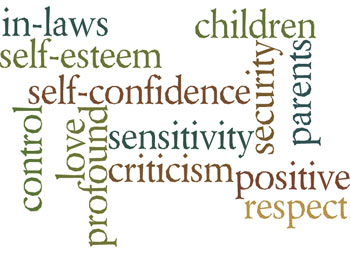
Dear Dr. Respler: My parents, who I love dearly, constantly contradict what I say to my children. They constantly interfere with the way my wife and I raise our children. For her part, my wife is very frustrated with this situation. What makes it harder for her, her parents live out of town while my parents live close by and are thus more involved with our children.
 September 11, 2026