יום ראשון, ט׳ תשרי תשפ״זSunday, September 20, 2026



Follow Us


I’m also a rebbetzin but as yet I do not have married children; it’s an experience I’m looking forward to and the reason I am writing to you now.

By dvora
Since suffering from colitis as a teen, I finally adopted a strict diet in my 30s that ended my torment. It wasn’t easy to forgo white flour, white sugar and all chemical additives, but it meant that I spend the last 40 years pretty much free of doctors, medications and illness, thank God. Thus, I was surprised when two weeks before Rosh Hashanah, I began to experience increasingly severe stomach discomfort – until I was barely able to move. Despite what I was soon to endure, it helped greatly to focus on the moment-to-moment miracles.
By Naama Klein
I almost never met the man I married. No, I am not from a very strict chassidishe home where dating is taboo and a brief meeting suffices before the engagement is announced. My husband and I actually dated for a few months, by which time my parents were beginning to grow concerned and the neighbors were having a heyday gossiping about us. But if not for a significant helping of siyata dishmaya, we never would have managed to get together in the first place.

By dvora
Among the many things we were tested with during Hurricane Sandy was the way in which we can preserve our food in the middle of a disaster.
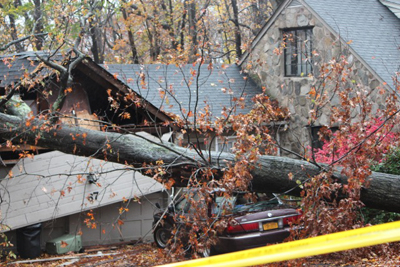
Usually, when I begin a speech, I start with something interesting, lighthearted or funny - to get your attention and lead into the speech itself. Permit me to deviate from that this week, because there is nothing funny, lighthearted or interesting about what so many of us are experiencing, and if not us, than our friends, loved ones and neighbors, and if not them, than people a few miles away from us in Long Beach or Far Rockaway who have lost everything to 14 foot waves, or a little farther away where helpless Senior Citizens are living without water or power in high rises on the Lower East Side.

By dvora
It is painfully difficult to start and end the hectic day seeing my daughter wander, almost lifelessly, from room to room and sibling to sibling with no desire to venture out into the scary world of society. With her bundle of strengths and weaknesses, and despite my countless pep talks, our 27-year-old daughter chooses to spend most of her time in the comfort and safety of our home. That is until recently, when terrible loneliness finally pushed her out the door.

By Rabbi Shimshon HaKohen Nadel
Minutes after candle-lighting, sirens rang out in Jerusalem, disturbing the peace and tranquility ushered in by Shabbat. Earlier that day, my wife and I assured our parents that we are far from the rockets in our home in Har Nof, a quiet suburb nestled in the Jerusalem Forest.
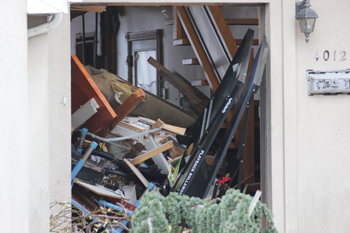
“Sandy gives New York a real thrashing!” screamed the headlines. “Hmmm, who exactly is Sandy and why is she thrashing New York,” I wonder. How about this one: (an exact quote) “For all those left homeless, for all those left scared and frightened, there is an enormous lesson from this hurricane – mother nature will do what she wants, when she wants, and our modern world can only bow before it.” Now I am really confused – who is this mother and why is she acting so mean – aren’t mothers supposed to be nice? And more so – what exactly is this “enormous” lesson? Why should I bow to her?

As I write these words I am still in my new adopted home. Originally I came to my wonderful friends’ warm apartment with the intention of staying just overnight and I did not even bother packing. My children kept pressuring me – “Ima, you have to go!”
Ever since I started this question-and-answer column, people have been coming over and asking me questions. Baruch Hashem, right?

Dear Dr. Yael: I feel extremely guilty about my elderly father and am filled with anger toward my sisters and brothers in regards to his care.
By Elliot Resnick and Sandy Eller
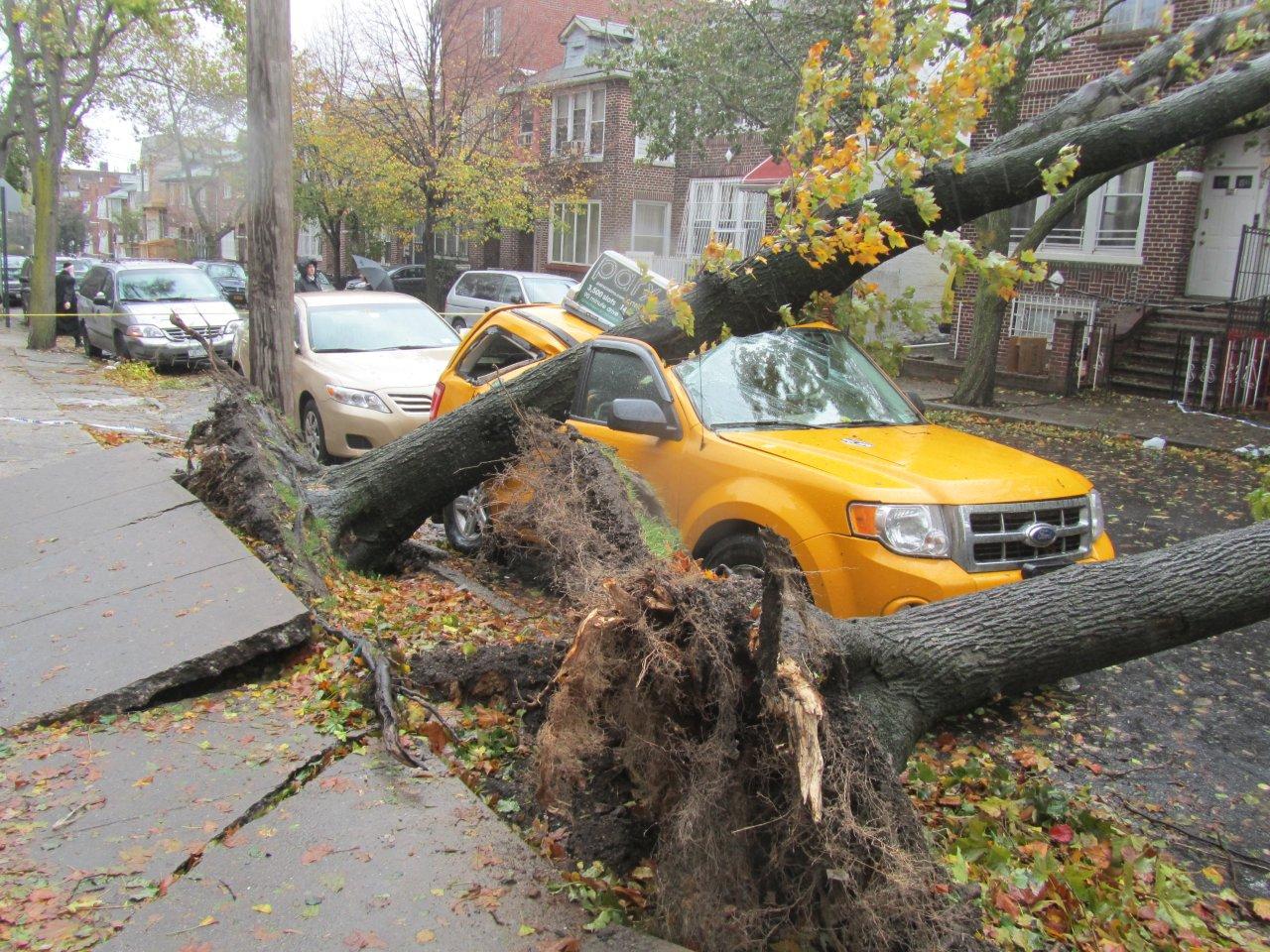
“It’s like a war zone,” said Rabbi Akiva Eisenstadt, surveying the damage in Manhattan Beach, a day after Hurricane Sandy swept through New York.

By Ann Goldberg
Yael was tired of sticking the highchair together with glue or Sellotape. It had lasted through five children, a miracle in itself, but now it seemed to have given up all hope – and decided to self-destruct.
Dear Dr. Yael: I am a man in my 50s who, Baruch Hashem, has had a good life. I am married with children and grandchildren and was always a happy-go-lucky person, thankful for all the berachot bestowed on me. This year, though, has been very difficult for me, with many family and personal problems. I have begun to experience something that I have never really had before: depression. Out of nowhere I begin to feel upset and anxious, and I do not know what to do to get rid of these feelings.

Feeling like a prisoner, I went along with a shidduch she wanted for me. Baruch Hashem, the girl was sweet and beloved. But I held out hope that after the wedding I'd be able to ask my wife to gradually change. I knew this could cause problems, but I was hopeful. Sadly, after 12 years of marriage and six children, my situation is the same; my wife is unwilling to change. As a matter of fact, contrary to what I had hoped for, the opposite is happening: my wife wants me to change. She says that I am too modern and should become more frum.

Dear Dr. Yael: My husband and I are, Baruch Hashem, happily married for five years. But there is a stumbling block constantly facing us.
“A himmel geshrai” is a Yiddish phrase that, loosely translated, means “a tragedy of such catastrophic proportions that the heavens themselves cry out.” Sadly, every one of the letters on family breakdowns I’ve featured these past several weeks can be summed up as “a himmel geshrai.”

Dear Dr. Respler: I notice a certain unfortunate trend. People who lose a parent at a young age often stay single for a long time – or, unfortunately, do not marry at all. This was first pointed out to me at a sheva berachos in the fall of 2011. My internal thought was that the person who lost his father when he (the son) was just 28 – which, in my opinion, is an age when one should be able to function on one’s own – was simply looking for an excuse to rationalize why he had not yet gotten married.
The response to my columns regarding family breakdowns has been explosive.
A couple of years ago The Jewish Press published a letter I wrote about how people treat “kids/teens off the derech.” I wrote about my daughter who had totally left religion and how I felt people could make a difference in these children’s lives; they either inspire them or turn them off. The response to my letter was overwhelming. People contacted me wanting to help and others wrote about their children in similar situations.

By dvora
The day following our oldest daughter’s wedding in Eretz Yisrael was the day we had planned for my husband to return to his job in the U.S. I was staying for another week in Israel with the rest of our children and my dear mother in order to participate in the remaining wedding celebrations.

The family: My name is Liora and I made aliya from Toronto when I was 16. That was 29 years ago and I came without my family. I lived in Neve Dekalim for 18 years. I met my husband Elimelech during my first year of college. He was studying in Yeshivat Hesder Yamit which was located in Neve Dekalim. When we go t married we decided to stay in Gush Katif until we completed our studies.

Dear Dr. Yael: I am, Baruch Hashem a happily married woman of 10 years with two children. As I am trying to expand my family, it seems that Hashem has other plans for me (my husband and I have not been able to conceive another child). Of course we want more children, but we can only do our hishtadlus and leave the rest up to Hashem.
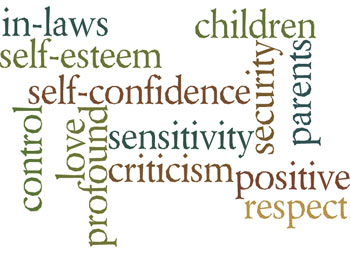
Dear Dr. Respler: My parents, who I love dearly, constantly contradict what I say to my children. They constantly interfere with the way my wife and I raise our children. For her part, my wife is very frustrated with this situation. What makes it harder for her, her parents live out of town while my parents live close by and are thus more involved with our children.
In this week’s parshah the Torah writes about a prohibition on killing a murderer prior to his trial. As the pasuk says: “…v’lo yamus harotzeach ad amdo lifnei haeidah lamishpat – … so that the murderer will not die until he stands before the assembly for judgment” (Bamidbar 35:12). The same rule applies to anyone who commits an aveirah that is punishable by death; no one is permitted to kill him prior to his trial in beis din, including the witnesses that warned him and witnessed the aveirah. The Sefer Hachinuch (mitzvah 409) writes that if one kills a transgressor prior to his trial, he is regarded as a murderer.
Dear Rebbetzin Jungreis, This is the most painful letter I’ve ever written. I’ve been through many horrific experiences. My parents were survivors of the Holocaust; they were shattered people. I know you will understand this since you too are a Holocaust survivor.
I receive letters and e-mails every day from all parts of the world. Sadly, there is no shortage of problems. Pain and suffering abound. How to navigate the turbulent waters of the world we live in is a challenge for everyone.

By dvora
Yom Yerushalayim, a national day of thanksgiving to Hashem for the liberation and reunification of the Holy City of Yerushalayim, is celebrated in Israel with many different meaningful programs. One of them is the annual bike ride from Hebron to Yerushalayim, celebrating the former’s liberation.
Dear Dr. Yael: My wife, who takes good, loving care of our children and is very generous with her time, has a closed nature. It is not in her character to pay compliments or show appreciation. While she tries valiantly to never raise her voice to the children or me and works hard to always speak with derech eretz, I yearn to hear her tell me that she loves me – although I know that she does.

Picture a family full of smiles, and joy. See all the moments they spend together and support each other, through blessed times and difficult ones. Picture the holidays filled with warmth and laughter, and the Shabbat... But then something destroys the serenity.

The family: I was seven years old when I came to Israel from Czechoslovakia. My father had gone to New York in 1939 on a business trip and while he was returning on the Queen Mary ship World War II broke out. The ship changed its course and set sail for England, where my father stayed for the next year.
I’d like to share with you a story I believe is a wonderful gift we can present to Hashem now that the painful summer months of Tammuz and Av – months that saw the destruction of our holy Temple – are nearly upon us.

On January 31, my family’s world was turned upside down. I received a phone call from my mother early in the morning. “Go to Baltimore, your sister is sick. Daddy and I are flying up today [from Florida]. Her organs are shutting down. It’s bad.”
Last week I mentioned that I’d received numerous reader responses to my series of columns detailing my experiences in a San Diego hospital following surgery for a broken hip. I shared one such note with you last week. Here is another.

By dvora
It was a brisk fall day in late October some years ago when Chavy (name changed) decided that since the weather was perfect she would walk to work. She had, Baruch Hashem, just resumed her work schedule after being home for six weeks due to her maternity leave for the birth of her latest child. She felt the exercise was good for her, as it was only about a half mile to her job. She put all of her work papers into her knapsack and gingerly swung it over onto her back for the trek to work.
For the time being, at least, this will be my closing column on my experiences in the hospital in San Diego. Today, Baruch Hashem, I am on my way. I had the zechus to be at our Hineni Fortieth Anniversary Dinner, to greet the overflow crowd and impart my heartfelt love to them. True, I am walking with a cane, sometimes a walker, but I am walking, speaking, teaching and writing, and for as long as Hashem will allow me, I shall continue to try to serve Him.

This past December 5, I became a Savta again. My mother always told me not to count my grandchildren, so I won't. Suffice to say, Baruch Hashem, our little tribe has expanded greatly since our first granddaughter, Aleeza, was born eight years ago. And since they all came on the scene, my husband Lou and I have spent countless hours enjoying them.

Dear Dr. Respler: The holidays are a great time to learn about ourselves – the good, the bad and the ugly – and then try to make lemonade from the lemons, turn the positive into building blocks, and generally create good things from the lessons learned. The Yamim Tovim are saturated with kedushah, leading to beautifully crafted creations from what one learned and experienced during these holy, spiritual days.
B’ezrat Hashem I will continue to share with you my challenging days spent at Scripps Memorial Hospital in San Diego. Whenever difficult days befell me, my revered father would always say “Hashem sends us tests so that we might know how to help others when they have to confront their trials.”

My son lost his backpack when traveling back to his base. He had put it in the hold of the bus in which he was traveling. He would need to replace his wallet, tefillin, clothes, books, phone charger and all of his documentation. Of course the tefillin was the most important item of all. It was a bar mitzvah gift from his grandparents and specially written for him, and we all know how expensive tefillin are. But obviously the sentimental value was irreplaceable.

The family: I was born in Israel and I’ve never left. My husband Moshe was born in Detroit, MI. His family made aliyah when he was 12 years old.
Several weeks ago I started a series on hashgachah pratis, or Divine Providence. Every believing Jew knows that events do not just unfold randomly; the story I told of two brothers named Yaakov and Yedidya clearly testified to that reality in a contemporary setting.

Dear Dr. Respler: I love my wife, who is by nature a difficult person. As a result, our seven children gravitate more to me than to her. She thinks she is always right, her favorite line being “I told you so.” This is annoying and drives all of us crazy.
I have been sharing personal testimonies on the subject of hashgachah pratis, chosen from a plethora of letters that have reached my desk. Each of these stories reflects a different challenge ranging from problems of health, parnassah, shidduchim and loss of dear ones (some of which I have yet to publish). These difficulties, to one extent or another, at one time or another, have challenged all of us.

Dear Dr. Respler: I am, Baruch Hashem, a healthy mother and grandmother who was recently trying to be helpful to my married daughter. After Shabbos my daughter, who has a large family, had many dishes piled in the sink. I planned on rinsing the dishes and placing them in the dishwasher, and then straightening up downstairs while she put her younger children to sleep. Aware of my plans my daughter, who loves me and means well, said, “Ma, please don’t work so hard. I will put the children to sleep, and then I can clean up and load the dishwasher quickly. I will do it quicker than you, and I want you to relax.” I was hurt. I know that she really wanted me to take it easy, but suddenly I felt like an old, useless woman. Do you think my daughter was right? How can I tell her how I feel without hurting her? My husband and I are planning to move in with my daughter, son-in-law and their children for Pesach. We always enjoy going there, but I do not feel good when I cannot be useful. I would like to help my daughter over Pesach, and would feel better if she allowed me to help her. Please advise me. A Healthy Grandmother
In last week’s column I shared the remarkable story of hashgachah pratis that two terrific young yeshiva boys, Yedidya and Yaakov, experienced. Their story evoked an enthusiastic response. Many were motivated to reassess their own lives and discover their own hashgachah pratis.
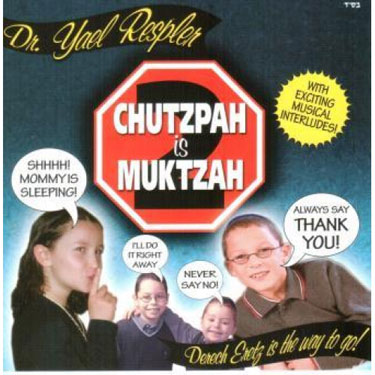
Dear Dr. Respler: I enjoyed your recent column concerning the jealousy a girl had toward her newborn brother.

By dvora
More Commentary On Bais Yaakov’s High School Education

Dr. Yael replies to a woman who feels like she's playing second fiddle to her husband's myriad phone calls, business deals, medical emergencies, and everyone else who needs him so desperately. Despite the fact that he buys her beautiful jewelry and gifts, that they live in a stunning house and have cleaners and babysitters, all this does not substitute for the intimacy and warmth that she craves from him.

An index of the Talmud with more than 6,000 topical and 27,000 subtopical entries is a major undertaking and its publication a seminal event in Jewish scholarship.

By Anonymous
The following inspiring story was told to Rochelle Rothman by her close family member. It truly shows how Hashem runs the world, and helps us in all of our endeavors.
I believe in my last column we established that when it comes to shidduchim we cannot rely on our own “seichel” – for while singles may believe they made the right choice, they might just discover the opposite to be correct.

For the past few weeks my column has focused on the difficulties singles experience while trying to find their soul mates.
 September 18, 2026