יום שישי, י״ד תשרי תשפ״זFriday, September 25, 2026



Follow Us


The Jews living outside Eretz Yisrael began reciting vesein tal u’matar in the Shemoneh Esrei this week. If one does not say vesein tal u’matar (instead continuing to say “vesein berachah”) and finishes the Shemoneh Esrei, he must repeat the Shemoneh Esrei. If one accidentally does not daven at all, he must daven two Shemoneh Esreis during the following tefillah. If one did not say vesein tal u’matar and finished davening and only remembers this fact at the time of the next tefillah, he must daven two Shemoneh Esreis at the next tefillah.
By dvora
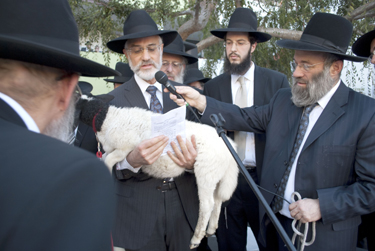
More than 1,200 members of the Los Angeles Jewish community gathered recently to witness the observance of the mitzvah of petter chamor. Organized and led by Rabbi Yehuda Lebovics, a Los Angeles mohel, the event was held in the immense outdoor courtyard of Yeshiva Aharon Yaakov Ohr Eliyahu.
In this week’s parshah we learn of the episode whereby Avraham sent his servant Eliezer to find a wife for his son Yitzchak. Eliezer met Rivka and decided that she was right for Yitzchak. After discussing matters with her parents and her brother, Lavan, Eliezer was ready to return with Rivka to Avraham and Yitzchak. Prior to their departure Rivka’s family blessed her, saying that she should become “thousands of myriad…” and may her offspring inherit the gate of its foes.

Two recent experiences served to drive home the point to me that – with apologies to the popular Disney musical boat ride “It’s a Small World” – it really is a small Jewish world.

Dear Dr. Yael: I feel extremely guilty about my elderly father and am filled with anger toward my sisters and brothers in regards to his care.

Once again I must postpone the continuation of my Oct. 5 column, “Technology, Yom Kippur, Ahmadinejad,” this time due to the heavy reader response to last week’s column.
Question: What is unique about Modern Orthodoxy?
I am postponing the follow-up to my previous column – “Technology, Yom Kippur, Ahmadinejad” – so that I might share with you a very personal experience.
By Rabbi Yaakov Klass and Rabbi Gershon Tannenbaum
Pomp And Circumstance ‘Endeavor to See the King’ (Berachos 58a)
“When I proclaim the name of Hashem, give greatness to our G-d (32:3). When we hear a berachah, it is proper to exclaim "Baruch Hu u’Baruch Shemo" (“He is blessed and His name is blessed”) when Hashem's name is pronounced. But much more is intended. The mention of that most important word (in any language) should evoke the greatest reverence and love and devotion. How much should we exert ourselves in this function?
There is a machlokes between the Mechaber and the Rema concerning the berachos recited on the Yom Kippur haftarah by Minchah. The Mechaber says (Shulchan Aruch, Orach Chaim 622:2) that we take the Torah out and read the parshah of arayos and then read Maftir Yonah. He says that we recite the berachos of the haftarah before and after the haftarah. If Yom Kippur falls out on Shabbos, we mention Shabbos in the berachos. The Rema argues that we do not recite the berachah of “al haTorah v’al ha’avodah” by Minchah.
By Rabbi Yaakov Klass and Rabbi Gershon Tannenbaum
Shehakol Bread? ‘One Recites A Blessing On The Primary Food’ (Berachos 44a)
The Mishnah in Rosh Hashanah 32a lists the Yom Tov’s berachos and the order in which we must daven on Rosh Hashanah. The Mishnah says in the name of Rabbi Akiva that we begin with the berachah of avos. We then recite, in this order: gevuros (atah gibor); kedushas Hashem; kedushas hayom (we incorporate malchuyos in that berachah); zichronos; and shofros. This is followed by avodah hoda’ah and birchas kohanim (sim shalom). The Gemara there brings a beraisa that cites a source in the Torah for reciting each one of these berachos.
By Rabbi Yaakov Klass and Rabbi Gershon Tannenbaum
A Vicious Cycle ‘Many Different Kinds Were Set Before Him’ (Berachos 41a)
By Rabbi Yaakov Klass and Rabbi Gershon Tannenbaum
A Two Way Street? ‘Joining Geulah To Tefillah Is Preferable’ (Berachos 30a)
Question: What should the chazzan do when he reaches Kedushah and Modim? Some chazzanim say every word of Kedushah out loud and some only say the last part of the middle two phrases out loud. As far as the congregation is concerned, some congregants say every word of Kedushah and some say only the last part. Finally, some chazzanim and congregants say Modim during chazaras hashatz out loud and some say it quietly. What is the source for these various practices? A Devoted Reader (Via E-Mail)
By Dov Shurin
In Israel today there is a new generation whose members may not be outwardly observant but who are intrinsically religious and have the utmost respect for the Torah and its scholars.
In this week’s parshah the Torah gives us the mitzvah of tefillah – davening to Hashem – for as the pasuk says, “oso sa’avod – you shall serve Him.” The Torah repeats this mitzvah several times, with another mention further in this week’s parshah: “uleavdo bechal levavchem – serve Him with all of your heart.” The Sifri explains that one serves with his heart by means of tefillah.
I had the tremendous zechut to attend the wedding of my granddaughter Rachayli Fuchs to Shaul Klein in June, and then, much to my delight I was able to make one of the Sheva Berachot. My guest list was composed and invitations extended. The divrei Torah would be delivered by my grandson Rabbi Raphael Fuchs and my nephew Meir Greenwald.
Dear Rebbetzin Jungreis, This is the most painful letter I’ve ever written. I’ve been through many horrific experiences. My parents were survivors of the Holocaust; they were shattered people. I know you will understand this since you too are a Holocaust survivor.
By Rabbi Yaakov Klass and Rabbi Gershon Tannenbaum
Soul Food ‘It Comes To Include A Fragrance’ (Niddah 52a)
A comment by Kadima leader Shaul Mofaz the other day set us thinking about an element in the draft debate that could only manifest itself in an Israeli context.
In this week’s parshah Balak hires Bilam to curse the Jews. The Gemaras in Berachos 7a and Avodah Zarah 4a say that there is a very brief moment during each day when Hashem allows himself to get angry. The Gemara says that no one was ever able to exact that moment except for Bilam the rasha, as it says: “veyode’a das elyon – and he knew Hashem’s knowledge.”
Question: I understand that at a minyan, the chazzan is required to repeat Shmoneh Esreh out loud so that people who may not know how to daven can fulfill their obligation to daven with the chazzan’s repetition. What, however, should the chazzan do when he reaches Kedushah and Modim? I hear some chazzanim say every word of Kedushah out loud and some only say the last part of the middle two phrases out loud. As far as the congregation is concerned, I hear some congregants say every word of Kedushah and some say only the last part. Finally, some chazzanim and congregants say Modim during chazaras hashatz out loud and some say it quietly. What is the source for these various practices? A Devoted Reader (Via E-Mail)

The Bible introduces us to many fascinating and inspiring personalities, righteous men and women whose example of piety continue to guide and uplift us to this very day. There are some, however, to whom we can relate in an especially powerful way and whom we can truly strive to emulate.
The Rambam begins hilchos talmud Torah with the following halacha: Women and slaves are exempt from talmud Torah. A man is obligated to teach his son Torah, as it says, “velimadetem osam es beneichem ledaber bam.” However, a woman is not obligated to teach her son Torah because whoever is obligated to learn is obligated to teach – and since a woman is not obligated to learn, she is not obligated to teach.
By Rachel Weiss
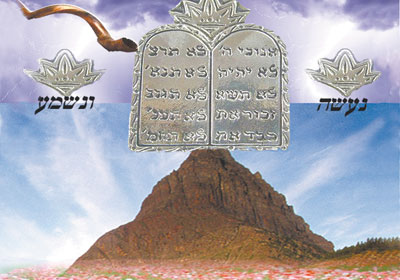
Shavuos. How unremarkable a name for a Yom Tov that celebrates the very foundation of our existence. Actually, Shavuos is one of five names designated for this holiday, the others being Atzeres, Yom HaBikurim, Chag HaKatzir and Z’man Mattan Toraseinu.
For the time being, at least, this will be my closing column on my experiences in the hospital in San Diego. Today, Baruch Hashem, I am on my way. I had the zechus to be at our Hineni Fortieth Anniversary Dinner, to greet the overflow crowd and impart my heartfelt love to them. True, I am walking with a cane, sometimes a walker, but I am walking, speaking, teaching and writing, and for as long as Hashem will allow me, I shall continue to try to serve Him.
Question: May one recite Sefirat Ha’Omer with a berachah after sunset (shekiah)?
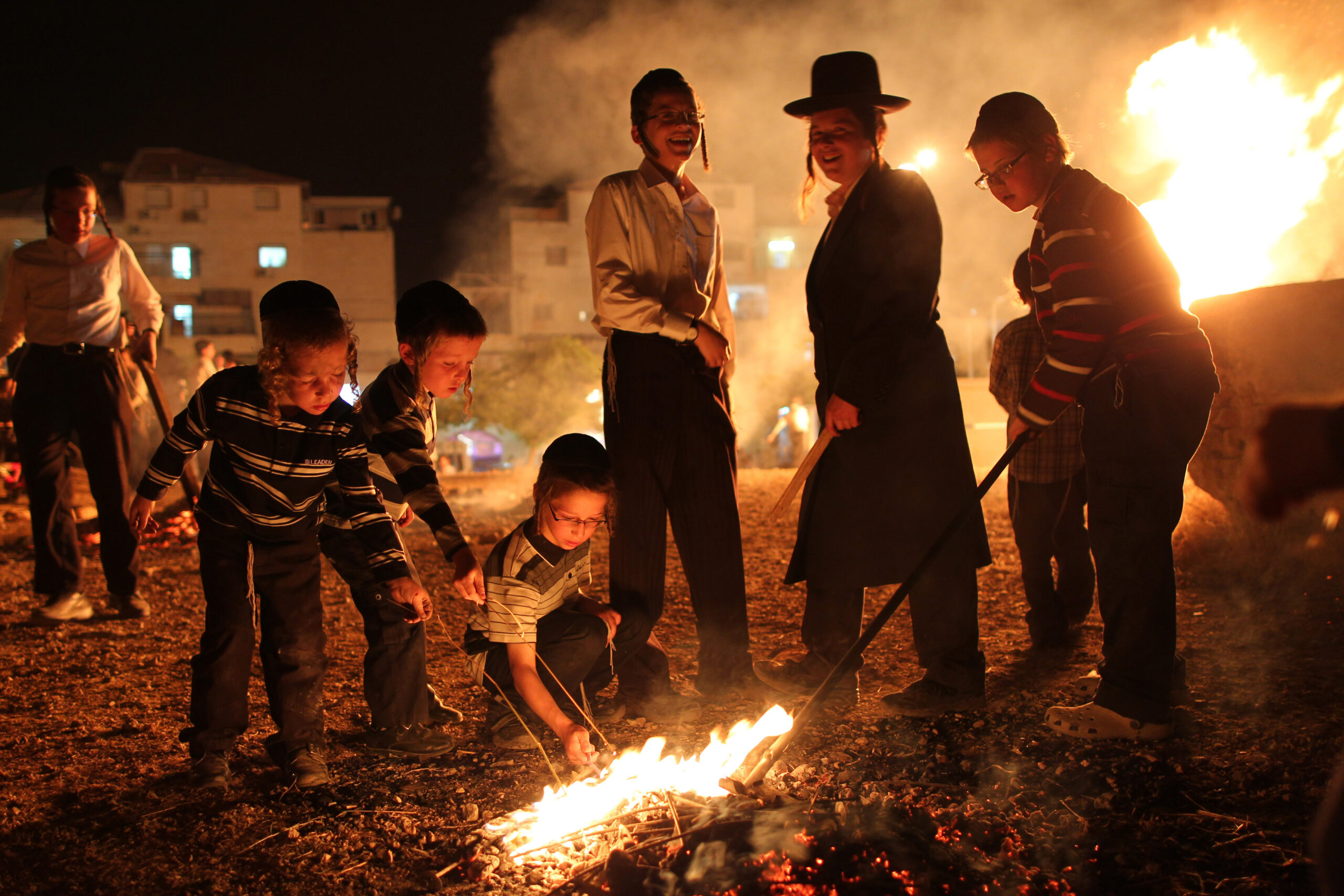
One who forgets to count sefirah at night may count during the day without a berachah, and then continue counting the rest of the days with a berachah. If one forgets to count sefirah at night and does not remember to count by day, he may not count with a berachah thereafter.
I have had much experience in bikur cholim – visiting the sick. Even at the age of six I would accompany my saintly father on his rounds to slave labor camps where young Jewish men were incarcerated by the Hungarians prior to the Nazi occupation.
In order to fulfill one’s obligation in the mitzvah of matzah, one must eat a k’zayis amount of matzah. This is because the Torah uses the wording of achilah (eating) when it commands the mitzvah of matzah.
For the past several weeks I have been focusing on hashgachah pratis – personal, individual and national guidance that comes from heaven. Sadly, in our secular, high pressured, very often decadent society, many voices assail us and we have difficulty hearing the still small voice of G-d leading and prodding us.
The Gemara in Pesachim 115a says that there was a machlokes regarding how one was supposed to eat matzah and marror in the times of the Beis HaMikdash. Hillel said that during those times, when there was a korban Pesach, matzah and marror should be eaten together. His peers argued that they must be eaten separately. The Gemara concludes that since the halacha was not paskened we eat matzah separately, then marror separately, and then both together to accommodate both opinions.
Purim is the one Yom Tov all Jews can celebrate. Special knowledge is not required and the demands of its observance are easy enough.
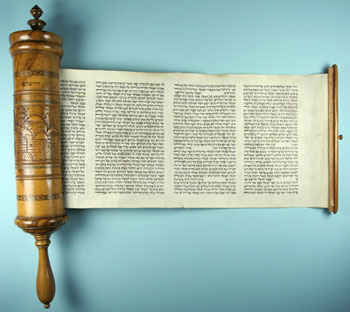
On Purim we read Megillas Esther twice, once by night and once by day. It is uncertain what the nature of the obligation is.
By Rabbi Yaakov Klass and Rabbi Gershon Tannenbaum
‘He Uttered Hashem’s Name In Vain’ (Temurah 3b)
In this concluding column I would like to focus on the big question so many have asked: Since our faith teaches that every person has a soul mate – bashert – designated by Heaven, how is it that so many cannot find their partners?
At the onset of the Bnei Yisrael’s journey through the midbar, we read in this week’s parshah that the Bnei Yisrael’s complaint was for food to eat. Hashem responded that He would send “lechem min hashamayim” (also known as mun), and that the Bnei Yisrael would collect each day’s portion according to the number of members of his household.
We have myriad matchmaking programs all over the world, from word of mouth to computerized, from well-intentioned individuals and professional shadchanim to singles organizations.
Question: Are there limitations to the mitzvah of chinuch?
After Moshe had agreed to go to Pharaoh to beseech him on Klal Yisrael’s behalf, he began traveling to Mitzrayim with his wife Tziporah and their sons – including the newborn.
 September 25, 2026