יום חמישי, י״ג תשרי תשפ״זThursday, September 24, 2026



Follow Us


It is in the nature of the Nations of the World to be hostile towards the Jewish People.
When the "offensive" statements in our Talmud were stated, no one thought they were offensive.
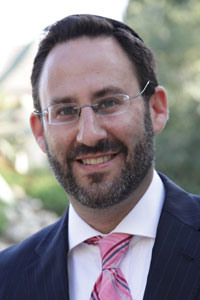
It’s been a rough few weeks. It began with the news of a heinous crime just blocks from where I live on Manhatan’s Upper West Side: a nanny viciously took the lives of her two young charges. Hurricane Sandy came next, contributing additional loss of life and financial devastation of a magnitude never before experienced by our East Coast brethren.

At the age of seventeen, Yosef was wise in the ways of the Torah and in the ways of the world. He was called a “ben zikunim” because even at such a young age he showed the brilliance of an elder scholar. He had already absorbed all the Torah Yaakov had learned in the many years he had spent in the yeshiva of Shem.

A famous scholars of the beis midrash in the city of Brodi was Rav Avraham Gershon of Kitov. This modest and unassuming man possessed such wondrous qualities of goodness and knowledge that the great Nodah B’Yehudah referred to him, in part, as follows:
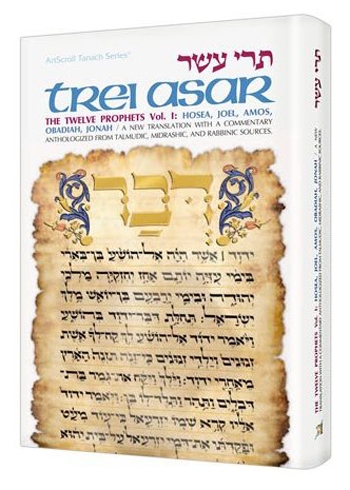
I always wonder about Jewish names. Some make it and some don’t. Some have mazel and others don’t. Some Biblical personalities’ names are very popular amongst the members of Klal Yisrael and then there are those personalities whose names never seem to be used.
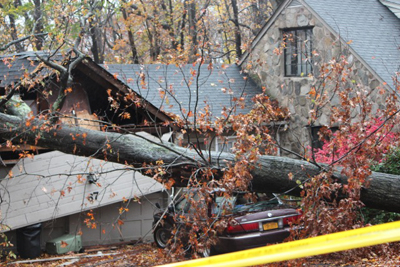
Usually, when I begin a speech, I start with something interesting, lighthearted or funny - to get your attention and lead into the speech itself. Permit me to deviate from that this week, because there is nothing funny, lighthearted or interesting about what so many of us are experiencing, and if not us, than our friends, loved ones and neighbors, and if not them, than people a few miles away from us in Long Beach or Far Rockaway who have lost everything to 14 foot waves, or a little farther away where helpless Senior Citizens are living without water or power in high rises on the Lower East Side.

From the moment she is introduced as Avraham’s young bride (Bereshit 11: 29,30,31) till her death in this week’s Torah portion appropriately titled Chayei Sarah -- The Life of Sarah , the fascinating image of our first matriarch is the subject of many intriguing Midrashic commentaries.

I recently interviewed Mrs. Tziporah Lifshitz of Maaleh Adumim, Israel about the recent posthumous publication of the book A Day Is A Thousand Years, Human Destiny and the Jewish People, authored by her late father, Dr. Zvi Faier, and edited by Tziporah and her mother, Chaya.
In this pasuk, Hashem appears to Noach, telling him the world has turned to evil and He will now destroy all of life. Noach, his family, and the animals that remained pure will be the core of a new world. The reason for this destruction is stealing – “since the land is filled with robbery.”
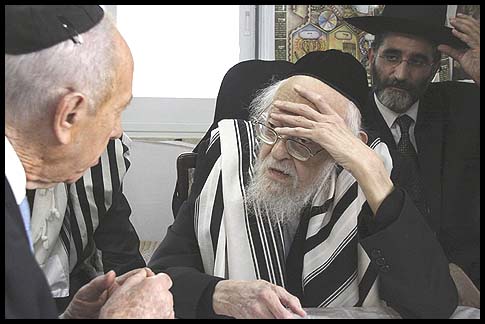
One of the biggest issues that has arisen as a result of the Slifkin controversy is the question of whether Chazal, the sages of the Talmud knew the actuality of nature. There are those who say that they did. They say that every statement recorded in the Gemarah with respect to science is an accurate reflection of nature itself. The science redacted in the Talmud is as valid as the Halacha - both being Mesorah.

In this week's Torah portion, within the majesty and mystery of creation, the woman emerges in three successive stages.

By dvora
Seven years ago, I was approached by a group of friends with an unexpected request. Would I be interested in running for trustee of my local public school district?
Each year, amid the ebullient joy manifest during the holiday of Sukkot, we read the megillah of Kohelet. With its realistic perspective on the world, Kohelet provides us with the means to not only properly calibrate our joy, but to accurately understand the role of joy and happiness in the world.
Chazal tell us that Torah is our life and the length of our days. Here is a story that proves this statement quite literally. In Yerushalayim there lived a family in which all the children passed away at an early age. Everything possible was done to protect the children from illness and the slightest danger, however, it was to no avail. Not one child lived past the age of 18.

I rarely take the extended warranty when purchasing new electronics. I figure that this warranty must not be worth much if they feel the need to pressure me into buying it. They must know what I have learned the hard way: there is no such thing as a real guarantee. In my more naive days, I purchased this "peace of mind," as they call it, but never cashed in. Usually, by the time the item broke, I had forgotten about the extended warranty and purchased a replacement.
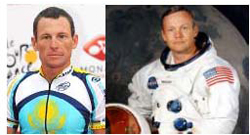
Two major news stories involving two famous men named Armstrong occurred within days of each other recently. Was it random happenstance? Or was there hashgacha involved? We know that nothing happens outside Hashem’s realm and power. But did Hashem have a specific reason for these two events occurring together when they did?
By Rabbi Nosson Dovid Rabinowich
A passage at the end of the Zichronot blessing in the Mussaf Amidah of Rosh Hashanah appears to have two slightly different versions. The Shulchan Aruch (Orach Chayim, 591:7) rules that this is the correct text: “V’akeidas Yitzchak hayom l’zaro tizkor.” It also rules and those who change the words and specify “l’zera Yaakov tizkor” are mistaken and guilty of changing the text instituted by Chazal. The source for this ruling is a responsum (chapter 38) by the Spanish and then Algerian Rivash (14th century).

It is hard to believe that Elul is upon us and that the Day of Judgment is only one month away. In a short 30 days we must face our Creator and have our deeds evaluated in the hopes of a receiving a merciful blessing for a good and healthy year. We spend the month of Elul focused on repentance, and we learn the holy books of mussar to inspire us to grow and change.
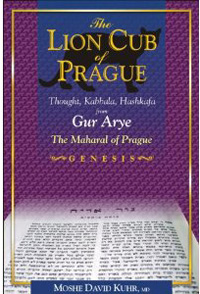
Rabbi Yehuda Loewe of Prague, known as Maharal, was one of the greatest lights that G-d has given to the Jewish people. Halachic authority and active communal leader, linguist and grammarian, philosopher and mystic, master of the totality of rabbinic literature and conversant in the arts and sciences as well, Maharal revealed new depths to the words of Chazal and uncovered layers of meaning that would otherwise have gone unnoticed.

They say that one mother can take care of five children, but five children cannot take care of one mother. One of the most challenging situations, and perhaps the most unnatural, is when children need to take care of aging or infirm parents. Why is this so difficult and why do so many of us fail at caring for our parents when they need us most?
Question: Is it prohibited to listen to music in the privacy of one’s home (or car) during the Nine Days?
Man is seldom satisfied with his life. Even when he has done great things, amassed vast amounts of wealth and achieved great fame, he still yearns for more and his soul is not fulfilled. "No man dies with even half of his ambition fulfilled," say Chazal.
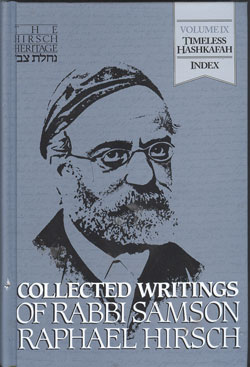
Looking for inspiration? Read Rav Samson Raphael Hirsch. This is my general rule of thumb, which is why I was thrilled when the ninth (and presumably last) volume of the Collected Writings of Rabbi Samson Raphael Hirsch (Feldheim Publishers) came out a few weeks ago.
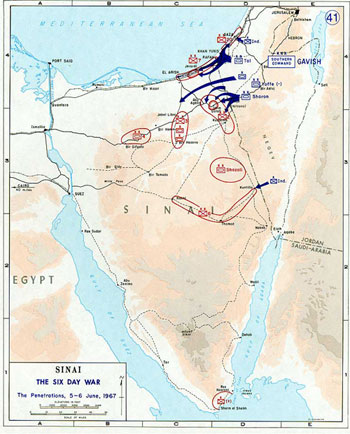
Our sages teach us that when we have left this life and face the Court on High, we will be called upon to answer for our lives. Among the questions we will be asked is, “Did you throughout your lifetime eagerly await and anticipate the geulah, the ultimate redemption?”

We often sit through the haftorah without understanding what it is all about. “Why do we read the haftorah anyway?” we sometimes think. Krias HaTorah of the parsha makes sense—we read a portion of the Chumash each week so that over the course of the year we have completed the entire Torah. But what is the goal of reading the haftorah? We know that it is not so we can finish Navi on some kind of schedule. What then is the purpose of the haftorah?

Although Megilat Rut is one of the most beautiful stories regarding unadulterated chesed, it also serves as a primer on leadership. After all, its primary purpose is to establish the lineage of King David’s dynasty. Therefore we should expect to glean from it some important leadership lessons. Yet at first blush it would appear more apt to describe it as a book about followership. Rut’s noble commitment to join the Jewish people, despite all the hardships this entailed, is captured in her stirring words (1:16): “To where you will go I will go, where you will sleep I will sleep, your nation is my nation…” These words seem to constitute a declaration of what is termed “followership” more than leadership. However, a recent class trip, with my Yeshivah’s 8th grade, to the United States Naval Academy at Annapolis helped clarify matters.

Is it really possible for any self-respecting New Yorker to love parking tickets? I have seen those orange rectangular pieces of paper become the nemesis of society. As a result, those trying to earn a meager living giving out these tickets have become Public Enemy Number One. We view them as “out to get us,” deliberately attempting to make our lives miserable.
Yaakov Avinu received word that his brother Eisav was coming to greet him. He understood fully well that this was not to be a warm family reunion. Eisav came accompanied by a band of four hundred armed men, bent on revenge. The Torah says Yaakov was “very frightened,” so he prepared for war.
Rav Yosef Hochgelanter, the rav of the city of Zamushet, where Rav Akiva Eiger received his early training while still a young boy, was a great scholar and the author of Mishnas Chachamim. At the time he was chosen to be rav of the city he was the son-in-law of a very wealthy man who was very generous with his support.

In the vernacular of our sages and in our prayers, Pesach is titled, “Z’man chayrusaynu- Time of our freedom.” Although we did attain freedom at the time of our redemption from Egypt, titling the holiday as such doesn’t seem to encapsulate the root of the holiday’s greatness.
After a long and detailed description of the avodah (service) to be done in the Mishkan, the parshah ends with statement that “Aaron and his sons did as they were told.”
One of the great gaonim was Rav Yaakov Berlin, the father of the Netziv (Naftali Tzvi Yehuda of Berlin), the rosh yeshiva of the Volozhin Yeshiva and a leader of European Jewry at the close of the 19th century.
The entire Jewish nation – every man, woman, and child – experienced the revelation of Hashem on Har Sinai. They saw Hashem as clearly as humans can, and they attained a level of prophecy. Now they were being offered one of the greatest gifts imaginable: Hashem Himself was going to dwell among them.
The Return Of The Sage When Rabi Simeon ben Shetach saw that he had found favor in the eyes of King Yannai (after he appointed him Nasi of the Sanhedrin), he approached the king and said: “If I have found favor in your eyes will you grant me a wish? Something sorely vexes me that only you can rectify.”

By dvora
Recently, I discovered a frum website, www.jewish-e-books.com, that allows one to download hundreds of Jewish books – both in English and Hebrew. Having written a sefer myself, I was able to get it put on their website.

Tu B’Shevat is not just “another day.” It’s the Rosh Hashanah for trees, one of four roshei hashanah that occur in the Jewish calendar year (Mishnah Rosh Hashanah 1:1).
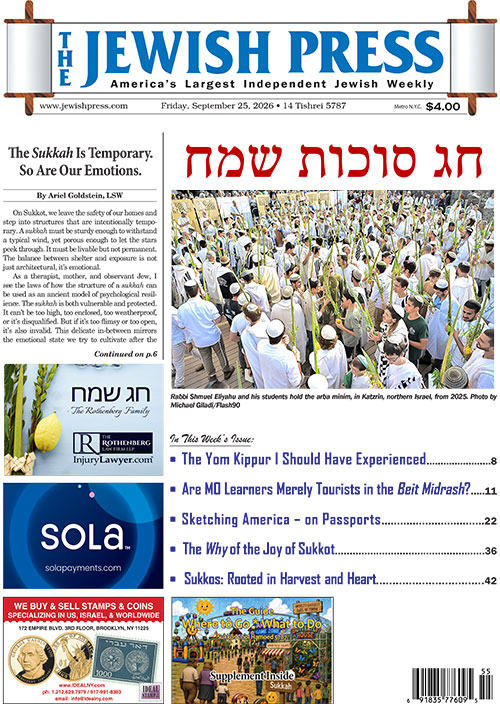 September 25, 2026