יום שישי, י״ד תשרי תשפ״זFriday, September 25, 2026



Follow Us


Scanning the media today, one can hardly miss noticing the two ominous scenarios threatening our world’s very existence, physically and mentally.

Tune in to discover the keys to unlock one of the most overlooked books in Tanach and reveal the inspiration and guidance in the words of prophets for our generation, the generation of Mashiach
The entire epoch of Mashiach will be concluded by the year 6000. The Jewish calendar is now year 5777 Think about what is at stake and what are the consequences. What must we do to hasten the arrival?


The time immediately preceding Mashiach's arrival is likened to the birth pangs of a woman in labor.
An Israeli soldier: "We feel an amazing embrace by the whole nation; we're all part of one family"
Rav Pam said we must realize that God has no pleasure from such negative speech.
Netanyahu did the right thing in the right manner and with the right words.

“Israel has bad public relations.” This is the perennial cry. “Israel must improve its image to convince the world of the justness of its cause.”

Yaakov Avinu received word that his brother Eisav was coming to greet him. He understood fully well that this was not to be a warm family reunion. Eisav came accompanied by a band of four hundred armed men, bent on revenge. The Torah describes Yaakov as “very frightened,” so he prepared for war.

By Tzvi Fishman
The indefatigable woodchopper, Goliath, provided the posts and slats for the fence which the settlers began erecting around the kibbutz. Ben Zion adamantly opposed the idea, claiming a fence would turn the settlement into a ghetto and curtail any further expansion.

The continuation of my column on the power of prayer was ready to go – but then tragedy hit. Tragedy of a magnitude none of us could have envisioned.

By Tzvi Fishman
Strangely, the person who seemed most affected by Tzeitl's death was Goliath. Upon hearing the news, he surrounded himself with an impenetrable wall. He even found it hard to play with the children. Shmuelik said the body had to remain wrapped in a sheet on the floor of Hodel's house until the Sabbath was over. […]
By Hannah Kark
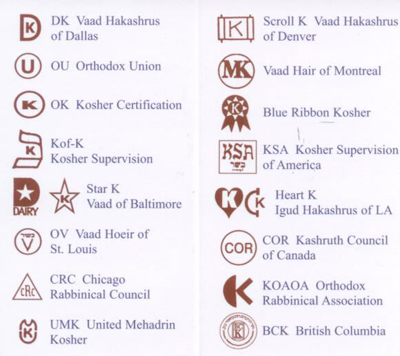
When I walk in to the grocery store it is second nature for me to just check to make sure that that bag of chips or that cookie has an OU or other kosher symbol on it. To many Jews, it is just something that they do, and it usually is like that for me. But when this question was asked, I thought deeper. I began to think about how this label gives me a sense of community; and as I made that connection, I thought of our rich heritage, and once that relationship was made I thought about our homeland – Israel.
By Dov Shurin
I sleep every Tisha B’Av night on a narrow cushion in front of the Me’aras HaMachpelah in Hebron. I do this because the following chiddush came to me many years ago: When the spies went to Israel, the pasuk says “vayavo ad Chevron” – “and he came until Hebron.” He instead of they. Rashi says only Calev ben Yefuneh went to Hebron, to pray to Avraham Avinu that he not fall for the plan of the spies.

By Tzvi Fishman
The Rambam himself, in his famous, “Letter of Teman,” writes: “Those who seduce themselves and say that they will stay in their places until the king, Mashiach, comes to the lands of the West, and only then will they depart and go forth to Jerusalem – I don’t know how the decree of destruction will be stayed from them. Rather, they are transgressors, and they cause others to sin."
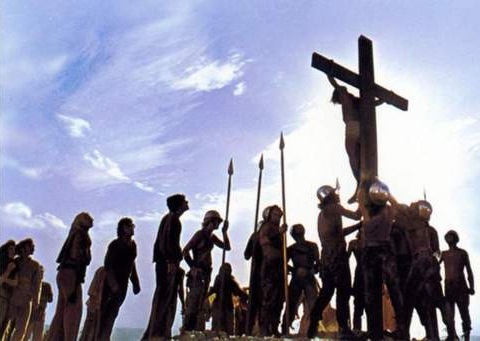
By Tzvi Fishman
The task of the Mashiach is to save the Jews from its enemies and rebuild the Nation of Israel, yet the followers of Jezeus have slaughtered millions and millions of Jews and done everything in their power to keep Israel lowly and weak.

By Tzvi Fishman
Some people don’t realize that Mashiach’s coming is a process that evolves over time. These people want everything to be finished at the start. They say that when Mashiach comes and does all the work of rebuilding the Land of Israel, and gathers all of the exiled Jews to Israel, and fights the wars of Hashem, and rebuilds the Beit HaMikdash, then they will come on aliyah. First, everything has to be perfect. First, the Mashiach has to do all the work.
“If you put Google, Apple, and Microsoft together, it still doesn’t compare to the miracles of Jewish renaissance I have witnessed in this country,” I said to two reporters from The New York Times and Moscow Times.
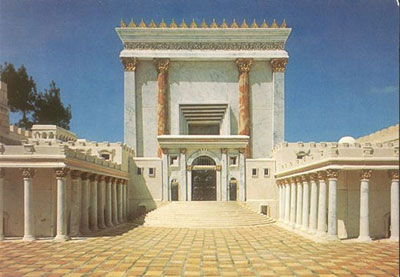
We all know we have to take the Three Weeks seriously. But at the same time we all just want the time between the 17th of Tammuz and Tisha B’Av to pass already.

There are 613 mitzvoth – we all know that. We also all know it is impossible for one person to perform all 613. Twenty-five mitzvot can only be performed in the Land of Israel, which leaves many Jews out in the cold, shall we say. After all, the people of Israel and the Land of Israel are inextricably intertwined; they are in fact dependent on one another for survival. But Judaism has a solution or as a modern Israeli would say, a “patent.” Mitzvot can be performed by proxy; by taking a part in a mitzvah one merits a share in the whole.

By Tzvi Fishman
Tevye took the shovel and started to dig. The earth was hard, but after breaking through the frozen topsoil, the ground became looser below. Whoever would have dreamed of Tevye digging up his Golda?
By Tzvi Fishman
As the first wave of bombers reached the shores of Tel Aviv, a wall of rain clouds appeared in the sky. Jerusalem vanished in an impenetrable fog. In the lead French bomber, the dials on the instrument panel were spinning wildly in circles. The mysterious fog darkened the cockpit. An unworldly thunder shook the plane like a toy. The terrified pilot tried to swing the giant bomber around, but the steering was jammed.

By Tzvi Fishman
"I've come for my house," the man said. "My family wants to move back tonight." Ehud's voice stuck in his throat. He felt dizzy. He felt weak. Giving up his house was too much. Ehud felt his sons' eyes upon him, watching to see what he would do. "It isn't your house," Ehud said. "Yes it is," the man answered. "We bought it. We have a deed," Ehud insisted. "I have a deed too. The people you bought the house from weren't the legal owners."

The Bible introduces us to many fascinating and inspiring personalities, righteous men and women whose example of piety continue to guide and uplift us to this very day. There are some, however, to whom we can relate in an especially powerful way and whom we can truly strive to emulate.

Some still think that the rightist leadership is actually capable of getting the State of Israel off the route previously charted out by the Zionist Left. They really think that the reason why our national train continues to speed down the Oslo track is because of the people in charge.
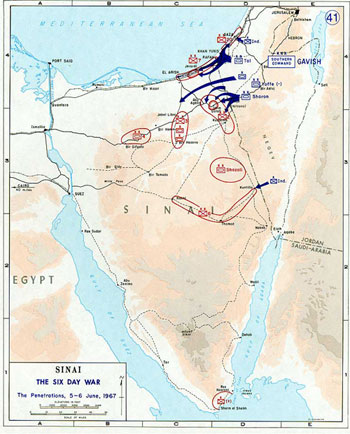
Our sages teach us that when we have left this life and face the Court on High, we will be called upon to answer for our lives. Among the questions we will be asked is, “Did you throughout your lifetime eagerly await and anticipate the geulah, the ultimate redemption?”

By Tzvi Fishman
Some people will tell you that if you put on tefillin in Brooklyn, you’ve reached the pinnacle of the Jewish journey, but it isn’t true. Other people will tell you we have to stay in exile until Mashiach arrives. But that isn’t true either. Hashem isn’t waiting for Mashiach. Before our very eyes, Hashem has brought millions of Jews back to Israel on His own, without waiting for Mashiach to do all the work.

Dear Dr. Respler: The holidays are a great time to learn about ourselves – the good, the bad and the ugly – and then try to make lemonade from the lemons, turn the positive into building blocks, and generally create good things from the lessons learned. The Yamim Tovim are saturated with kedushah, leading to beautifully crafted creations from what one learned and experienced during these holy, spiritual days.

At about 4 a.m. on cold and damp autumn mornings in London, Dad would try to wake us in time for Selichot, the pre-Jewish New Year dawn prayers. As we heard Dad’s footsteps mounting the stairs, my brother and I would hide under our covers and mutter our displeasure at being disturbed.
Yaakov Avinu received word that his brother Eisav was coming to greet him. He understood fully well that this was not to be a warm family reunion. Eisav came accompanied by a band of four hundred armed men, bent on revenge. The Torah says Yaakov was “very frightened,” so he prepared for war.
Several weeks ago I started a series on hashgachah pratis, or Divine Providence. Every believing Jew knows that events do not just unfold randomly; the story I told of two brothers named Yaakov and Yedidya clearly testified to that reality in a contemporary setting.
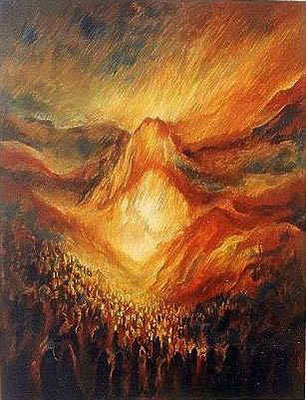
During Pesach we experience liberation from slavery, followed by the dramatic encounter with Pharaoh’s army at the Red Sea. Then we trek through the desert to the great moment at Har Sinai.
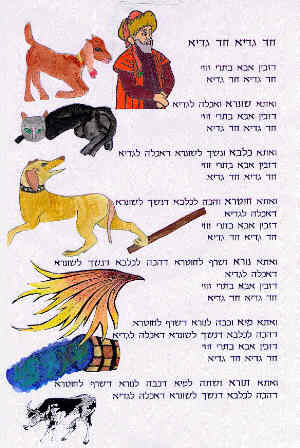
As the Seder night ebbs away – long after the Four Questions have been asked and answered, after the festive meal has been eaten and the post-feast drowsiness descends, after the evening’s mitzvot have been observed and the fourth cup of wine emptied – we raise our voices in a curious, delightful, seemingly whimsical song at the end of the Haggadah.
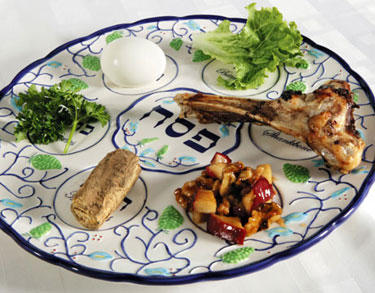
The Midrash (Shemot Rabbah 18:12) describes “leil shimurim,” the “night of watching,” the night before the redemption, as one of the glorious nights in Jewish history.
Purim is the one Yom Tov all Jews can celebrate. Special knowledge is not required and the demands of its observance are easy enough.
Last week I described some prophecies concerning the wakeup calls that would come to our people when the arrival of Mashiach was near. Unfortunately, we have yet to attune ourselves to the sound of those footsteps.
Many of the most fascinating posts I come across are based on sources in Hebrew. These stories would fascinate you, yet I simply do not have the time to translate them all for you...

Why is Purim eternal? I would suggest that Purim is the prototype of the End of Exile, and as such will remain forever linked to the Era of Mashiach that will occur after the Final Redemption. Therefore, Purim will be part of that entire period at the culmination of history.

Tu B’Shevat is not just “another day.” It’s the Rosh Hashanah for trees, one of four roshei hashanah that occur in the Jewish calendar year (Mishnah Rosh Hashanah 1:1).
Question: My son recently stopped wearing a necktie and lace-up shoes on Shabbat. He explained that he doesn’t want to transgress the prohibition against tying knots on Shabbat. Is tying a necktie or shoelaces really forbidden? “A Mother in Israel” (Via E-Mail)
 September 25, 2026