יום חמישי, ג׳ תמוז תשפ״וThursday, June 18, 2026



Follow Us


Sections
E-Edition

And if we are commanded to have faith (emunah) in Hashem – to believe in something unknowable – how can we also be commanded to know Hashem?
When a circle is merely cyclical, detached from growth, it represents spiritual death. This is the circle of routine, of habit, of endless repetition with no forward progress.

Time does not move along a continuous, straight line; it circles around in a repeating yearly cycle. As the Ramchal explains, Hashem created thematic cycles of time, and each point in the year contains unique spiritual energy.

Once we understand the concept of time, and the distinct opportunity and importance of tapping into the unique theme of each point of time in the systematic process of ascension, we must delve into the specific theme that Shavuos presents.
Hashem not only willed the world into existence at one point in the past, but continues to do so every instant.
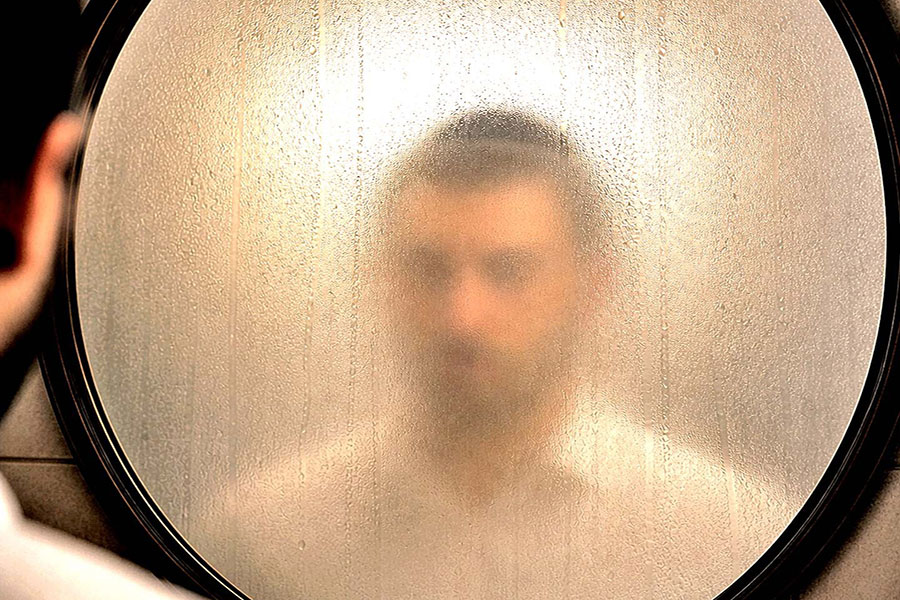
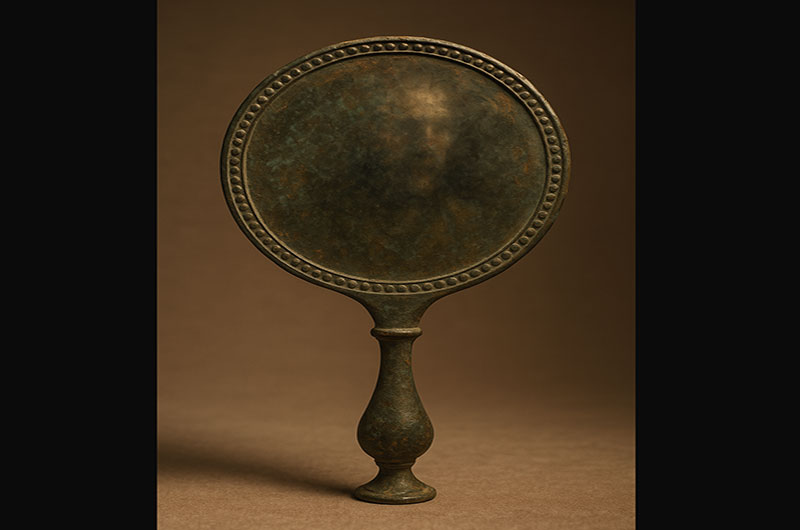
Having forgotten our true selves, we are born with the illusory belief that we are only that which we can see. When we look in the mirror, we see only flesh and bone, and we believe that this is all that we are.

By Bracha Gold
How could something I had once chosen so carefully simply… slip away? I searched my memory, trying to reconstruct that moment. But the truth was, there were several couples within my own family who were in need of such tefillot at the time.

The purpose of rebuke is simple: Rebuke helps us see where we have gone wrong, clarifying what we must change and improve in order to fulfill our purpose and actualize our true potential.

An interesting feature of the Omer is the emphasis on counting each day. This suggests that Sefiras HaOmer is one long mitzvah, complete only if each of the forty-nine days are counted. However, l’halacha, we make a beracha on each individual day of the Omer, suggesting that each one is a mitzvah in its own right. How can we reconcile this apparent inconsistency?

We are not counting down to Matan Torah, but rather are building toward it, ascending one day at a time. We do not wait for Shavuos to arrive; we actively bring it ourselves through the time and effort we invest as we count the Omer.

We are all drowning in Western culture, where physical beauty takes the front seat – or the only seat – in life. But to fully understand the present-day challenge of beauty, we must understand the spiritual concept of beauty in all of its depth.

Despite the original Shulamit not being a name (but rather a description), in post-Biblical times, that word came to be used as a personal name given to Jewish girls, and in the last generation or so has actually become quite popular.

Nothing in the physical world is objectively good or evil, rather, everything has the potential to be used for either good or evil.
Most spiritual schools of thought are focused wholly on the spiritual; they view the physical world as lowly and dangerous. They therefore claim that the physical should be avoided to the greatest extent possible.
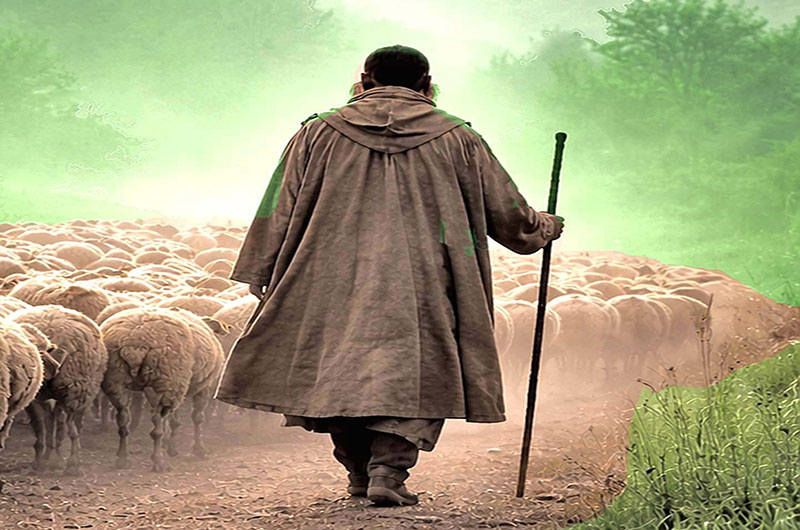
Everyone is a leader in some capacity. Some will lead their families, while others will lead the world. The scale is irrelevant; the principles remain the same.

Only when you look closer, deepening your gaze, do you see the deeper layer of reality, the transcendent root.

The first fundamental principle of Jewish belief is that Hashem is the Creator of the world. He is the source of time, space, and all of existence.

The most primitive form of leadership is selfish leadership, driven by the desire for power and self-gratification. In such a system, the leader represents only himself and his own selfish desires.

Your job in this world is not to create yourself but rather to recreate yourself; to reattain your original state of perfection, as you were shown by the malach. This time, however, it must be done through free will, i.e., by choosing to become great.

Someone called my mother, the oak tree. If you needed someone to lean on, my mother was there for you. She knew that people were different, and she accepted them as they were.
The feeling of making a great decision leads you to another great decision, and the cycle continues.
By Naama Klein
We can generally guesstimate the time for Yizkor with an impressive degree of accuracy, but on Shavuos all bets are definitely off.

Chazal mention a few cases of kefitzas ha’derech. One is when Yaakov travels from the house of Yitzchak, narrowly escaping Eisav’s clutches. Another is when Eliezer embarks on a journey to find a wife for Yitzchak. There are several others as well, but what do these cases have in common? Do they share any deeper connection?
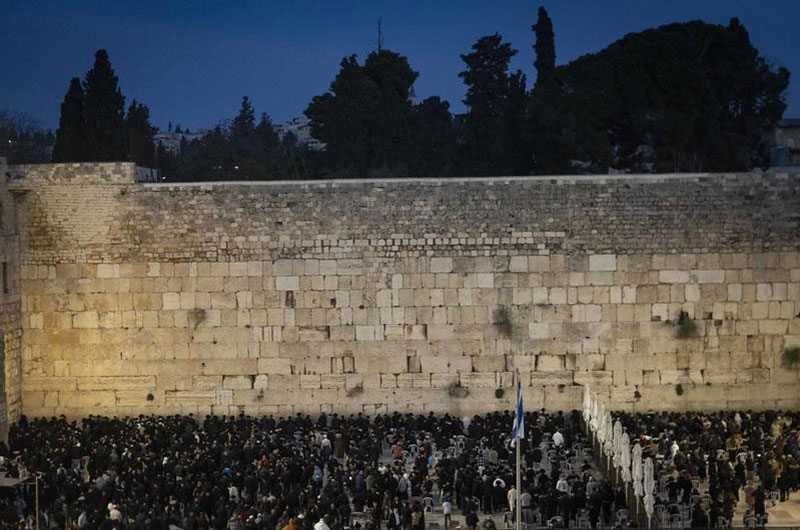
The Torah is replete with mention of Eretz Yisrael’s greatness and uniqueness. While we often hear about Eretz Yisrael’s unique kedusha (holiness), we must ask: What is the nature of this holiness, uniqueness, and greatness?

The transition from Torah She’bichsav to Torah She’baal Peh introduced a number of fundamental shifts in our relationship with Torah. These include the introduction of machlokes and a mode of “hearing” as opposed to “seeing.”
Committing something to writing renders it static and finalized, and writing down the Oral Torah would limit its wisdom to finite fragments of individual statements, causing the shards of truth to remain shattered and broken.

The first stage of history lasted from Creation until the time of Purim and Chanukah. This stage was highlighted by the miracles of yetzias Mitzrayim and Matan Torah and the presence of nevuah. During this period, Hashem’s revelation in this world was apparent and clear. The physical world was naturally seen as an expression of a spiritual reality, and it was easy to source the physical back to the spiritual.
Before Adam sinned, he looked nothing like you or I do today. When we look at one another, all we see is flesh and bone, but if you looked at Adam before he sinned, his appearance was angelic, transcendent, luminescent.
The Chanukah battles were no different. What unfolded in those years in Yerushalayim, and the miracles we witnessed there, sent ripples far beyond the boundaries of our people.

By Naama Klein
In case it is not obvious, this new flavor consists of peanut butter flavored ice cream overloaded with chunks of peanut chews and homemade Reese's Pieces, AKA chocolate and peanut butter heaven! I'm getting hungry just writing about it.
We are able to understand and experience the spiritual through the physical, as the two are intrinsically connected. If you're wondering how to understand this concept, consider the way other human beings experience, relate to, and understand you.
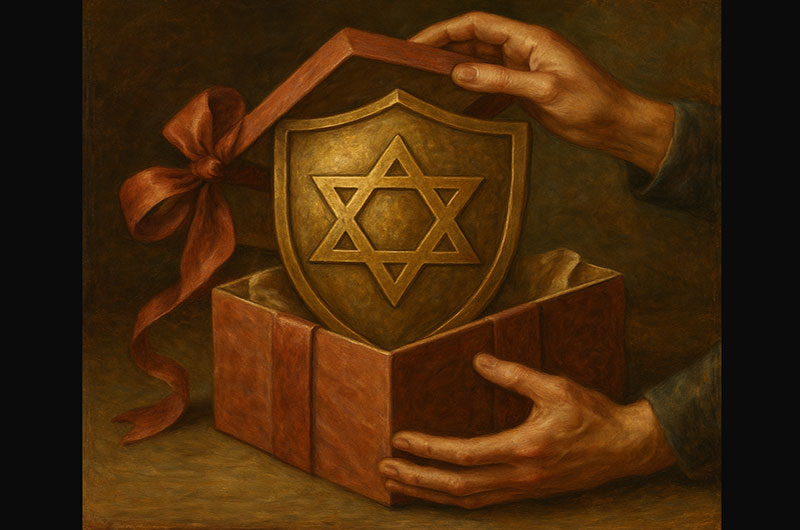
When we recall the story of Chanuka, we think not only of the Hasmoneans’ stunning victory over the Seleucid Greeks, but also of the special gift that followed: the miracle of the oil. In the newly rededicated Temple, a single sealed jar of pure olive oil was found, enough for just one day – yet it burned for eight.

Judaism believes that it’s not so much what I know as what/who I am! Book knowledge isn’t worth much, if that knowledge doesn’t cause a transformation within the person.
By Alan Magill
It is important to know, that in addition to my father's full-time job he fixed televisions on the side to earn extra money. Not like today's flat-screen TVs, but televisions with picture tubes and other varying shaped tubes.
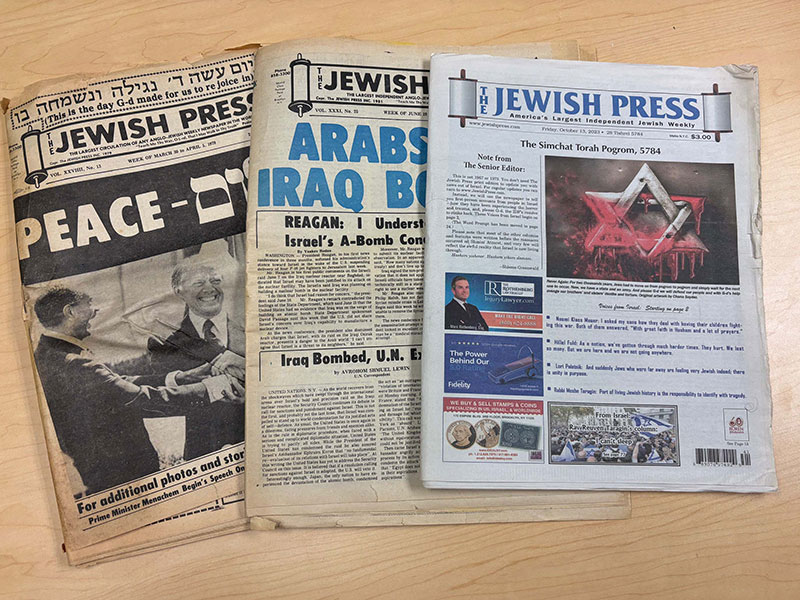
On a personal level, especially being an out-of-towner, I looked forward to the arrival of The Jewish Press all week long. Right in the beginning pages, the paper laid out what was in store for the coming days, and if it was a week blessed with a holiday, the paper spelled out what to do and what had to be avoided. For those of us who could not remember from year to year, The Jewish Press was there to remind us.

There are two different types, or aspects, of perfection. The first is static perfection (sheleimus), where something is, has been, and always will be absolutely perfect. Such a being does not struggle, has no conflicting wills, and never fails. The second type of perfection is more nuanced, and in some sense, even more powerful.

As you likely know, the Jewish surname Barber originates specifically within the Ashkenazic Jewish community. While this doesn’t entirely rule out possible Hebrew or Aramaic origins, it makes them less likely.

A worthwhile journey often includes a long winding path, twisting and turning in all directions, leading you on a seemingly endless quest.
The Torah is not only a guide to living a life of truth within the physical world; it is also the literal blueprint and DNA of this physical world.

What happens when you remove an organ from the body? You are left with empty space. If you remove a kidney or liver, what remains is the empty space that this organ used to occupy. The same applies to spiritual organs as well.
While our default experience of life is internal and personal, we occasionally feel compelled to look at ourselves from an outside view and ponder the meaning and direction of our lives.

The uneducated mind thinks of the truth as a single, factual statement. But the truth is actually the balance and harmony of opposite, seemingly contradictory ideas.

Why was Pinchas’s act of killing even considered heroic? It appears to be violent and rash, perhaps even worthy of criticism. Why then, was it rewarded, and so handsomely at that?

In a journey to the self, all that we know is the starting point; the destination remains to be discovered. We don’t know what we’ll find along the journey, the challenges we’ll face, what people will think, or if we will even succeed.

If a teacher wants to share a deep principle with his or her students, they might share a story or analogy that depicts the idea through a more relatable medium. While the mashal does not fully convey the idea itself, it leads the listener toward it, aiding him or her in the process of understanding.

It does mean that we must not conflate the fallibility of leaders with the infallibility of the Torah itself.
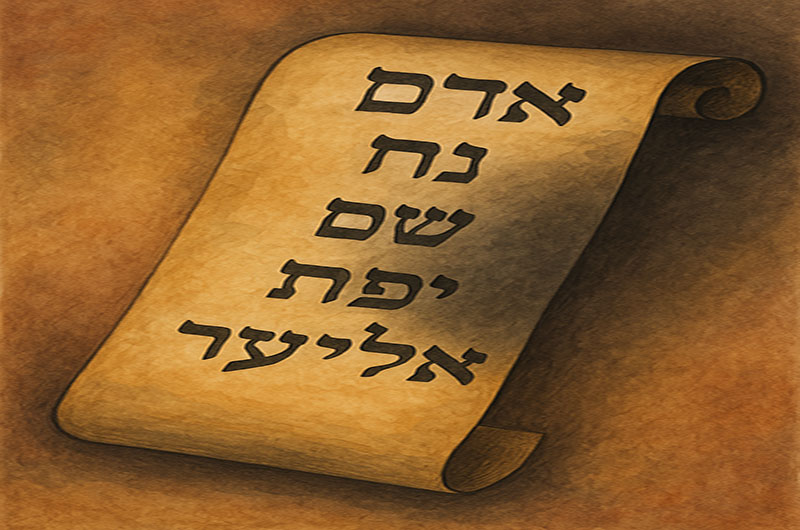
One of the problems with the Mabit’s position that the Chida focuses on is how Moses was able to name his son Eliezer, if that name is clearly from the time before Abraham (as we mentioned)?

We first experience Elul, then Rosh Hashanah, and then Yom Kippur, a developmental process of raising ourselves higher and higher above the physical world and deeper and deeper into the spiritual world.

This is not a war of maneuver. It is a slow, grinding, street-by-street campaign against an enemy embedded in every alley, hiding behind civilians, and fighting from below.
By Rabbi Lord Jonathan Sacks z"l
We are a hyper-verbal people. We talk, we argue, we pontificate, we deliver witty repartee and clever put-downs. Jews may not always be great listeners but we are among the world’s great talkers. Accuse us of anything and we’ll come up with a dozen reasons why we’re right and you are wrong.

If the soul and body are complete opposites, how do they manage to coexist as one? One would expect them to repel each other, like two opposite sides of a magnet.

At 18, many girls might be expected to spend their time scrolling through their phones or shopping in malls. The chesed program provides these teenagers with a purpose beyond themselves, transforming them into compassionate, mature young women who value the art of giving.
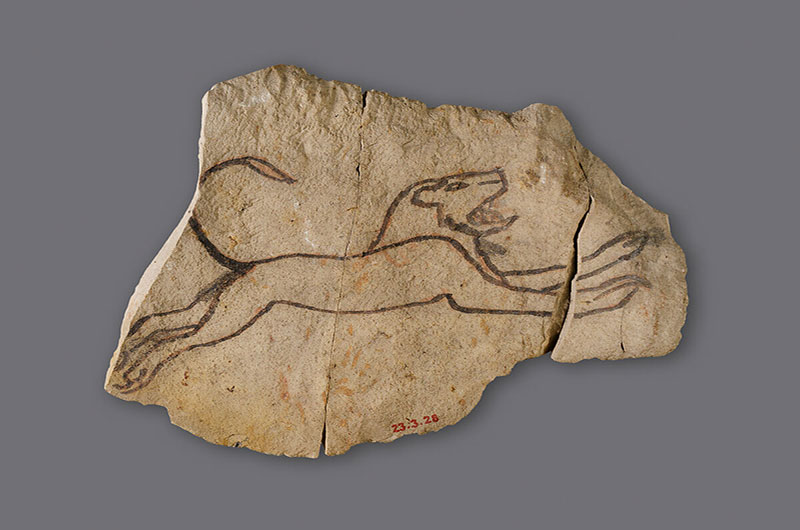
The earliest instances of Lavi as a first name that I know about are all found in the halachic responsa of the Algerian Sage Rabbi Yitzchak bar Sheshet (1326–1408), also known as the Rivash.
We have brief moments of inspiration, but they soon fade into oblivion, only to be resuscitated for a few more days the next year in the hopes that somehow this year might be different.

Only when we negate our egos and acknowledge that the goodness and beracha in our lives comes not from our own independent efforts but from Hashem – our ultimate source and creator – can we then receive more beracha.
By Alan Magill
I was astounded at this tremendous mitzvah she was doing. She was dispensing HOPE in a big dose.
By Michael Gati
Walking into the shul I saw an old man walking really slowly, I offered to help him down the stairs but was reluctant. He made an attempt to put on his tallis but was not able to. I walked over to help him but despite his reluctancy I insisted on helping.

Although we likely take it for granted that berachos are a pillar of our daily lives, they have not always existed as they do now.

If someone were to ask you to prove that you exist, you would seriously struggle to do so. One’s own existence simply cannot be rationally proven.

Tehilla understood that nights of interrupted sleep and scampering into the safe room was a small price to pay compared to the price others paid in the terrible loss of life and limbs.
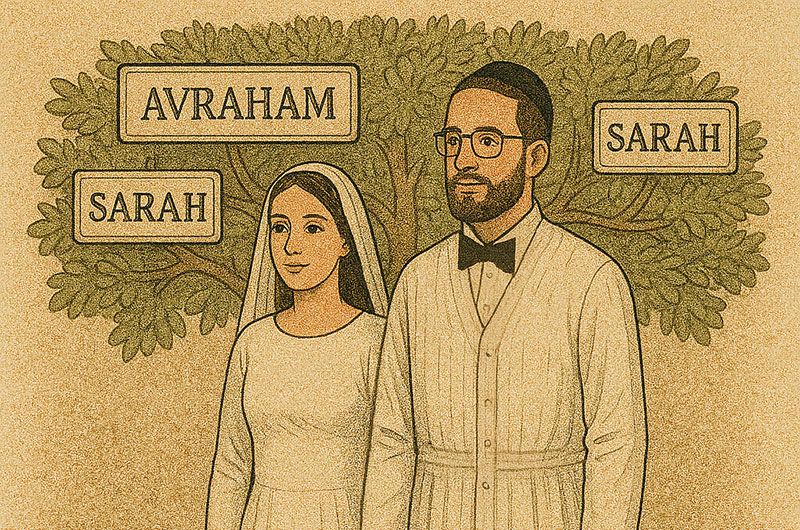
There are several leniencies in applying this restriction when the names do not totally match up. For example, if the names do not match exactly – such as a father-in-law named Yaakov Yosef and a son-in-law named Yosef – some poskim permit the marriage.
He drove and drove, enjoying every minute when suddenly the car in front of him put on the brakes! David tried to stop in time but couldn't and he went smashing into the car in front of him.

Very often, people believe that true depth and wisdom lies only in far-off places – in Eastern spirituality or Western philosophy. However, the deepest wisdom lies within Jewish thought, in the depths of the Torah’s inner wisdom. One must only seek, and they will find.

By Alan Magill
Three diseases could not stop my mother. They never had a chance. She LIVED and was a giver until the last moment she passed from this world to a better world.
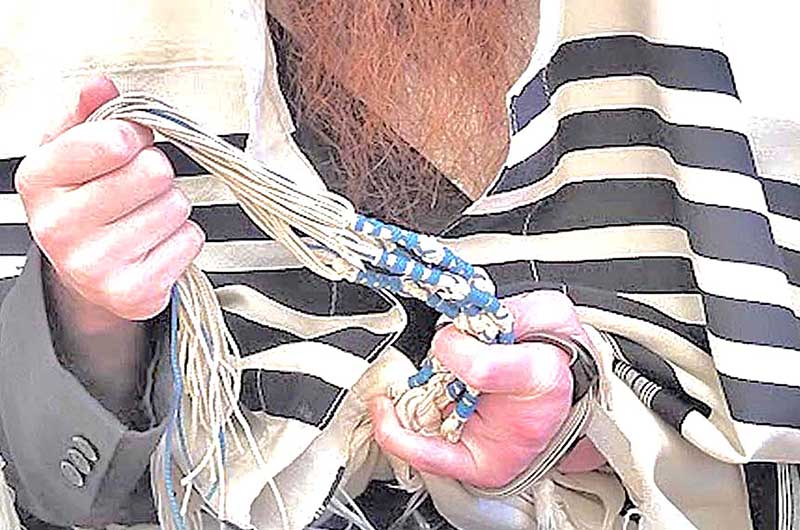
As we previously explained, the purpose of techeiles and tzitzis is to straighten the bent path and help connect us back to Hashem, our Source.
By Risa Rotman
Sunday morning as I was packing up for my retreat, I threw in the Arnica even though I felt like my hand was already feeling and looking much better. It can’t hurt, I thought as I tossed in a few more maybe items.

To destroy is easy. To build is sacred, slow, and infinitely more precious.
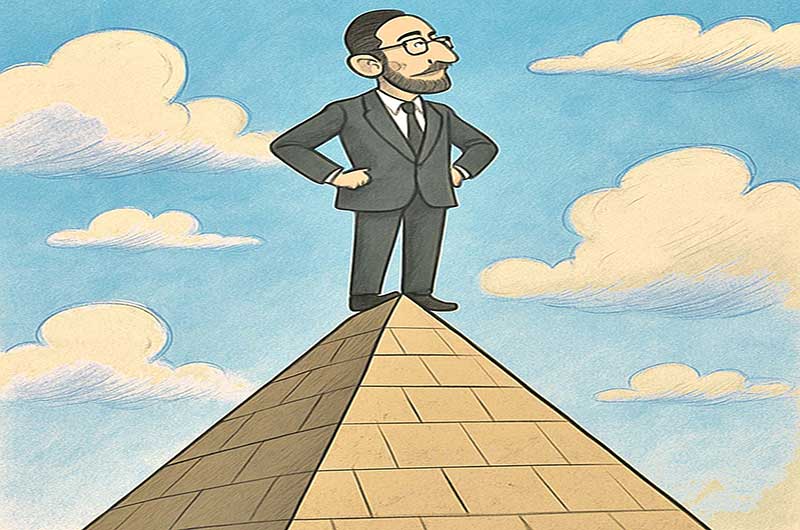
Most people, at some point in their lives, have felt invincible, unstoppable, almost G-dly. And yet, at other times, these very same people have felt weak, incapable, deflated, and worthless.

The meraglim not only misunderstood their experience, but they then reported this distortion back to Klal Yisrael.
There are two levels of reality: The first is how things appear on the physical surface; the second is the meaning that lies behind that exterior.
We don’t wait for spirituality to come to us; we proactively seek it out. We don’t let time wash over us; we actively ride the waves of time.
By Rabbi Lord Jonathan Sacks z"l
According to he Netziv, If Jews live distinctive and apart from others they will dwell safely, but if they seek to emulate ‘the nations’ they ‘will not be reckoned’ as anything special at all.

The most obvious form of chesed is giving money, but this is far from ideal. Short-term monetary gifts do not usually solve a long-term struggle with poverty; the person will therefore remain dependent and poor.

Only when there is silence, and the complete absence of ego, can the truth be heard, understood, and accepted. The Torah is the absolute and whole truth and can therefore only be given when there is absolutely nothing else competing against it.
If the Torah does, in fact, require organization, why specifically divide it into five parts?
The Beis HaMikdash is the point where the spiritual heavens kiss the physical earth…this is where the infinite and spiritual meet the finite and physical.
By Rabbi Lord Jonathan Sacks z"l
The trouble is that if the leader is a parent, then the followers remain children. They are totally dependent on him. They do not develop skills of their own. They do not acquire a sense of responsibility or the self-confidence that comes from exercising it.

You lost that transcendent connection to oneness so that you could journey through life to rebuild it.
By Adina Perez
I was stunned. Everything had lined up so perfectly. My heart cried, This was your chance! But my conscience said otherwise. I was stunned. Everything had lined up so perfectly. My heart cried, This was your chance! But my conscience said otherwise.

Everyone wants to contribute something significant to the world; to play a meaningful part in the cosmic symphony we call life. This desire is an inherent part of being human.
How many people choose to politely confront the people they’ve been hurt by without bearing a grudge, stewing, seeking revenge or sulking?
By Rabbi Lord Jonathan Sacks z"l
But the Torah is not mere history as a sequence of events. The Torah is about the truths that emerge through time.

We do not simply remember what once occurred, we relive the experience as we tap back into the power of kabbalas haTorah.

A promise is a promise and it'll only take me a minute, I can surely do this without any problems!

By Rabbi Lord Jonathan Sacks z"l
Words can injure and inspire. Words can bless or curse. Words can create new moral facts, such as when we make a promise.
By Rabbi Lord Jonathan Sacks z"l
“Torah study without an occupation will in the end fail and lead to sin.” Avot 2:2

Words can injure and inspire. Words can bless or curse. Words can create new moral facts, such as when we make a promise.
By Talya Gross
The front of the car where the engine was had burnt to a crisp, and all the windows were shattered.
By Rabbi Lord Jonathan Sacks z"l
The holy spaces had to be kept free of conditions that bespoke mortality.

The name Maya ranked as the fifth most popular name for Jewish girls born in Israel in 2023.

How do we, as physical and limited beings, transcend our finite dimensions? How do we relate to the abstract, to the infinite, to the spiritual?

Another equally problematic motivation for speaking lashon hara is the desire to feel good about oneself. We all desire to feel important, significant, and worthy of respect.
By Rabbi Lord Jonathan Sacks z"l
There is an order to the universe, part moral, part political, part ecological. When that order is violated, eventually there is chaos.
Do you ever wonder what people really think about you? Whether they think you’re brilliant, caring, and fun; or lazy, self-centered, and boring? The truth is that you’ll never know; people only talk about you openly when you’re not in the room.
By Rabbi Lord Jonathan Sacks z"l
After the Flood, G-d gave humans permission to eat meat, but this was a concession, as if to say: Kill if you must, but let it be animals, not other humans, that you kill.
When you do something – even something good – without being commanded, all you are reflecting is yourself. It is your personal form of avodah, self-contained, limited, and disconnected from Hashem.

Makkas bechoros was unique in that Hashem Himself performed this Makkah (Rashi, Shemot 12:12). The Ramban explains that all the principles of hashgacha pratis were displayed through these events. We were clearly then on an immensely high spiritual level.
I rummaged and rummaged through every pocket in the bag while the tag continued to beep. And lo and behold – while I was still trying to locate the tag, what did I come up with but two little packages of chametz snacks!
By Rabbi Lord Jonathan Sacks z"l
If you want to be a great leader in any field, from prime minister to parent, it is essential to think long-term. Never choose the easy option because it is simple or fast or yields immediate satisfaction. You will pay a high price in the end.
Nothing in the physical world is objectively good or evil, rather, everything has the potential to be used for either good or evil. The choice is solely up to you!