יום שלישי, ט״ו תמוז תשפ״וTuesday, June 30, 2026



Follow Us


While the Rinat Yisrael siddur’s original editions relied on the support of the Religion and Education Ministries, the edition meant for Diaspora Jews was funded by the World Zionist Organization’s department for Torah education and culture in the Diaspora.

Even after the pogroms of 1391 and the expulsion from Spain in 1492, those expelled from Catalonia maintained their customs and nusachs – at least partially – which they took with them to new places, including North Africa (primarily Algeria and Tunis), Italy, the Ottoman Empire, and the Land of Israel.
Phillip Feldheim died in New York City in 1990. Ten years later the first edition of the siddur bearing his name – Tefilat Shai – appeared in Jerusalem.
Shrem’s unique musical talents quickly earned him the right to serve as the chief chazzan at some of the most central and well-known Syrian shuls in the city: at Magen David and then Bnei Yosef.
The different target audiences led to the siddurim being printed in two versions: while the siddurim for olim from the Soviet Union contained the Israeli national prayers, those sent through various clandestine paths to Soviet Jews themselves contained no elements which might anger the Soviet authorities.
In an effort to beat his competitors – both in the print and book sales business – Chinsky joined others in 1901 to found the Hebrew Publishing Company, the largest and oldest Jewish New York-based publishing house.
The name Rechovot Hanahar (Streets of the River), derived from its mention in Bereishit 36:31, was interpreted by Kabbalah as referring among other things to the period before Creation, and was also tied to names such as Nahar Shalom – one of the famous books by the Rashash himself.
Nowadays, stressing the shva na is an accepted and fairly common element in many siddurim. But when Ishei Yisrael appeared, it wasn’t common at all.
As has been noted elsewhere, Shlomo Tal originally sought to produce Rinat Yisrael based on nusach Sfard so as to unite people who had different traditions, but he found himself ultimately also producing siddurim for Ashkenazim and Mizrachi-Sefardi Jews.
The siddur had a number of versions from the outset – one of which was meant for schoolchildren – and at least one of which appears to have had an attached translation into Ladino, all sold in New York stores during WWI.
In terms of content, an organized and clear introduction was added to the siddur written by Professor Dov Rafel, and the prayers themselves were accompanied, as promised, by basic and brief halachic instructions, as well as midrashic and machshava passages which were included in the margins of each page, with clear lettering and in a different color.
The siddur originally came out in two volumes, numbering a total of 330 pages. Despite Rabbi Halevi’s desire to produce a complete siddur, he ultimately only managed to cover weekdays and Shabbat (alongside berachos).
Artscroll-Mesorah is one of the largest publishing houses in the Jewish world, and despite its strongly conservative character, it enjoys increasing popularity – including in nationally minded Israeli communities.
Aside from the dilemma between custom and text – which every editor likely deals with, implicitly or explicitly – Alsheikh also wondered about the siddur’s graphic design, while seeking to almost artificially fortify its identity as a religious prayer book.
The siddur’s opening pages include an introduction by Rabbi Dr. Shlomo Toledano, who describes the uniqueness and ancient character of the Moroccan nusach, while addressing much broader historical processes, which are usually not to be found in conservative siddurim...
New prayer houses such as these, which mix and match different traditions of prayer and custom, continue to be created all the time in many places. It is thus entirely natural that the siddur bookshelf also be enriched with new siddurim expressing this new trend, with approaches to prayer which previous generations would have found difficult to imagine.

As a siddur meant for both religious Zionists and non-Zionist charedim, and much like siddurim of previous generations, the original Beis Tefilah also did not include the national prayers – those said every Shabbat and those said on Israel’s Independence Day, Memorial Day, and Jerusalem Day.
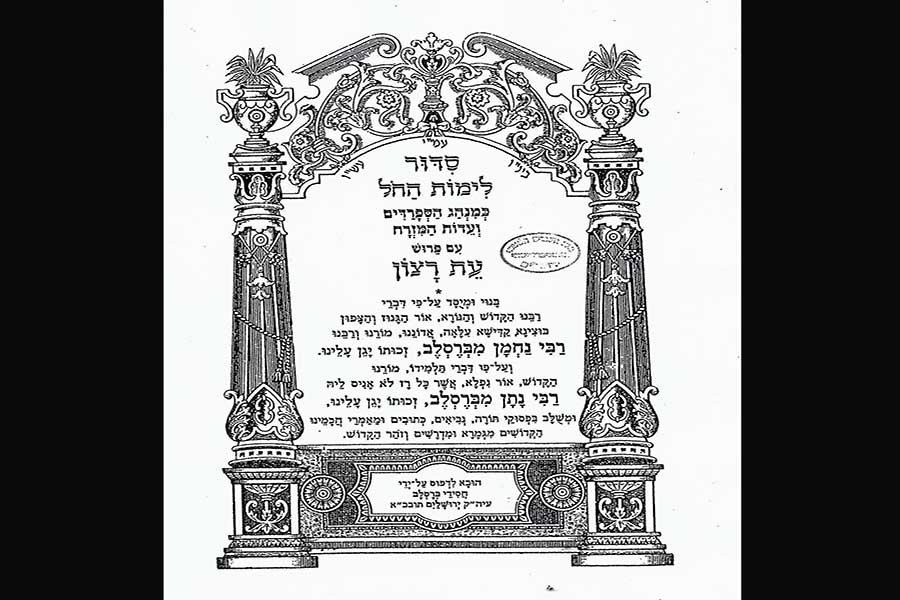
The siddur itself was Sephardi for all intents and purposes, but its subheading – “according to the minhag of the holy community of Sefardim of the Ma’arav and the Mizrach” – hinted at Rabbi Aburbeh’s principled and consistent ideological line, which strove already at this early date to fuse all existing Sephardi and Mizrahi prayer nusachim into a single, unified prayer formula.
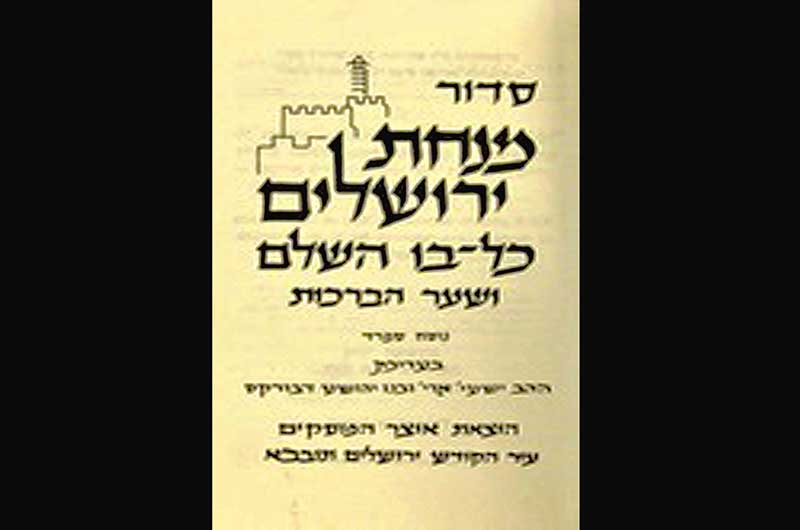
The prayers themselves, it should be noted, only appear after no fewer than 100 pages of prior content, and the book’s design is apparently based on the Siddur HaShalem previously published by Eshkol Press.
This highly popular machzor was so widely accepted that it was even quoted in the writings of major poskim, including the Chasam Sofer.

As mentioned, the siddur also included a complete Sefer Tehillim, divided according to the days of the week and month, something which was also considered part of the classical world of Jewish women’s prayer at the time.
The Jewish national period of mourning.
By Josh Hasten
The International Halacha Institute offers personalized online training in French, English, Hebrew and Spanish.
The Jewish national period of mourning.
his is not the standard look for someone who attends our shul even if just passing through, especially since there are other shuls on the block that may be considered a better fit. I'll be honest that if someone comes in looking like this, it's usually to collect tzedakah.
By Baruch Lytle
It was obvious I was in the wrong place with the wrong people and I needed to get out of there.
By Baruch Lytle
Makom, a branch of the organization Jew In The City (JITC), was founded in 2014 by Allison Josephs, to help Jews who feel they no longer want to stay in their community of birth find a new community of choice – instead of leaving Judaism altogether in frustration.
By Baruch Lytle
While his going OTD was painful for his mother, Boruch says she still accepted him – and worried more about the types of people he was hanging with.
Though demography was not an exact science, Jews may have numbered several million in the early Roman Empire. For more than a century before the 70 CE destruction of the Second Temple, most Jews preferred living around the Mediterranean basin, instead of their aboriginal homeland. Still, Jews were the majority in the Holy Land, perhaps […]
By Baruch Lytle
Among them was Aryeh Abramov, 17, who was to leave for a year in Israel two days later. “He was an all-around good person,” Abramov said, “he gave to all of us by always making the minyan, so it’s nice that I can be here and make a minyan for him.”
The author of the book Ronit Treatman, the daughter of Israeli diplomats who speaks several languages and lives in Philadelphia, was inspired to write the book after she became involved with the Bnei Anousim, the tens of millions of people around the world descended from forcibly converted Spanish and Portuguese Jews through the organization Reconectar.
By Tzvi Fishman
Rabbi Samson will teach a special 32-session course designed for bar mitzvah boys that will provide an overview on the 613 mitzvot, with a concentration on the daily mitzvot such as prayer and those related to Shabbat. A parallel course for bat mitzvah girls will also be offered.
Rav Taragin doesn’t want to distract from the purpose of the program, whose essence is joining members of Klal Yisrael together.
Elie Wiesel was once asked, “Is there a tradition of silence in Judaism?” “Yes,” he answered. ”But we don’t talk about it.”

This pandemic has forced us to redefine “essential” and “non-essential.” With the proper frame of mind, many of us can be empowered in unprecedented ways to sincerely and genuinely sing Dayeinu from the essence of our being.
Saying a shorter version of Kabbalat Shabbat would hardly be unprecedented or a scandalous reform.
In Israel, most people are more careful to stress the end of the word (what’s called “mil’ra”), where it usually belongs for Hebrew words.
I always go far into things. I’ve always been a seeker. I was looking for tranquility, peacefulness, and accomplishment.
Even though her dreams for a perfect wedding had been shattered by her brothers’ boycott, she never resented them or their decision.
When the Stern children wondered why marrying Jewish was so important, their parents struggled to answer.
It didn't take long to understand the depths of the Torah lifestyle.

It becomes quite clear that measured by time, Klal Yisrael values avodas ha’tefillah, serving Hashem through prayer, tremendously.
“I liked Israel, and felt good being Jewish for the first time in my life.”
All of Shabbos centers around this one, primary idea: that we are enjoined to recall and internalize the fact that Hashem created the world in six days and rested on the seventh.
Here I am with everything. All of my facilities. Youth. Strength. Looks. Money. Degree of talent. Family. Health. And after all of that and more, I think I'm miserable? It can't be. Something's got to change.
The four Stern children reported that the religious observances felt like just that: observances of a culture with little relevance to their modern lives.
Our rav also advised me that given the circumstances, I should not rely on an ordinary Kohen, but should specifically find one with a proven lineage to avoid having to do a third pidyon haben in the future.

Throughout his month in Israel, Kalman realized he had found his home, in the beis medrash and in Eretz Yisrael.
They built the community there. Some of their children hung around, but all of their grandchildren disappeared. They were lost to Judaism. You can’t hand down secular Judaism, bagels-and-lox Judaism, Ken said.
Fast forward to 1977. Larry had already begun to become observant while in graduate school. When his PhD research flopped that year, Larry decided to pack his bags and headed to Eretz Yisrael to work on a kibbutz.
At many points in his life, he intended to go in one direction, until Hashem pushed him back on the road to return.
With the warm reception they had received in Manchester, and with both Aaron and Rivka preferring quieter areas and smaller communities to the hustle and bustle of London, they decided to move there.
Was their recent commitment strong enough to prevail against this dramatic test?

The more we know and understand, the more focus and intention we put into our prayers, the more powerful they are.

To which kingdom do we belong? Which government are we loyal to? By what criteria do we allocate our fealty?
By Guest Author
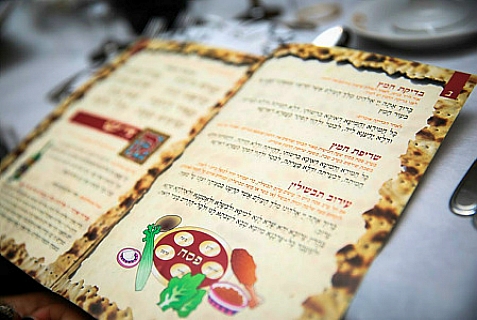
Nothing beats some preparation to make it a memorable Seder!
"An animal also has an instinct to care for its young, but you are doing more than that. You are performing chesed, an act of kindness for another human being. Does it matter that he also happens to be your son?"
"Only a Navi or a fool can say why it occurred - and we don't have Neviim any longer."
Shlomo Veingrad has traveled further for his speaking engagements than even during his days in the NFL, crisscrossing America and speaking around the world.
“Presentation is very important. Judaism is not necessarily appealing to a lot of people and you want to make it as attractive as possible,” said Rabbi Chaim Miller, founder of the Kol Menachem publishing house.
In 1992 the Dallas Cowboys won Super Bowl XXVII. Among the members of the team was a young Jewish man named Alan Veingrad. Alan, now Shlomo, became frum several years later and found a much more significant calling: as an in-demand speaker he captivates Jewish and non-Jewish audiences around the world with lessons from his football days and from his teshuva journey.
By Rhona Lewis
Children should be seen and not heard. It was a maxim that I heard many times throughout my childhood and which caused me a fair amount of frustration. When, I often wondered, would I cross that invisible line and move out of the periphery to which I was assigned, into the arena of adulthood and be given the chance to express an opinion that people would listen to?
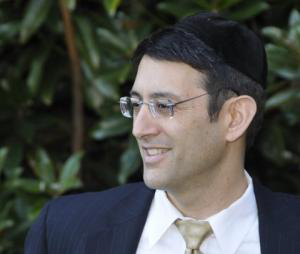
Twenty-five years ago, when kiruv was still a relatively new concept, a group of four young rabbis left Ner Yisrael with families in tow to head down south to Atlanta, Georgia. Rabbi David Silverman was one of those pioneers who founded the Atlanta Scholars Kollel. He is a powerhouse of kiruv – his charisma, sincerity and broad knowledge have helped him inspire thousands of Jews, including this writer.
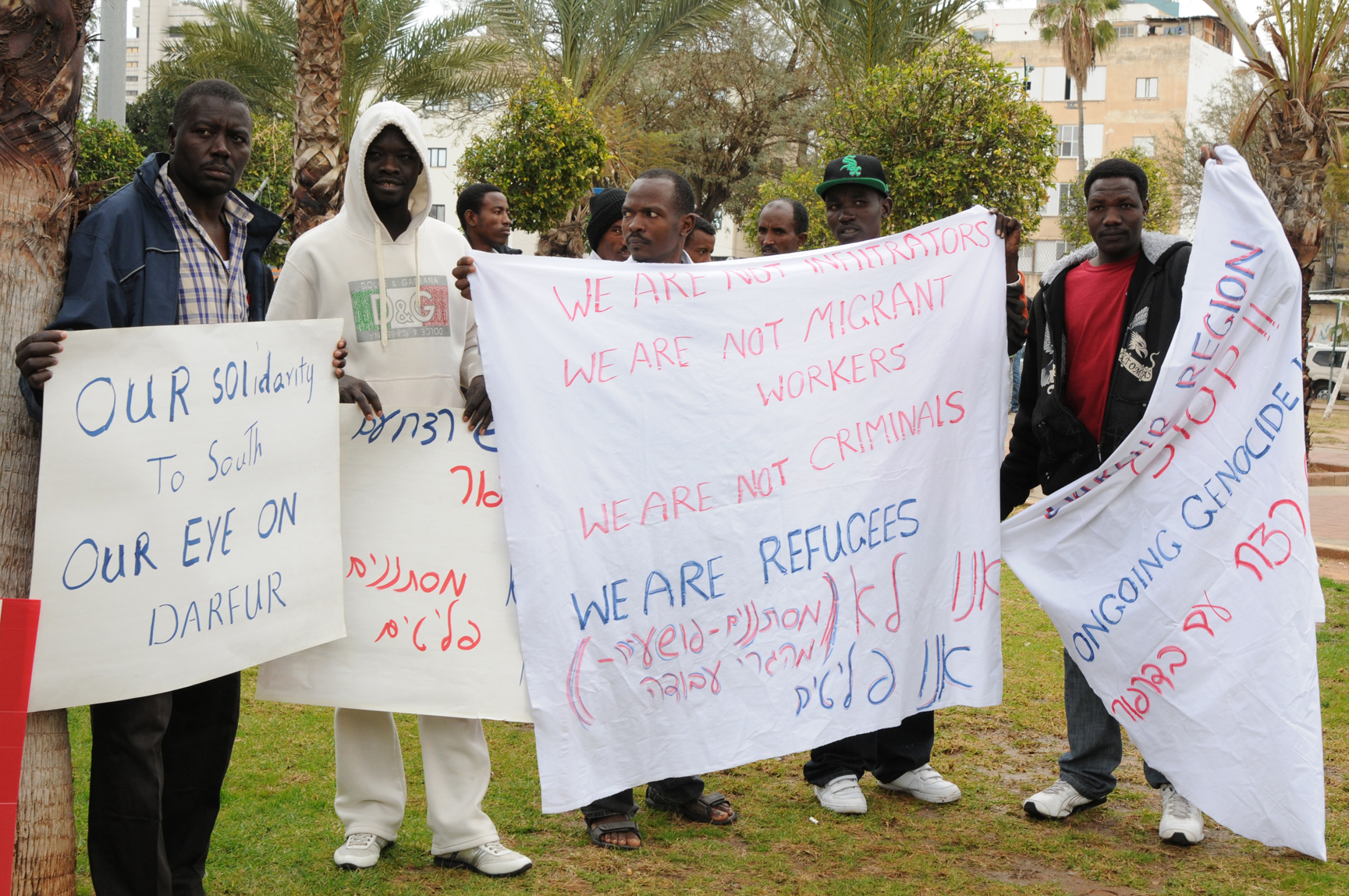
From elected officials to people in the street, from the highly educated secular upper class to yeshiva students to the working poor, numerous Israelis seem to share a lexicon and intellectual framework which denigrates and dehumanizes Africans, belittles their suffering, and trivialized their plight.

By dvora
We recently layned Parshas Naso which contains the Biblical source for the obligation of a married woman to cover her hair. An eesha sotah is a woman whose husband suspects her of having acted immorally. The Torah commands the Kohein to take various steps to demonstrate that the sotah has deviated from the modest and loyal path of most married Jewish women (Rashi 5:15-27). Among the procedures, the pasuk clearly states: “ufora es rosh haisha…” and he shall uncover the hair of the head of the woman (5:18).

By dvora
JERUSALEM – A leading Orthodox rabbi in Israel has a revolutionary proposal for the harvesting of organs from a clinically dead patient. At present, his proposal not only has no support from other rabbis, it is also against Israeli law – but he is not fazed.
By Dov Shurin
Prior to the Knesset vote on the Regulation Law, which was defeated on June 6, I visited the protest tent where people were on a hunger strike and I realized we are again going through what we went through in the days before the destruction of Gush Katif.

If you ask someone coming out of church on a Sunday, "Do you believe in G-d?" the worshipper will be shocked. "What type of question is that? Of course I do!"

Tina was in my kindergarten class last year. Each day Tina’s hair flew all around her. It would tumble into her eyes and she would bat at it periodically throughout the day just to see. Sometimes I’d use whatever hair accessory I had at hand - even just a rubber band - to put Tina’s hair out of her face.

Our Mission: When it comes to Chesed the Jewish people are at the front of the line. We’ve tackled Chesed and everyone is aware of the unbelievable work and generosity that we are involved in. Now it’s time to take on a new, more difficult challenge: Middot (character trait).
Pesach is the time of redemption and salvation, which can often come from the most unexpected sources. Such is the story of a boxing title fight in Yankee Stadium that launched a young boy from Russia on a journey to discover his Jewish heritage in Israel.

In the vernacular of our sages and in our prayers, Pesach is titled, “Z’man chayrusaynu- Time of our freedom.” Although we did attain freedom at the time of our redemption from Egypt, titling the holiday as such doesn’t seem to encapsulate the root of the holiday’s greatness.
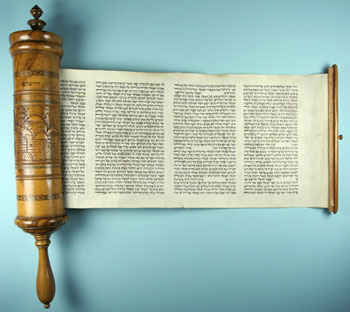
On Purim we read Megillas Esther twice, once by night and once by day. It is uncertain what the nature of the obligation is.
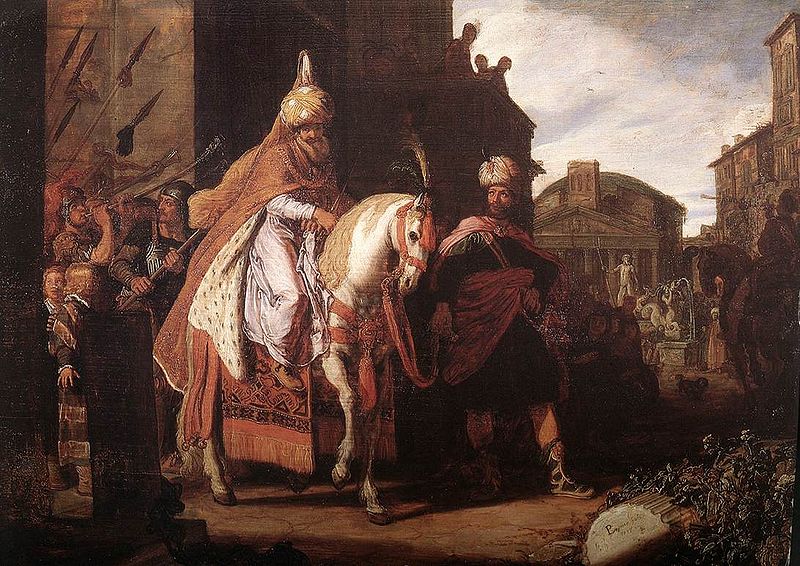
Purim is the holiday of contradictions and tenacity-driven-optimism: Grief replaced by joy; Esther's concealment replaced by the disclosure of her national/religious identity; Haman's intended genocide of the Jews replaced by redemption; Haman replaced by Mordechai; national and personal pessimism replaced by optimism.
Do you really care about your fellow Jew? Take the following test to see if your Ahavas Yisroel Quotient is on par with requirements established by Chazal.

These are excerpts from the sefer “Inside Purim” which contains additional answers to the following questions and much more.
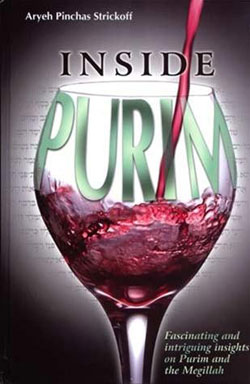
These are excerpts from the sefer Inside Purim, which contains additional answers to the following questions and much more.
 June 26, 2026