יום שבת, ה׳ תמוז תשפ״וSaturday, June 20, 2026



Follow Us


Sections
E-Edition
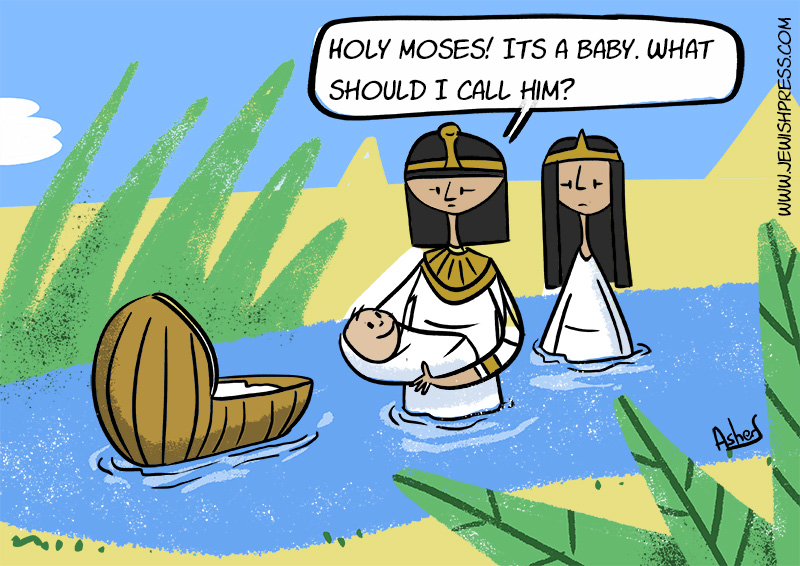
Did Pharaoh's Daughter Speak Hebrew?
By Aryeh Savir, Tazpit News Agency
According to PA officials, identifying the site as a Jewish altar is a “falsification of the Palestinian history of the place.”
On Av 10, 5765 the Ariel Sharon government uprooted thousands of Jews from the Gaza Strip.
By Moshe Herman
God could make Redemption come about by Himself if He wanted to! Rabbi Mike joins Rabbi Yishai to usher in the Book of Exodus, and the first great redeemer - Moses!
On Shabbat we will read of two events that took place on the first of Nisan.

By JNi.Media
Have a wonderful, holiday, regardless of whether or not it is plague-infested…
By Moshe Herman
Why was Moses' face aglow when he came down from Mt. Sinai? Why did the Jews want a golden calf when they saw that Moses was delayed (or dead)? Rabbi Mike Feuer joins Rabbi Yishai to discuss one of the most dramatic Torah portions in the canon - at the end of this episode your face will be on fire as well!
By Moshe Herman
So what are the Ten Commandments? Chapter headings or mnemonics maybe? Rabbi Mike Feuer joins Rabbi Yishai to find out!
Moses descended from the mountain and beheld the uncontrolled passion with which the masses were dancing about the idol they had adopted.
By Moshe Herman
Jim Long is a Noahide, a Torah-believing gentile, a filmmaker and publisher, and author of "Riddle of Exodus." He helps get the "philosophical chametz" surrounding the Exodus out of our collective closets. He joins Yishai in-studio, together with Rabbi Michael Shelomo Bar-Ron, author of the just-released "Song of the Creator - Revealing the Super-Intelligent Design of the Pentateuch," which posits that the Five Books of Moses is a perfectly symmetrical document the likes of which could only be written by God. Then, Rabbi Shimshon HaKohen Nadel joins Yishai in-studio to talk about a special mock Pascal Lamb Offering ceremony in Jerusalem he attended along with thousands of other people, among them animal-rights protesters. Listen in!
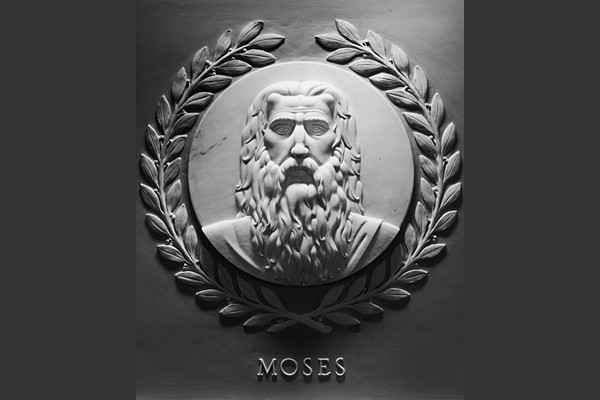
By Anav Silverman, Tazpit News Agency
It was probably the first time that the marble relief portrait of Moses hanging in the House Chamber ever received such public acknowledgement.
By Rabbi Lord Jonathan Sacks z"l
God’s “name” is therefore His standing in the world. Do people acknowledge Him, respect Him, honor Him?
By Rabbi Lord Jonathan Sacks z"l
You perpetuate a transformative event by turning it into a ritual.
“It turns out that Moses wasn’t such a bad navigator after all, Prime Minister Binyamin Netanyahu told the Israeli Presidential Conference birthday party for President Shimon Peres Thursday evening. Negating the old joke that Moses could have turned towards Saudi Arabia and lead the People of Israel from Egypt to a land of oil instead […]
By Rabbi Lord Jonathan Sacks z"l
For the first and only time, Moses invokes a miracle to prove the authenticity of his mission

The valuable Cypriot gas fields are located halfway between the Cypriot and Israeli coast.
Connections between the Jewish and American traditions of liberty.
What does it mean when we say that man was created in the image of God?
By Tzvi Fishman
The meaning of the Exodus is that Hashem chose the Jewish people to be His special Holy nation.
By Tzvi Fishman
The darkness of materialism is so great, who can fight against it?
What was G-d thinking when he sent Hurricane Sandy and what could have been its purpose? In truth, I don’t much care, because our role as humans is not to understand G-d’s plan in the face of horror and tragedy, but to challenge God and demand that human life always be protected and preserved. Did I say demand? Yes, humanity has rights before God. We are His children. He commanded us to preserve and promote life always. “Choose life,” Moses orders the Israelite nation in God’s name, on the last day of His life. And the Creator must abide by the same dictates He expects His creatures to.
"The Book of Mormon clearly states that Nephi built a temple modeled upon the temple of Solomon upon arriving in the Americas (2 Nephi 5:16). In addition, the Book of Mormon says that other temples were built in the Americas (see 3 Nephi 11:1 and Helaman 3:14)...the Israelites in the Americas were trying to faithfully follow the law of Moses."
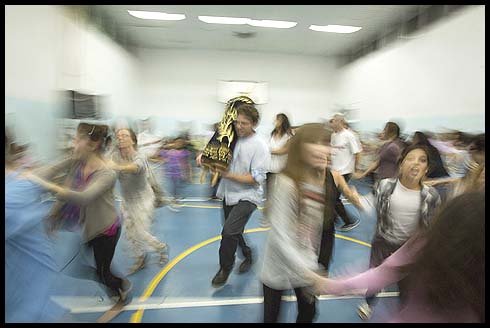
By Paula Stern
As the men danced around below us, I had a lot of time to notice the people who were there - many are friends and neighbors of mine; children and grandchildren of people I know. The rabbi that is so loved in this community; a woman who regularly collects food for needy people. This one has a child who is ill; a boy with Down Syndrome who is so loved and cherished. This family has more boys than I can count; this one just had a daughter who got married. She's a grandmother now. Her son just got engaged. That one there is married to her over there. And on and on - a community of people.
As the year draws to a close we have the book of Deuteronomy before us week after week, reviewing many of the halachos and reminding us of our harrowing trek through the wilderness. Moshe Rabbeinu is the stern narrator, guiding us to the very edge of the Promised Land, a final step he will never take. He pleads with God to let him enter the Land to no avail. Finally, “Moses, servant of Hashem, died there, in the land of Moab, by the mouth of Hashem. And He buried him in the depression, in the land of Moab, opposite Beth-peor, and no one knows his burial place to this day. (Deut. 34: 5).” We complete our reading of the Torah with tears in our eyes for our faithful teacher, prophet and leader, whose life seems to end in angst and frustration. What was the inner life of our brave and tenacious leader?
However remote the prospect of acquittal, a Jew must never give up. God commands us to challenge indictment with prayer. And the rabbis urge us to confront sentencing with hunger strikes. And so, the Midrash tells us, when Moses stood before God, at a loss for words with which to defend the sin of the golden calf, God Himself donned a tallit, took to the prayer stand, and showed Moses how to pray and what to say:
By Rabbi Lord Jonathan Sacks z"l
It is a scene that still has the power to shock and disturb. The people complain. There is no water. It is an old complaint and a predictable one. That’s what happens in a desert. Moses should have been able to handle it in his stride. He has been through far tougher challenges in his time. Yet suddenly he explodes into vituperative anger:
By Rabbi Lord Jonathan Sacks z"l
Adaptive leadership is called for when the world is changing, circumstances are no longer what they were, and what once worked works no more. There is no quick fix, no pill, no simple following of instructions. We have to change. At a certain point, Moses had to help the Israelites change, to exercise responsibility, to learn to do things for themselves while trusting in God instead of relying on God to do things for them.
Question: I find it very difficult to understand the punishment of death that was meted out to Rabbi Akiba’s students. If he was so great, we can assume that his students were of a superior caliber as well. If so, why did they deserve such a harsh punishment? Zelig Aronson Queens, NY
Question: I find it very difficult to understand the punishment of death that was meted out to Rabbi Akiba’s students. If he was so great, we can assume that his students were of a superior caliber as well. If so, why did they deserve such a harsh punishment? Zelig Aronson Queens, NY
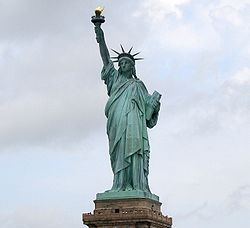
In 1620 and 1630, William Bradford and John Winthrop delivered sermons on the Mayflower and Arbella, referring to the deliverance from “modern day Egypt and Pharaoh,” to “the crossing of the modern day Red Sea” and to New Zion/Canaan as the destination of the Pilgrims on board.
By Moshe Herman
Before leaving for IDF reserve duty, Yishai put together a great show bringing two very special talks he gave in Canada to Jewish high school students and Canada Christian College.
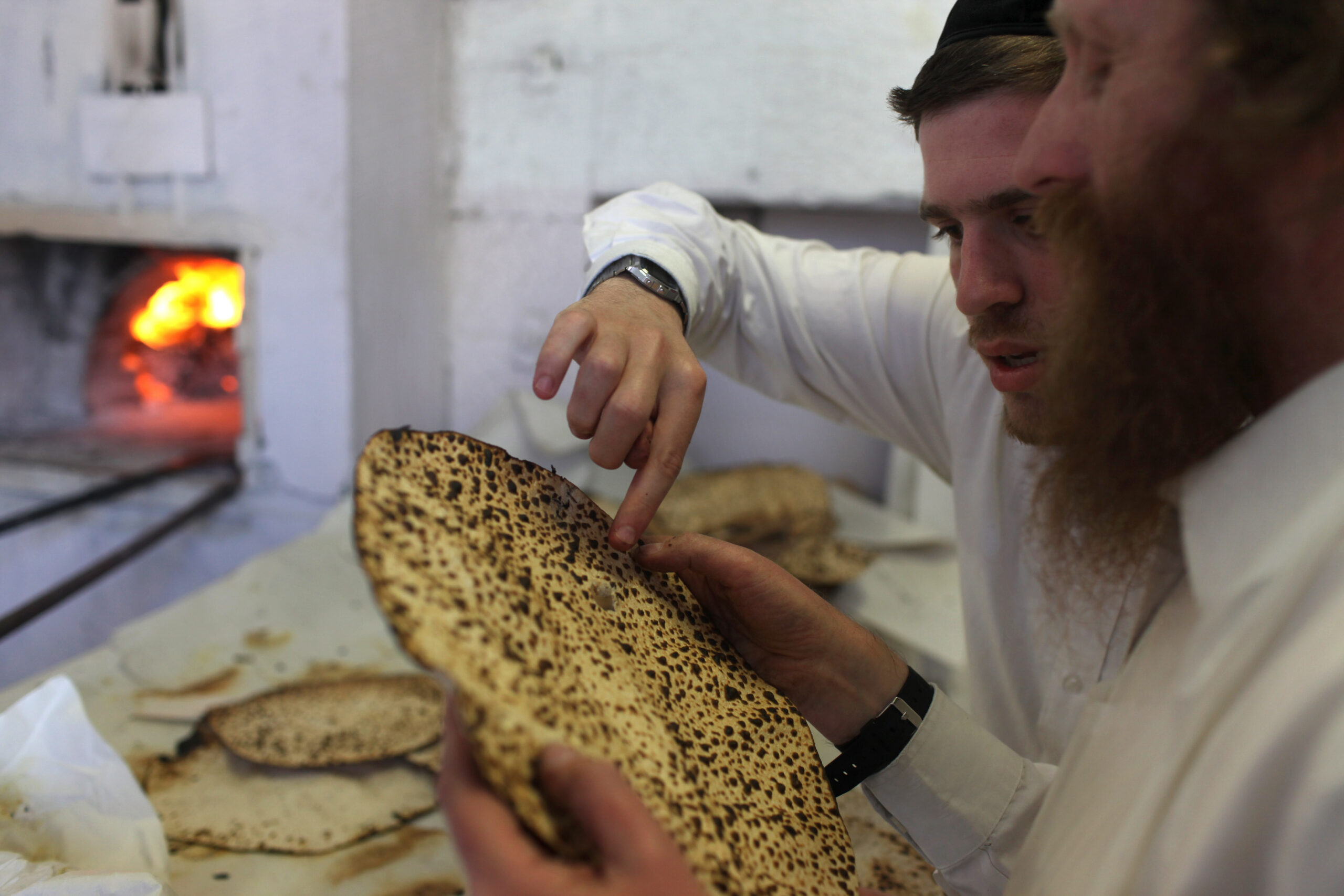
I believe we need to get back to the basics. Holiness is something we should embrace rather than stray from, and thus we should "look" for more opportunities to become holy rather then stay "safely" away from it. True, with every act of holiness comes restrictions and I can already feel the backache of cleaning the pantry from Chametz. But shall this hardship turn Pesach into the Holiday of misfortune rather than happiness?
By Rabbi Lord Jonathan Sacks z"l
There is a deeper message in Parshat Tetzaveh - the principle of the separation of powers, which opposes the concentration of leadership into one person or institution. All human authority needs checks and balances if it is not to become corrupt. In particular, political and religious leadership (keter malchut and keter kehunah) should never be combined. Moses wore the crowns of political and prophetic leadership, Aaron that of priesthood. The division allowed each to be a check on the other.

Why is Purim eternal? I would suggest that Purim is the prototype of the End of Exile, and as such will remain forever linked to the Era of Mashiach that will occur after the Final Redemption. Therefore, Purim will be part of that entire period at the culmination of history.
Rabbi Amsalem admonishes UTJ MK Gafni for recent comments that Haredim should not serve in the IDF.

On the twentieth day of Teves we mark the 808th yahrzeit of Rabeinu Moshe ben Maimon, the Rambam (Maimonides). The Rambam (Maimonides) lived from 1135 to 1204. His scholarly works are world-renowned and it is about him that we say, “From Moses to Moses there never arose so great a person as Moses.”