יום שלישי, כ״ו אלול תשפ״וTuesday, September 8, 2026



Follow Us


I would recommend this book to any helping professional who works with people for insight into the power of listening to enable others to help themselves.
I hope this book will encourage parents to realize that they are the best parents for their children, and to enjoy the privilege of parenting and see it as a catalyst for their own growth, says Rebbetzin Eisenbach.
There is no right or wrong way to use this book. You can choose to start with the current month, or pick a month that focuses on an area that you’re interested in improving in.
Later on in the book, Levine discusses the topic of exaggeration in the Talmud, but he frames it with juxtaposition to the controversial musical legacy of Eminem.
By Ben Rothke
While books like this are great introductory texts, the cursory overview of the topics, many of them which warrant numerous volumes on their own, can give the reader too far a superficial view of the topic.
By Helen Joyce
The consistency of an old man’s failing memory, prompted by his daughter and grandson serves to underscore the accuracy of Martin Bodek’s account.
By Ben Rothke
If you have heard any of her speeches, Rahav-Meir is very big on keeping it real and current. She writes that Judaism has so much to offer to the world, and the world wants to hear from the Jews.
This eye-catching new volume does not limit itself only to ritual parallels. The pictures and illustrations of the flora and fauna of the biblical text are extraordinarily informative.
You might think that this is a collection of essays, at first glance. Upon further examination, you realize that R. Naor is examining every aspect of the phrase souls of the world of chaos.
By Etai Lahav
Lebens opens GJU with a discussion of conversion under Jewish law – even though this book is not addressed to non-Jews – to illustrate that commitment to Judaism begins, first and foremost, with a commitment to the Jewish people.
Once the reader understands the framing of this book, it is a gold mine.
The first Jews of Eastern Europe were of a distinct variety who spoke a Judeo-Slavic dialect known to scholars as Knaanic. This dialect was later rendered obsolete by the arrival German/Yiddish-speaking Ashkenazim, whose language became somewhat influenced by Knaanic, but also essentially caused it to fizzle out
Pesach reminds us of the liberation from Egypt, but also commands us to live through its events as if we were there. Every generation and every Jew, no matter which community they belong to, can, in their own way, relate to the story of Pesach.
By Adina Broder
Having exhausted the possible correlations between the three holidays, Rabbi Lauer suggests that it is not the similarities among these three holidays that define them as a unit. Rather, it is the fact that these holidays are all components of a greater whole.
The Asher Yatzar book discussed the kavanos we should have while eating: food should serve as a function with which we should have the energy to serve Hashem.
Haunting dream-like illustrations, dialogue that crackles with tension, spare writing, all conspire to make you feel not ‘as if’ you’re there, but that you really are there...
By Ben Rothke
While Grade never mentions who Rasseyner is, later research showed that the character is based on Rabbi Gershon Liebman, who headed up the group of Novardok-based yeshivas in France after World War II.
Coming a number of years after the previous volume, Lau’s series humanizes the Sages, giving information about the time period and place they lived in, character attributes gleaned from Mishna and both the Babylonian and Jerusalem Talmuds.
The stance on confidentiality – not sharing personal issues with others for advice – is a great example of how he can be absolutely right and this can damage the relationship OR speaking up is actually really important and a great way to get the name of a great therapist or access to help.
By Dr. Jon Lamm
Phraseology aside, Part Two of From Boys to Men is full of useful information mainly geared toward adults with several sections of important information for teens clearly labeled within.
When reading Reb Dovid, you would think this biography is about a gadol hador from hundreds of years ago. Yet, this was our dor’s gadol.
The Maharal is classically celebrated for taking deep Kabbalistic and mystical ideas and bringing them down to Earth, composing them in a deep and beautiful style. He masks the traditional Kabbalistic terms in more the conventional Rabbinic Hebrew.
The author’s skill at portraying multiple layers of trauma gives this book great depth. We see the long-lasting effects of the shame imposed on family members for something they didn’t do.
If all one does is pick up the book and flip through it to look at the photos and captions and charts such as these, they will gain a wide window into Jewish history, scholarship and life.
Children’s books are becoming more and more important. Children are left too much on their own with their multitude of screens. Children need parents who believe in them and encourage them, says Rubin.
For someone who has accomplished and written so much, what's left? I opened another book of Sherri's to see what I might find.
The stories are written in Rabbi Krohn’s inimitable style and their subjects range from Gedolei HaDor to “ordinary” men, women and children; from the shores of America to the epicenter of the Holy Land.
If you don’t want to read it cover to cover, you can flip through it. Find the question you are looking for as it becomes relevant to your situation or if a case is of interest to you.
Rabbi Klapper grounds our Orthodoxy in a commitment to a halachic process in which poskim and a community of faithfully observant Jews exercise joint responsibility over the shape of halacha.
By Ben Rothke
While books like this are great introductory texts, the cursory overview of the topics, many of them which warrant numerous volumes on their own, can give the reader too far a superficial view of the topic.
By Sandy Eller
For people like me, who already have quite the cookbook collection, Best of Kosher is a great resource, saving me endless minutes of thumbing through book after book in search of a favorite recipe.
The book does not hold back. The honesty of its prose is as refreshing as it is validating.
Unfortunately, it’s easy to walk around with autocorrect syndrome, thinking that in life, it’s okay to mess up because no one will ever realize we made a mistake if we just move on; autocorrect will just take care of it.
As I matured, the counterexamples to the authority of gematria grew more numerous, more amusing, and naughtier.
For another scholarly compendium related to Jews and Non-Jews during the Holocaust in the USSR
By teaching us mindfulness exercises for the beginner, and the expert, Polen helps us to build perspective, setting the stage for a mindful observance of Shabbos.
By Adina Broder
Like the lecturer who begins with a joke as a way to warm up his audience, Rabbi Kurland intends for the humorous anecdotes to make the reader more receptive to the words of mussar that follow.

An essential scholarly volume on the Shoah
By Ben Rothke
As a pulpit rabbi, Friedman said that he found that the biggest obstacle for most people is that they struggle to find meaning in their Torah learning.
Targeting late elementary school, this book is a great way to learn about history in such a way that can’t be learned from a textbook.
By Aaron Roller
That experience of the daf yomi framing individual interpretations and personal epiphanies is captured beautifully by Hillel Broder’s ambitious new collection of poems Daily Blessings.

While Basseva is aware of an inquisition of Conversos under suspicion that they are secretly reverting to Jewish practices, she has no reason to believe that she, the daughter of a well-respected wealthy Jewish man, is in danger.
I am sure that once the borrower reads this small-yet-powerful book, it won’t be returned for quite a while, if ever – because I can’t imagine anyone wanting to part with it!
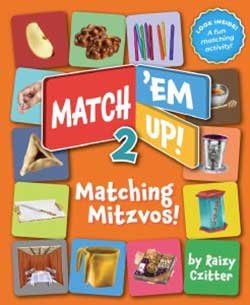
By Sandy Eller
With so many excellent choices, there’s no time like the present to instill a love of reading in your children and with wonderful books like these, you might just find yourself borrowing a few of them to enjoy on your own.
By Yael Zoldan
One of the best parts of this book is that along with the footnoted, scholarly answers, the author provides practical suggestions for different portions of prayer.
By Jordana Baruchov Grreenfield
There is something so profound when reading Kayla’s notebook/sefer. She approaches in a way that is similar to that which Dovid HaMelech aspired to.
The beauty of this sefer is that Rabbi Jachter wrote a brilliant masterpiece in a simple refined language that can be understood by a layman, but also incorporates the original source texts (in both Hebrew and English), and detailed footnotes for the most experienced poskim and rabbeim.
What’s in Tuli’s Box? mirrors questions children themselves would ask – about this box-like object that gets fed coins from time to time, is empty, full and then empty again – and about the purpose of those coins inside.
By Ben Rothke
While the Talmud is 2,711 pages, in a little over 200 pages, Kirsch does a good job of detailing the main topics and themes of the various tractates.
Of Medicine, Miracles, and Mindsets, is a first-person account of Rabbi Elie and Chaya Rochel Estrin and their child Yossi, written mostly from Rabbi Elie’s perspective.
Consistent with that fear was a reticence about sharing his Torah. He wanted to work on things a bit longer, always wanted to make sure he was not overstating or misstating.
Following a brief biography of Rav Kook, Rav Sinclair proceeds to trace and then weave disparate strands from the abundant storehouse of Rav Kook’s thoughts, uniting and bringing these to bear on the subject matter to illuminate, for the English-speaking world, the breathtaking tapestry that is Shabbat Ha’Aretz.
By dvora
Tension reigned. They were watched by the Soviet security services. The KGB often would search their rooms and suitcases. They were threatened and warned and targeted in shuls.
Our religion has a lot of rules – about eating, about the Sabbath, about how to relate to other people – but the point of all of them is to create a special relationship between us and Hashem.
This is a book about friendship, responsibility, chesed, family and the challenges Hashem gives us.
The feature that most immediately grabs the reader’s attention is the presentation of the sources. The authors do not just bring sources as footnotes or endnotes – rather, they meticulously focus on the sources.
By Levi Morrow
There’s so much to say about Torah Goes Forth from Zion that it would require a small book to properly review it all.
The book serves as a brief, yet simultaneously detailed, overview of many broad components of Karaite Judaism, rather than focusing on a single detail in-depth – a tactic which would better serve seasoned Karaite scholars.
Time and time again, Rav Asher exhorts his followers, and anyone else inclined to heed his halachic pronouncements, to ‘follow the science’ and adhere to the recommendations of recognized physicians and the guidelines issued by the Ministry of Health.
The illustrations by Racheli David caught the eye of my toddler granddaughter, and she brought the book over to me more than once to discuss the pictures.
Sophia’s mission continues. “I want every high school student in the United States to read Mordechai’s book,” Martin’s Story: An Orphan’s Triumphant Journey, she says, unwavered by this seemingly insurmountable task.
In a conversational and metaphorical style that is refreshing, Lavane talks about growing up in post-baby boomer America as a religious woman who’s trying to find love while not compromising her values.
Lily’s story opens with a vivid description of her idyllic childhood and upbringing in the quaint Hungary town.
From the reviewer’s perspective, being asked to review this booklet has given me the chance to engage in introspection as to my own relationship with Viduy.
One unique feature of this book is that over the past few years, Lustiger has been posting to YouTube powerful video clips of the Rav (most of them in Yiddish with subtitles).
that Selichos should be seen as more than a mere recitation but as a heartfelt prayer, as not just strict objective discipline but as exalted subjective romance.
The writer is a bit snarkier than either of his main characters. Sometimes he writes from the vantage point of the man, and sometimes from the woman.
By Jason Ciment
The author uses the addiction framework as a prism through which to also reach a much larger audience – people who are unaware that certain habits mask addictive behaviors.
He powerfully argues against the stereotype of Jews marching like sheep to the gas chambers: The great majority remained honest, dignified, pristine and heroic…
Kolodny explores Nassau and Suffolk community by community. He escapes the dryness of history by zooming into the unique experiences of individual members.
By Yehuda Fogel
Cohen’s paradoxes are such that he provokes readers and writers alike to riff on their own.
In the introduction of this book, the author takes us on a tour of this four-story supermarket. As I followed along with her tour, I felt like I was at a culinary version of IKEA or Bed Bath & Beyond.
By IPT-Investigative Project on Terrorism
Human Rights and Anti-Semitism
In this scholarly study, Zilbergerts upends the conventional take on those early Modern Hebrew writers.
Saltsman is a deeply spiritual person and a perennial optimist. She gains insight – and often finds humor – in the most mundane experiences.
Guaranteed to be a best-seller, former (and future?) Prime Minister Benjamin Netanyahu announced his new autobiography is coming out.
This isn’t a novel set during a five-year period or within the context of a war, some pogroms, or even a specific historical event. It takes place within a span of nearly 200 years – That is a lot of Jewish and German/Prussian and British and Israeli history to research.
If you’re the type of home cook who wants a collection of no-fail, impressive, easy-to-make recipes that you can pull out for any occasion, this book will be of interest.
Feldman shares a lot of the Torah she learned at this time, which clearly resonated for her more deeply than the approaches she had been presented with before encountering Chabad.
By Ben Rothke
When Rashi wrote in his commentary that he had to stop writing to go to his vineyard, it did not mean that it was his profession. He writes, Rashi may have been a vintner, but by the same token, he may have been an egg salesman.
“Stern’s spirit of freedom, pride, and sacrifice birthed the Jewish Insurgency and eventually its State, and, now in English, may well spark a revolution in the hearts and minds of the English-speaking Jewish world.”
By Alan Zeitlin
Israel doesn’t have a right to defend itself. It has an obligation to defend itself. The primary obligation of any government is to defend its citizens.
It’s not just the language barrier that poses a problem. I consider myself to be proficient in Hebrew when it comes to ordinary tefillos, but I routinely find myself stumped by the extremely difficult Hebrew of the liturgical poets.
By Rabbi Dr. Jonathan Schwartz
The presentation was spellbinding. He spoke about the important role of humor (it was the month of Adar) from both a psychological and a Torah perspective.
By Rabbi Dr. Mordechai Schiffman
In terms of the book’s structure, because it is a compilation rather than a direct commentary, some connections are more directly related to the mishnayot than others.
In her class, Aviva is the only girl without a father, and that becomes particularly poignant in her sixth-grade year, when the school traditionally hosts a father-daughter Bas Mitzvah Bash at a local arcade.
By Guest Author
Former Trump administration Mid East envoy Jason Greenblatt shows how rejecting conventional thinking brought peace.
Trump challenged the notion that America has to be an honest broker indifferent to its ally’s interests; instead, he felt that America should be a smart broker.
This sefer can be used at the Shabbos table for parsha review and discussion question prompts, even if not everyone sitting down at the meal has read the book.
With a conversational, upbeat and humorous style that is both down to earth and sophisticated, Rabbi Viders in this, his second book, connects snippets of history and everyday life with the eternity of the Torah’s truth and values.
By Yael Zoldan
I've long been in the camp of people who believe that food is either good (think Haagen Dasz) or good for you (think brussels sprouts) but rarely, if ever, both.
I was intrigued by how the writer looked to find Hashem’s message in frustrating, mundane stories.
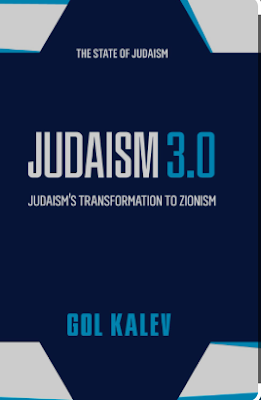
By Bennett Ruda
Can the current rise in antisemitism as anti-Zionism pressuring American Jews to criticize Israel actually have a positive dimension?
Failure to acknowledge the hierarchy of values causes us to risk losing sight of the forest for the trees.
Why unpack that can of worms when it seems like the repository of our experiential faith has never been deeper and more sound?
Rabbi Halberstadt says at the start that he doesn’t think that the big question of this generation is Is the Torah true or not? Therefore, he doesn’t address this point.
Rupture was intended as a description of the development of Ashkenazic, mitnagdic post-migration Orthodoxy. It was never actually about 1990s American Modern Orthodoxy and its anxieties, or about how to resolve them.
By Eli Berger
If you’re a frum person seeking traditional answers to modern questions, this is a resource you’ll want to have on your shelf.
The book covers an array of topics, one for each letter of the alphabet – including the age of the earth and universe, climate change, evolution, the sun and stars, and vision.
The sefer provides practical advice about how to daven, inspirational stories about davening, and even various kavanos to consider when praying.
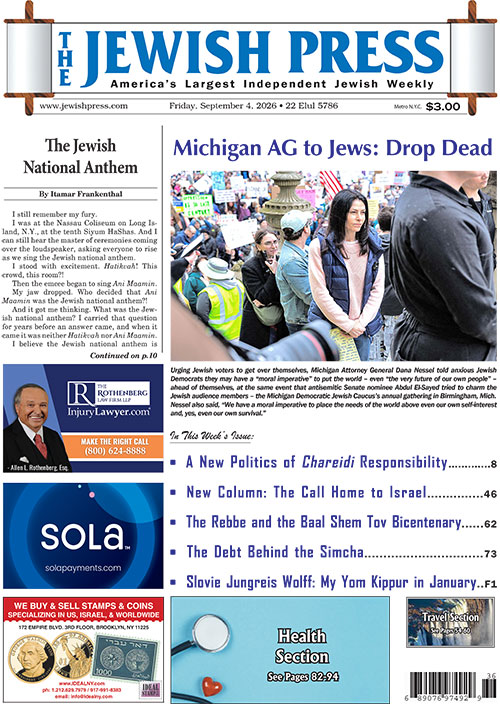 September 4, 2026


