יום רביעי, י״ב תשרי תשפ״זWednesday, September 23, 2026



Follow Us


By Rabbi Lord Jonathan Sacks z"l
Simply, for Rambam the number 14 (2x7) was his favored organizing principle.
“The generalities of the commandments necessarily have a cause and have been given because of a certain utility."
There is nothing like a Jewish mother, especially one who went through nine abortions in 17 years in the Soviet-bloc country of Georgia. Mazal tov on a new baby girl.
The Netanyahu government is going “politically correct” and will make sure the next serious of Israel shekel bills will feature a Sephardi Jew following last year’s four new banknotes that featured only Ashkenazi Jews. Prime Minister Binyamin Netanyahu said on Sunday he personally prefers that the “Sephardi shekel bill” feature poet Rabbi Yehuda HaLevy, calling […]
The students could have come from anywhere, but the content of many of the poems dealt with various aspects of their relationship to God and to Judaism.
In this week’s parshah Yosef brings his two sons to his father Yaakov to receive blessings before his death. Rashi tells us that when Yaakov was about to bless Yosef’s sons the shechinah left him as a result of some of Yosef’s sons’ evil descendants.
By Tzvi Fishman
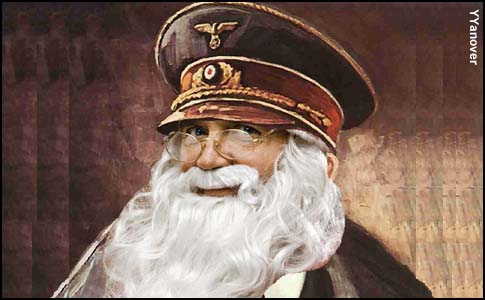
If you think that living in a Xtrian land doesn’t affect you at all, it’s because your brain has been so saturated with dreams of white Christmases.
By Rachel Weiss
Our Jewish calendar is based on the lunar year, and Rosh Chodesh, literally the head of the month, occurs when the moon renews itself. It is a holiday — in that we daven mussaf, just like on Shabbos and Yomim Tovim, we do not conduct fasts, and the pious among our people eat a special seudah. Traditionally, women do not sew on Rosh Chodesh and refrain from performing heavy-duty tasks.
Certain activities – such as building, tying, weaving, writing, dyeing and sewing – are not prohibited on Shabbat unless they are made to last. For example, one may tie a knot that is not tied in a professional manner and will be untied within seven days, such as shoelaces or the ribbon around the Torah scroll, on Shabbat afternoon. So too a safety pin may be used on Shabbat since it is not a form of permanent sewing.

When we put away our sukkak and machzorim over a month ago, many of us let out a sigh wishing that these wonderful days of simcha and closeness to Hashem would never end. But in truth Hashem does not want it to be Yom Tov all year long. He wants us to take what we received during those special days and integrate it into our daily life. It sounds nice, but how are we supposed to do that? The answer is through Shabbos! This wonderful day, which comes every week, has the ability to lift us once again to those same spiritual heights and help us recharge our batteries for the coming week.

The new Jewish year is still young. The new Parshas HaShavua cycle is but a few weeks old. It is indeed time for new beginnings.
A leisurely Shabbat stroll around town recently turned a calming experience into a rather upsetting one, as graffiti sprayed on quite a few buildings in my neighborhood defaced the beautiful Jerusalem stone with the words; “Dabru Ivrit/Speak Hebrew”!
In this week’s parshah the Torah commands us in the first mitzvah: pru u’revu – be fruitful and multiply. We rule in accordance with Beis Hillel that one fulfills this mitzvah when he has fathered one boy and one girl.

By Anav Silverman, Tazpit News Agency
A 51-year-old Palestinian man suffering from Parkinson’s disease received successful therapy treatment in Haifa’s Rambam Medical Center this past summer.
Despite continued tension on the southwestern border, four Gaza children are receiving medical treatment in northern Israel. The children are all nephrology patients suffering from kidney insufficiency, and have been hospitalized for the last several months at the Children’s Hospital at Rambam Health Care Campus awaiting transplants.
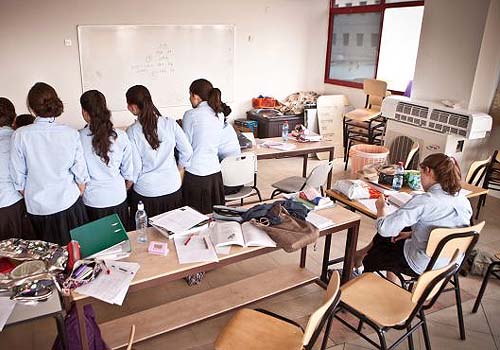
Charedi schools like Darkei Sarah now realize that the Charedi family can no longer survive on the kinds of menial jobs women can get without a decent education.

By Tzvi Fishman
When a man understands that his personal t’shuva advances the redemption process of the world, his motivation to mend his own life is enhanced.
In this week’s parshah the Torah discusses the halachos of eidim zomimim. The Gemara in Makkos 2a explains that eidim zomimim is when one set of two or more witnesses testifies against someone, and another set of witnesses testifies that the first set of witnesses was with them and therefore could not have known their testimony. The Torah says that the later set of witnesses is believed and the testimony of the first set of witnesses is disqualified.

As a frequent traveler abroad, I rarely see a community where everyone is alike. Though the comfort of "living with your own" is understandable, there is much to be said for a Jewish community in which Streimlach walk on the same sidewalk with Kippot Serugot, and girls wearing heavy stockings walk to shul on Shabbat together with those wearing sandals without any socks.

"Monopoly was created for a summer Shabbat and Fast Days…"! So I heard, time and again, in my early years. Years later, I know rather too well that while "Monopoly" has a place in the Jewish home, I am not sure about it's appropriateness to either Shabbat or a Fast-Day.

The following is one unique halacha that is associated with arayos (forbidden relationships): Concerning most aveiros, if one is put in a predicament where he must choose between saving his life and fulfilling a mitzvah he must choose to live and transgress the mitzvah. The Gemara says that arayos are one of the three mitzvos that are yehareg v’al ya’avor (one must allow himself to be killed so as not to transgress the mitzvah), along with murder and avodah zarah.
At the conclusion of this week’s parshah, the Torah discusses the halachos of one who stole from another. The pasuk says, “veheishiv es hagezeilah asher gazal – and he shall return the stolen object that he stole.” We derive from this that there is a mitzvas assei to return a stolen object.
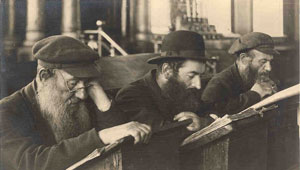
By Rabbi Yaakov Klass and Rabbi Gershon Tannenbaum
‘He Uttered Hashem’s Name In Vain’ (Temurah 3b)

This week’s parshah, Parshas Mishpatim, discusses many various halachos regarding monetary issues. One of the topics is when one damages another person’s property.
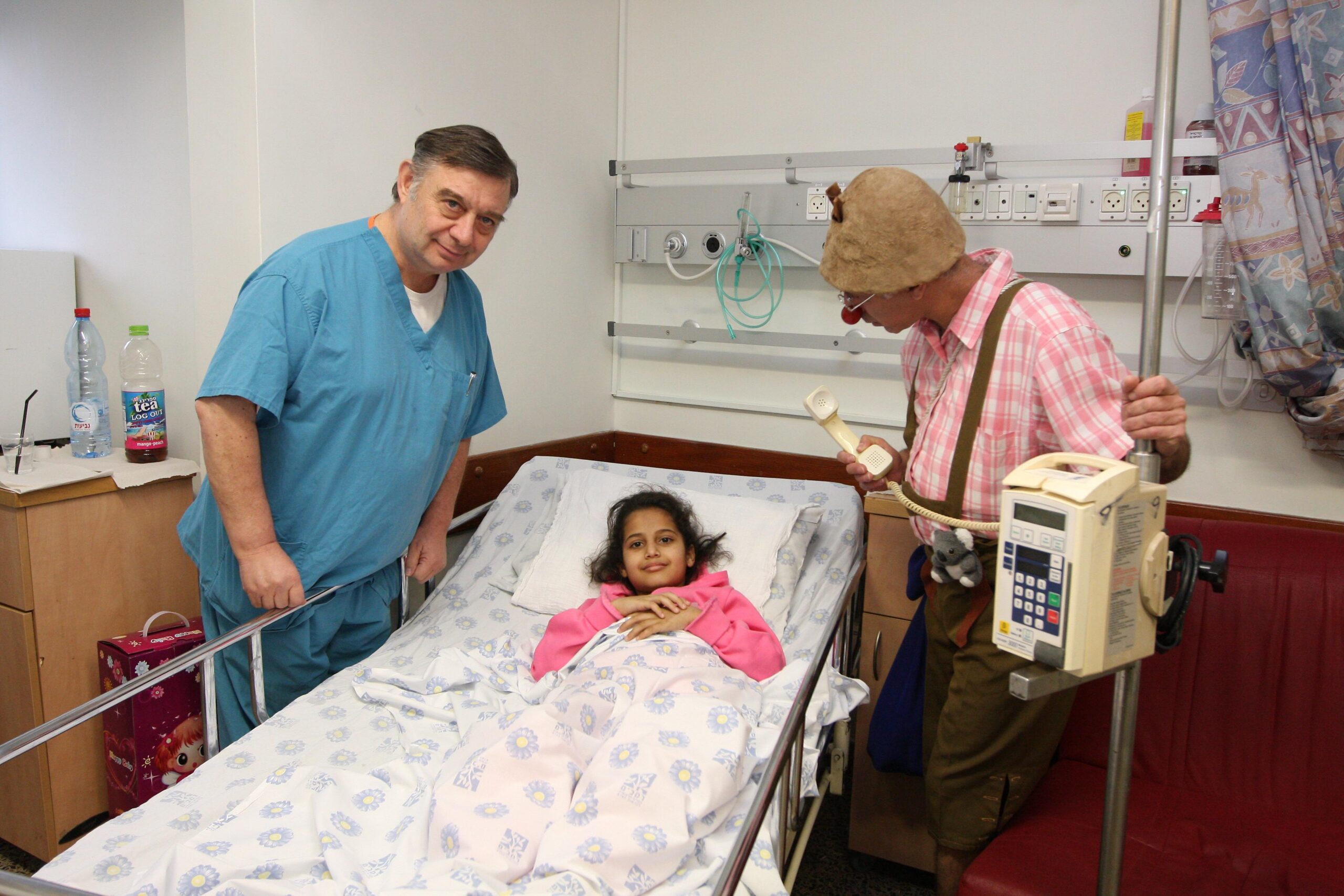
By David Ratner
Rambam Medical Center Public Affairs Director David Ratner describes how the life of a young Palestinian girl was saved by the hospital.

On the twentieth day of Teves we mark the 808th yahrzeit of Rabeinu Moshe ben Maimon, the Rambam (Maimonides). The Rambam (Maimonides) lived from 1135 to 1204. His scholarly works are world-renowned and it is about him that we say, “From Moses to Moses there never arose so great a person as Moses.”
 September 18, 2026


