יום שני, י״ז תשרי תשפ״זMonday, September 28, 2026



Follow Us


In our haftara, we find Shlomo HaMelech completing the construction and initiating the dedication of the First Beit HaMikdash. In Shlomo we find a unique synthesis of the attributes of Moshe and of Betzalel.
These last two years have demonstrated how vital it is to feel solidarity not only toward those who have passed away but toward those who have been sick but are not yet fully recovered, toward business owners, toward coping parents, and, in fact, toward everyone who has been affected,--which means every one of us.
Our Sages tell us that righteous men and women merit that their descendants continue in their ways.
The wickedness of men and women can live long after they are gone.

If Dan is the extreme expression of Yosef in the same way that Shimon is of Yehuda, what was the importance of appointing tribesmen of Yehuda and Dan to lead the construction of the Mishkan?
Baal and his prophets are not worth the time or the energy of the last remaining prophet to Hashem. His mission is to the people of Israel who have abandoned the service of Hashem.
If one is quiet, it indicates that the matter at hand does not concern him.
The old adage, the best present you can give to your children is more of your presence, is an extremely vital concept. So too is the famous acronym for the word “family” – “Father and Mother I Love You.”
A mistake that nearly had catastrophic results for the entire people of Israel ultimately revealed Moshe's true greatness as a national leader.
Many years ago, I took my children to the Museum of Natural History in Manhattan. A guide took us around and was patiently describing the history of the world, showing us fossils with great enthusiasm, and talking in detail about prehistoric times. About 15 minutes into the tour, one of my daughters, four years old […]
Avoid popularity if you would have peace. -Abraham Lincoln
Initially, we have the task of simply lighting a fire. To educate, to explain, to pay close attention and to inspire.
When the navi Yechezel is given a vision of the third Beit HaMikdash, he is commanded to teach its measurements and dimensions to the people of Israel. The people to whom he delivers this prophecy have yet to build the second Beit HaMikdash, so it's a bit incongruous to be speaking of a third.
By submerging individual identity into the collective Hebrew nation, the kohanim work to cleanse the children of Israel from all transgressions and to inspire the people with a powerful show of kedusha.

R’ Simcha Bunim noted, If you want to go collecting you need a coat with two pockets. One for the honor that some will give you, and the other is for the ridicule that will come your way.

The human contribution is the essential ingredient. It is only in the giving of oneself to others that we truly live. -Ethel Percy Andrus
It is considered very mature to salt away money for our retirement. But let’s ask ourselves: If we retire at 65, how long will retirement be? Another 50 years?
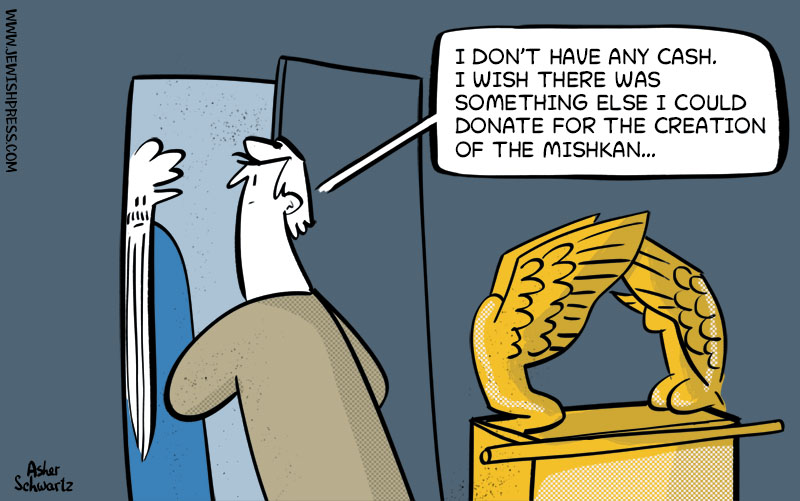
What can the Mishkan teach us about the ways Divine revelation is channeled into our world?
The trebled height of the Beit HaMikdash the Malbim associates with greater ambition that Shlomo has for the spiritual purpose of the Sanctuary that he has built.
The goal is not to have God do what we want, but rather to do what He wants and thereby sanctify Him in the world. Often, that is accomplished by praying, but sometimes it is better accomplished by not praying – we are to look to halacha to tell us which situation is which
Swept up in their love for the mitzvah and the joy of having an opportunity to fulfill another mitzvah, the impending doom was cast aside.

How should we understand the difference between the Written Torah and the Oral Torah within the context of Israel's identity and development?
I would not want to worship a G-d whose ways are understood by the mind of mere mortals.
Why did Hashem create a world in which inspiration, physical sensation, and emotional delight always fade? What is the deep spiritual idea behind this pattern?
In our society, one of the biggest problems is the burgeoning jail population. Society is saddled with sheltering and catering to the needs of its malefactors and, sadly, the system is largely ineffective.
The wise person does not become distracted by nonsense.
The covenant was a last chance for the Jewish nation to show that they were worthy of their sovereignty and wealth.
Why were the Hebrews so surprised by the sudden realization that they would receive the Torah as a set of laws & a mission for the rest of humanity?

We have heard and not understood. We have seen and not known. Now we are those holy seeds lying in the ground waiting to sprout so that the decrees of Hashem might at last be heeded and carried out.
If the drowning of the Egyptians was because of the drowning of the Jewish babies in the Nile, shouldn’t the Egyptian soldiers have drowned in the Nile rather than in the Red Sea?
Our fervor and dedication to Torah study must never wane. In that way, Hashem will achieve true satisfaction and pleasure, as He did when we stood at Har Sinai and accepted the Torah.
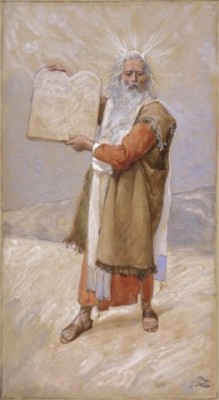
In Parshas Yisro, Klal Yisrael hear the ultimate truth, the Aseres Hadibros (Ten Commandments), as they embrace their lofty mission in this world.
When Jews came to America and they were confronted with the WASP society that didn’t allow them into the country clubs, some made the mistake of thinking that if they became more American they would be more accepted.
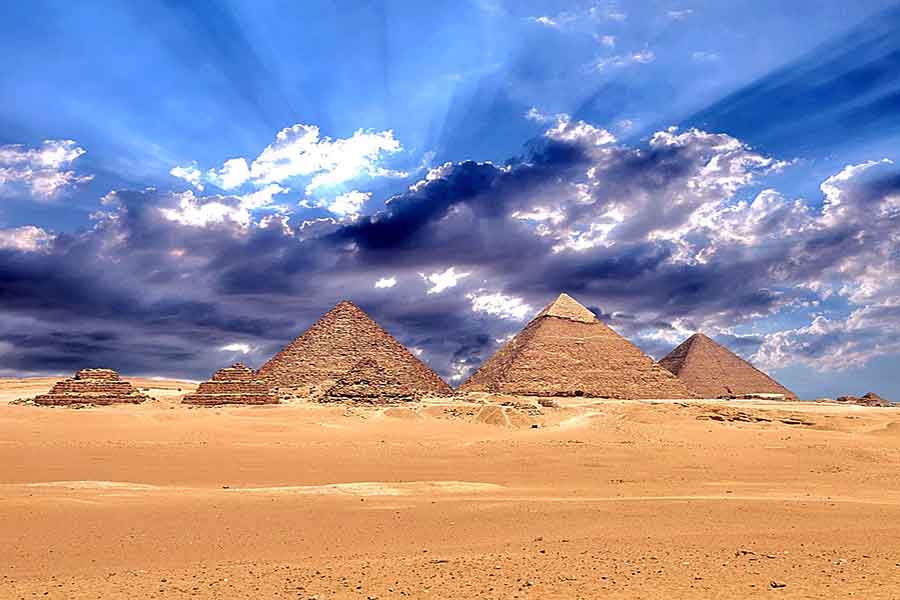
Rabbi Avraham Yitzchak HaKohen Kook wrote: Leaving Egypt will forever represent spring for the entire world.
Man is born free, yet he is everywhere in chains.-Jean Jacques Rousseau
Why didn’t G-d wipe out the army in Egypt? Why was it necessary to have them pursue the Jewish people into the Sea of Reeds?
Between the smashing of Egypt's military at the Sea of Reeds and the war against Amalek at Rephidim, the Hebrews had to develop a national perception of emuna in preparation for receiving the Torah.
Krias Yam Suf was in fact a necessary step before the Jews could receive the Torah. What is the significance of the water of the Yam Suf, especially in regards to the Jewish People's journey from Mitzrayim to Har Sinai?
The difference between the righteous and the wicked is in the longevity of positive passing thoughts.
One must strive to always be moving upwards spiritually, with no restrictions or restraints in his Torah learning. In this way, the person gains a more educated and knowledgeable grasp of mitzvos, aveiros, and one’s mission in life.
Let not thy will roar, when thy power can but whisper. -Thomas Fuller
Rav Shimon ben Gamliel in Pirkei Avos states, All my life I grew up among great sages and I never found anything better for one’s body than the virtue of silence.
What nation has ever returned from exile, or even been remembered after a thousand years or more?
The Nature of nature
What were the necessary steps for Israel to develop a national consciousness ahead of leaving Egypt?
The ten plagues were part of a deliberate process to educate not only Egypt and Israel but also humanity.
Do we grant ourselves time "to pause, look around, and consider" in order not to miss the announcement that redemption is coming, so that we can adjust the direction in which we are headed accordingly?
The comfort zone takes our greatest aspirations and turns them into excuses for not bothering to aspire. -Peter McWilliams
All things are equal, we should certainly pick for our children purely Jewish names. Even the surnames should be distinctly Jewish.

Apparently, it was not only Moshe but the entire tribe of Levi who were, astoundingly, not subject to Pharaoh’s persecution. Why was that?
When someone makes an unsubstantiated argument, it is impossible to counter it with a logical explanation. That would imply that the two opinions are of equal value.
Our true salvation and our joy doesn’t come from the downfall of the wicked.

We each get to choose who we will become. Let us be inspired to straighten the bent path
After despairing of a slave revolt, did Moshe seek to create a new nation in Midian to replace Israel?
The Sefardim and Ashkenazim read different portions for the haftara this week. These portions seemingly have little to do with each other or with the parsha.
Our Sages tell us that all prayers make a strong impression in the Heavens and are answered. It is possible, however, that one may need to wait for the answer or may not understand the response.
Ever since the funeral, thousands of people began to perform wonderful deeds in her memory – from distributing Shabbat candles and challahs throughout New York City to holding large havdalah gatherings for passersby in Jewish neighborhoods.
Learning of mishnayos is one of the greatest protections one can do against the possible future punishments of Gehinom.
As Einstein famously said, "if you judge a fish on its ability to climb a tree, it will spend its whole life believing it's foolish". We cannot compare ourselves to someone else, as we are completely different people.

What are the individual contributions of each Hebrew tribe to Israel's national collective?
What is the way of all the world? Naturally, we live and then, after a while, we die, leaving this world behind.
When the wicked Bilaam asked a request for himself, he said, “May my soul die the death of the righteous and may my Afterlife be like theirs.” Even the wicked Bilaam knew the reality of the Afterlife.

What ever disunites man from God, also disunites man from man. -Edmund Burke
What is that great good that is accrued in Gan Eden? The Ramban notes that if one would collect all the physical enjoyments of a lifetime, it would not compare to one minute of pleasure and satisfaction in the World-to-Come.
If we analyze them closely, we begin to realize that Yaakov wasn't simply blessing his children, he was showing each of them their unique purpose, their unique mission.
The alchemy of teshuva: Turning lead into GOLD.
Did Yosef use the famine to bring his family down to Egypt in hopes of implementing an alternative approach to the Hebrew mission in the Diaspora?
We know from our great tzaddikim that it is beneficial and meaningful to stare at the lights of the menorah. One of the reasons is because it helps us to actualize in our minds the reality of the afterlife.
On a national scale, one day, we will see how centuries of tragedy were actually bringing us closer and closer to our ultimate destination, similarly, on a personal level, the same is true for each of us;
Yaakov Avinu wanted to see what kind of life Yosef was living, and he knew that if he saw Yosef face to face he would immediately know whether his spiritual being still lived.
Rav Amiel invokes the verse from our haftara in a discussion of the nature of chosenness, which he understands as a unique burden placed upon the people of Israel. A set of responsibilities as opposed to privilege.
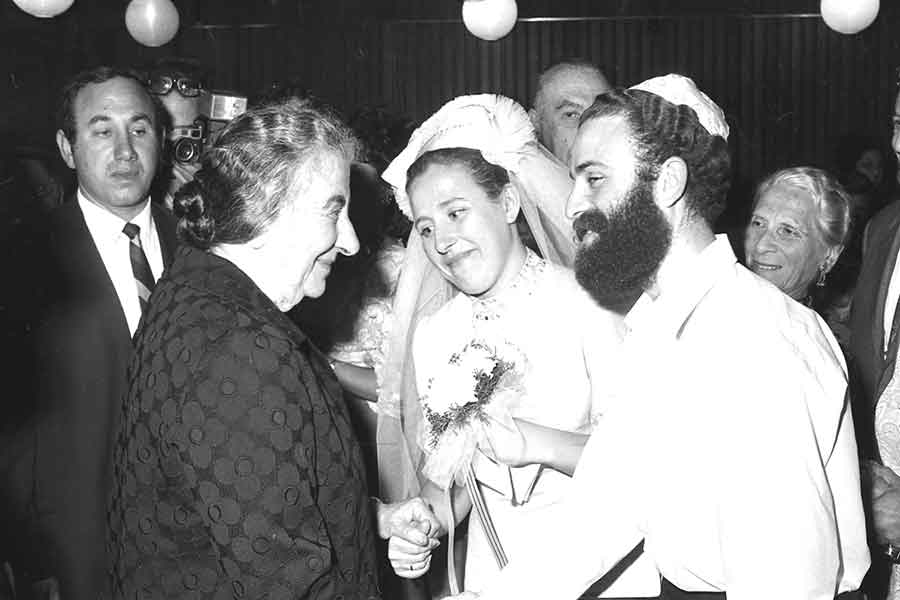
All they knew about her was that she was an older immigrant from the former Soviet Union. And then they discovered who she was: Ruth Alexandrovich, the famous prisoner of Zion.
They sing a little, eat a little something, but fail to see what the holiday is teaching us: It's about the power of individuals and the power of faith.
The Mishkan is the blueprint for the Jewish home.
There’s a temptation for earthly leaders to believe that events unfold as a result of their decisions, the exercise of their power.
Nowadays every home has its own menorah, some with one for every person in the household, to dispel the darkness of each individual – big or small, rich or poor, religious or not yet religious, highly intelligent or unlearned.
Did Yosef seek to transform Egypt into a civilization built on Hebrew values that would repair the world?
It is the job of the G-d-fearing person to combat the blinding attempts of the yetzer hara at every turn of our life.
The most important of life's battles is the one we fight daily in the silent chambers of the soul. -David O. McKay
This wanton disregard for the welfare of others is the epitome of chamas for which the world was already destroyed once and, the navi is warning, for which Israel will yet be exiled from her land.
Why does the Torah find it necessary to tell us that they bought shoes with the money, ostensibly a trivial detail?
Several days ago, Eliyahu told a friend that after years in the army, in yeshiva, and in agriculture, he felt that when working at the Kotel he was completely living his dream.
As internal conflict over the Hebrew clan's direction leads to tragic consequences for Yosef and Yehuda, each must discover his own messianic potential.

Our Sages tell us that if a person performs mitzvos and does good deeds he will merit to be escorted day and night by angels who guard him.
This Torah portion offers us a yearly reminder: We need to check if people in the public eye are everything they seem to be
When we are tired, do we still push ourselves to get up early and join a minyan, or do we succumb to temptation and say our prayers quickly at home before dashing off to work?
As Yaakov returns back home to his land, he and his family are met with new challenges that ultimately transform them into the nation of Israel.
Life is not a having and a getting, but a being and a becoming. -Matthew Arnold
Esav is the last of all the nations to come into the world. He is a pretender. He uses his strength and deception to humiliate and to conquer others, but in the end he is just a bully.
She said, were she not more righteous than me, she wouldn’t be privileged to have so many children.

Every physical action affects the spiritual realm, creating cosmic ripple effects; The same is true of the physical world. Every action creates a corresponding reaction in the spiritual world. In essence, our physical world is like an upside-down puppet show
After 80 years, I finally know who I am and who my family members are, he said yesterday when he met his cousin in the city of Modi'in.

Before becoming Israel, Yaakov had to first spend several years in exile learning to be more like Esav.
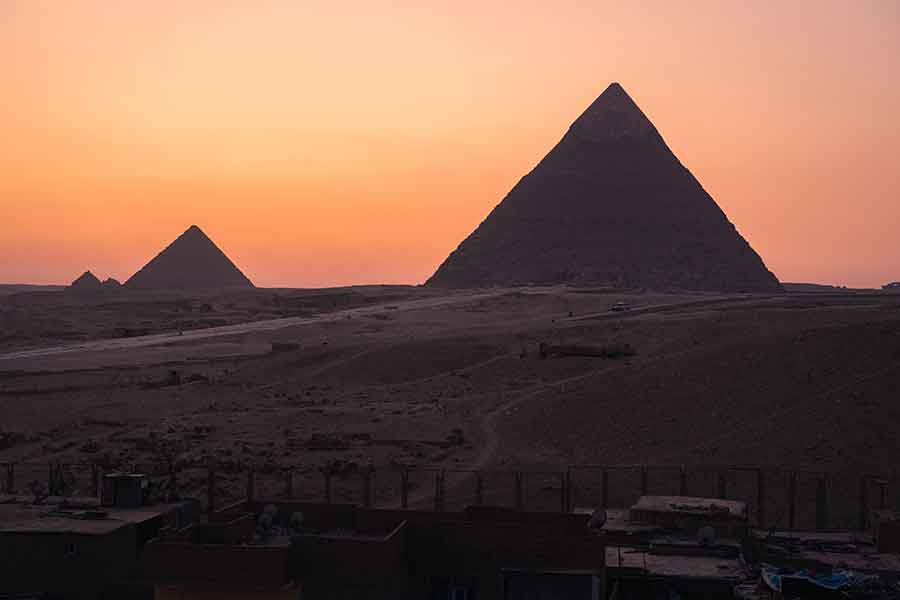
It was the enmity of the brothers to Yosef and their selling him as a slave, that was the primary cause for their descent to Egypt and being forced into slavery by the cruel Pharaoh.
Such is the power of tears that it has the ability to transform worlds and to create a new essence of blessing and abundance, no matter who is crying.
A vow is fixed and unalterable determination to do a thing, when such a determination is related to something noble which can only uplift the man who makes the resolve. -Mahatma Gandhi
When we come through for others, when we ask how we can help, when we make the difference for them, we bring a piece of heaven down here to earth. Through our actions we build an actual stairway to heaven.
Just as Yaakov tended the sheep of Lavan, guiding and guarding them so he could win the hand of Rachel, so Hashem protects his offspring until the end of time.
The partnership that could have-should have-been
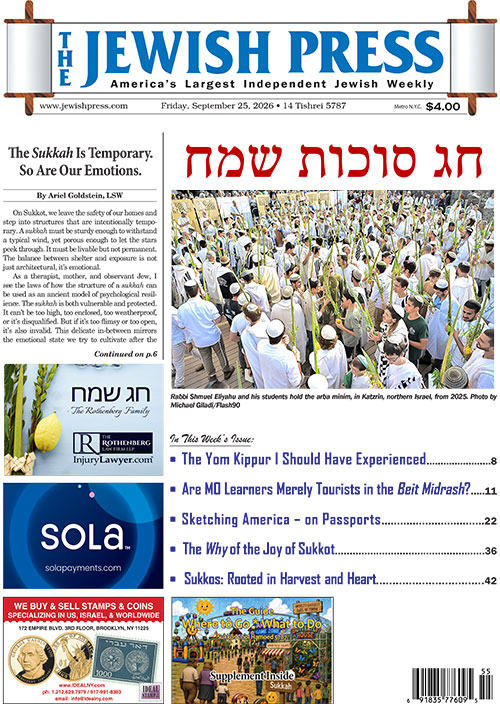 September 25, 2026