יום שני, י״ח אלול תשפ״וMonday, August 31, 2026



Follow Us



I can probably read your thoughts: “Elul? I’m still in the Catskills! We haven’t even gone shopping at the Back-to-School sales yet!” That is true, but on the other hand, this week is Shabbos Mevorchim Elul, when we announce Rosh Chodesh Elul. Before you know it, we will be deep into Elul! Let us see how we can utilize this Shabbos to start getting ready.
By Vera Kessler
Devorie Kreiman, an inspirational lecturer and writer on the power of faith, humor and joy, lost 5 of her 8 children.
By Vera Kessler
Rebbetzin Shifra Sharfstein is co-director of Chabad at Georgia Tech and Georgia State Universities. She talks about the real meaning behind prayer--establishing a close connection with Hashem.
Why do several men insist on davening in the women’s section in shul during the week?
By Jason Maoz
His voice had the strength of a pipe organ and the gentleness of a violin, but most of all it had the power to make men weep.
Taking a break from politics for something more important...
The Gemara says that Rabbi Yehuda agrees that the berachah on shechita said at the beginning suffices to cover both types.

The truth is we seldom explore with kids what prayer is supposed to be about.
The davener stands, sits, stands, bows, straightens up, turns, takes steps backward and forward, sits, stands, sits, stands, bows, and so forth.
Scenes of Jews davening on the side of the highway just as common in the Jersey Turnpike as they are in Israel, but the country’s north-south superhighway “6” toll road now has mobile synagogues.

The Jews living outside Eretz Yisrael began reciting vesein tal u’matar in the Shemoneh Esrei this week. If one does not say vesein tal u’matar (instead continuing to say “vesein berachah”) and finishes the Shemoneh Esrei, he must repeat the Shemoneh Esrei. If one accidentally does not daven at all, he must daven two Shemoneh Esreis during the following tefillah. If one did not say vesein tal u’matar and finished davening and only remembers this fact at the time of the next tefillah, he must daven two Shemoneh Esreis at the next tefillah.
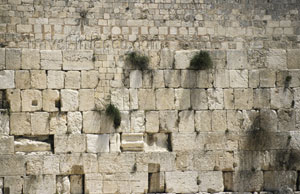
By Hillel Fendel and Chaim Silberstein / KeepJerusalem.org
For probably the first time since the Yom Kippur War nearly 40 years ago, air raid sirens sounded this week in Jerusalem and environs. The sounding of the sirens occurred about two minutes after sundown on Friday, such that Sabbath-observers had no direct way of ascertaining where, what, how many, or who, if anyone, was hurt.

The Orthodox Jewish world continues to seesaw back and forth about the pros and cons of the Asifa on Technology at Citifield in New York. Debates abound about on the best Internet filters, blocks and technological band-aids to which will surely repair the dangerous environmental influences of the outside world. Let’s ban or block the Internet and suddenly our children will be less distracted, our communities more heimish and our learning and davening more for the sake of Heaven instead of rote blabbering to get it over with.

As I write these words I am still in my new adopted home. Originally I came to my wonderful friends’ warm apartment with the intention of staying just overnight and I did not even bother packing. My children kept pressuring me – “Ima, you have to go!”

Ever since I started this question-and-answer column, people have been coming over and asking me questions. Baruch Hashem, right?

As has been noted in a previous column, Reb Elimelech – like the Baal Shem Tov before him – asserted that pessimism and depression cause sin and spiritual apathy. Repentance (yes, even repentance!) that causes depression and sadness distances the Holy Presence.

"And the servant said to him…" (Genesis 24:5). The biblical portion of Chayei Sarah comprises two chapters in the Book of Genesis. The first (chapter 23) deals with the death and burial of Sarah and the second (chapter 24) deals with the selection of a suitable wife for Isaac.

By dvora
The Kollel Yechiel Yehuda Menlo Family Building recently celebrated its move to its new beis medrash at 444 N. La Brea with a Chanukas Habayis.

In this pasuk, Hashem appears to Noach, telling him the world has turned to evil and He will now destroy all of life. Noach, his family, and the animals that remained pure will be the core of a new world. The reason for this destruction is stealing – “since the land is filled with robbery.”

By Shulamis S.
They called the colt Unbridled Song. His father's name was Unbridled, his mother's Trolley Song. The colt loved to run, with an energy and spirit that stretched into an endless melody of wind and pounding hooves and the freedom of the open track. They hoped he would become a champion.

We all know that there are some synagogues that, unfortunately, only reach full capacity several days a year. There is something about these days that arouses even many unaffiliated Jews to attend High Holiday Services. In fact, each one of us also feels the holiness, and it helps us to be on our best behavior. We make sure to come on time to davening and we daven slower than usual. We are extra careful in our observance of halacha and how we treat the members of our family.
The Mishnah in Rosh Hashanah 32a lists the Yom Tov’s berachos and the order in which we must daven on Rosh Hashanah. The Mishnah says in the name of Rabbi Akiva that we begin with the berachah of avos. We then recite, in this order: gevuros (atah gibor); kedushas Hashem; kedushas hayom (we incorporate malchuyos in that berachah); zichronos; and shofros. This is followed by avodah hoda’ah and birchas kohanim (sim shalom). The Gemara there brings a beraisa that cites a source in the Torah for reciting each one of these berachos.
There is a custom to say Selichos before Rosh Hashanah. Sephardim have the custom to say Selichos during the entire month of Elul, while Ashkenazim follow the custom of the Ramah (Orach Chaim 581:1) to only say Selichos for a minimum of four days prior to Rosh Hashanah – beginning with Motzaei Shabbos. The Ramah quotes from the Kol Bo that certain communities had the custom that the ba’al tefillah should also be the chazzan for the remainder of the day. The Magen Avraham explains that this is because of the general rule that when one begins a mitzvah he should complete it.

By Alan Magill
The five-year-old boy was in a church in Puerto Rico with his parents. As they and his grandparents were Catholics, that made him Catholic – as far as his young mind could figure.

The new school year is just around the corner, and as the summer days wind down the air is filled with the anticipation of the approaching back-to-school season. During this time, students and their parents often feel the apprehension and worry of preparing for school. Of course, we’d rather take advantage of these final warm vacation days and really enjoy ourselves, but the nervousness of the new school year is palpable. The best cure for this anxiety is to help ease the fear of the unknown by preparing for school. Set your children up for success by helping them prepare for this transition smoothly. Here are some tips to help you and your children experience this season bump-free.

In Bais Yaakov, you were either they way they wanted you to be, or you were wrong.
We asked several experienced mechanchim for their insights on how to shepherd children from their first “Modeh Ani” to the understanding that Hashem alone holds the key to every aspect of their existence. Here are the key principles they shared.

You will not have much time this week for your gathering - the haftorah is very short, only ten pesukim. (Let me be clear. I most certainly do not support Kiddush Clubs for a variety of reasons, not the least of which is the what should be obvious lowliness of leaving a shul minyan to go and have a whiskey party, and not being able to wait until after davening. Despite efforts to combat these gatherings, I know they still exist and figured I would warn “the guys” about the brevity of this week’s haftorah.)

Sixteen years ago, when I married my husband, I did not give much thought to whether he was Askenazi or Sefardi. Having grown up in what was then a small close-knit Jewish community, it held little importance; my concerns were focused around whether or not my bashert (intended) was Jewish according to halacha, someone who was upstanding in both ideals and actions, and a man solidly committed to a Torah lifestyle.

Dear Dr. Respler: I wish to share with your readers and you what I did to enhance my marriage through the use of your suggested technique of countermoves. My husband is, by nature, a closed person and has a hard time paying compliments. Many people have advised me to accept him and love him just […]

By Alan Magill
I was preparing a shiur to honor the memory of my father, Paul Magill, a”h, on the 20th anniversary of his passing, and I was looking at that week’s sedrah, Parshas Re’eh. I was struck by the words, “See, I present before you today a blessing and a curse. The blessing: that you hearken to the commandments of Hashem, your God, that I command you today. And the curse: if you do not hearken to the commandments of Hashem, your God, and you stray from the path that I command you today, to follow gods of others, that you did not know.”
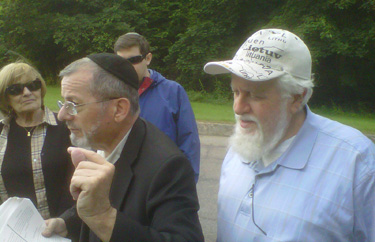
Recently, my wife Clary and I traveled to Lithuania to experience what remains of one of Judaism’s most magnificent centers of learning. My journey, organized by Zvi Lapian of Israel and led by the eminent historian and distinguished scholar Dr. Shnayer Leiman, took me to what was once the world’s center of Torah learning.
On the sad day that Eliezer Lipman, Reb Elimelch and Reb Zusha’s father, passed from this world, his children gathered for the week of mourning. At the conclusion of the shivah the sons divided their father’s inheritance in the following way: Avraham received the cash and the house was given to Nosson. The jewelry and housewares went to Elimelech and the outstanding debts were to be collected by Zusha.
In this week’s parshah the Torah gives us the mitzvah of tefillah – davening to Hashem – for as the pasuk says, “oso sa’avod – you shall serve Him.” The Torah repeats this mitzvah several times, with another mention further in this week’s parshah: “uleavdo bechal levavchem – serve Him with all of your heart.” The Sifri explains that one serves with his heart by means of tefillah.

By Henia
I was going crazy. I couldn’t stand it another minute. Yes, I was feeling sorry for myself. I had been blessed, b’li ayin hara, with children very close in age. Surely having one child after the other was a blessing to be grateful for. I knew there were many people who would give a million dollars to have such a “problem.” But still, it was very stressful. But that wasn’t the hardest part, and it wasn’t the main reason for my feelings of despair.
We doubt anyone attending last week’s massive Siyum HaShas at MetLife Stadium will forget anytime soon the breathtaking sight of more than ninety thousand people breaking out into dance and song in celebration of the Torah following the delivery of the siyum by Lakewood Rosh Yeshiva HaRav Malkiel Kotler. Or the chills they experienced as Cantor Yitzchok Meir Helfgott recited the Kel Moleh Rachamim prayer in honor of the victims of the Holocaust who died Al Kiddush Hashem. Or the inspiration they felt as tens of thousands of Jews prayed together as one. All were testimony to the centrality of Torah to Jewish identity, fealty to the Ribbono Shel Olam and submission to His Will.

Let me assure you that the purpose of this article is not to weigh in on the recent Internet Asifa (gathering) that was held at Citifield in New York. Suffice it to say, that irrespective of one’s views regarding the execution and specifics of this unprecedented event, it should be crystal clear to every sane adult that Gedolei Yisroel have brought to the forefront the perils that accompany the recent monumental advances in modern technology. It is incumbent on each and every individual to devise and implement a personal plan of action that will protect his/her family from one of the greatest dangers of the 21st century.
I am in shock. A friend of mine was visiting the United States and his ride to the airport for his return flight to Israel fell through. At the last minute he needed to find a ride to a terminal that was 50 minutes away in order to catch a bus to New York City where he would then take a shuttle to the airport.

By Henia
I’d like to believe that I at least have average intelligence. And when in need of inspiration or to learn something to facilitate my personal growth, I gain much from adult tapes and books. I’m greatly inspired by the words of the plethora of writers and speakers who target their words to adult audiences; their sentence structure and vocabulary meant only for us grownups. Their valuable lessons are often arrived at through a series of logical steps any adult with reasonable intelligence should be able to follow. And follow I do.
In this week’s parshah Balak hires Bilam to curse the Jews. The Gemaras in Berachos 7a and Avodah Zarah 4a say that there is a very brief moment during each day when Hashem allows himself to get angry. The Gemara says that no one was ever able to exact that moment except for Bilam the rasha, as it says: “veyode’a das elyon – and he knew Hashem’s knowledge.”
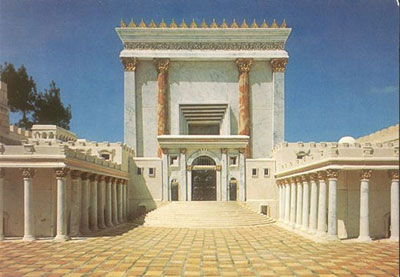
We all know we have to take the Three Weeks seriously. But at the same time we all just want the time between the 17th of Tammuz and Tisha B’Av to pass already.

On January 31, my family’s world was turned upside down. I received a phone call from my mother early in the morning. “Go to Baltimore, your sister is sick. Daddy and I are flying up today [from Florida]. Her organs are shutting down. It’s bad.”

I am on a bus as I write this article and the ride will be at least 11 hours. For me, one of the big draws of traveling in a manner most would feel is quite tedious, is that several long distance bus companies offer free WIFI service. This allows me the opportunity to possibly enrich myself financially (by watching the ebb and flow of the stock market); educate myself (by reading various online newspapers, including The Jewish Press); entertain myself (downloading the many humorous, sometimes witty, satirical articles/photos/cartoons available to brighten a person’s day) or write a column, (and for a change not have the pressure of stressfully productive hours before my deadline) – all time consuming activities that should make time pass quickly.
By Dov Shurin
Here we are again – Shavuos, the yom tov commemorating the giving of the Torah, God’s greatest gift to mankind. If someone were to say to me, “It’s unbelievable that Hashem gave us His amazing Torah,” I would respond, “That’s the wrong way to put it. ‘Unbelievable’ means ‘not to be believed.’ The correct expression is, ‘It’s beyond belief’ – meaning more than belief. Hashem loves His charming nation beyond words.”
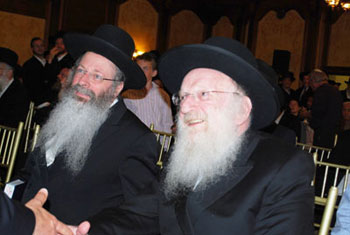
By dvora
The Lakewood roshei hayeshiva, Rav Malkiel Kotler and Rav Yisroel Neuman spent Shabbos Parshiyos Tazria-Metzora (April 28) with the two largest Jewish communities of Los Angeles – Rav Kotler in Los Angeles-Hancock Park, and Rav Neuman in Pico-Robertson/Beverly Hills.

By Dov Gilor
While in Las Vegas, my wife, Barbara, fed several quarters into a machine that really cleaned us out. She then fed more quarters into another machine that dried all of our clothes.

By Alan Magill
It’s my first moment of wakefulness, and I’m chilled to the bone. Pull the covers over myself, I’m thinking, while I decide to roll over to look at the clock. It’s 5:30 a.m. and I’m exhausted. But attending morning minyan – even once – is the least I can do.

Jonathan, who once wondered how he would ever get his son close to Hashem, now knows he wasn’t the only one who wanted it. Hashem had an interest in it as well, and made it all come together.

Why is Purim eternal? I would suggest that Purim is the prototype of the End of Exile, and as such will remain forever linked to the Era of Mashiach that will occur after the Final Redemption. Therefore, Purim will be part of that entire period at the culmination of history.
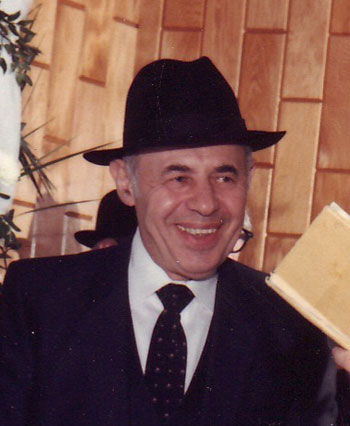
Rabbi Avraham Ginzberg, who passed away earlier this month, will be remembered by many for his fifty-plus years as executive director of Yeshiva Chofetz Chaim in Queens, New York. He will be remembered by his congregants as “our rabbi” – the spiritual leader of our small shul attached to the yeshiva.
 August 28, 2026