יום שלישי, ח׳ תמוז תשפ״וTuesday, June 23, 2026



Follow Us


The message of Moses' speech before the Children of Israel entered the Promised land are still applicable and inspiring to us, today. Join us as we tackle the mystery of Moses' speech.
An obstacle to understanding Devarim is thinking of it as a book. Devarim literally means “[spoken] words” and should therefore be primarily considered in its 'orality'

Vandals left graffiti that quoted a prayer in which it is written "cut off their false idols" but forgot the verse from the Torah that "you shall set a king over yourself."

Israel gets a mensch for Chief of Staff along with a Yiddishe Mama.
Since the Children of Israel knew firsthand all the miracles God had done for them, how could lack faith?

By Joseph Cox
Unlike the two and a half tribes, when we walk in front of G-d, we must be perfect in our motivation
We are all familiar with the famous midrash (Vayikra Rabbah 30, 12) that compares the four species we take on the holiday of Sukkos to the four different types of Jews: the esrog, which has both smell and taste, corresponds to those who learn Torah and perform good deeds; the lulav, which has taste but no smell, corresponds to those who learn Torah but do not perform good deeds; the hadasim, which have a pleasant smell but no taste, correspond to those who perform good deeds but do not learn Torah; and finally, the aravos, which have neither smell nor taste, correspond to those who have neither Torah nor good deeds.
By Rabbi Lord Jonathan Sacks z"l
It would be reasonable to assume that a language that contains the verb “to command” must also contain the verb “to obey.” The one implies the other, just as the concept of a question implies the possibility of an answer. We would, however, be wrong. There are 613 commandments in the Torah, but there is no word in biblical Hebrew that means “to obey.” When Hebrew was revived as a language of everyday speech in the nineteenth century, a word, letsayet, had to be borrowed from Aramaic. Until then there was no Hebrew word for “to obey.”
The pasuk from which most of the halachos of gittin (divorce) are derived is in this week’s parshah. The pasuk says: “Ki yikach ish isha… vechasav lah sefer kerisus v’nasan b’yadah veshilchah mi’beiso – If a man marries a woman … and he wrote her a bill of divorce and placed it in her hand and sent her from his house” (Devarim 24:1).

The Gaon, Rav Yisrael Hopstein, known as the Maggid of Koznice, was the prototype of Aharon HaKohen. He loved peace. When the dispute arose between the Chassidim and the Misnagdim he refused to participate in it. When asked to help the cause of the Chassidim, he replied: “Not through quarrels or excommunications can Chassidim hope to win, but only through showing their strength in the study of Torah, prayers, observing mitzvos and doing the work of Hashem.”
By Rabbi Lord Jonathan Sacks z"l
Something implicit in the Torah from the very beginning becomes explicit in the book of Devarim. God is the God of love. More than we love Him, He loves us. Here, for instance, is the beginning of this week’s parshah: “If you pay attention to these laws and are careful to follow them, then the Lord your God will keep his covenant of love [et ha-brit ve-et ha-chessed] with you, as he swore to your ancestors. He will love you and bless you and increase your numbers” (Deuteronomy 7:12-13).
By Tzvi Fishman
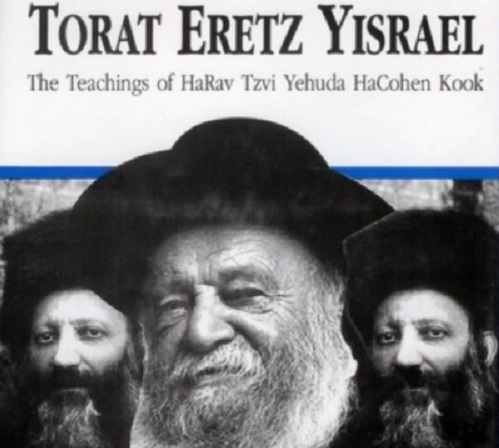
We learn from Moshe that the true meaning of Haredi is someone whose fear and reverence of God so fills his being that he rushes to do every mitzvah as speedily and completely as he can. We also find this Haredi quality in Moshe’s great desire to live in the Land of Israel. Moshe wanted to make aliyah more than anything else. This is a sign of a true Haredi Jew – a towering love for the Land of Israel and a passionate desire to live there.
By Rabbi Yaakov Klass and Rabbi Gershon Tannenbaum
A Hadran On Shas ‘Tam V’nishlam’ (Niddah 73a)
In this week’s parshah Moshe Rabbeinu recounts ma’mad Har Sinai – the giving of the Torah on Har Sinai. Additionally, the Torah warns us earlier in the parshah not to forget the revelation that we witnessed at Har Sinai, for as the pasuk says: “Only beware for yourself and greatly beware for your soul, lest you forget the things that your eyes have seen and lest you remove them from your heart all the days of your life, and make them known to your children and your children’s children” (Devarim 4:9).
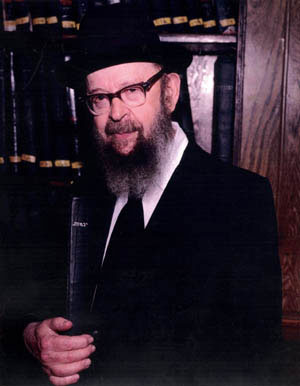
Moshe's blessing to the nation of Israel is interesting in that a similar blessing, which Hashem had given Avraham and Yizchak, had already been fulfilled. Rabbi Avigdor Miller, zt”l, observes that among the greastest blessings is abundant offspring, and therefore this blessing was particularly auspicious – even the third time around.

By Tzvi Fishman
Rabbi Kook explains that a weakening of the will is due in large measure to a lack of physical energy and strength. When a person’s willpower is weak, he can fall into many bad habits. As part of his overall mending, he must improve his physical health, as well as his moral and spiritual worlds.
By Dov Shurin
We’ve just read the Torah portion about Pinchas, an amazing tzaddik who performed an unusual act instinctively and for the sake of Hashem and His honor.
By Zev Kraut
Since the moment God gave the Torah to the Jewish people, keeping kosher has been an essential part of the Jewish home. Accordingly, the home is an essential part of a Torah lifestyle. What goes on in the home directly affects what goes on in the rest of one’s life. The question is, why kosher?
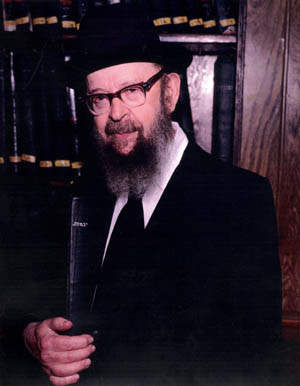
Aharon HaKohen is distinguished for his love of peace. Korach earned distinction for failing in this area; his name has become synonymous with dispute and divisiveness. Rabbi Avigdor Miller, zt”l, found in this story a striking lesson about the danger of argumentativeness and its application to every Jew.
By Rabbi Yaakov Klass and Rabbi Gershon Tannenbaum
Lost In Translation ‘A Shesua Is A Creature…’ (Niddah 24a)

Have you noticed that we seem to have preferential memory for the unpleasant things that happen to us? Try as we might to provide our children with good experiences and positive memories, it is the memories that evoke fear, pain, sadness, etc. seem to be the ones that stand out.

There is a tradition from the Vilna Gaon that Milchemes Gog and Magog at the time of Moshiach will last only 12 minutes. In that short amount of time 1/3 of the world will be destroyed, 1/3 severely wounded and 1/3 will survive. Until recently this was incomprehensible - how could such destruction happen so quickly?

The Generation of the Wilderness was unique in the history of Israel, as Rabbi Avigdor Miller, zt”l, explains concerning the first verse of Bamidbar. Israel was slated for a special mission in the world, and this mission was begun with a special forty-year inauguration in which Israel gained an intense and unmatched closeness to Hashem.
By Rabbi Yaakov Klass and Rabbi Gershon Tannenbaum
Spared Possible Punishment ‘Those Who Are New To The Ketores’ (Tamid 32b-33a)
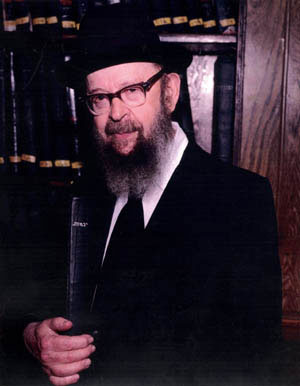
The truth is sometimes unpopular or uncomfortable. Thus, people who wish to dismiss the Hand of Hashem from history and human affairs may be taken aback by the assertion of Rabbi Avigdor Miller, zt”l, based on the beginning of this parshah, that the suffering that befalls Israel comes for a Divine purpose. Rabbi Miller finds this purpose explicit in the opening words of Bechukosai, and observes that this “wish” (to dismiss the Hand of Hashem from history) is not a Jewish way of thinking.

Seven men – including 4 rabbis - happened upon by an Israeli paratrooper in a closed military zone on the Hermon mountains on Monday, were on a mission of their own – to safeguard the sanctity of the Jews of the city of Metulla.

As one that has trained and followed rabbis throughout their careers, I can generally say that rabbis gain detractors not so much because of their sermons, vision, lectures or the like, but rather when they fail to return phone calls, when they avoid bikur cholim, and when they fail to respond to emails. One can deal with refusal, disagreements, debates and the answer 'no', but how should one deal with being totally and utterly ignored?!
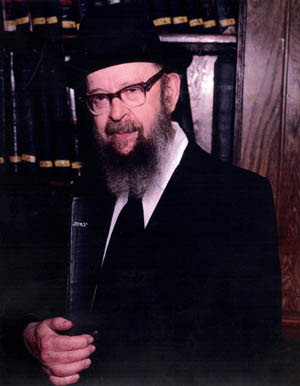
We should not be so naive to think Moshe himself could not have thought of the plan of appointing officers. The Elders of the sons of Israel in Egypt were an official and recognized body, not mere old men as are found today in homes for the aged.
 June 21, 2026