יום חמישי, ג׳ תמוז תשפ״וThursday, June 18, 2026



Follow Us


Sections
E-Edition


Balancing work, community responsibilities, and family life is not easy. However, consistently making time for your family can have a profound impact on your children's upbringing and on marital harmony.

SpaceX's proposed IPO, targeting up to $75 billion in proceeds, would shatter the previous record held by Saudi Aramco, which raised $29.4 billion in 2019. Elon Musk could become the world's first trillionaire. The numbers are staggering, almost cartoonish. And yet the market believes. Why?

I became less of an operator and more of a leader. With exceptional people around me, I could delegate. I could focus on the few things only the CEO could do.

Selling the home, paying off the mortgage, and accepting a large tax bill may feel painful. Few people enjoy writing large checks to the IRS. However, taxes are sometimes the price of simplifying life and unlocking financial flexibility.

Having low fixed expenses early in life allows you to save aggressively and build a foundation that can compound for decades.

Wealth should serve a purpose beyond individual comfort. Before personal consumption, the first portion of one’s resources should be directed toward higher purposes.

Consolidation brings clarity. Keeping investment accounts at one primary institution, or two if necessary, and maintaining a separate bank for checking, simplifies oversight.
Every fifty years, in Yovel, ancestral land returns to its original family. Every seven years, in Shemittah, Hebrew slaves go free. At first glance, this looks like a Mamdani-style forced redistribution: confiscate, redistribute, repeat. It is not.

A healthier approach is to adopt a strategy both partners can live with emotionally. The mathematically optimal portfolio is irrelevant if it creates stress or conflict.

Financial research shows that wealth, even when substantial, rarely survives more than three generations. What seems permanent in one era often fades in the next.

In almost every ancient civilization, priests were the masters of death.

One of the biggest misconceptions about financial planning is that it is purely mathematical. Numbers matter, but they are only part of the equation.

When it comes to financial news, successful investing does not require constant attention to headlines or daily market movements. It is more useful to focus on financial history instead of forecasts.

One of the most striking aspects of a yeshiva education, especially as highlighted during the Seder, is its role in preserving tradition.

Values such as kibbud av va’em and the importance of supporting children as they build their lives are deeply ingrained. These are not obligations people take lightly.
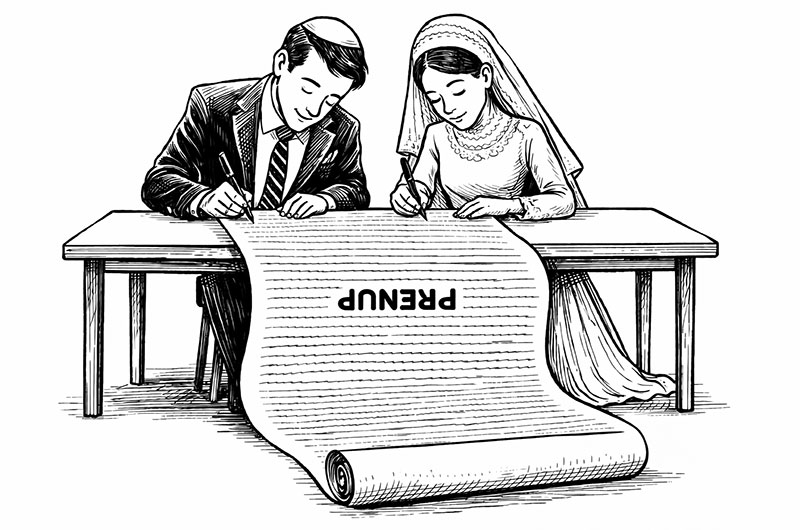
Regardless of the circumstances, couples considering a financial prenuptial agreement should always consult experienced legal professionals.

Allocating a portion of his gifts to charity reinforces the idea that financial blessings come with obligations. It teaches gratitude, perspective, and the importance of contributing to something larger than oneself.

When Moshe asks to see the Divine presence, G-d responds: You will see my back, but my face cannot be seen (Shemot 33:23). We do not see providence as it unfolds. We see it only after it has passed.

At its core, investing means allocating capital to a productive enterprise. When you buy a stock, you’re purchasing a stake in a business that sells goods or services and generates cash flow.

It is the only book in Tanach where G-d’s name does not appear. There is no open miracle, no prophecy, no explicit divine intervention.

While the Megillah takes only 30-40 minutes to read, the actual story unfolded over nearly 10 years. By the time the threat becomes clear, the decree has already been sealed.

Hegai provided not only access but instruction. He was not a prince or a general. But he knew the king. He understood the king. He knew what resonated, what was rewarded, what fell flat. He saw Esther’s potential and invested in developing it.

While wealthy families may not worry about paying monthly bills, they face a different, and sometimes more complex, set of challenges. As wealth increases, so does exposure to lawsuits, taxes, poor investment decisions, complicated family dynamics, and spiritual drift. Thoughtful planning becomes essential.

At Sinai, the Jewish people received the Torah, experienced direct prophecy, and felt G-d's presence in an overwhelming, transformative way. It was the founding moment of the nation.

Even under ideal conditions, managing property requires time, expertise, and patience. Once family dynamics enter the picture, routine business decisions can quickly become emotional, and disagreements that might otherwise be manageable can strain relationships.

It’s important to point out that good financial planning primarily focuses on smart lifestyle planning. There is no savvy investment or tax strategy that will magically solve financial stress.

Opportunity and obstacles often wear the same face. What separates those who seize the moment from those who retreat is the lens through which they interpret what they see.

It can feel unfair, even infuriating, seeing someone who pays less enjoying something that many others have given up in the name of paying full tuition.

While I can’t speak to what is standard for all yeshivas, I can touch on all the points in your question, provide some background, and offer some suggestions for any employees in your situation.

The real value of money, beyond comfort and security, is its power to buy back time. Time to think. Time to build. Time to teach. Time to parent. Time to choose meaning over urgency.

Behavioral economists have long wrestled with why smart people make bad decisions. Dan Ariely and others have shown that we often act against our own interests to protect pride, defend identity, or avoid appearing weak. What begins as conviction can harden into stubbornness.

I won’t mention specific names, but if readers want to do their own research just look up the best performing funds/stock pickers in a previous year. They will rarely be on top multiple years in a row. Yet, they will still get prominent airtime to discuss their strategies, which are usually wrong or antiquated.

Where will the market end in 2026? What sectors will be the best performers in the new year? If you had to invest $1 million in one area of the market for 2026, what would it be? Where will the market trade tomorrow? These are all actual topics that financial “gurus” discuss this time of year.

Before you can move someone, you must understand their state of mind. Motivating someone who is emotionally depleted is like pressing the gas with an empty tank. Effort rises. Nothing moves.

If an investor is approaching retirement, like you are, having some money in cash equivalents and high-quality bonds for a couple of years’ worth of expenses makes sense.

Yaakov was not favoring one brother arbitrarily. He was reading the vessel. He blessed according to potential, not position.

The custom is rooted in the idea of honoring and supporting the groom as he enters marriage. It began as a way for the bride’s family to show respect, strengthen the bond between families, and provide the groom with items that would help him fulfill his new spiritual and communal roles.

The trend toward extravagance, ostentatiousness, and high prices is also relevant in the investment world. I struggle against it with clients. I’m advising them to stick to a sensible investment program, while they are lured by approaches that seem more exciting.

It rarely makes sense to have retirement accounts scattered at various institutions, especially old employers. It’s better to consolidate old accounts into an IRA to keep your assets organized.

When we first meet Yosef, he is seventeen, full of dreams and unaware of their weight. In one dream, his brothers’ sheaves bow before his. The sun, moon, and stars bow in another. These dreams center on status.

Despite my background in shadchanas, I must admit that I am no expert on today’s dating scene. I have been out of the parsha for a long time, and expectations and social etiquette may have changed.

While I realize that your question is post marriage, it’s worth pointing out that a couple’s approach to money should be in sync and laid out BEFORE they tie the knot.

Behavioral science shows how powerfully environment shapes us. Who exercises, overspends, smokes, or shows up for family is often less about conviction than we like to believe. We are social creatures. If your friends go to the gym, you are more likely to go. If your colleagues drink heavily or live beyond their means, you may drift with them.

Not every family is fortunate to have extra dollars to spend on non-essential items. Many individuals in our community are just getting by.

The right seat is more than a box on an org chart. It is the alignment of someone’s natural strengths with the role they occupy.

In life and business, we are often asked only for water. Whether we also draw for the camels is what separates technical competence from moral leadership. Rivka became a matriarch not through words, but through awareness and action.

The consequences of this election will be interesting (and perhaps scary), but instead of sitting back and complaining about the bad policies, I favor a more proactive approach.

Companies like Enron and Theranos rose on innovation and brilliance but fell to arrogance and deceit. Their failure was not from lack of intelligence but from loss of integrity.

Many readers may not have a background in investing and financial planning. However, you do have intuition.

hTe truth is that some events are too seismic to plan for in advance. During these situations, we learn the ultimate lesson from Noach, which is to …Walk with G-d (Bereishit 6:9).

In Parshat Lech Lecha, Avraham shatters the assumptions of his world. Surrounded by idol worship and inherited beliefs, he dares to ask: what if there is something greater, unseen, and just?

The World Bank and modern economists confirm what the Torah taught millennia ago: societies that protect property rights thrive; those that don’t decay. Trust, not gold or oil, is the real wealth of nations.

This “keeping up with the Joneses” mentality can occur at every wealth level. You will never be able to earn your way out of this approach to life.

As Yom Kippur approaches, we are called to reflect not only on our choices, but also on the apparent randomness that shapes our lives.

Switching yeshivas is a significant life decision. It will be disruptive, and another school may have a different style, hashkafa, or other attributes that don’t make it your first choice. However, tough choices need to be made to address your predicament.

We notice what screams for attention: a fractured relationship, a career setback, a health scare. But what about what seems fine? A marriage that’s good enough. A spiritual life that’s lukewarm. A job that’s steady but uninspired. These don’t collapse from catastrophe. They wither from neglect.

Gratitude does not just lead to joy. Gratitude produces joy. By tracing our blessings back through time, we cultivate the emotional soil in which joy grows.

In this piece, I will cover accounts that may not be top of mind, but can be extremely beneficial for frum families with a range of wealth, lifestyle, and personal circumstances.

Willpower is the scholar’s strength to seize back the microphone. To choose what I should do over what I want to do. But it is finite. Like a phone battery, it drains over the day, leaving the teenager in charge by nightfall.

Abraham Lincoln chose a different path. Instead of surrounding himself with loyalists, he built a “team of rivals,” appointing to his Cabinet, men who had opposed him and even run against him for the presidency. They disagreed with him often and sometimes bitterly, but Lincoln welcomed the challenge.

Having too much cash sitting in a checking account is typically a poor decision, as you are losing buying power due to inflation.
The Lubavitcher Rebbe, zt”l, refused to call a hospital a beit cholim, house of the sick, because words shape reality. He called it a beit refuah, house of healing, reinforcing hope and recovery. The label itself becomes part of the cure.

An important first step after receiving a large windfall is to assess your overall finances. If you borrowed any money, you should consider paying that off first.

In much of the West, particularly in the United States, silence is often perceived as awkward, a sign of disengagement or lack of confidence. But in some East Asian cultures, such as Japan, silence conveys thoughtfulness, respect, and even wisdom.
As Steve Jobs said in his Stanford commencement speech, You can't connect the dots looking forward; you can only connect them looking backwards.

A healthy cash flow is the cornerstone of personal finance. It’s imperative you position yourself to earn a livable wage while you are young, by attaining proper schooling or training, before launching your own business or career.

Viral shame is a digital stampede. Each click tramples someone closer to ruin.
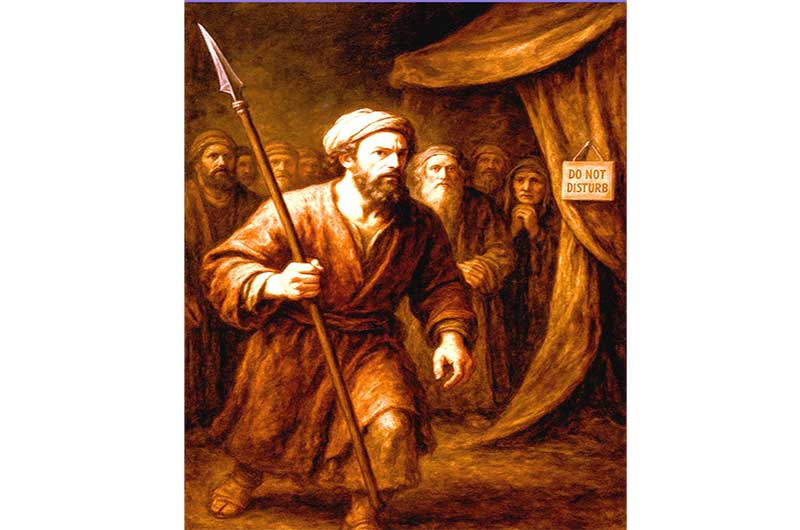
Speak up and pay the price or stay silent and enable failure. In such moments what organizations need isn’t just better ideas, they need better messengers. Outsiders with no agenda. Someone who can say what others can’t.

While it’s important to have articulate advocates representing Israel and the Jewish people, what is the average person’s role in improving the plight of Jews around the world?

If we make people believe they are infallible, they eventually believe they can do no wrong – especially when they do.

As AI emerges as the next frontier, Apple’s magic – the sense that it knows what we want before we do – is at risk of growing stale.

The procedure itself is covered by medical insurance. This program is for ancillary costs, such as lost income, travel expenses, lodging, food, child and elder care, and medical aides not covered by insurance.

In addition to revealing wasteful spending, a regular review process will also empower the school with the information to go to the market and find the most cost-effective services.

The Mishna teaches that any dispute not for the sake of Heaven will not endure. A dispute for Heaven asks, ‘What is right?’ A personal dispute asks, ‘Who is right?’

When we are stretched beyond our current ability, we enter discomfort. But that discomfort doesn’t mean we’ve reached our limit; it may mean we’re standing at the edge of our capability. Whether we step forward depends on mindset.

Adaptation does not mean straying from who we are. It means deepening our understanding of who we are meant to become.

My personal view on homeownership has evolved over time. Instead of focusing on the subpar returns that most homes will generate, I have come to appreciate why a house may be an excellent financial decision for many families.

Being frustrated at work or trying to get away from a difficult boss are not good reasons to retire.

The most important aspect of successful investing is having a long-time horizon.

If readers take a moment to think about the role that mazal has played in their own lives, they will undoubtedly find the luck in seemingly small or seemingly insignificant decisions or events that literally changed the trajectory of their life.

The human tendency to focus on positive memories, while conveniently forgetting about the less positive ones, is helpful.

If you need to take out credit card debt to pay for something, it means you are spending too much money.

It behooves all families, but especially folks with a lot of assets, to speak with an estate planning attorney and tax accountant who specialize in these cross-border issues. Failure to do so can wreak havoc within your finances, especially for your loved ones after you pass away.

With Purim rapidly approaching, below is a blueprint of how to prudently spend your money to enhance the holiday instead of just trying to one up your friends.

Investors also possess superpowers that can help them overcome financial challenges. If implemented, they can help families – even those with modest incomes – achieve wealth and prosperity.

While we should all daven for divine intervention to protect us and help us make good decisions and achieve our goals, I find that, in the realm of personal finance, far too many people seem to rely solely on miracles to secure their financial future.

The best way to manage the inevitability of changing market dynamics is to plan ahead.

For every bad financial experience regarding kollel, I imagine there are many positive ones. The most non-financially stressful kollel experience requires a Yissachar and Zevulun relationship that is clearly defined from the onset.

In my annual investment outlook, I always try to focus on strategies that are more practical for investors. My friend, Yoni Raab, suggested that this year I look to Parshas Mikeitz and Pharaoh’s dreams to glean some timeless Torah wisdom for investors to apply in the year ahead. As always, Mr. Raab’s suggestion turned out to be spot on.

While I truly believe that most people in the investment business conduct themselves with high ethical standards and are motivated to help investors achieve their financial goals, there are a few bad apples out there that are usually the loudest and most skilled salespeople.

In the realm of estate planning, if one son is in kollel and the other son is an investment banker, more money may be needed to support the former. The latter may appreciate a different type of non-financial support to help them achieve their full potential.

I’m sure readers can point to their own parents, grandparents, or great-grandparents, who moved to this country to improve their respective circumstances. Whether it was to flee antisemitism and pogroms, or perhaps to find a job, moving has always been an effective financial planning strategy.
Do not rush to make investment decisions based on who the new president is. Take time to digest the information.

To determine how best to allocate your funds, it’s important to understand your personal financial goals.

The cornerstone of personal finance is to live within your means. Buying something you can’t afford goes against this dictum and will set you up for financial ruin.

The importance of creating meaningful experiences is especially relevant as we approach the chagim.

A caveat on my perspectives. My kids are not yet of marriageable age. My only wedding planning experience comes from my own nuptials. Although beyond showing up with a suit and kittel, and selecting a stellar mesader kedushin, my involvement was modest, and that’s being generous. My opinions, therefore, don’t stem from the details of planning.

At the end of the day, believing in your plan can keep you committed to it when the going gets tough.
Surround yourself with people who derive joy from other aspects of life beyond materialism to eliminate the feeling of constantly needing to keep up with friends in your community.

Investors tend to make drastic decisions when they are feeling scared, greedy, or impatient. Unfortunately, these impulsive moves rarely, if ever, work out. Emotional decisions have no place in the world of successful investing.