יום שני, כ״ט חשוון תשפ״זMonday, November 9, 2026



Follow Us


Must there be a reason for everything?

Korach was the hero of the hour. His ratings and the spirit of the times were on his side.
Tefillah is only m’drabbanan, but the avoidance of machlokes is m’doraysa.
By expressing, in terms they could comprehend, the Torah’s profound mystical secrets, he provided his disciples a window into his own overarching perspective and exalted vision.
With Moshe at the rock, I wonder whether the Gemara implies Moshe had trouble believing words alone could do the trick.
The nation had nothing to do. There was no mission to accomplish, no sense of urgency, and about this our sages wrote: "Idleness leads to boredeom and boredom leads to sin."
Today, the challenge is to bring the Torah’s teachings, including its deepest mystical concepts, to Jews far from Torah as a means of drawing them back to Yiddishkeit.
Because the Jewish people lacked emunah, they became troubled and confused.
Many of the commentators find a disturbingly strong rationale in the Jews’ complaint mentioned above. The complainers were essentially blaming Moshe for setting up a murderous trap for the two hundred and fifty men that contested the choice of Aharon and his sons as priests.
When R’ Menachem regained consciousness, he…cried bitterly because he had not worn tefillin that day.
Despite decades of intense communist persecution, they had steadfastly remained faithful to the Torah.
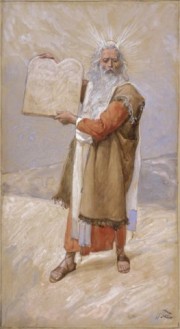
In a world devoid of prophecy, it becomes exceedingly difficult to understand or even relate to the propehcy
Sometimes we set up camp for a short period of time and other times for a much longer period.
R. Lichtenstein saw how the spies could have turned the event around for the better, and I find his logic shows us many other candidates as well.
Until he got sick, Yudi, of course, had never missed a day of wearing tefillin since his bar mitzvah.
The Torah offers us something new: learning for the sake of learning. In the world of competition this is something exceptional.
Discord and divide in government has trickled down to the everyday man.
In this week's parsha, there is an unusually insightful process of how a little complaint can undermine a gigantic and noble enterprise:
By observing a mitzvah, we rise and become united with, and absorbed in, Hashem’s holiness and infinitude.
We did not huddle together because of Pharaoh or the Egyptians or the Nazis or any other threat.
It is man’s triumph over his yetzer hara that brings true honor to Hashem.
“Mi laHashem eilei!” is a charge to every person in every generation to step up to the plate.
Each individual felt less responsibility for completing the minyan, felt someone else would take his place, and simply excused himself from showing up.
The family fled on the last train out, embarking on a long trip to Central Asia. German airplanes strafed the train, and they survived only by miracles, said Rabbi Schwei in recalling the fright all his life.
Most of us don’t understand the Torah of Rabbi Shimon Bar Yochai at all, but we understand that there is something there, that there is a greater unseen depth to life.
He never sat in the Rebbe’s presence – he always stood – almost without movement, listening intently to the Rebbe’s every word and watching him for the slightest indication that he might need something.
Hishtadlus is proper; worry and concern are not.
Rashi had thought the blessings the parasha details before the tokhaha also started with consistent Torah study. We can initiate a virtuous cycle, consistent Torah study aimed at discovering the best ways to act on Gd’s word, and reap remarkable blessings.
All things are artificial, for nature is the art of God. -Sir Thomas Browne
We don't seek leaders who transcend human struggle and temptation, sit on mountaintops meditating on their naval. Our leaders are individuals who embrace the physical, uplift it, and connect it to the infinite.
People who are challenged in extraordinary times are often able, not only to survive, but to flourish.
None of us, of course, can be so presumptuous as to compare ourselves with Rabbi Shimon bar Yochai.
Our children have learned how to maintain a connection with grandma and grandpa without hugs, how to manage with their brothers and sisters when cooped up in isolation, and how to follow new rules that changed their lives.
Rabbi Shimon bar Yochai, the teacher of the Zohar who we honor on Lag B'Omer, plants seeds of infinite growth in our minds so each of us can begin our time travel with Torah with a taste of her eternally expanding wisdom embedded in our souls
Why may Kohanim not attend to the dead?
It follows that particularly in Iyar, Hashem supernaturally heals, removing sickness as if it never existed.
Taking revenge on another individual is like taking revenge on oneself.

It is an old habit with theologians to beat the living with the bones of the dead. -Robert G. Ingersoll
The high priest is alone. It is forbidden for anyone to be with him, but it is precisely because of this restriction that his power is so great.
As I read Aharei Mot-Kedoshim each year, I wonder about what it does to us as Jews to live in a world whose morality is so clearly at odds with the Torah’s.
Great is charity, for it brings closer the Geulah.
The Chofetz Chaim notes that despite the severe sins of individuals, if we wouldn’t speak lashon hara, the Satan would be completely powerless.
In this week's portion, the man, having been officially declared impure, is now ready for the end of his nightmare beginning his process of purification--on the sidelines.
A man of courage is also full of faith. -Marcus Tullius Cicero
The Be’er HaChaim says that during moments of stress, a person’s focus should always be on the good in his life.
So what are we getting out of Pesach this year? Pesach itself. In this strange and difficult time, we are left with Pesach itself. With the festival of freedom.
“They will laugh the first day. The second day there will be less laughter. After a few days, no one will laugh anymore.”
Considering how morally depraved Egypt was, for the Jews to leave this country, rise up to true freedom, and then receive G-d’s holy Torah just seven weeks later required a tremendous “leap” on their part.
Our sages who tell us that causing a chassan and kallah to rejoice is like rebuilding one of the ruins of Yerushalayim.
The lecturer said he understood her message to him – that in her classes the objective was not to demonstrate how much she knew (and she knew a lot), but to teach the public.
A true Jewish leader, however, must be aware of and interested in the lives and problems of individuals and communities.
Our Matzah is not Shmurah if we are unconcerned with those who have nothing to eat, or no Seder to join.
It might seem easier to pray alone to God, rather than with the various distractions of a communal setting. True, Jewish law actually recognizes this and tries to minimize these distractions by recommending a set seat, prohibiting holding objects, etc. Still, the many distractions are impossible to completely eliminate. Yet in spite of its drawbacks, we derive strength from doing things together with a group.
Local secret police in Rostov hounded the Rebbe and even arrested him once. They closed his yeshiva and in 1924 forced him to leave his home in Rostov.

We explore life through the lens of Torah through the entire year. Now that Pesach approaches, we pause and listen as this week we hear God's loving call as if For The First Time.
It appears that our mission this Shabbat is to bring the holiness of the synagogue - now standing empty - into the living room and the kitchen.
As he struggled to continue, the mountain climber feared that he would succumb to the elements and be buried in the snow.
Leaders must have the courage to try new things, build new edifices and achieve new heights.
Rebbi suffered terrible stomach pains for 13 years for his lack of pity on a calf.

To counteract increasing secularization, he campaigned to create an association of Torah-observant Jews throughout Eastern and Central Europe, which later crystallized into Agudath Israel.
Perhaps in the midst of the great uncertainties created by the Coronavirus pandemic, it is all too easy to remember that we are not God. But the temptation to think otherwise still exists. And once the pandemic will be over and man will continue to build better and better tools to control his fate and his environment, that temptation will regain its strength
The Alter of Navardok writes that the merit of the multitudes is so great that if three chassidim from Rasyen claimed they could fly, he would believe them.
“All of us are presently learning a course in ‘How to live with uncertainty.’ From my experience, to succeed in this course you need to open your heart to embrace the unexpected.
He also encouraged rabbinic leaders and those who wrote English well to disseminate knowledge of taharas mishpacha and other practical mitzvos.
The greatest of leaders are those who are able, not only to lead by example, but also to lead through experience.
I suggest we begin to realize we know less about what it means to be Gdly, in the halakhically important sense of fulfilling this mitzvah, than we think. Ordinary compassion or mercy may be good and laudable, but few of the commentators pointed to it as what it means to emulate Hashem’s being rahum
A primary lesson of Purim, then, is to relive the vital awareness that Hashem is protecting His people in exile, “scattered among the nations.”
There is actually an obligation to be joyous.
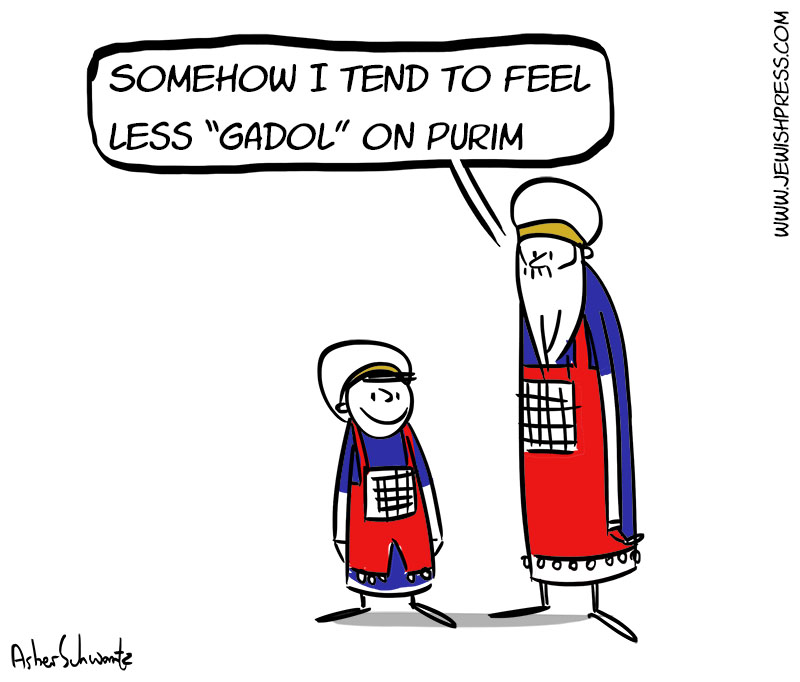
So who had it better, Moshe or Aharon?
Whatever the case may be: Why would the goblets have been upside down?
The real contribution is intense love and fervor for Hashem with which we give.
Humanity today has received an abundance of life and health as an incredible gift. But does it properly take advantage of this blessing?
Ideas we feel compelled to share, insights we're desperate to impart, powerful experiences we reveal are all contagious, Torah conversations that are contagious build a Home for the Divine Presence.

A society needs laws to function, while at the same time it needs to provide opportunities within the structure for the human spirit to blossom.
Often he strove to aid Jews materially even before working to elevate them spiritually because an improved material life allows one’s spiritual life to thrive.
“We cannot keep the thunder and lightning of Sinai with us, but we can take the spirit of Sinai and incorporate it into mitzvoth – whether we are at the market, at home, in the bank or the car.
Mitzvos that seemed rational in earlier generations may seem irrational today.
The traditional understanding – that the Torah is referring to the monetary value of an eye – is not without its difficulties either

Torah is to be taught as healing, as a relationship, as nurturing. It is this Torah I love and that gives me life.
The challenge is finding the delicate balance between knowing our calling and not burning ourselves out.
Only Yisro went deeper into what this all meant to him. He didn’t just hear – he changed.
Angels don’t anticipate a reward when they do Hashem’s bidding and therefore the mitzvos they perform are absolute and perfect.

These Ten Sayings weren’t about specific commandments, they were foundational ideas for the Jewish people, were said at that momentous event to capture what we were becoming by accepting the Torah. What mattered were Ten Sayings, however many commandments they reflected.
Many don’t realize that standards of Orthodox Jewry here before 1940 were incomparably lower than today.
Moshe was leading them, and I suspect that he knew exactly where to go. The cloud was not a GPS, it was a reminder of the benefit of having our heads in the clouds: The cloud was an invitation to extend their reach, to remind them that each time they
The Rebbe Rayatz treated everyone with the utmost respect, even doing material favors for many non-observant Jews.
If the great Galanter Rebbe had troubled himself to appear to him, there was no doubt that his decision to remain in the wine business would be to his advantage.
To what extent is a prophet of God allowed to improvise?
“The Torah, though, is not just telling us about Pharaoh; it’s also telling us about ourselves. In every one of us, a little Pharaoh is hiding who knows exactly what needs to be done but doesn’t do it.

Pity Netanyahu and Gantz weren’t “tough” like Moshe and Aaron, telling Trump, lay off our land, and watch us apply sovereignty to all of it, in front of the eyes of the whole world. And, you’re going to recognize it. There’s no such thing as “Palestinians,” and there will never be a “Palestinian State.”
Less than five years earlier, World War II had ended, which consumed a third of world Jewry, including most Torah-observant Jews. Almost all great Torah centers were destroyed.
One Minchah recited properly can change everything for the better.
Only one-fifth of the Jews left Egypt during the Exodus. Every Jew who left Egypt all presumably knew one or many relatives and friends who had not gotten out.
Among Custer's character flaws was his inability to look inward. When a problem arose he blamed others.
 November 6, 2026