יום חמישי, ו׳ תשרי תשפ״זThursday, September 17, 2026



Follow Us


Avraham Avinu symbolized Toras chesed, the Torah of loving kindness. Commentaries ask: Is there a Torah that isn’t loving kindness?
When others see that serving Hashem is rewarded with material abundance, G-d’s name is sanctified. It is a kiddush Hashem.
Rashi gives us a new insight into Avraham’s relationship to Israel, seeing it as a place he went voluntarily, before Hashem told him
Noach is considered responsible for the Flood because he felt no personal responsibility for his generation.

What was Adam missing? After all, he had everything – a female companion, food, a Garden of Eden surrounding him. What was lacking?
Rashi writes that the world was going to be destroyed because of rampant immorality. So why does the Talmud say robbery sealed the decree?
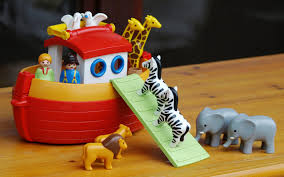
God doesn't need a slave to order and say: Build an ark! He could have made it in a second. God desires a partner. It is up to us to rise to that role. Noah's greatness was that he figured it out.
When Noach gets off the ark, there seems to be a whole new world order that surrounds him.
We see from the Talmud that ingratitude can be cause for harsh punishment.
The universe was created for the sake of the Torah and for the sake of the Jewish people – i.e., in order that we Jews study and observe the Torah.
“How can you know there’s no G-d? Can anyone possibly prove there’s no G-d? How can you prove that?” I wondered.
Of Rav Nissim Karlitz,(ZT"L) the Chazon Ish said “One day, the entire world will hear from him.” He was right.
To cross the infinite gulf separating us – as finite created beings – from the infinite Creator, we need to nullify our sense of self-importance.
The Vilna Gaon (cited in Sefer Kol HaTor 1:7) states that one's entire body is involved in two mitzvos: the mitzvah of sukkah and the mitzvah to dwell in the Land of Israel. (the GR"A does not mention Mikvah). It turns out that the mitzvah of sukkah and the mitzvah of living in Eretz Yisrael are like sister mitzvos.
A person only receives the amount of parnassah that was proclaimed for him in Heaven.
Irritation leading to growth...
A person who responds “Amen” with all his might…has the power to open all the gates surrounding Gan Eden.
Our soul wants, to be better, different, true. Now the soul prevails over the body, and in the last moments of this journey, we must take something with us, some 'soul food' for the road ahead.
“If God only commanded Moshe to present Haazinu, what was the need for Yehoshua to join in?”
Hashem’s love for us is like the love of parents for their young child; it’s an essential love not dependent upon the child’s conduct.
We're going to talk about something that is probably one of the most practical pieces of advice for today. We're talking about handing over leadership.
The Angel Raziel read the sefer together with Adam, who fell on his face, shaking.
What we need to think about now – in Tishrei 5780 – is Tishrei 5781...Shana tova!
The fear of success, the fear of being led astray, the fear of losing sight of where we started and the truths we used to know we had to hold self-evident, these were the fears Hashem was telling the Jewish people to have the strength and courage to overcome,
Whereas all people need to be careful of what their words may cause, leaders must especially be careful in this regard.
Lean back but be active
The “head” – the great Torah leaders – are dependent upon all lower “limbs” of our people for their spiritual completeness.
A person should never despair of his ability to do teshuvah.
Since we are taught that each person is like a universe, to casually dispense with one individual is like dispensing with an entire universe.
Finally, in a choked voice, the father said, “Yanky has a brother, Mutty, who has been in the hospital with a debilitating illness for many months.”
Choosing what really matters
The path of Chabad, on the other hand, while maintaining the close Rebbe-chassid relationship, emphasizes personal labor in serving Hashem.
A friend told me about a niggun for what to me is a new zemer and I have recently begun singing it. It has had a profound impact on me and how uplifted I feel on Shabbos...
Sadly, we live in a world where too many of us reject such remonstration out of hand, deny anyone else’s right to give us the awareness we may not find ourselves. In doing so, in building a society of tochaha-objectors, we lose half the arrows in the quiver, and open ourselves to the risk of never hearing what we need.
These three verses point to Elul as a time for reinforcing the “three pillars upon which the world stands: Torah, service [of Hashem through prayer], and kind deeds” (Avos 1:3).
Although the chacham and rasha are completely dissimilar, they still share a bond as brothers.
Once I learned to treat every person I meet as more than chance and as an opportunity, I was able to expand my collection of superheroes.
Many commentators wonder why not proffering bread and water is considered such a great crime. Because turning away goes from being a sign of neutrality to being an act of hostility.
Leadership is not domination, but the art of persuading people to work toward a common goal.
Even though you think you see the whole picture, chances are that you don’t.
ven with all the news stories about “the best teacher I had” or “the teacher who changed my life,” there is no doubt that the teachers who influence us the most are our parents.
Our Divine soul’s life-force, which enlivens our body, is intended to be utilized solely for fulfilling G-d’s will.
The primary quality of anyone judging another is that the judge first know how to judge himself. If he cannot honestly examine his own behavior, how can he possibly judge someone else's?
Before our matriarch Rivkah gave birth to Yaakov and Eisav, a Heavenly message told her they represented two opposing nations, “and one nation will struggle to overcome the other nation” (Bereishis 28:23).
If a person leads a meritorious life, the good is revealed. If he doesn’t, the good is camouflaged and appears to be bad.
How does contemporary Judaism deal with the great challenge of Torah laws no longer practiced?
Leaders on all levels must pay careful attention to the commander's intent as a misunderstanding can result in terrible consequences.
What makes someone great, really great? Many commentators say the answer to this question is hidden in the following verses from this week's parshah
As urgent as this call was at the beginning of the 20th century, it is even more urgent in this era when Jewish communities are more exposed than ever to the influences of the secular world.
The Chofetz Chaim says that if one has the power to correct a situation among Klal Yisrael and fails to do so, he is culpable for any blood spilled among them.
Sins woven into the fabric of a society have a weight individuals’ sins do not. Communities must set standards, make sure people do not forget the nature of right and wrong, however far from it they may stray.
I wish all of us, parents and teachers, would listen to everything our children ask and say. I dream of our hearing them so well that we can begin to visualize and relate to them as who they can be when they fulfill all their potential.
Why should we rejoice on Shabbos like those who received the Torah?
Not only is a person capable of saying Shema while being tortured and killed; he must do so.
In the modern era, many nations introduced compulsory education and in the process tried compelling Jews to change their curricula.
" Nachamu, Nachamu, is not a repetition, but a Song of Act Two--uf new beginnings and of hope.

“Man reached the moon. But man to man he has yet to reach.”
Originally, the brothers condemned Yosef for being a rodef, but in the end they were haggling over his clothing and extra shoes.
It is the easiest to only praise, to be "all smiles and hearts," but if you truly care about someone, you do not flatter him. You help him become better.
The astronauts, too, had to follow every detail of their instructions, utterly negating their own desires.
The word eichah is a word we heard from Moshe Rabbenu, calling us to realize we weren’t aiming as high as we could. We could have heeded it then, and put ourselves on a better path. We heard it centuries later, a call to see how we were setting ourselves up for destruction. Two calls we unfortunately ignored, leading to the third eichah, which continues to ring in our hardened ears.

The Jewish people’s affairs are connected with, and depend on, the Torah in its entirety...

The Baal Shem Tov told his disciples that all the dozens of journeys detailed in this parshah exist also in each person's life – from the day of his birth to the day he leaves this world. In every journey, one has to move upwards and learn something new.
Flattery is such a grievous avairah that Tosafos even discusses whether flattery is permissible in an emergency.
One of the more fruitless political debates in the United States is whether strict restriction of gun permits would add to public safety. One of the reasons it is fruitless is that both sides muster flawed analogies to other societies.
Ben-Gurion understood both the strategic and symbolic value of Yerushalayim.
He then called out, “Zechariah, Zechariah, I have killed the best. Do you want me to kill them all?”
"Starting today, every child to us is like one thousand children." These words were said by Rabbi Herzog to the Pope after the Holocaust when he went out on a journey to find Jewish children who were transferred to convents and monasteries to avoid deportation to Nazi concentration camps, and were baptized to Christianity there. Rav Herzog wound up returning many children to their faith, people, and homeland.
Hashem gave us the Torah and we forged a connection with Him. The bond that existed after Har Sinai wasn't temporary, it was tamid, constant.
Moshiach, when he comes, will reveal the deeper reasons for every detail of Torah observance – why it is necessary to perform particular mitzvos in specific ways and what each detail accomplishes in the spiritual realm.
Location, Location, Location

Having a good eye means one is able to view others positively on an intellectual level.
The next time we face a rainy day, let's not feel down.
Higher than the question of our duration is the question of our deserving. Immortality will come to such as are fit for it, and he would be a great soul in future must be a great soul now. -Ralph Waldo Emerson
During the Three Weeks, the Rebbe recommended learning more Torah, giving more tzedakah, and increasing activities of ahavas Yisrael.
R’ Yisroel Salanter noted that some people are very careful to observe rabbinic mitzvos…but do not take seriously a Torah prohibition like lashon hara.
In Judaism, since sin is not a foregone conclusion, we hold ourselves fully accountable for it. Likewise do we hold others accountable – if not to us, then certainly to God. And so the daughters of Tzelophad put this out about their father – and about everyone else.
Hashem doesn’t ask a person, “What did you do?” He asks, “What are you able to do?”
The Rebbe Rayatz, however, refused to leave. He considered it his duty to uphold Torah study and observance even under such trying conditions.
This coming Shabbat will be the 25th Yahrzeit of the Lubavitcher Rebbe. The mission and legacy he left for us is more relevant than ever
Bilam describes himself as yode’a da’at ‘Elyon, knows the mind of the most-High. Mockingly, the Gemara says “the mind of his own donkey he does not know, he knows the mind of the most-High?” [A line mori ve-rabi R. Lichtenstein zt”l used to invoke frequently, to warn us against glibly asserting we know why Hashem acts in various ways].
Most of Rashi’s comments derive from the Talmud or Midrash. But he almost always changes the wording or quotes specifically one of several versions.
Parshat Korach reminds us that seeing the good we have, and not coveting the good others have, is more urgent than almost anything else.
She argued that Moshe was fabricating his own laws until Korach finally became convinced…and organized a revolt.
In contrast to the previous generation – and as we will soon see more clearly – this generation was really saying, “Let’s get to our land already.”
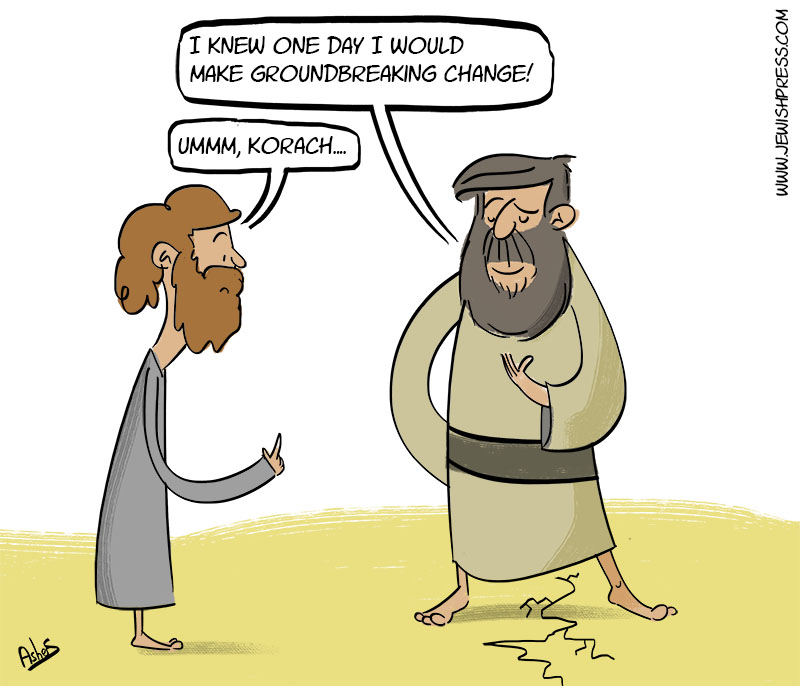
We assume we know as well as our leaders less because they have failed to prove themselves or have shown deficiencies than because of our attachment to seeing ourselves a certain way. And, as was true of Korach and his group, we do so to our detriment.
They considered themselves like grasshoppers, and did not believe they had the zechusim to conquer the land.
This week's parshah teaches us that there is almost no such thing as objectivity. We are all subjective. All of us speak from our own world of values.
Chassidus explains that the spies weren’t afraid they couldn’t defeat the Canaanites. They didn’t wish to enter the Land because they knew they would be forced to become involved in the material world as a result.
The Maharsham adds that only when we acknowledge that we are unable to triumph over the enemy will we be able to be unafraid and will Hashem bring about our salvation.
No seeing anything improper is crucial to retaining one's kedushah.
Never to old to be a Bar Mitzvah.
When encouraging Jews to fulfill mitzvos they didn’t grow up observing, we take into account the difficulties they may experience.
There are two more positive lessons that can be learned. The first is to always second-guess ourselves. The second lesson is that no matter how devastating events may be, we must muster the courage and strength to keep going.
The great mussar giants often said: It is not the hand that has to strike the heart; it is the heart that has to hit the hand.
 September 18, 2026