יום שלישי, י״ב אלול תשפ״וTuesday, August 25, 2026



Follow Us


Each week, a raffle is drawn with 20 lucky winners. Prizes include vouchers for toys and Sefarim.
Remember Hamas missiles on Israeli cities? Remember last year’s bloated deficit? Haredi MKs don’t. Everything was great, they say, until Lapid’s universal draft, which turned Syria against Israel.

In a recent New York Times article, Robert Lipsyte, a sports author, posed the following question: “Boys and Reading: Is There Any Hope?” For years, I have been dealing with this question in my office. In fact, the U.S. Department of Education’s reading tests for the last thirty years show boys scoring worse than girls in every age group, every year.
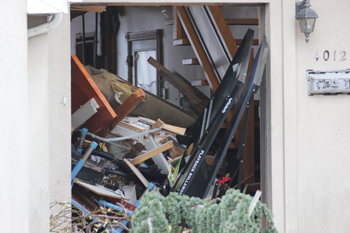
“Sandy gives New York a real thrashing!” screamed the headlines. “Hmmm, who exactly is Sandy and why is she thrashing New York,” I wonder. How about this one: (an exact quote) “For all those left homeless, for all those left scared and frightened, there is an enormous lesson from this hurricane – mother nature will do what she wants, when she wants, and our modern world can only bow before it.” Now I am really confused – who is this mother and why is she acting so mean – aren’t mothers supposed to be nice? And more so – what exactly is this “enormous” lesson? Why should I bow to her?
By Rabbi Yaakov Klass and Rabbi Gershon Tannenbaum
Children And Corpses ‘A Body Lying In The Sun…’ (Shabbos 43b)
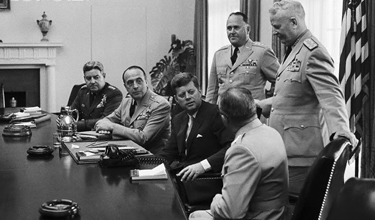
In his book, Thirteen Days (1968), Robert Kennedy publicized the inner workings of the Kennedy White House during the terrible days of the Cuban Missile Crisis. He described how the President’s special advisory group, known as ExComm, debated the options available to defuse the crisis in light of the intelligence presented to them.

When we put away our sukkak and machzorim over a month ago, many of us let out a sigh wishing that these wonderful days of simcha and closeness to Hashem would never end. But in truth Hashem does not want it to be Yom Tov all year long. He wants us to take what we received during those special days and integrate it into our daily life. It sounds nice, but how are we supposed to do that? The answer is through Shabbos! This wonderful day, which comes every week, has the ability to lift us once again to those same spiritual heights and help us recharge our batteries for the coming week.
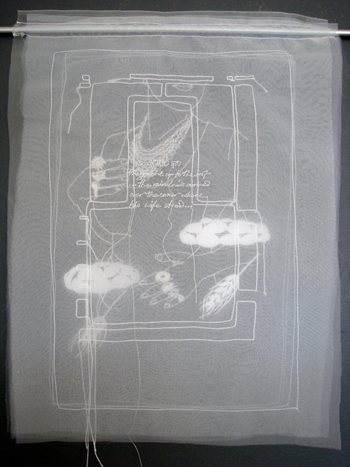
Jacqueline Nicholls, a Jewish artist from England, presents us with a formidable challenge. Namely, what is the role of a contemporary Jewish Woman artist and how does one confront patriarchal dominance? She presents her response to both queries in her current exhibition at the JCC Manhattan, beautifully curated by Tobi Kahn and organized by Tisch Gallery director Megan Whitman. The results are breathtakingly forceful, subtle and insightful.

I rarely take the extended warranty when purchasing new electronics. I figure that this warranty must not be worth much if they feel the need to pressure me into buying it. They must know what I have learned the hard way: there is no such thing as a real guarantee. In my more naive days, I purchased this "peace of mind," as they call it, but never cashed in. Usually, by the time the item broke, I had forgotten about the extended warranty and purchased a replacement.

By dvora
With memories of the Siyum HaShas still fresh in people’s minds, many Jews around the world have been purchasing a Tractate Berachot in order to take part in the 13th cycle of Daf Yomi, the daily study of one daf of Talmud Bavli.

We all know that there are some synagogues that, unfortunately, only reach full capacity several days a year. There is something about these days that arouses even many unaffiliated Jews to attend High Holiday Services. In fact, each one of us also feels the holiness, and it helps us to be on our best behavior. We make sure to come on time to davening and we daven slower than usual. We are extra careful in our observance of halacha and how we treat the members of our family.

The Gaon, Reb Nachum devoted all his time, day and night, to collecting money for charity and helping the poor. The vast majority of the people thought so highly of Reb Nachum that they would deduct a fixed amount of their income every week and give it to him to distribute it to the poor. But there was always the exception, some people just tried to avoid contributing.
The pasuk from which most of the halachos of gittin (divorce) are derived is in this week’s parshah. The pasuk says: “Ki yikach ish isha… vechasav lah sefer kerisus v’nasan b’yadah veshilchah mi’beiso – If a man marries a woman … and he wrote her a bill of divorce and placed it in her hand and sent her from his house” (Devarim 24:1).
In this week’s parshah the Torah discusses the halachos of eidim zomimim. The Gemara in Makkos 2a explains that eidim zomimim is when one set of two or more witnesses testifies against someone, and another set of witnesses testifies that the first set of witnesses was with them and therefore could not have known their testimony. The Torah says that the later set of witnesses is believed and the testimony of the first set of witnesses is disqualified.
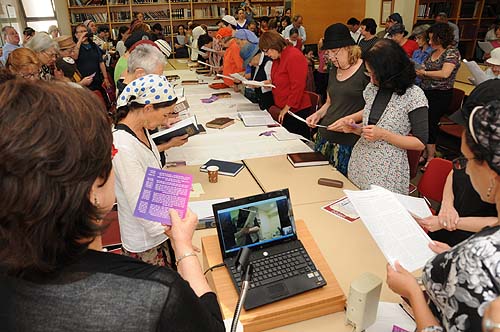
On August 1, the biggest Jewish American event ever took place – the completion of the daily learning of the entire Gemara, which happens once every 7 and a half years, known as Siyum HaShas – filling of 90,000 seats at New Jersey’s MetLife Stadium. However, a significantly smaller, but just as intriguing group celebrated the event in skirts, scarves and a spirit of sisterhood in Jerusalem.
Harav Matisyahu Salomon, the Lakewood Mashgiach, once related the following personal story: “When I was a young man I was a student in the Gateshead Yeshiva. The yeshiva had a 125 students - not large quantitatively, but qualitatively tremendous. The building was fairly small and the tables were so narrow that the volumes of Gemara overlapped each other. If a student wanted to turn the page he had to ask everyone around him to lift their Gemaras first. Yet despite it all we studied with tremendous diligence.
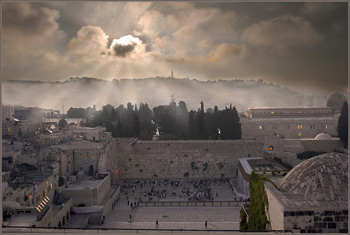
We’ve all seen the ads in the papers. Shabbos Nachamu is one of the biggest getaway weekends of the entire “frum” summer. There has long been a long-standing American tradition for people to go up to the mountains for Shabbos Nachamu.
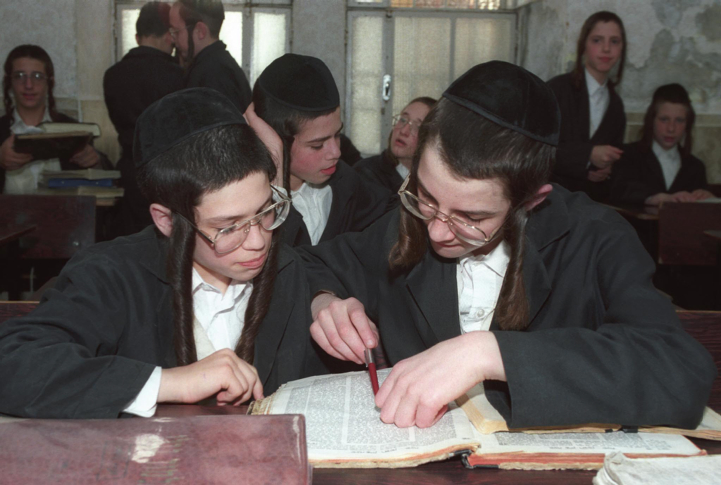
I have always felt that the Daf Yomi would be the leader of that "Ahavat Chinam". In all my experiences attending those various Daf Yomis across the globe, nobody ever asked me what Kashrut I observe, how big my Kippa was or if my wife covers her hair. We were all one nation, one people studying the same page of Gemara. And then it came crashing down.

Question: I was taught that due to our state of mourning on Tisha B’Av, we are not allowed to learn or discuss Torah – a topic that makes us happy and weakens our mournful state. Why, then, are we allowed to read from the Torah at Shacharit and Mincha on Tisha B’Av? Also, does the halacha of not learning apply to a regular mourner as well? Menachem (Via E-Mail)

By Jeremy Rosen
Real progress is being made to generate lab grown meat that tastes as good as the real thing without the fuss -- isn’t this something we Orthodox Jews should welcome?

The beginning of this week’s parshah discusses the halachos of a parah adumah (red heifer). The red cow is shechted and burnt, and its ashes are sprinkled on one who is tamei meis. The individual thereby becomes pure.
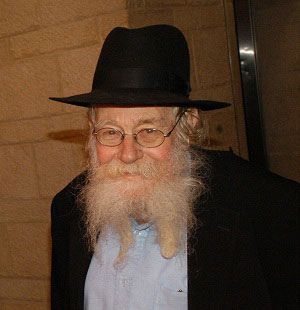
Rabbi Adin Steinsaltz is quite an accomplished personality. The author of over 60 books, Rabbi Steinsaltz has also translated the entire Talmud into Hebrew, a project he started in 1965 at the age of 28 and took 45 years to complete. To date, over two million copies of the Steinsaltz Talmud – in Hebrew, English, French, and Russian – have been sold. No wonder Time magazine once dubbed him a “once-in-a-millennium scholar.”

We often sit through the haftorah without understanding what it is all about. “Why do we read the haftorah anyway?” we sometimes think. Krias HaTorah of the parsha makes sense—we read a portion of the Chumash each week so that over the course of the year we have completed the entire Torah. But what is the goal of reading the haftorah? We know that it is not so we can finish Navi on some kind of schedule. What then is the purpose of the haftorah?

Have you noticed that we seem to have preferential memory for the unpleasant things that happen to us? Try as we might to provide our children with good experiences and positive memories, it is the memories that evoke fear, pain, sadness, etc. seem to be the ones that stand out.
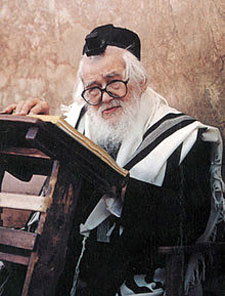
Throughout their forty years in the desert, the Jewish nation had to be prepared to travel at a moment’s notice. At any time the Divine clouds could suddenly rise and proceed further into the desert. As soon as that occurred the entire nation had to immediately dismantle their camps, gather their children and belongings, and begin to travel in perfect formation along with their tribe.

In a famous photo, President John F. Kennedy is seen facing the windows of the Oval Office with his back to the camera. Slightly bent over, with his hands spread out on a credenza, he appears in deep and painful thought. The caption of the picture says it all: “The Loneliest Job.” Only the relatively few people who have been President of the United States truly understand the enormity of the job’s burden. It is for this reason presidents, despite their party affiliation, and often after leaving office, develop close bonds with one another, give the current office holder the benefit of the doubt and make themselves available to whoever may be president at the moment to help and advise.
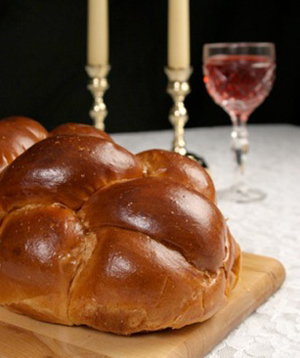
In sixteenth-century Cracow, there lived a Jew named R’ Isserl. He was a scholar, philanthropist, and a well-respected community leader, who made a fine living manufacturing and selling fine silk. Many member of the Polish nobility were his customers.

While things might have seemed very strange in this foreign college environment, especially because I was tossed in without any roadmap to help me navigate and understand the kinds of things I was seeing all around me, there was one area I was not worried about: academics. Northeastern Illinois has a rather derogatory nickname, “Northeasy," and it does not have a very good academic reputation. I didn’t think my classes would be very hard at all.

Is it really possible for any self-respecting New Yorker to love parking tickets? I have seen those orange rectangular pieces of paper become the nemesis of society. As a result, those trying to earn a meager living giving out these tickets have become Public Enemy Number One. We view them as “out to get us,” deliberately attempting to make our lives miserable.

When Rabbi Berel Wein began working for the O.U. kashrus division, he shared an office with Rabbi Alexander Rosenberg a’h, the founder of the kashrus division and its administrator for thirty years.

Author Irving Langer provides his own look at wine-making as well as the nature of the storage barrels used to age wines for taste perfection. He intersperses the book with Jewish historical facts and figures, a few jokes and photographs, and advice on how to pair wines with specific foods.
Question: When we pray, are we requesting or demanding that God fulfill our wishes?

Klal Yisroel stood at Har Sinai and accepted the Torah in a state of supreme purity and complete unity. Every Jew reached a level of prophecy and witnessed an unparalleled revelation of G-d. Then Moshe ascended Har Sinai for forty days so G-d could teach him the laws and details of the Torah.

By Rabbi Shimshon HaKohen Nadel
The word the Gemara uses to get drunk on wine is “l’besumai,” literally - to become fragrant. Not stinking drunk, but rather like the incense in the Holy Temple; a sweet smelling aroma.

Question: Is there any halachic rationale for men to shake hands with women?
By Rabbi Yaakov Klass and Rabbi Gershon Tannenbaum
Permission Granted? ‘Lo Yachlifenu B’Shel Acheirim…’ (Temurah 9)

An index of the Talmud with more than 6,000 topical and 27,000 subtopical entries is a major undertaking and its publication a seminal event in Jewish scholarship.
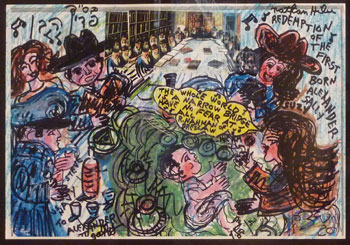
“Man must make the Torah manifest” in every action, speech and creative act. That is clearly the credo of Nathan Hilu, master-artist of the Lower East Side, Torah, Tanach, midrash, Gemara and beyond.
In this week’s parshah (Shemos 6:6) the pasuk reveals the four leshonos of geulah: v’hotzeisi, v’hitzalti, v’ga’alti, and v’lakachti. Rashi, in his commentary to Pesachim 99b, tells us that the four cups of wine that we are commanded to drink on Pesach at the Seder correspond to the four leshonos of geulah mentioned above.

Reb Pinchos, born in Romania, moved shortly after birth with his parents to Vienna. As a teenager, he learned in another city and took his Gemara with him. Pinchos remembered how his rebbe always liked to teach from his Gemara.
 August 21, 2026