יום שלישי, י״ב אלול תשפ״וTuesday, August 25, 2026



Follow Us


By Vera Kessler
Rebbetzin Zeesy is the director of Sinai Academy Jewish International School and Cape Town Torah High School.
By Vera Kessler
Tzirel Liba Greenberg is a singer and composer who has written over 100 original songs!
By Vera Kessler
Are you a single mother, widow or divorcee who dreads shabbos (shabbat)?
By Vera Kessler
Rebbetzin Chaya Sarah Silberberg of the Chabad Torah Center in West Bloomfield, Michigan, shares words of wisdom on elevating shabbos, and making every day holy and special.
By Vera Kessler
Rebbetzin Leah Shemtov, Executive Co-Director of Chabad of Stamford-Jewish Center for Life and Learning opens our eyes to the fact that challah is not just bread--it's SO much more!
By Jewish News Syndicate (JNS)
“There’s a real fraying of society and social connectedness,” says project leader Arielle Levites. “Shabbat dinner, in particular, is often used by Jewish communities as a tool for fostering connection and community.”
The device could be a game-changer in the next step towards reopening shuls on Shabbat.

Four leading candidates for Jerusalem mayor rejected a demand Monday by Health Minister Yaakov Litzman to close the city’s Shuk Mahane Yehuda open air market at night.
By Jason Maoz
His voice had the strength of a pipe organ and the gentleness of a violin, but most of all it had the power to make men weep.
By Rachel Weiss
Those born in Adar are charitable, great listeners and good companions.

Question: This year Tu B’Shevat falls on Shabbat. I recall that you discussed this holiday a while back, but since it falls on Shabbat this year, could you please discuss it again? Do we observe it any differently because it falls on Shabbat? M. Goldman Miami, FL
By Rachel Weiss
The month of Shevat shares its element of air with the months of Sivan and Tishrei. During Sivan, the light of the Torah was revealed to us on Har Sinai.
By Rachel Weiss
Yiras Hashem (fear of Hashem), a lofty objective we continuously strive to achieve, transforms the negative element of Teves into positive, spiritual fulfillment.
By Rachel Weiss
The Jewish nation thankfully emerged from their spiritual slumber just in time...
Displayed here are the few stamps specifically presenting the Shabbat theme.
By Rachel Weiss
Rosh Hashanah on the first of Tishrei comes to assure us that we needn’t despair, for Hashem, our Heavenly Father, is eager to accept our teshuvah and wipe our slate clean.
By Rabbi Dr. Nathan Lopes Cardozo
The Holy Day vs. the Tel Aviv Railway Construction - Can both sides win, or must both sides lose?
By Rachel Weiss
Deep contemplation, loyalty, ambition and intelligence define the traits of one born in Elul, the month symbolized by Virgo, a sign of purity.

When a man mounts a horse, the man may weigh 150 pounds, the horse more than 2,000. Yet the man commands the horse to ride, gallop, turn, and stop.

If a person will not be fasting on Sunday for whatever reason, he should say havdalah on a cup prior to eating.
By Rachel Weiss
He implored the talmid to come up with a way he could return the money without implicating himself.

By Marc Gronich
Goldfeder served five years in the Assembly. He told The Jewish Press, “This is not where I want to be at this time in my life.”
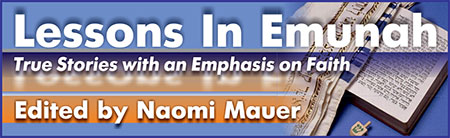
Shabbos is not only the culmination of the week but of creation and a great time to contemplate both-and then nap.
By Ann Goldberg
Apart from that, the Oneg was a great success with inspiring divrei Torah and singing until late.
By Rachel Weiss
The sign of the powerful bull (shor) is symbolic of Iyar (Taurus), while the part of the body representative of the month is the neck.

Ted Cruz is a true Oheiv Yisroel and the kind of unyielding moral warrior we need in the White House.
A federal court on Wednesday will hear arguments that the conditions prevent him from working and force him to violate Jewish law.

Update: The union has called off the strike after reaching an agreement with the Airport Authority.
The Hareidi politicians agreed to not protest the country club after the mayor agreed to move it. So much for agreements.

For our children, technology is not just another activity that is forbidden on Shabbos.
“Freedom is just another word for nothing left to lose” – Janis Joplin.

Chaos - that is how the world is described at its inception in the book of Beraishis (Genesis). Confusion. A lack of clarity and boundaries. Or, as I teach my kindergartners, "a mishmash".

If you ask ten people what the main focus of Chanukah is, nine would probably answer, “lighting the menorah.” While that is certainly an integral part of the chag, the Gemara (Shabbos 21b) tells us, “The next year they established these days as a Yom Tov, l’hodos u’lihalel – to thank and praise.” What an eye opener! There is more to Chanukah than lighting the menorah, playing dreidel and eating latkes? Yes! These are days established primarily to thank and praise Hashem!
By Rabbi Yaakov Klass and Rabbi Gershon Tannenbaum
For Whom The Bell Tolls ‘Royal Children May Go Out With Bells’ (Shabbos 66b)

By Pnina Baim
My oldest daughter loves school. In fact, over the long holiday break, whenever her school was mentioned, she would say in a little sad voice, “I miss my morahs.” I repeated this story gleefully to my friends. Some of them, the ones with older kids, looked at me with a blasé face and said, “don’t […]
By Rabbi Yaakov Klass and Rabbi Gershon Tannenbaum
Children And Corpses ‘A Body Lying In The Sun…’ (Shabbos 43b)

Dear Dr. Yael: I am struggling in my marriage after just five years. I am, by nature, a very outgoing person. I love to go out with friends and have people over for Shabbos meals. My husband, on the other hand, is quieter and would rather be home and stick to our routine. This causes a great deal of friction; between work and the kids, I do not have much of a social life and always want to invite people over or go out with other couples.

By Tzvi Fishman
The emergency bell clanged throughout the valley of the Shoshana kibbutz. Workers who were building the first stone edifice on the settlement put down their chisels and masonry tools. Field hands set aside their scythes and their sickles and started back toward the compound of mud and wood dwellings. Within minutes, all of the settlers sat crowded together on the benches in the dining hall. With great indignation, Ben Zion related how the Arabs had ambushed them at the well and stolen his horse and two rifles. He demanded that a small force be organized immediately and set off in retaliation.

By Ann Goldberg
Yael was tired of sticking the highchair together with glue or Sellotape. It had lasted through five children, a miracle in itself, but now it seemed to have given up all hope – and decided to self-destruct.

My column on prayer last week touched sensitive chords in many hearts. It is apparent that in our troubled times people are struggling with the entire concept of prayer. Does it really work? Is there Someone listening, or is it a waste of time?
By Pnina Baim
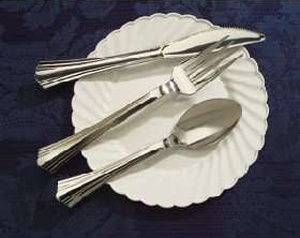
I feel that I am a good authority to write on this topic, because although I love having guests, it completely stresses me out. Something happens to me when we have guests over; I feel this urge to have the table perfect, the food innovative, delicious and abundant and my children buffed and shiny. When things don’t turn out well, it’s not exactly pretty.
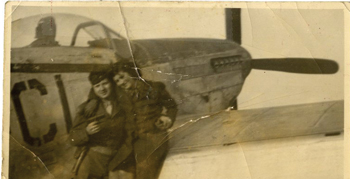
As I approached the home of Irving and Miriam Borenstein in the Mill Basin section of Brooklyn, two things became clear: the pride they feel at being Jewish and their joy at living in America. On their front lawn are large American and Israeli flags with a plaque in front which reads: Never forget the six million murdered in the Holocaust and the three thousand murdered on 9/11. May G-d remember them for the good with the other righteous of the world.
By Rabbi Yaakov Klass and Rabbi Gershon Tannenbaum
Crystal Clear As The Waters ‘Speak In The Manner Of One’s Teacher’ (Shabbos 15a)
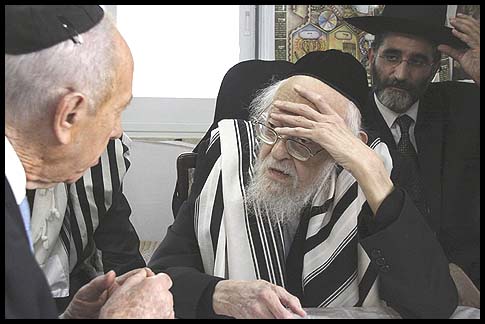
One of the biggest issues that has arisen as a result of the Slifkin controversy is the question of whether Chazal, the sages of the Talmud knew the actuality of nature. There are those who say that they did. They say that every statement recorded in the Gemarah with respect to science is an accurate reflection of nature itself. The science redacted in the Talmud is as valid as the Halacha - both being Mesorah.
By Rabbi Yaakov Klass and Rabbi Gershon Tannenbaum
Where Beis Shammai And Beis Hillel Agree ‘One Must Not Sit Before A Barber Near Minchah’ (Shabbos 9b)
By Rabbi Yaakov Klass and Rabbi Gershon Tannenbaum
Lulav, Shofar, Bris “His Hand Is Not At Rest” (Shabbos 3a)
In my most recent column I wrote about ways of improving family relationships, and raising children who have derech eretz and respect for their parents. I will continue on that same theme here.

Dear Brocha, I am married for 5 years and am unsure how to proceed with my husband and his behavior. Our religion incorporates alcohol throughout the year and during life cycle events. Purim, Pesach, bar mitzvahs, weddings and every Shabbos kiddush (not to mention the kiddush club) all seemingly require alcohol as an integral and necessary ingredient. For my husband, it seems like there is always a “good reason” to make a l'chayim.
If you would like to know if your marriage is relationship centered or not, the way to find out is to ask yourself about your core values. For example, what is the most important principle of your marriage? Is it your desire for money or pleasure? Do you dream about being comfortable, being honored by your spouse and having a lot of fun?
By Rabbi Yaakov Klass and Rabbi Gershon Tannenbaum
The Lady Of The House ‘One Blesses First On The Wine…’ (Berachos 51)
Question: The Kitzur Shulchan Aruch states that an individual praying selichot without a minyan is not allowed to recite the Thirteen Midot or the Aramaic prayers. What is the rationale behind this halacha? Moshe Jakobowitz Brooklyn, NY

By Tzvi Fishman
Strangely, the person who seemed most affected by Tzeitl's death was Goliath. Upon hearing the news, he surrounded himself with an impenetrable wall. He even found it hard to play with the children. Shmuelik said the body had to remain wrapped in a sheet on the floor of Hodel's house until the Sabbath was over. […]
By Tzvi Fishman
"What are we going to eat?" Shmuelik asked Tevye as they changed into their Sabbath clothing. Tevye did not understand the question. "What do you mean?" he asked. Before Shmuelik could answer, Hillel spoke up in a bard's satirical manner. "He means that though you may be overjoyed to be reunited with your daughter, the […]
By Tzvi Fishman
It was impossible to tell which thought gave Tevye more happiness. The thought of stepping foot in Jerusalem, or the thought of seeing his Hodel again. True, Hodel was his own flesh and blood. She was like a little piece of his Golda.

Dear Dr. Respler: Having enjoyed your column, The Benefits of Countermoves (Dear Dr. Yael, 8-17), I am now seeking your suggestions regarding my problem in this area. My husband practices the “silent treatment,” whereby if I tell him something not to his liking or if I do something that does not meet his approval (these acts are not meant to hurt him) he can stop talking to me for hours or even for one or two days. After awhile, he returns to his normal behavior and we never discuss the issue again.

The name of the Gaon, Rav Yitzchok Elchonon Spektor, was known to Jewry throughout the world. He was also well know to Russian royalty, having visited the Czar many times to plead for his fellow religionists.
How the Sages of the Talmud used to honor Shabbos! Each day of the week was only an introduction to the coming Shabbos and everything was done with an eye towards Shabbos.

I just finished trying on all my pre-nine day clothes. You know the drill: Wash your clothing but leave enough time to parade around in what will be worn for the next nine days. This way, it will not be freshly laundered. What amazes me is that each year I am sure it will be a very easy activity, since I have nothing to wear! Yet, somehow I find it very time-consuming.
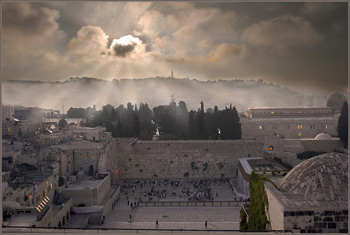
We’ve all seen the ads in the papers. Shabbos Nachamu is one of the biggest getaway weekends of the entire “frum” summer. There has long been a long-standing American tradition for people to go up to the mountains for Shabbos Nachamu.
One may not perform several actions during the week in which Tisha B’Av falls. This is referred to as shavua she’chal bo. For example, one may not take a haircut or wash his clothing (Ashkenazi Jews are forbidden in these actions prior to the week of Tisha B’Av in accordance with the ruling of the Ramah). The Mechaber (Shulchan Aruch Orach Chaim 551: 4) writes that in a year when Tisha B’Av falls on Shabbos and is pushed off to Sunday (as it does this year) there is a machlokes as to whether there are any prohibitions during the week before Tisha B’Av. The Mechaber seemingly sides with the view that there are no halachos of shavua she’chal bo in such circumstances.

By Henia
I’d like to believe that I at least have average intelligence. And when in need of inspiration or to learn something to facilitate my personal growth, I gain much from adult tapes and books. I’m greatly inspired by the words of the plethora of writers and speakers who target their words to adult audiences; their sentence structure and vocabulary meant only for us grownups. Their valuable lessons are often arrived at through a series of logical steps any adult with reasonable intelligence should be able to follow. And follow I do.
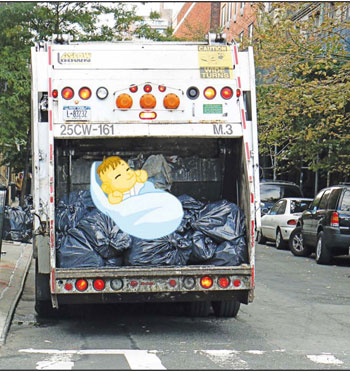
Welcome once again to “You’re Asking Me?” where we answer any and all questions sent in by readers. It’s a lot like all the other “ask the expert” columns, except that, whereas the other experts are interested in giving you a well-researched answer, our interest is more in meeting our deadlines so we can get back to looking for our car keys. Most of the time, we tackle advice questions, but once in a while we have to take a break from those, because of the lawsuits.
The Gemara in Baba Basra 119b relays the following conversation that took place in this week’s parshah: Moshe Rabbeinu was teaching the halachos of yibum when the daughters of Tzelaphchad approached him with the following question: Our father died in the midbar and did not have any sons. Why then is our mother not required to fulfill the obligation of yibum? And if the fact that he had daughters is the reason that she is not obligated to fulfill this requirement, why then can we (his daughters) not receive an inheritance – just like sons would?

Earlier this year I was presenting my survey of Jewish art, “A Jewish Art Primer,” in a West Hartford, Connecticut synagogue and during the intermission a local artist, David Holzman, introduced himself to me. He relayed his rich and fascinating artistic background and then produced a portfolio of 8 black and white prints that he generously gave to me as a gift. As a tantalizing glimpse into recent work, they are truly amazing and I would like to share them with you.

We often sit through the haftorah wondering, “Why do we read the haftorah anyway?” Krias HaTorah of the parsha makes sense—we read a portion of the Chumash each week so that we finish the entire Torah over the course of the year. But we’re not reading a portion of Navi each week so that we can finish all of it on some kind of schedule.
By Rabbi Yaakov Klass and Rabbi Gershon Tannenbaum
Rebirth Of Sorts ‘Immersing Contaminated, Emerging Pure’ (Niddah 42a)
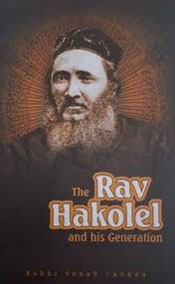
In the 1880s, a substantial immigration of Jews poured into New York from all parts of Europe, Russia, and Galicia. They were eager to escape the hard life of poverty and lack of peace back home, but the reality in America was not as they had expected it to be. It was hard to find work; it was a struggle for mere existence.
Raised in a secular family, she followed the usual pattern of the last couple of generations, placing marriage on the back burner in favor of relationships.
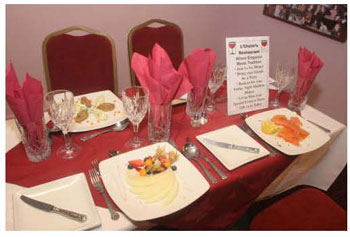
If you are seeking a new place to visit this summer with all kosher amenities at your disposal, why not visit Scotland? Glasgow has a full range of Jewish facilities to cater for tourists and business people alike. Including daily minyanim, a mikveh for men and women, and kosher food. Edinburgh has a mikveh for ladies, minyanim only a few times during the week.
At the conclusion of this week’s parshah, the Torah writes about the mekoshesh eitzim – the individual who desecrated Shabbos in the midbar by gathering wood. The pasuk says that since it was uncertain what the halacha was concerning one who is mechallel Shabbos, the mekoshesh was placed in custody until Hashem gave instructions as to what to do. Hashem then told Moshe Rabbeinu that the man is to be put to death by stoning; and so he was.
By Rabbi Yaakov Klass and Rabbi Gershon Tannenbaum
A Shabbos Treat ‘Snow Is Neither Food Nor Drink’ (Niddah 17a)
During the past several weeks I have shared many of my own personal experiences and those of others. I am referring not only to my recent hospitalization following the breaking of a hip, but also to my series of articles on hashgachah pratis – events that befall us that can easily be attributed to random happenings but upon closer scrutiny and honest introspection testify to the ever-guiding Hand and mercy of Hashem.
By Tirtza S.
“I think I’m going to stay alone for Yom Tov,” I said, shivering with the frightening finality of the words. The rav sprung into action. He pulled open the fridge and pulled out a small tin of sliced gefilte fish. He pulled open the freezer and pulled out a pan of roasted chicken.

We often sit through the haftorah without understanding what it is all about. “Why do we read the haftorah anyway?” we sometimes think. Krias HaTorah of the parsha makes sense—we read a portion of the Chumash each week so that over the course of the year we have completed the entire Torah. But what is the goal of reading the haftorah? We know that it is not so we can finish Navi on some kind of schedule. What then is the purpose of the haftorah?

Have you noticed that we seem to have preferential memory for the unpleasant things that happen to us? Try as we might to provide our children with good experiences and positive memories, it is the memories that evoke fear, pain, sadness, etc. seem to be the ones that stand out.
Question: Whenever a yom tov starts on Sunday (like this year), synagogues generally forego their Seudah Shlishit, eaten after Minchah on Shabbat. But why? If one is supposed to eat a third meal every Shabbos, why skip it if a yom tov starts that night?
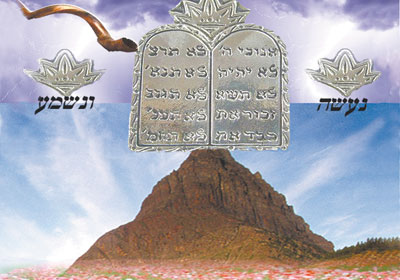
By Rachel Weiss
Shavuos. How unremarkable a name for a Yom Tov that celebrates the very foundation of our existence. Actually, Shavuos is one of five names designated for this holiday, the others being Atzeres, Yom HaBikurim, Chag HaKatzir and Z’man Mattan Toraseinu.
By dvora
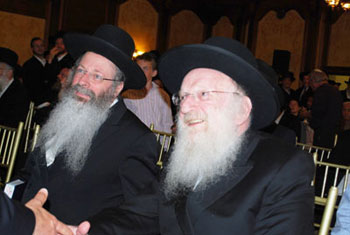
The Lakewood roshei hayeshiva, Rav Malkiel Kotler and Rav Yisroel Neuman spent Shabbos Parshiyos Tazria-Metzora (April 28) with the two largest Jewish communities of Los Angeles – Rav Kotler in Los Angeles-Hancock Park, and Rav Neuman in Pico-Robertson/Beverly Hills.
Lag B’Omer is the yahrzeit (anniversary of the death) of Rabi Shimon bar Yochai. Thousands visit his grave in Meron to pay homage to this tzaddik and leader in Israel.
In sixteenth-century Cracow, there lived a Jew named R’ Isserl. He was a scholar, philanthropist, and a well-respected community leader, who made a fine living manufacturing and selling fine silk. Many member of the Polish nobility were his customers.

About a month ago, we began the Passover Seder by asking “the four questions,” which led to a narrative explaining how the Jewish people were freed from Egypt. We are now in the midst of a forty-nine day process of spiritual growth in which we prepare ourselves to receive the Torah.
Question: I find it very difficult to understand the punishment of death that was meted out to Rabbi Akiba’s students. If he was so great, we can assume that his students were of a superior caliber as well. If so, why did they deserve such a harsh punishment? Zelig Aronson Queens, NY
In February, Chessed Yad L’Yad, Kiryat Mattersdorf’s local chesed organization, celebrated forty years of active involvement in the community. Beged Yad L’Yad, the Hand-Me-Down Pass-Me-On clothing gemach, was a natural subsidiary, especially with dozens of Anglo-Saxon families receiving clothing packages from abroad.

The book Here Comes Shabbos! is about a family baking, cooking, polishing silver, shining shoes, shopping and cleaning for Shabbos. The activities begin on Friday morning and only conclude shortly before lighting the Shabbos candles. During that time span, it covers everything you need to do in order to get ready for Shabbos.
The Gemara in Pesachim 115a says that there was a machlokes regarding how one was supposed to eat matzah and marror in the times of the Beis HaMikdash. Hillel said that during those times, when there was a korban Pesach, matzah and marror should be eaten together. His peers argued that they must be eaten separately. The Gemara concludes that since the halacha was not paskened we eat matzah separately, then marror separately, and then both together to accommodate both opinions.

By dvora
Armed with a clever name, an award-winning chef, and a remarkable menu, Meat Me is poised to take the world of Kosher cuisine by storm.
 August 21, 2026