יום חמישי, י״ג תשרי תשפ״זThursday, September 24, 2026



Follow Us


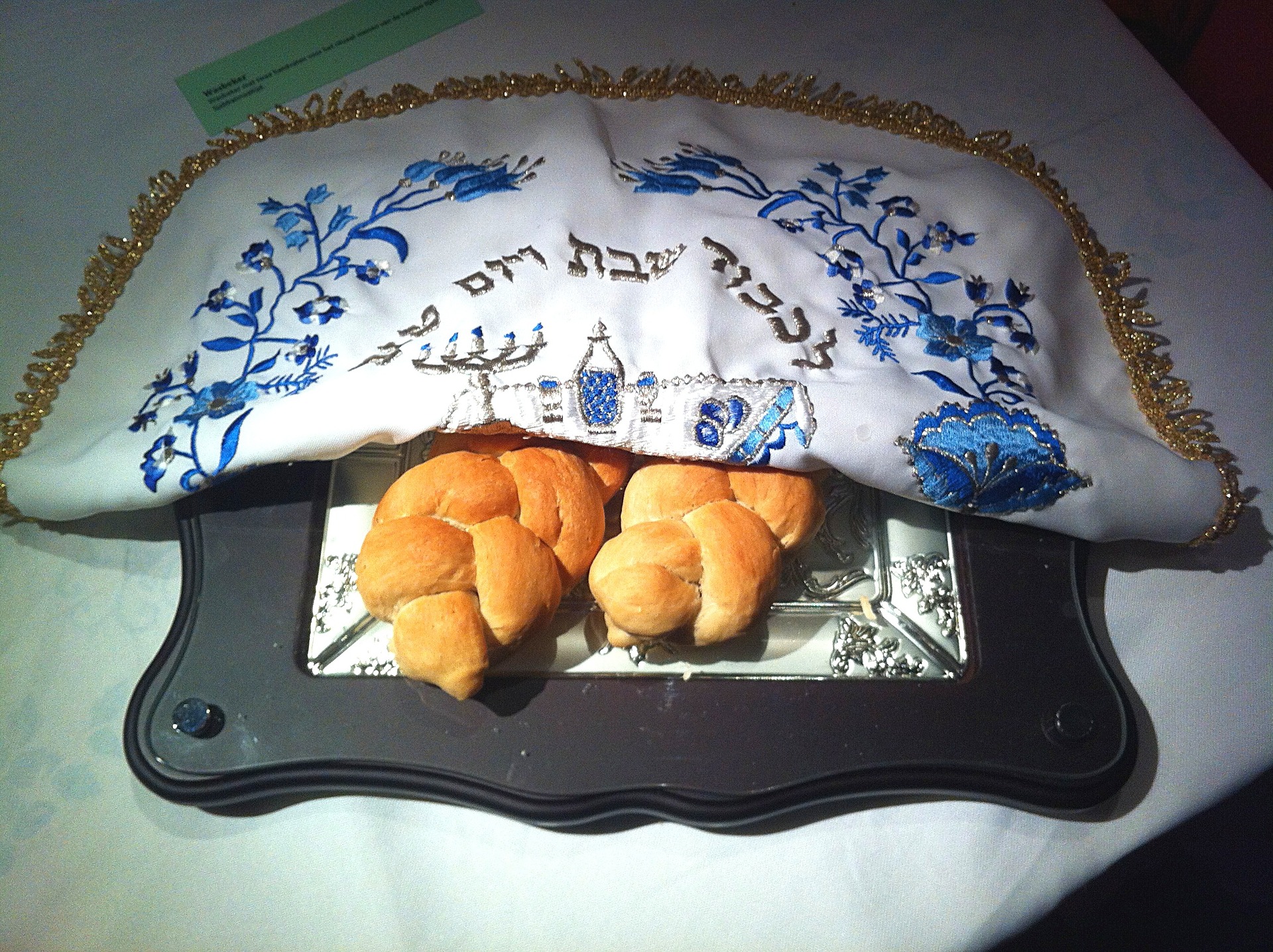
Jameel discusses the origins of the minhag of Shlissel Challah.
Certain activities – such as building, tying, weaving, writing, dyeing and sewing – are not prohibited on Shabbat unless they are made to last. For example, one may tie a knot that is not tied in a professional manner and will be untied within seven days, such as shoelaces or the ribbon around the Torah scroll, on Shabbat afternoon. So too a safety pin may be used on Shabbat since it is not a form of permanent sewing.

By Tzvi Fishman
Emunah, the very heart of the Torah, teaches us what God and the Nation of Israel are all about.
By Tzvi Fishman
While my writing may be blunt and painful to some, I don’t blame the Jews in the Diaspora for their misunderstanding of what the Torah is really all about.
By Tzvi Fishman
Pure Judaism? Without the Land of Israel? Sorry, but that isn’t Judaism. It’s a new religion.

By Irene Klass
A rose that I picked from our garden to enhance the beauty of our sukkah is so exquisite that visitors remarked that they didn’t realize it was “real” until they noticed the water in the vase.
By Tzvi Fishman
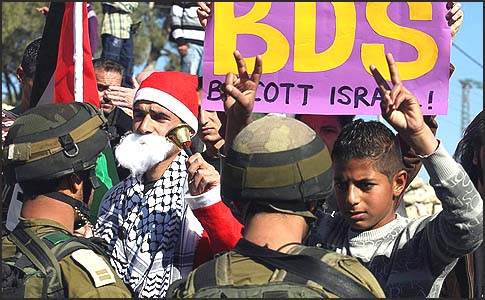
Just so the jolly little elves and white-bearded Santas don’t fool you, it pays to recall the truth about Christianity.
In times of trouble like these, it behooves us to remember a phrase made popular in song after the attack in Pearl Harbor during World War II. A phrase that speaks to Hishtadlus: Praise the Lord and pass the ammunition.
By Tzvi Fishman
So know that I am with you. So is your mother. The whole Shabbat, she waited for the moment she could turn on the radio to learn what was happening.

Our forefathers were giants when it came to having faith and a belief that G-d would take care of them. Nothing worried them save that they wasted time not studying our holy Torah. They relied on G-d to take care of their needs.
The juxtaposition in the Torah of the laws of Shabbat and the Mishkan, the Sanctuary, not only serves to identify the 39 melachot prohibited on Shabbat but also determines the conditions that must exist before one can be held liable for performing a melachah. One of these conditions is intent.
By Rabbi Lord Jonathan Sacks z"l
Rebecca, hitherto infertile, became pregnant. Suffering acute pain, she went to inquire of the Lord – “vateilech lidrosh et Hashem” (Bereishit 25:22). The explanation she received was that she was carrying twins who were contending in her womb. They were destined to do so long into the future.
By Tzvi Fishman
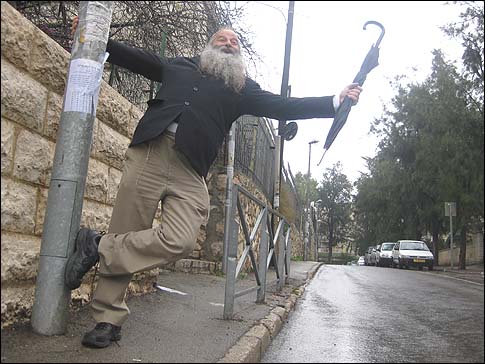
Before Shabbat, the Heavens opened with a symphony of thunder and lightning, and the great blessing of rain washed over the Land of Israel in answer to our prayers. Like I do every year with the very first rain, I hurried outside and danced in joy, laughing happily as the raindrops splashed on my face.

ne Shot, authored by M. Wiseman, is an emotional drama that focuses on issues faced by some teens nowadays. In Suburbia, U.S.A., lived three extraordinary young men, Baruch, Nadav and Rafi. Nadav and Rafi have been friends forever, and Baruch joins the crew in his later teens. Pain is the bond that brings the threesome together. Baruch and Nadav have emotional pain and Rafi suffers from a physical pain; he discovered that he had advanced-stage cancer. The cancer was serious – too serious for the doctors, so they eventually stopped treating him.
By Rhona Lewis
Children should be seen and not heard. It was a maxim that I heard many times throughout my childhood and which caused me a fair amount of frustration. When, I often wondered, would I cross that invisible line and move out of the periphery to which I was assigned, into the arena of adulthood and be given the chance to express an opinion that people would listen to?

By Tzvi Fishman
Two Torah scholars were sent from Israel to Babylon. Upon their arrival, they took part in official ceremonies and didn’t reveal the purpose of their visit. They were received with great honor. Gradually, they started to vent their opposition. Finally, they entered a crowded assembly and said to the Jews of Babylon, “Behold, you are a great congregation. You can be independent. You don’t need Eretz Yisrael. You don’t need Mount Moriah.” Their sarcasm was purposely stinging in order to shock the Babylonian Jews. “And you’ve also got Rabbi Ahia here. Let Ahia build an altar, and let Haninah play on a harp. But know that if you detach yourselves from the centrality of Eretz Yisrael, you have no portion in the God of Israel!”

The new Jewish year is still young. The new Parshas HaShavua cycle is but a few weeks old. It is indeed time for new beginnings.
Question: I am a single mother of young children. Their father has shirked all his responsibilities to them. I do my best for my children, but it isn’t easy. Isn’t their father in serious violation of the Torah by neglecting his children and not making any effort to provide them an education? No Name Please (Via E-Mail)
By Tzvi Fishman
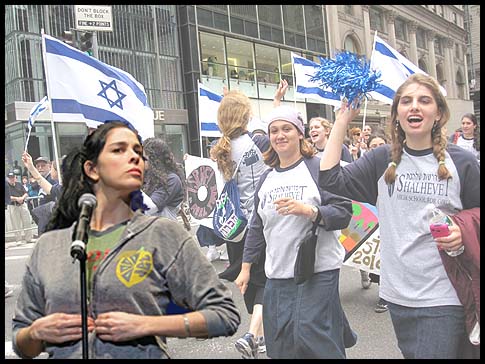
To be perfectly honest, until yesterday, I had never heard of Sarah Silverman. I never saw a photo or a video of her; I never heard her jokes, nothing. While a great deal of junk American culture seeps into the Land of Israel, still we are sheltered from much of it, thank G-d, and I never heard her name mentioned in Israel at all. Until yesterday, when to my surprise and chagrin, I saw the immodest photo of her on the homepage of The Jewish Press, in her sleeveless top and her butt sticking into the air. Gevalt! Reading on about the silly fuss, I was further chagrined
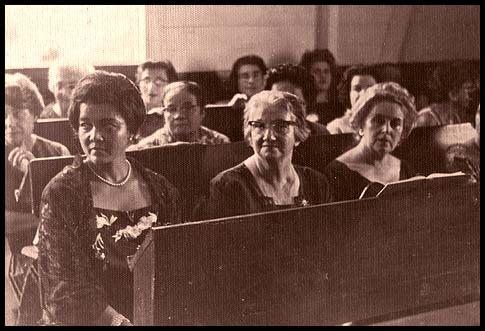
I do not question Rabbi Zev Farber’s sincerity. I even applaud his resolve to right what he sees to be wrong in the way we practice Judaism today. But I do not agree with him at all on the way to do it. In a recent article on Morethodoxy, Rabbi Farber suggests that we change the paradigm with respect to a woman’s role in Judaism. His contention is that women are (at best) inadvertently ignored and mistreated vis-à-vis their public religious personae. Their current place in the synagogue is where this is mostly felt.
By Tzvi Fishman
Almost everyone is familiar with the famous first Rashi on the Torah. He asks why does the Torah begin with the account of Creation? After all, since the Torah contains the commandments which Hashem gave to Am Yisrael, it should have begun the precept concerning Rosh Chodesh - the first commandment given to the Israelite Nation.
By Tzvi Fishman
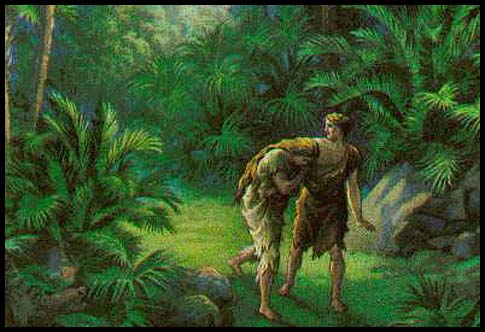
If Eve had read www.jewishsexuality.com, she wouldn’t have followed after her eyes and got us all kicked out of the garden. If Adam had read jewishsexuality.com, he wouldn’t have eaten the “apple.” Today, we don’t have to make the same mistakes they did. We have the teachings of the Torah and the advice of the Sages to rely upon. While I won’t quote from the holy Zohar here, for people who enjoy the secrets of Torah, there’s a lot more to the snake than his pretty long tail.

One of the most informative books I have ever read on the subject of early 20th century American Jewry was Rabbi Aaron Rakeffet’s biography of Bernard Revel, the 1st President of Yeshiva University. The picture painted of American Jewry in the Revel bio matches that of Rabbi Rakeffet’s own autobiographical account of growing up in pre-war era New York. To put it simply - Orthodox Judaism as we know it today did not exist.
“Isn’t it ironic that kids whose parents fail to set and enforce limits feel unloved and angry? Although they tend to test and protest, we have learned over and over again that limits are what kids really want. Invariably, when we talk with out-of-control teenagers or adults who were juvenile delinquents and lucky enough to survive, we ask them, ‘If you could go back to when you were a child, what would you change?’ Most of them say something like, ‘I wish my parents had reeled me in when I was a kid. Why didn’t they make me behave?’
By Paula Stern
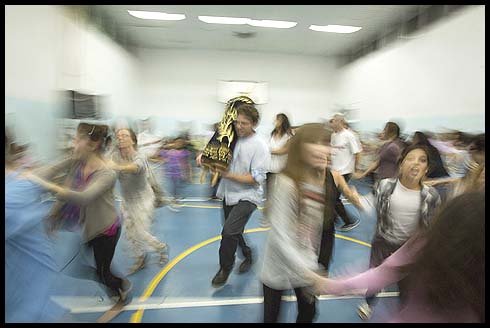
As the men danced around below us, I had a lot of time to notice the people who were there - many are friends and neighbors of mine; children and grandchildren of people I know. The rabbi that is so loved in this community; a woman who regularly collects food for needy people. This one has a child who is ill; a boy with Down Syndrome who is so loved and cherished. This family has more boys than I can count; this one just had a daughter who got married. She's a grandmother now. Her son just got engaged. That one there is married to her over there. And on and on - a community of people.
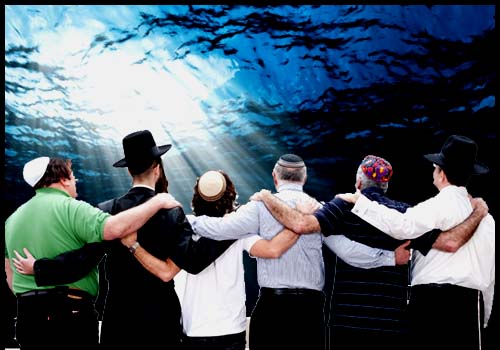
It doesn’t matter to what segment of Orthodox Jewry one belongs. All segments celebrate this day with the same exuberance. It is truly the Torah which unites us all, right to left.
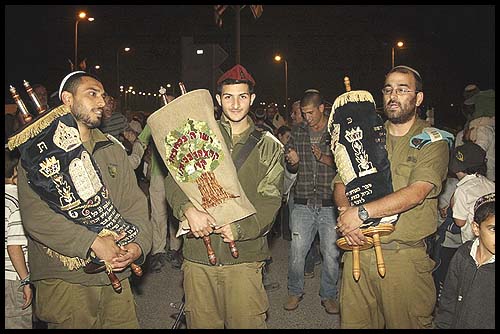
On Simchat Torah we celebrate having successfully read the entire Torah over the space of a year.
By Tzvi Fishman
During the reign of King Solomon, the Nation of Israel was at its prime. We lived in peace in our own homeland. A Jewish government ruled over the country from the majestic city of Jerusalem. All of the people gathered for the Festivals at the Temple three times a year. Jewish law went forth from the Sanhedrin. Prophets communicated the word of the Lord to the Nation and the world. A powerful Jewish army guarded the country’s borders. Torah was studied in great academies of learning. Hebrew was spoken on the street. The leaders of foreign nations flocked to Jerusalem to pay tribute to the Jews.
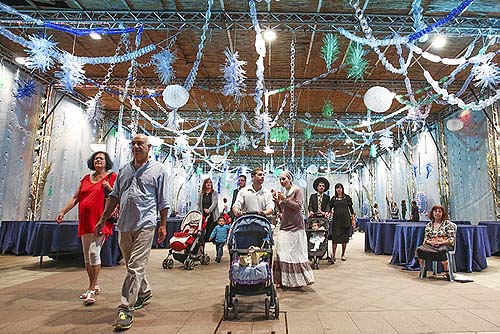
The U.S. covenant with the Jewish State dates back to Columbus Day, which is celebrated around Sukkot (October 8). According to "Columbus Then and Now" (Miles Davidson, 1997, p. 268), Columbus arrived in America on Friday afternoon, October 12, 1492, the 21st day of the Jewish month of Tishrey, the Jewish year 5235, the 7th day of Sukkot, Hoshaa'na' Rabbah, which is a day of universal deliverance and miracles. Hosha (הושע) is the Hebrew word for “deliverance” and Na’ (נא) is the Hebrew word for "please." The numerical value of Na’ is 51, which corresponds to the celebration of Hoshaa'na' Rabbah on the 51st day following Moses' ascension to Mt. Sinai.

In my most recent column I wrote about ways of improving family relationships, and raising children who have derech eretz and respect for their parents. I will continue on that same theme here.

By Tzvi Fishman
Rabbi Kook’s advice is to set out correcting the transgressions of the past which are within the person’s reach to correct. This will set into motion a snowball of t’shuva whose inner force will lead him to correct matters more and more difficult, until he succeeds in redressing all wrongs.
By Tzvi Fishman
The more you learn Torah, the more t’shuva you will be inspired to do — and the more t’shuva you do, the more Torah you are able to learn.

There is a machlokes between the Mechaber and the Rema concerning the berachos recited on the Yom Kippur haftarah by Minchah. The Mechaber says (Shulchan Aruch, Orach Chaim 622:2) that we take the Torah out and read the parshah of arayos and then read Maftir Yonah. He says that we recite the berachos of the haftarah before and after the haftarah. If Yom Kippur falls out on Shabbos, we mention Shabbos in the berachos. The Rema argues that we do not recite the berachah of “al haTorah v’al ha’avodah” by Minchah.
We live in an age of conveniences – and dangers. Our affluence presents dangers to our quest for spiritual perfection, which the Torah cautions against and which Rabbi Avigdor Miller elaborates on in Parshas Vayelech.

Charedi schools like Darkei Sarah now realize that the Charedi family can no longer survive on the kinds of menial jobs women can get without a decent education.

But it is even more foolish in my view to not teach the science in the first place. Ignorance is our worst enemy. Because the minute one finds a contradiction to the insistence that only the most literal interpretation of the Torah is acceptable, believers can and often will sadly go the way or Mrs. Brown.
The Gemarah in Kiddushin (82a) indicates that homosexuality is not something that Jews have to deal with because “Jews are not suspect to be homosexual”. In fact the Rambam (Issurei Biah 22:2) uses this Gemarah as a basis for a Halachik ruling. So, how do we understand this Gemara and Rambam in the light of the many people who present to therapy struggling with this issue?
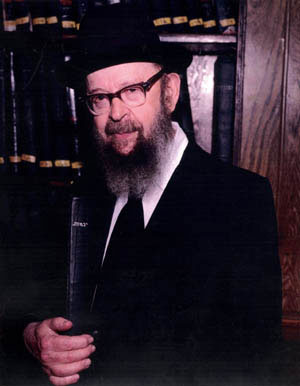
Many passages in the Torah appear at first glance to be repetitious. Often, each iteration has a unique and deep message. Rabbi Avigdor Miller, zt”l, finds such a case (in the passage of the Blessings and Curses) in the Torah's instruction to keep Hashem’s commandments and walk in His ways. Also in the passage of the Blessings and Curses, Rabbi Miller highlights the great blessing of a long life.

By Tzvi Fishman
Today, the “evil thing” in our communities and homes is the onslaught of immodest websites and images on the Internet.
By Rabbi Lord Jonathan Sacks z"l
It would be reasonable to assume that a language that contains the verb “to command” must also contain the verb “to obey.” The one implies the other, just as the concept of a question implies the possibility of an answer. We would, however, be wrong. There are 613 commandments in the Torah, but there is no word in biblical Hebrew that means “to obey.” When Hebrew was revived as a language of everyday speech in the nineteenth century, a word, letsayet, had to be borrowed from Aramaic. Until then there was no Hebrew word for “to obey.”

Some might call this Emunah Peshuta – simple belief. Perhaps. But it is not blind belief. I am not a blind believer. However, I can understand why someone would call my belief in the truth of Judaism blind.
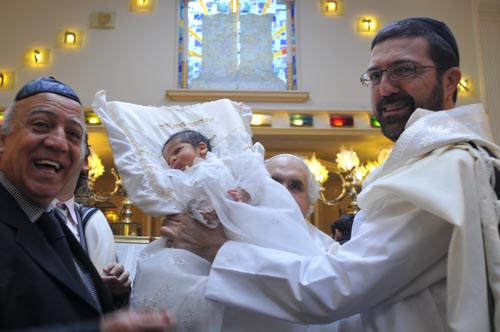
When it comes to Metzitza B’Peh, we are not discussing a Biblical Commandment, nor are we referring to a Rabbinical enactment from the Gemarah's time. We are referring to a hallowed Minhag from days of yore to use the mouth only.
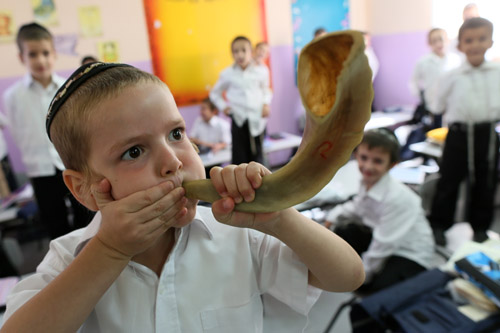
As the year is coming to an end, with endless days filled with doing the very same commandments, we besiege G-d on each remaining day, asking for one vital ingredient for the one yet to come: May we never get used to our routine.

The Talmud asserts that the rebellious son of the verse below never existed and never will. Nonetheless, the Torah relates this law to advise parents in the most difficult of issues – raising children. To Rabbi Avigdor Miller, zt”l, the law and its lessons help reveal Israel's greatness.

By Tzvi Fishman
The expulsion of Adam and Eve from the Garden of Eden describes man’s existential plight. In effect, the sum of world history is mankind’s journey to return to the Garden. Not only man, but the world itself wants to return to its original state. This yearning is one of the most powerful forces of Creation. Thus the world “roars like a mighty lioness” to return to its original, ideal closeness to God.
In this week’s parshah the Torah discusses the halachos of eidim zomimim. The Gemara in Makkos 2a explains that eidim zomimim is when one set of two or more witnesses testifies against someone, and another set of witnesses testifies that the first set of witnesses was with them and therefore could not have known their testimony. The Torah says that the later set of witnesses is believed and the testimony of the first set of witnesses is disqualified.
By JTA
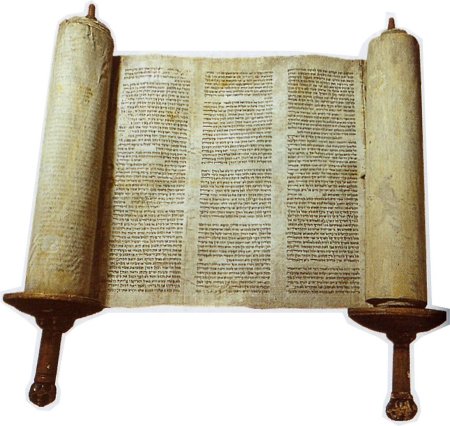
Two Torah scrolls, one complete and one incomplete, were found in Poland's Sokolow Podlaski district. The Torah scrolls found Aug. 20 are believed to have belonged to a synagogue in nearby Wegrow. A local policeman brought the scrolls to the municipal offices in Sokolow and gave them to Marcin Pasik, Sokolow Commune Head. "The policeman […]
By Tibbi Singer
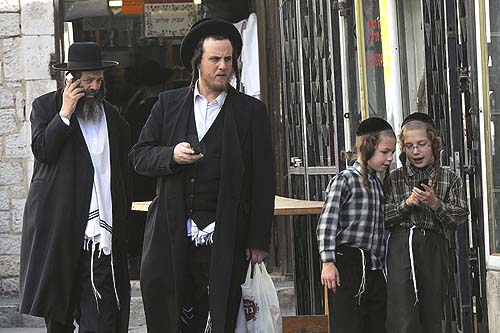
We have grown accustomed to these letters being directed at Haredi women. Now, surprisingly, this letter is addressed specifically to the men.

By Tzvi Fishman
"No Jew is an atheist," Rabbi Kook answered. "No matter how confused our young people are with foreign ideas and creeds, the Jewish soul is always pure. Sometimes our eyes are blind and our ears are deaf, but our inner souls long for our God and our Torah. We carry the flame of our heritage eternally within our hearts. Nothing can extinguish it, not even two-thousand years of darkness and exile.

As currently defined, an Orthoprax Jew tends to follow Halacha, but may question the existence of God or whether the Torah was given to us at Sinai .
With all the well-earned accolades and fanfare that surrounded last week’s monumental Siyum HaShas, one would expect to find numerous direct references in the Torah mandating the study of Torah. It therefore comes as a great surprise that there is not one direct statement in the Torah commanding its study.

By Tzvi Fishman
In our previous blog, we mentioned that Moshe Rabainu offered 515 prayers to Hashem, at the beginning of this week’s Torah portion, begging Hashem to let him enter the Land of Israel. Some people have trouble making up prayers if it isn’t written out for them in a siddur. So here’s a prayer I wrote for coming to the Land of Israel. Print it out and say it every day for the next 515 days. If it doesn’t work, crumple up the page, send it to me, and I’ll eat it.
We all sin. But not all of us sin the same way. By being so repulsed by people who have same sex attractions, we end up turning these people away - leaving them with a feeling of abandonment and being hated by their fellow Jews. Jews who are otherwise decent people. When decent society rejects you... how are you supposed to feel?!
The Jewish Press joins Klal Yisrael in mourning the death last week of HaRav Yosef Sholom Elyashiv, widely recognized as the Torah world’s foremost authority on Jewish law for nearly three decades – a scholar who set the tone and direction for resolving its most complex issues and who in many ways defined an era.
By Tzvi Fishman
Rabbi Kook explains that a weakening of the will is due in large measure to a lack of physical energy and strength. When a person’s willpower is weak, he can fall into many bad habits. As part of his overall mending, he must improve his physical health, as well as his moral and spiritual worlds.
By Tzvi Fishman
The roots for the Destruction of the Temple and Jerusalem were planted long before the Destruction itself, on the night the Spies in the Wilderness returned from their ill-fated mission and convinced the Jewish People not to journey on to live in the Promised Land. That night was the 9th of Av. Their rejection of the Land of Israel was the rotten foundation which brought about our later National Destruction as an independent Nation in our own Land.

In the confrontation between Israel and Midian, the Torah reveals the great void of virtue that separated the two nations. While Israel had fallen to great depths in the challenge of the Peor, Rabbi Avigdor Miller, zt”l, points out that it had risen again to great heights in the ensuing battle against a nation steeped in immorality.

By Tzvi Fishman
The Rambam himself, in his famous, “Letter of Teman,” writes: “Those who seduce themselves and say that they will stay in their places until the king, Mashiach, comes to the lands of the West, and only then will they depart and go forth to Jerusalem – I don’t know how the decree of destruction will be stayed from them. Rather, they are transgressors, and they cause others to sin."
By Tzvi Fishman
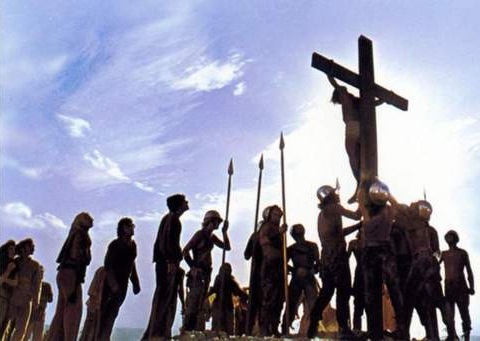
The task of the Mashiach is to save the Jews from its enemies and rebuild the Nation of Israel, yet the followers of Jezeus have slaughtered millions and millions of Jews and done everything in their power to keep Israel lowly and weak.
By Zev Kraut
Since the moment God gave the Torah to the Jewish people, keeping kosher has been an essential part of the Jewish home. Accordingly, the home is an essential part of a Torah lifestyle. What goes on in the home directly affects what goes on in the rest of one’s life. The question is, why kosher?

By Tzvi Fishman
Yesterday, in what smacks of a Middle Age witch hunt and blood libel, I was ridiculed and attacked by two supposedly liberal Jewish bloggers. This is all the more interesting since their attack on me falls on the 4th of July, which for them is a cherished holy day, honoring the American principles of equality, pluralism, and freedom of speech, which obviously don’t apply to “idiot lunatic Zionists” like me who disagree with their leftist, anti-Torah opinions.

I am deeply concerned that a new religion, though close to Judaism but not part of it, is being formed based on a so-called "frumkeit" not defined as a mere "Chumra" [stringency], but rather actually violating clear laws and regulations set down by God for the Jewish people to follow

The beginning of this week’s parshah discusses the halachos of a parah adumah (red heifer). The red cow is shechted and burnt, and its ashes are sprinkled on one who is tamei meis. The individual thereby becomes pure.

By Tzvi Fishman
When Moshe led the war against Amalek, he didn’t just pray on the mountain – he sent Yehoshua to lead the soldiers of the Molech Israelite Army to fight down below on the battlefield. Yehoshua didn’t merely blow shofars in conquering the Land, he cut off the heads of the enemy. And who was a greater scholar than Rabbi Akiva? To defend the Land of Israel from the Romans, he closed his Gemorah, rushed to the battlefield, and accompanied Bar Kochba into battle!!
By Tzvi Fishman
How can it be that outstanding Torah scholars in Europe, before the Holocaust, and even after it started, were against the Zionist movement and told their congregations not to uproot themselves from where they were and flee to Eretz Yisrael? Even today, there are Torah leaders who tell their followers that the time has not come to go to Israel. The question arises – can Gedolim err?
Rav Chaim Soloveichik, the Torah luminary of the city of Brisk, was a legendary figure when it came to charity and good deeds.
By Tzvi Fishman
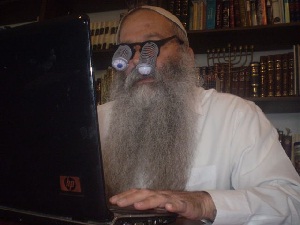
Imagine that a camera was recording your every move on the computer – would you still click on immodest sites? Would you still go astray after your eyes if you knew that a video of your doings was going to be posted on Youtube for the world to see? You may not be caught in This World, but up in the big Movie Theater in the sky, when you come before the Heavenly Tribunal, your Youtube history is going to be presented on the Big Screen for all of the Celestial Judges to see.
By Tzvi Fishman
Though my parents were not happy when I told them that I was moving to Israel, I made aliyah anyway. While honoring one’s parents is an essential tenet of Judaism, if parents do not want a child to move to Israel, the child does not have to listen to them, since going on aliyah is a mitzvah, and parents are not allowed to prevent a child from carrying out a commandment of God.
At the conclusion of this week’s parshah, the Torah writes about the mekoshesh eitzim – the individual who desecrated Shabbos in the midbar by gathering wood. The pasuk says that since it was uncertain what the halacha was concerning one who is mechallel Shabbos, the mekoshesh was placed in custody until Hashem gave instructions as to what to do. Hashem then told Moshe Rabbeinu that the man is to be put to death by stoning; and so he was.

By Tzvi Fishman
We mustn't forget that the gentile nations do us a favor by allowing us to stay in their lands - until they expel us. One must realize that we are on foreign soil there. It is not our society, nor government, nor culture. Nothing is ours. Only in Israel are we at home with family, living according to our customs, and our uniquely Jewish year, living in the one place designed for our holiness, for our psychological health, even for our physical wellbeing.

By Tzvi Fishman
Rabbi Yisachar Shlomo Teichtal was one of the respected leaders of Orthodox European Jewry before World War II, the head of the Beit Din in Budapest. Witnessing the horrors of the Holocaust, he discarded his fierce anti-Zionist ideology, and wrote a brilliant scholarly treatise on the vital necessity for Aliyah, titled "Eim HaBanim Semeichah."
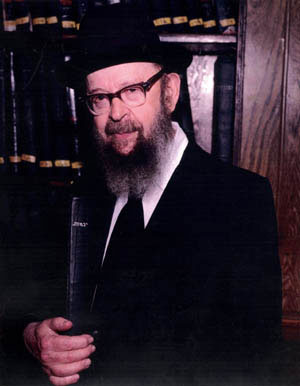
Each detail in the Torah is laden with meaning. Surely the service vessels of the Temple had great importance and consequence over and above their routine service. In the description of the menorah that stood in chamber outside the Holy of Holies, Rabbi Avigdor Miller, zt”l, found layer upon layer of meaning.
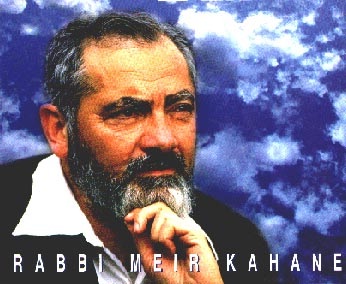
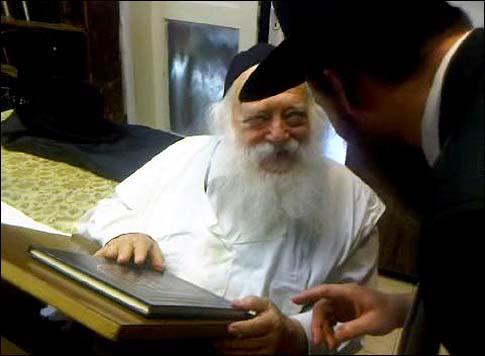
For any reader who may be confused about the obligation to live in the Land of Israel, this sweeping halachic and Talmudic overview of Rabbi Kahane will surely put all uncertainty to rest. Because of its vital importance to each and every Jew, we will be presenting it in two installments.
By Erica Lyons
Hong Kong’s Ohel Leah Synagogue recently celebrated the dedication of a new Sefer Torah. Britain’s Chief Rabbi Lord Jonathan Sacks and Lady Elaine Sacks joined Rabbi Asher Oser and Assistant Rabbi Ariel Zamir of Ohel Leah at the festivities. Also present were Rabbi Mordechai Avtzon of Chabad of Hong Kong, Rabbis Meir Azarzar and Avner Cohen from the Shuva Israel community, and the sofer, Rabbi Yehonatan Yitzhak-Halevy. Hundreds of members of the Hong Kong Jewish community participated as well.
In this week’s parshah the Torah writes about the halachos of a sotah. A sotah is a woman whose husband warned her, in the presence of two witnesses, not to go into seclusion with a specific man – but two witnesses saw her in seclusion with that man. Even though the only testimony that we have is that she was secluded with this man, she is nevertheless forbidden to be with her husband as she is an adulteress. This is in effect until she drinks the sotah water.
By Tzvi Fishman
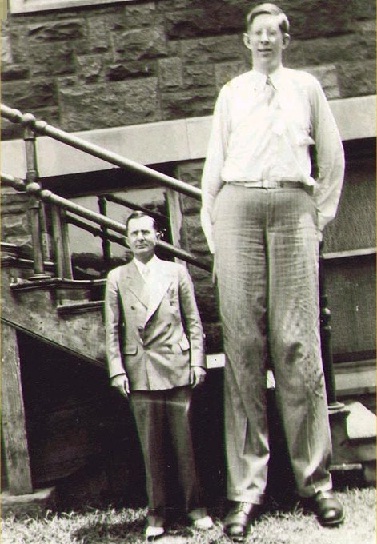
When a Jew makes Aliyah to Eretz Yisrael, the letters of his soul shift into high gear and multiply in size. All of his being gets bigger. He grows closer to God. Compared to the person he was in Galut, he becomes larger than life. He transforms into a giant, filled with greater valor, greater holiness, greater happiness and wisdom.

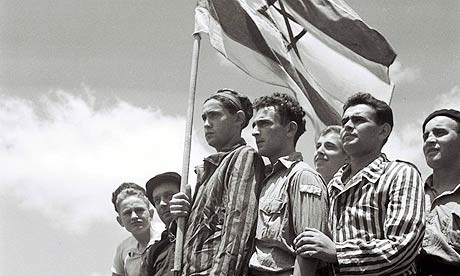
Shavuot is the holiday of the Torah, which impacted the US Constitution in particular and the state of Western morality, liberty, and democracy in general. Shavuot is celebrated by decorating homes and houses of worship with Land of Israel-related fruit, vegetables, herb and flowers, demonstrating the indigenous connection between the Torah of Israel, the People of Israel, and the Land of Israel.
By Tzvi Fishman
Yes, the Ribono Shel Olam, the Master of the World is a Zionist. So was Avraham Avinu, Moshe Rabeinu, Yehoshua, King David, Rabbi Akiva, Rabbi Shimon Bar Yochai, the Macabbees, all the Prophets of Israel, including Ezra and Nechemia who led a seemingly motley crowd of sinners back to the Land of Israel from Babylon to rebuild the Holy Temple.
By Rachel Weiss
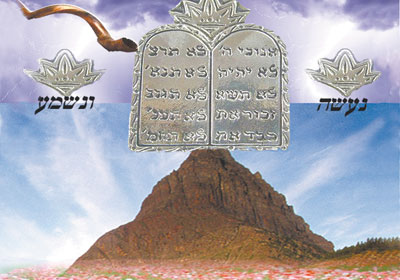
Shavuos. How unremarkable a name for a Yom Tov that celebrates the very foundation of our existence. Actually, Shavuos is one of five names designated for this holiday, the others being Atzeres, Yom HaBikurim, Chag HaKatzir and Z’man Mattan Toraseinu.
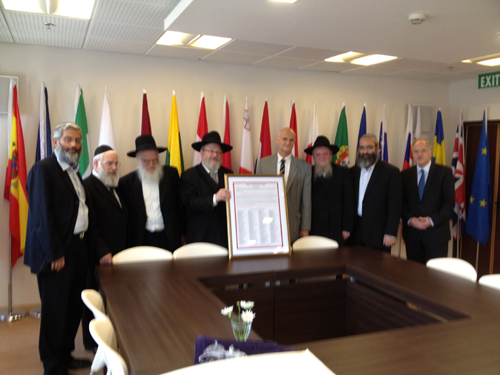
Rabbi Shlomo Rosenfeld: "The Jewish people are again being made a scapegoat for the lack of world peace while the Palestinian terrorists and murderers are depicted as innocent peace seekers. I want to state in no uncertain terms that the EU’s one sided support of the Palestinian demands is an extension of the Holocaust.”

By Tzvi Fishman
This blog is not coming to reject, or condemn, any practice of Judaism which is based on a sincere fear of Heaven, nor to reject or condemn any Jew, or Jewish community, God forbid. The blogs we write come to reject only the misunderstanding of Judaism which negates the centrality of the Land of Israel to the Torah and to the vitality of Jewish life.

By Tzvi Fishman
All of the directors and presidents of the Jewish organizations and federations and committees and leagues and unions who didn't and still don't call upon their members to pack up and go, they all should be replaced with braver souls. With the scourge of intermarriage decimating our ranks, all of the rabbis who didn't and still don't urge their congregations to go en mass to Israel should read through the Torah once again.

By Tibbi Singer
I admit, I like a bizarre news story like the next gal. So I definitely had to click to read this item from the AP: "Police say a man named Joseph Glynn Farley was arrested in a Southeast Texas city for riding his unicycle in the nude, distracting drivers and creating a hazard." Right away, […]

By Tzvi Fishman
Some people will tell you that if you put on tefillin in Brooklyn, you’ve reached the pinnacle of the Jewish journey, but it isn’t true. Other people will tell you we have to stay in exile until Mashiach arrives. But that isn’t true either. Hashem isn’t waiting for Mashiach. Before our very eyes, Hashem has brought millions of Jews back to Israel on His own, without waiting for Mashiach to do all the work.

By Tzvi Fishman
It is no secret that American Jewry is being decimated by assimilation. The longer the Jewish community remains in America the more the assimilation will grow. So I ask – what’s the point in working to strengthen something that is destined to dwindle out and end? The exile is a curse which is not supposed to continue forever.

Title: Biblical Beauty: Ancient Secrets and Modern Solutions Author: Rachelle Weisberger Publisher: Anbern Press

Sefer HaChinuch: The Torah commands us to count the Omer so we can relive the Exodus from Mitzrayim. Just as the Jews back then anxiously anticipated the great day when they were to receive the Torah, so too we count the days till Shavuos, the Yom Tov that commemorates the giving of the Torah. To the Jews then, accepting the Torah on Har Sinai was even greater than their redemption from slavery. So we count each day to bring ourselves to that sense of great enthusiasm, as if to say, “When will that day come?”

My considerable experience with bad people is: showing weakness to them never, ever works. Not ever. Never. As evidenced by the entire arc of human, and Jewish, history.
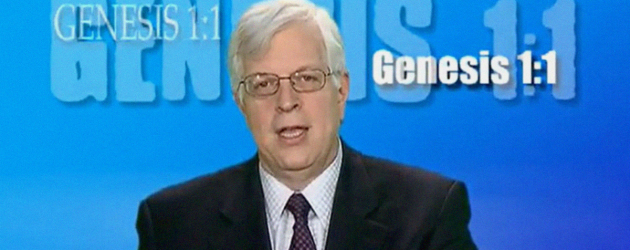
Throughout my life, I have always been drawn to great speakers. As a word-lover, I have to keep an eye on this predisposition, the same way a wine-lover must be careful about that second glass.
“You shall not swear in the name of the Lord,” says the Torah. This is true even if what one is saying is the truth.

When Rabbi Berel Wein began working for the O.U. kashrus division, he shared an office with Rabbi Alexander Rosenberg a’h, the founder of the kashrus division and its administrator for thirty years.
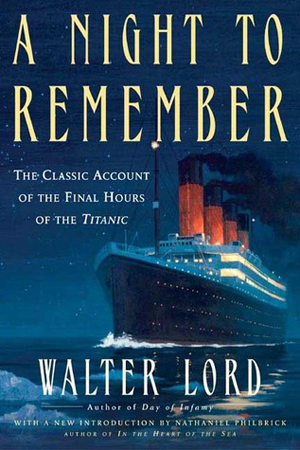
More than 1500 people died on the Titanic. As a result of the tragedy, out of date conventions and procedures were changed, navigational mistakes were identified and corrected, and the threat of ice was taken seriously—even in the era of modern ships. Walter Lord, in his seminal book on the disaster, A Night to Remember (1955), wrote: “Never again would men fling a ship into an ice field, heedless of warnings, putting their whole trust in a few thousand tons of steel and rivets. From then on Atlantic liners took ice messages seriously, steered clear, or slowed down. Nobody believed in the ‘unsinkable ship.’
In addition to karet, there is another type of premature death at the hand of God known as “mita bedei shamayim.”
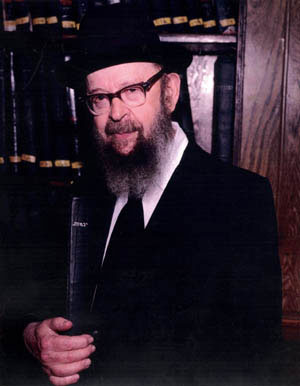
The commentators discuss the meaning and implications of the “strange fire” brought as an offering by Nadav and Avihu. In his discussion of this perplexing passage, Rabbi Avigdor Miller, zt”l, discusses their early demise and observes that their death served a greater purpose (through the sadness that ensued) and that despite receiving a divine death penalty, the Torah regards them as great people.
“Tell Bnei Yisrael, “These are the creatures you should eat.” – Vayikrah 11:2 Chovos Halevovos (Sha’ar Avodas Elokim 3) explains that Hashem created man out of two very distinct parts – a nefesh haschili (intellectual soul) and a nefesh habahami (animal soul). Each has its desires and inclinations, and each is competing with the other, […]

In this week’s parshah the Torah teaches us which animals are kosher to eat and which are not. The Torah says that the pig, although it has split hooves, is not kosher since it does not chew its cud. The medrash on this pasuk says that the reason that the pig is called “chazir” is because in the future Hashem will return (lehachzir) the pig to Bnei Yisrael and permit it to be eaten.
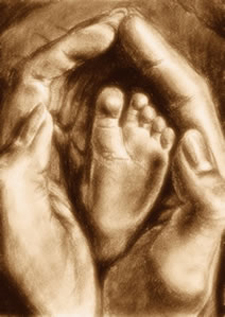
It’s fascinating to realize that the People of Israel growing into a mighty nation in Egypt was a reward for the heroism of the Hebrew midwives.
In order to fulfill one’s obligation in the mitzvah of matzah, one must eat a k’zayis amount of matzah. This is because the Torah uses the wording of achilah (eating) when it commands the mitzvah of matzah.
By Tibbi Singer
In an explosive letter, Hollywood screenwriter Joe Eszterhas ("Basic Instinct," "Jagged Edge") writes Mel Gibson, Joe is accusing Mel of “hating Jews” and of using him to deflect his anti-Semitic reputation. Eszterhas wrote that Gibson, the director of a sadomasochistic flick about how the Jews killed you-know-who, never actually intended to make the movie about Jewish heroism, titled “The Maccabees.”

In the vernacular of our sages and in our prayers, Pesach is titled, “Z’man chayrusaynu- Time of our freedom.” Although we did attain freedom at the time of our redemption from Egypt, titling the holiday as such doesn’t seem to encapsulate the root of the holiday’s greatness.
 September 18, 2026


