יום חמישי, י״א חשוון תשפ״זThursday, October 22, 2026



Follow Us



Rabbi Fohrman explains how the Torah provides the building blocks of true love.

Someone who focuses only on the bones of the Torah makes his bones dry and passionless.
“Who is wise? One who learns from each person” (Pirkei Avot 4:1)

Rashi is bothered by the expression Hashem used: “the Jews need only travel.”

According to the Rambam, the k’nas applies to any chametz on Pesach with which one could, in theory, transgress the aveirah – even if no transgression actually occurred.

Marror is the reliving of the bitter enslavement and matzah is the under-eighteen-minutes redemption.
One difference between Bnei Yisrael and Bnei Noach is that shiurim only apply to Bnei Yisrael.
Hashem imprinted into the essence of each animal all the instincts necessary for its survival as well as for the continuation of its species.

Chazal recognized the importance of recording events for subsequent generations to identify with, understand and appreciate what moved the author so many years before.

Yom Kippur is called one of the days of awe. What does awe have to do with forgiveness for our sins?

the lots teach us that there are aspects of life that are based purely on mazal.
By Rabbi Dr. Aaron Rakeffet-Rothkoff
Today we have more than six million halachic Jews living in the Holy Land.
They have heard many shmuzin discussing the severity of this issue, and they don’t question it.

It may be suggested that a time frame of separation is mandated to heighten the physical encounter.
The Gemara, in Kiddushin 57b, searches for a source to confirm that the bird that is to be set free is permitted to be eaten after the process is concluded.

while each of us is an individual, we are also part of a larger unit

Without a plan of action, a leader will never be able to lead his followers anywhere, no matter how important the destination or lofty the goal.

A friend of mine recently heard a comment that left him stunned. A colleague told him that his mother, a survivor of Auschwitz, who had recently lost her husband of five decades, told her son, “You should know, being alone is worse than Auschwitz!”

This week's parsha deals with the strange set of laws dealing with tzara'at.
What is the sin of the birthing mother?
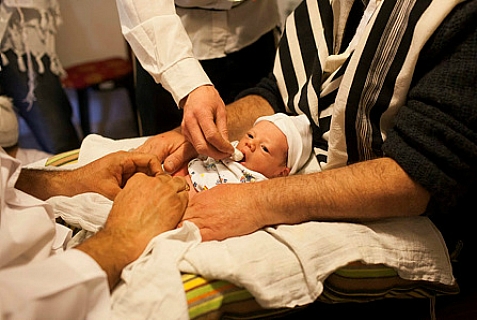
Many wonder what is the counterpoint for circumcision relative to women.
By Rachel Weiss
"Is my husband's Olam Haba'ah really worth the sume of 1,000 ruble?"
It seems Rashi is saying that had a Jew remained in his house that evening, he would not have been killed, and had he left his house, he might have died – not because he was guilty of any sin, not because he deserved to die, but because once the destroyer is given permission to kill, anyone in his path is in danger.
Man has two possible extremes. If he is worthy, he transcends the rest of creation. However, if he is not worthy he is lower than the mosquito that was created before him.
The Gemara (Niddah 31b) states that Rabbi Shimon bar Yochai was asked why a woman who gives birth must bring a korban.

While our purpose in this world is to use our free will to choose good, to overcome our tests and challenges, part of that choosing should include a deep wish that we wouldn't even have the ability to sin.

The ritual of kashrut may help us become more conscious of our responsibilities to live ethical lives.
By Dov Shurin
Boundless love was something Rav Kook had for the nation of Israel. Just as one cannot question the boundless love of Hashem for Israel, one cannot question the boundless love of a Torah giant for his people.
That second verse in Vayikra (9:23) tells us that Moshe and Aharon entered the Ohel Moed, and upon exiting they jointly blessed the people.
To remind us of this, Hashem gave us a permanent reminder of our uniqueness – the mitzvah of milah.
The Ritvah understands that the kosher signs are not just “signs” indicating that a fish is kosher; rather, they are what actually render the fish kosher. This may also be applied to the kosher signs of an animal, but the Ritvah does not indicate this.
The presence of a sacrifice in these covenantal experiences can be looked upon as a celebration of this glorious moment of meeting between God and his people.
Chazal tell us that Moshe functioned in many different capacities. For example, at various times he was considered a king and the equivalent of the Sanhedrin. He was also a kohen gadol, as evidenced by his role during this seven day period.
Born in 1933, Sheldon Adelson was the son of Ukrainian immigrants. His father drove a taxi and his mother ran a knitting shop. He grew up in one of the poorest sections of Boston. But even as a young boy he showed great ambition, first selling newspapers on the street corner, and then running his first business at the age of twelve. He went on to build over fifty businesses, eventually owning the Venetian Sands Hotel and Casino in Las Vegas. He became a very wealthy man.
If a korban chatas cannot be brought as a nedavah, how can one read the parshah of the korban chatas if he is not certain that he is obligated to bring one?
Sometimes, like the tamei individual who must stay away from the Mikdash, we have our limits and disabilities, and we must remember not to attempt those goals which are beyond our reach.

Welcome the book of Leviticus!
Operating the crane is Joe. Joe is overweight and a chain smoker. Another worker approaches Joe and says, “Joe, look at you! 80 pounds overweight, smoking two packs of cigarettes a day. You must do something about your health. Go the gym, work out, and get in shape.”
Esther's name, which means “hidden,” reminds us that at the outset she hides her Jewish identity.
Rav Akiva Eiger questions why semicha is considered a mitzvas assei she’hazman gramma. While it is true that it must be performed during the daytime, this is not because the semicha per se cannot be performed by night.
Besides the lack of appreciation and understanding on the part of knesset Yisrael, Sefer Vayikra has been derided and held in contempt by the nations of the world and other religions.
Even if he has committed sins that warrant his rejection from the community, he is never rejected by G-d.

Like Dempsey and Gates, leaders must always be cognizant of the costs involved in their decisions – even when the costs are less than human life
How do the pieces of this puzzle come together to help us understand how the Torah builds together?
Pekudei is the Hebrew word for reckoning. One way of understanding the meaning of a word in the Torah is to analyze the first time it is found.
The Panim Yafos asks: since invariably one of the seven days of miluim must have been Shabbos, how was Moshe able to erect the Mishkan on Shabbos?
When a couple makes the conscious decision to have a baby, they use a system Hashem put into place to bring forth a child. They don’t claim to be knowledgeable enough in anatomy to synthesize the proteins needed for growth.
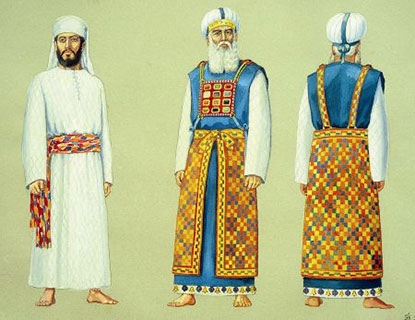
The Torah says (Exodus, chapter 28) several times v’nasa Aharon, Aharon was commanded to carry the responsibility of bnei Yisrael, represented by his wearing these garments. This was his masa, the koved, the heavy responsibility of being the intermediary between Hashem and the people. It is a difficult task indeed.
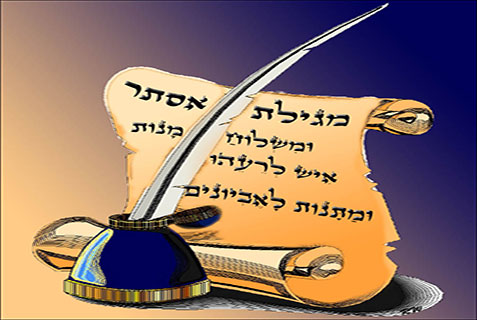
By Rachel Weiss
Readers who have kept up with this series since its inception will have noted a consistent emphasis on the role women have played in our rich heritage.

The Satan waits for opportunities to undo kedusha, particularly on erev Shabbos, when the potential to bring the Shechina into the world is great.
This exciting and daring video and challenges us to be more God-like in our actions.
The Torah's greatest manifestation of human creativity is the building of the Mishkan, which required human mastery over every creation.
The Torah specifies that the washbasin in the Mishkan was made of copper taken from the mirrors that the women brought as donations. Rashi explains that by telling us where the copper came from the Torah is teaching a significant lesson.
Rabbeinu Bachya points out that of all the materials that were donated to the building of the Mishkan, we do not find the inclusion of meshi (silk).
The difference between the intellectual and emotional approach to performing a mitzvah is most noticeable when analyzing the different approaches to giving charity. A person can readily comprehend and accept the intellectual rationale behind giving charity to the poor.

Granted, Hashem miraculously gave Betzalel unimaginable wisdom, but shouldn’t life-experience count for something?

King Achav reports back to his wife, Queen Izevel, thoroughly dejected. It seems Eliyahu has defeated them and their idolatrous practices. The nation would no longer worship Baal and return once again to serving Hashem. This threatened Achav and Izevel's entire hold on their kingdom.

The Jewish people commit the worst sin possible - worshiping a false god.
Klal Yisrael was living in the desert. They neither worked for a living nor had any use for money. All their needs were taken care of. They ate mon that was delivered to their tents daily. They drank water from the be’er, the rock that followed them in their journeys. Their clothes were washed by the Clouds of Glory, and their shoes never wore out. They didn’t need money and couldn’t use it. How could it become their downfall?
One of the most extraordinary images in the Torah appears in this week's portion. Moshe requests of God: "Show me your glory." God responds that He cannot be seen by any human being. But, God tells Moshe, "Stand in the cleft of the rock” and "you will see My back, but My face must not be seen" (Exodus 33: 17-23). What does this mean?
The Gemara says that Moshe lost his ability to pray and protest when he was ordered to descend. The Gemara uses the parable of the friend of the king to indicate that Moshe realized that Hashem provided him, despite his diminished status, with an opening and an opportunity to pray on their behalf to prevent their annihilation.
There are various requirements as to who can perform the shechitah. Optimally one should know the halachos involved and be a male over 13 years of age. If an individual is unfamiliar with the halachos of shechitah he should not shecht, as many problematic issues that he is unaware of can arise. He is also required to be an observant Jew.
One of the most striking features of this week’s parsha is the absence of Moshe Rabbeinu's name, an omission which occurs only once from the beginning of Sefer Shemos until Moshe’s death at the end of Sefer Devraim.
How can God be both outside of space and time, and in our physical world?
One of the signs a diamond is real is that it has a flaw. While it may be a very minor imperfection and almost unnoticeable, all genuine diamonds have flaws.
When the Rambam wished to give an example of how a non-kohen could light the menorah, why did he have to say that a kohen took the menorah outside of the Kodesh?
The Gemara mentions that the grape clusters refer to Moshe and Aharon, the paradigm of what a Jew can be.
Even the judiciary has its limits, based on the principles set forth at Sinai by the Almighty.
Winston Churchill repeated a grade during elementary school. He twice failed the exam to the Royal Military Academy at Sandhurst. He later wrote, “Never give in, never give in, never, never, never, never – in nothing, great or small, large or petty – never give in except to the convictions of honor and good sense. Never, Never, Never, Never give up!”
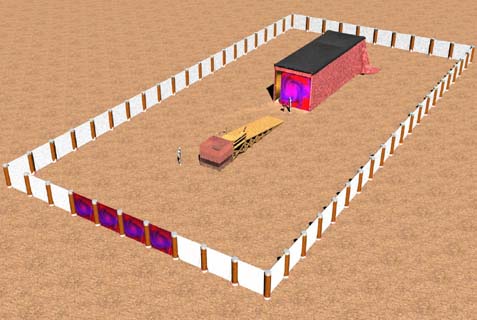
The mishkan represents the 'face' of God.
The notion of a Temple, as either a temporary dwelling or as a permanent building at a specific site, is inherently difficult to understand. How can Hashem, the paradigm of perfect sanctity, coexist with our mundane, flawed universe? Infinity with the finite?

Nachum was doing a research project on the Rambam for one of his courses. He borrowed a number of sefarim from his yeshiva's library for a month while writing the paper. When he completed the assignment, he gathered the sefarim together to return them to the library, but noticed that one sefer was missing.
It should come as no surprise that the people offered their donations to the Mishkan with zeal and enthusiasm.
Although a mitzvah may not require kavanah, it may nevertheless require lishmah.
Maimonides believes that even after the Roman conquest of Israel the land retained its holiness.
Question: What is the message behind the most famous statement of Jewish faith: “Shema Yisrael”?
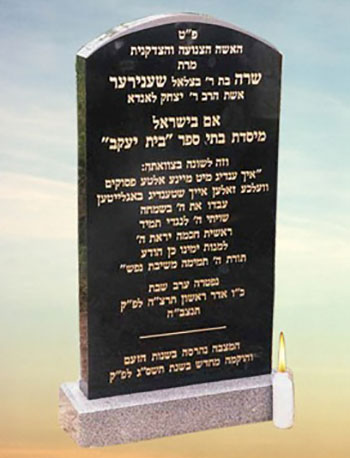
By Rachel Weiss
On this Shabbos Parshas Mishpatim, we bentch Shabbos Mevorchim Adar Rishon, Rosh Chodesh falling on Friday and Shabbos (January 31 and February 1). Mishenichnas Adar Marbin B’Simcha – with the beginning of Adar rejoicing is increased… by virtue of an extra Adar, our jubilation is extended this year.

G-d, accordingly, is encouraging Moshe to not just focus on reaching the top of the spiritual mountain but remaining there as well, thus fully capitalizing on his gains.

Once a person receives it, he becomes personally attached to the one who gave it to him - so attached that now he will view that person's position as his own... and a person does not see his own faults!
Worse, a female child, being sold by her parents!
One can serve with his or her hands or feet, but how does one serve with one's heart?
In Parshas Mishpatim, the Torah delineates various prohibitions and punishments. With regard to stealing, we see something unusual.
This week’s parshah contains the source for the halacha of following the rov (majority). The pasuk states: “acharei rabbim lehatos.” The Gemara in Chullin 11a says that this pasuk is referring to the Sanhedrin where the halacha follows the majority opinion of the judges.

We specifically use our legs to celebrate to demonstrate our new completeness.
The idea that those who are handicapped have a place in Judaism is fundamental to Torah.

The nation and God are 'married.'
In the Aseres Ha’Dibros we are told Hashem pays back the wicked for four generations and the righteous for two thousand generations. Rashi explains the ratio of two thousand to four comes out to be five hundred to one. This teaches us the measure of good to bad in the world is five hundred to one.
The Ramban writes in Parshas Yisro that the luchos were divided into two categories: the first side was mitzvos bein adam lamakom, and the second side contained mitzvos bein adam lachaveiro. The Ramban adds that the mitzvah of kibud av v’eim is on the first side because it is indeed a mitzvah bein adam lamakom.
Although the Torah often points out the infinite value of every human life, this week's parshah gives a clear message about the value of Jewish life. We are told that no one will be permitted to murder Jews with impunity.
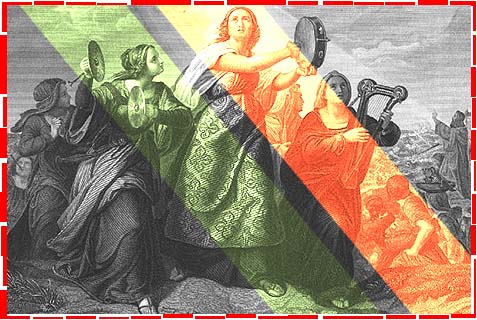
Why did Miriam lead the women of the nation in a second song?
After months of witnessing the hand of Hashem, the entire Jewish nation – three million strong – marched out from slavery to freedom with flourish and fanfare.
There is a machlokes Rishonim regarding the halacha that women are obligated in mitzvos that af ha’im hayu b’osah haneis.
That was G-d's original request, that Moshe "please" speak to the people and request that they borrow and share with their own friends - their fellow Jews, and demonstrate fraternity and devotion.
There is a question as to whether darkness is its literal meaning, or if it is simply the absence of light. The fact that light overcomes darkness is not an indication that darkness is merely a lack of light.
By Rachel Weiss
The month of Shevat, according to the Sefer Yetzirah, is associated with the letter tzaddik. A Tzaddik is, literally, a righteous person, one who eats to live, to have the energy to serve the Ribono shel Olam – versus the gluttonous, insatiable kind that live to eat, to satisfy their corporeal cravings.
Moshe's name would forever remind him of the kindness that Pharaoh's daughter did for him by taking him out of the Nile, and serve as a lodestar to him as he interacts with his people.
How could He do such a thing?
In this week’s parshah (Shemos 6:6) Hashem tells Moshe to tell the Bnei Yisrael the four leshonos of geulah: v’hotzeisi, v’hitzalti, v’ga’alti, and v’lakachti. The Mishnah in Pesachim 99b says that a poor man should be given four cups of wine, even from money that is allotted for tzedakah. Rashi there quotes a Yerushalmi in Pesachim that cites Rabbi Yochanan’s opinion that the four cups of wine that we are commanded to drink at the Pesach Seder correspond to the four leshonos of geulah as mentioned above.
Before each person is born, he is predestined for certain abilities and talents, a particular level of intelligence, and an exact disposition and temperament. At the end of his days, he will be compared to what he could have become. How far did he grow? How much did he accomplish with the tools given to him? This system is subjective. How much of his potential did he fulfill?
This week we begin reading sefer and parshas Shemos. The parshah begins with the words “v’eileh shemos bnei Yisrael habaim Mitzraimah.”
 October 23, 2026