יום רביעי, י׳ חשוון תשפ״זWednesday, October 21, 2026



Follow Us


Both of this week’s parshiyos discuss the various arayos – forbidden relationships. The Gemara in Kiddushin 67b states that if one attempts to perform kiddushin on one of the arayos, the kiddushin is invalid.

The Torah warns us many times and with many different exhortations not to consume blood. The Kli Yakar points out than in Devarim the Torah tells us not to eat blood because “Consuming blood brings cruelty into the one who eats it, and the nature of the father is given over to his children to be like him. Therefore, the Torah warns us not to consume blood so that we don’t acquire this nature.”
The Rambam writes the halachos of Sefiras Ha’Omer in Hilchos Temidim U’musafin (7:22-25). He says that there is a mitzvas assei to count seven complete weeks from the day that the korban omer was brought. The mitzvah is to count the days and the weeks. We count at night because the mitzvah requires that we count at the beginning of the day, which is at night. If one forgot to count at night he may count by day.
When you love someone, you will express it through service. A mother serves her family with food. A father serves his family with income. Service is a reflection and expression of the parents' love for their children.
By Rachel Weiss
Seems like we crossed the sea just yesterday, yet here we are literally counting down to the big day ahead – it is less than six weeks away. On this Shabbos, Parshas Shemini, we bentch Rosh Chodesh Iyar, which falls on Yom Revi’i and Yom Chamishi (Wednesday and Thursday). It was during this month that […]
In this week’s parshah the Torah teaches us which animals are kosher and which are not. There is a machlokes Rishonim whether one may eat human meat. The Rambam derives from a pasuk in this week’s parshah that says that from any animal that has split hooves and chews its cud, “osah tocheilu – that one you may eat” – that it is forbidden to eat human meat.
The Sefer HaChinuch explains that Hashem separated the Jewish people from all the nations. We were given a distinct role in this world. Our lives and everything we do must be different from other people.
There is something striking about the word tomorrow. Rashi explains that the word connotes some future distant time. Accordingly, for some reason the son described in this pasuk will not know why we perform the rituals connected with Pesach.
There is a mitzvah to remove and destroy the chametz from one’s possession before Pesach. This is derived from the pasuk in Parshas Bo, “tashbisu se’or mibateichem” (Shemos 12:15). There are also two lavim associated with owning chametz on Pesach: bal yiraeh and bal yimatzei.
After months and months of Hashem showing the Mitzrim that He alone controls every aspect of Creation, Moshe was instructed to warn Pharaoh that if he still wouldn’t let the Jewish people go, then exactly at the stroke of midnight every firstborn in Mitzrayim would die. Yet when Moshe appeared in front of Pharaoh, he changed the message and said, “If Pharaoh doesn’t free the Jews, then approximately at midnight every firstborn will die.”
Every year I have a special hope that the Geulah will arrive in Nissan and it appears that once again this year will not be the year. This is why I sigh.
One of the daily activities in the Mishkan was taking out the ashes. Chovos Ha’Levavos explains that Hashem commanded Aaron to do this action each day “to lower himself and rid himself of the arrogance in his heart.”
The Gemara in Pesachim 58b derives from the pasuk in this week’s parshah, “V’arach aleha ha’olah” that the tamid must precede all other korbanos. The drasha is from the letter “hei” that signifies the known one – in this scenario, the korban that is known to be the first korban.
In this week’s parshah the Torah discusses many different halachos that pertain to korbanos. Regarding the korban olah, the pasuk tells us that the entire animal must be brought on the mizbeach and is burned.
By Rachel Weiss
On this Shabbos, Shabbos Parshas Ha’Chodesh, we bentch the new month of Nissan — referred to in the Torah as Chodesh Ha’Aviv, the month of spring. Rosh Chodesh falls on Yom Shlishi (Tuesday), heralding the start of a new lunar year and commemorating the inception of the mitzvah of Rosh Chodesh.
When Bnei Yisrael donated money to build the golden calf all they got was a very small calf. This was despite a very successful fundraising campaign. Yet nobody questioned where all the money went.
The Torah specifies that the washbasin in the Mishkan was made of copper taken from the mirrors that the women brought as donations. Rashi explains that by telling us where the copper came from the Torah is teaching a significant lesson.
The Gemara in Shabbos 49b discusses different options regarding what the 39 melachos correspond to. One opinion in the Gemara holds that they correspond to the 39 times that the Torah uses the word “melachah.”
The Gemara says that anything made forbidden by a court must have an explicit permission put forth by another court in order for the prohibition to be removed.
“And you (Moshe) speak to the Children of Israel saying, ‘But my Shabbos you are to observe; for it is a sign between Me and you for your generations, to know that I am Hashem Who sanctifies you” (Shemos 31:13).
Moshe Rabbeinu was the greatest human being who ever lived. The Rambam tells us that of all the prophets he alone was able to speak to Hashem directly. Normally, a prophet must go into an altered state of consciousness to experience Hashem. Otherwise the experience would cause sensory overload, and he would die.

A colossal failure of mammoth proportions. Shaul HaMelech fails in his mission to destroy the nation of Amalek in its entirety and to this day, we suffer from its ever-present force of evil.
This column is dedicated to the refuah sheleimah of Shlomo Eliezer ben Chaya Sarah Elka. This week we read parshas Zachor (Devarim 25:17), which details the attack of Amalek and the commandment for us to destroy any remembrance of them. There is a mitzvah to remember what Amalek did to us on the way when […]
In the eighth year of Achashveirosh’s rule, on the thirteenth of Adar, every Jewish man, woman and child was to be slaughtered. Young or old, wealthy or poor, they were counted as one, and on that fateful day the Jewish people would cease to be. According to the ways of the world, and according to the natural course of events, that is what should have happened.
Moshe Rabbeinu was charged with the construction of the Mishkan, the dwelling place of Hashem in this world. While the components of the structure are physically complex, the kavannas – the specific intentions required during the process of building it – are even more intricate.
If one holds the object of a mitzvah upside down he has not fulfilled the mitzvah.
By Rachel Weiss
On Shabbos Parshas Shekalim we bentch Rosh Chodesh Adar, the month that concludes the lunar year cycle and marks the last of the six winter months. As Rosh Chodesh falls on Yom Rishon and Yom Sheni (Sunday and Monday), Shabbos Mevorchim coincides with erev Rosh Chodesh.
Besides being the final arbiter of difficult legal cases and the licensing agency for Kohanim, the Sanhedrin was also responsible for the maintenance of the religious well-being of Bnei Yisrael.
One of the many halachos written in this week’s parshah is the prohibition for a judge to accept a bribe. The Torah testifies that bribery works and can blind the eyes of the righteous; thus it is forbidden to accept any form of bribery – even for one to judge correctly.
The Das Zakainim teaches us that "before them" means before the Jews and not before the gentiles. The Torah is for the Jewish people exclusively.
At the beginning of this week’s parshah the Torah says that when Yisro, Moshe Rabbeinu’s father-in-law, joined Bnei Yisrael in the desert, one “ish” (man) bowed to the other and kissed him.
The Torah tells us that Yisro heard about the wonders Hashem had brought, and he joined the Jewish people. Rashi explains that while Yisro heard about all of the miracles, the two that actually moved him were the splitting of the sea and the war with Amalek. The others were impressive, but these alone actually affected him.
Have you ever been to a Sefardi shul - or a Sefardi simcha of any kind? There’s something special about the Sefardi personality, something which Ashkenazim don’t quite possess.
Egypt, the country that bragged that no slave had ever escaped its land, stood by helplessly as the Chosen Nation triumphantly left. Yet even at this moment, Pharaoh sent spies along to follow them. After three days, his agents reported back that the Jews had veered off course. Pharaoh called out to his people, “Let us reclaim that which is ours,” and he led them in pursuit.
In this week’s parshah the Torah informs us that after Bnei Yisrael miraculously crossed the yam suf, they traveled in the desert without water for three days. The Gemara in Baba Kama 82a expounds on this pasuk and explains that the word “water” is a reference to Torah. So the pasuk is actually telling us that Bnei Yisrael went three days without Torah – and they wilted.
Reb Dovid Blinder was a noted scholar and pedagogue in Russia in the late 1800s. He was called ‘Blinder’ (blind man) because he never lifted his head to look outside his immediate area. Among his other achievements, he had the distinction of teaching Rav Chaim Brisker in his youth.
There is a contradiction in the pesukim as to when makkas bechoros occurred. The pasuk in this week’s parshah says, “vayehi bachatzos halailah, v’Hashem hikah kol bechor b’eretz Mitzrayim… – and at chatzos of the night, Hashem hit every firstborn in the land of Mitzrayim…” (Shemos 12:29). This pasuk states that makkas bechoros occurred by night. The implication from the pasuk in Bamidbar 8:17 is that makkas bechoros occurred by day, for the pasuk says: “b’yom hakosi kol bechor… -- on the day that I hit all of the firstborn…”
After each of the makkos, Moshe Rabbeinu had to daven to Hashem to stop the makkah. After the makkah of frogs, the pasuk says “…vayitzak Moshe el Hashem al devar hatzefardi’im asher sam l’pharoh – and Moshe cried out to Hashem regarding the frogs that he inflicted on Pharaoh” (Shemos 8:8). This is the only makkah in which we find that the Torah uses the word “vayitzak [cried out]” in reference to how Moshe davened to Hashem. By the other makkos, the Torah uses the word “vayetar.” The Sifsei Chachamim asks the question that he says was bothering many people. He asks why the Torah changes its wording by the makkah of the frogs to the word “vayitzak.”
After months of rebellion, Pharaoh finally admitted he was wrong. The Dos Zakainim explains that the plague of barad moved Pharaoh more than any other. And it was because of one factor.
General George Marshall became the U.S. Army’s Chief of Staff in 1939. With a keen understanding that the United States would eventually be drawn into the war that had just erupted in Europe, he set out to rebuild and modernize the army. This was no easy task. Besides the normal difficulties inherent in such an undertaking, Marshall had to do it against the wishes of many influential isolationists. Even President Roosevelt was reluctant to upset the country’s isolationists for fear that battling them would undermine his New Deal.
Yosef, his brothers, and their entire generation had passed on. A new era was beginning in Mitzrayim, and with it came a new attitude. When the Jews had first entered the land they were received as celebrated guests. After all, they were brothers of the great Yosef who had saved the nation. That sense of appreciation was now gone. No longer were the Jews respected and revered, no longer were they welcome. They had become a thorn in the side of the Mitzrim.
The Gemara in Kiddushin 71a says that when Hashem told Moshe Rabbeinu (in this week’s parshah), “zeh shemi l’olam, v’zeh zichri l’dor dor – this is my name forever, and this is my name for every generation” (Shemos 3:15), he was teaching Moshe two separate names of Hashem. Rashi explains there that this is derived from the fact that the pasuk does not say “zeh shemi v’zichri.” The Gemara says that Hashem told Moshe that He has both a name that is written and a name that is pronounced. Hashem’s written name is spelled “yud, kei, vav, kei” and His pronounced name is spelled alef, daled, vav, nun. (We will refer to this name as Adnus.)
During my formative years, one of my rabbeim once told our class that he wished to tell us something very profound, something we may have a hard time believing: “I want you all to know that every student in this room has the capability to become one of the gedolei hador.” I recall that at first that comment encouraged and inspired me. But within a short time, I began to feel very dejected. In fact, I have thought of that comment many times since then and it took me a long time to understand what bothered me about it.

Parshas VaYechi describes the last days of Yaakov Avinu’s life and it is therefore appropriate that the haftorah is a description of the last days of Dovid HaMelech’s life (the beginning of Sefer Melochim). But is that the only association? The last days of someone’s life? If so, there are other examples of the last days of someone’s life in Navi that could have been chosen. There must be deeper connections between the lives of Yaakov and Dovid.
This week’s parshah opens up with the statement “Vayechi Yaakov b’eretz Mitzrayim shevah esreh shanah – “And Yaakov lived in Egypt for seventeen years.” The Bal HaTurim explains that the gematria of vayichi (lived) is seventeen. The Torah is telling us that the life of Yaakov was seventeen years. Up until that point, he had suffered so much that his years couldn’t rightfully be called a life. The sum total of the years that he spent without torment was the seventeen years that he lived in Mitzraim. That was his life.
In this week’s parshah Yosef brings his two sons to his father Yaakov to receive blessings before his death. Rashi tells us that when Yaakov was about to bless Yosef’s sons the shechinah left him as a result of some of Yosef’s sons’ evil descendants.

Yosef Hatzaddik is not only the central character at the end of Chumash Bereishis. I believe that Yosef is also the character who best serves as a role model for many in today’s world.
For 22 years Yaakov Avinu was in a state of mourning. His beloved son, the one who most closely followed in his ways, the one he envisioned as the leader of the next generation, had been taken from him while still a youth. For all those years Yaakov was inconsolable. Now the brothers came back with the news, “Yosef is still alive!” At first Yaakov could not believe it. The brothers convinced him it was true by showing him the wagons Yosef had sent.
In the beginning of this week’s parshah Yehudah tells Yosef that he must allow Binyamin to return to his father because Yehudah had guaranteed Binyamin’s return. As the pasuk says: “ki avdecha arav es hanar… – for your servant has guaranteed the boy…” (Bereishis 44:32; see also 43:9).
Pharaoh had a dream. First, seven “good” cows came out of the Nile. Then seven “bad” cows came up and consumed the first cows. When he awoke in the morning, he called for Yosef to interpret the dream. Yosef explained the seven “good cows” represented seven years of plenty that would be followed by seven years of famine.

A congregant once told me that he was spending a large amount of time trying to explain Judaism to a coworker. His colleague thought that all Jewish holidays had the same theme, and he proudly summarized this theme at his family's two-minute Seder: "They tried to kill us, Hashem saved us, we won, now let's eat!!" He proudly bragged that this sentence was the family's personal, abbreviated Haggadah.
There are two mitzvos that the rabbanan instituted for Chanukah, lighting candles and saying Hallel. The Gemara in Shabbos 23a says that women are obligated in the mitzvah of lighting candles because af ha’eim hayu b’osah haness – they too were involved in the miracle.

Most people remember where they were when they heard the news that Osama Bin Laden had been killed and justice delivered. Many books have already been written about the ten-year search for him, the decision to launch the mission and the actual attack on his compound in Abbottabad. While every aspect of this story is fascinating, I would like to focus on one specific area: Why were the Navy SEALs chosen to execute the mission? When the mission was being planned it was hardly a done deal that the SEALs would be selected as opposed to the CIA’s own paramilitary unit.[1]
At the age of seventeen, Yosef was wise in the ways of the Torah and in the ways of the world. He was called a “ben zikunim” because even at such a young age he showed the brilliance of an elder scholar. He had already absorbed all the Torah Yaakov had learned in the many years he had spent in the yeshiva of Shem.
The Jews living outside Eretz Yisrael began reciting vesein tal u’matar in the Shemoneh Esrei this week. If one does not say vesein tal u’matar (instead continuing to say “vesein berachah”) and finishes the Shemoneh Esrei, he must repeat the Shemoneh Esrei. If one accidentally does not daven at all, he must daven two Shemoneh Esreis during the following tefillah. If one did not say vesein tal u’matar and finished davening and only remembers this fact at the time of the next tefillah, he must daven two Shemoneh Esreis at the next tefillah.
By Rabbi Lord Jonathan Sacks z"l
The deception has taken place. Joseph has been sold into slavery. His brothers have dipped his coat in blood. They bring it back to their father, saying: “Look what we have found. Do you recognize it? Is this your son’s robe or not?” Jacob recognized it and replied, “It is my son’s robe. A wild beast has devoured him. Joseph has been torn to pieces.”
I always wonder about Jewish names. Some make it and some don’t. Some have mazel and others don’t. Some Biblical personalities’ names are very popular amongst the members of Klal Yisrael and then there are those personalities whose names never seem to be used.
Yaakov Avinu received word that his brother Eisav was coming to greet him. He understood fully well that this was not to be a warm family reunion. Eisav came accompanied by a band of four hundred armed men, bent on revenge. The Torah describes Yaakov as “very frightened,” so he prepared for war.
At the beginning of this week’s parshah Yaakov sent a message to Eisav. In the message were the words, “im Lavan garti – I lived with Lavan.” Rashi explains that Yaakov was informing Eisav that he had kept the entire Torah, as the word “garti” is the same numerical value as the amount of mitzvos in the Torah: 613. The following strong question concerning this statement has been discussed by the Rishonim and Acharonim: How could Yaakov say that he kept the entire Torah when he married two sisters, Rachel and Leah, which is biblically prohibited? Additionally, the Gemara in Yuma 28 says that Avraham Avinu kept the Torah; presumably the other avos did as well. How then did Yaakov marry two sisters?
By Rabbi Lord Jonathan Sacks z"l
Jacob and Esau are about to meet again after a separation of 22 years. It is a fraught encounter. Once, Esau had sworn to kill Jacob as revenge for what he saw as the theft of his blessing. Will he do so now, or has time healed the wound? Jacob sends messengers to let his brother know he is coming. They return, saying that Esau is coming to meet Jacob with a force of 400 men. We then read: “Then Jacob was greatly afraid and distressed” (Genesis 32:8).
When Yaakov met Rachel at the well, he experienced conflicting emotions. He felt tremendous joy at having finally met his bashert, yet he raised his voice and cried. Rashi explains that he cried because he came empty-handed. He said, “My father’s servant came with ten camels laden with gifts and finery, and I come with empty hands.”
The Rambam writes in the 10th perek of Hilchos Ishus (halacha 13-14) that if a man marries a woman, he is obligated to have sheva berachos for seven days. If one marries several women at once, he must have separate sheva berachos for each one for seven days – consecutively. The reason for this is because we cannot mix one simcha with another simcha.

The theme of my column is leadership. As a general rule I avoid extrapolating leadership lessons from current events. The following is my reasoning. First, the information available from current events is often incomplete and inaccurate. Even when the information is relatively complete and accurate it is unanalyzed. Therefore the basis for lessons learned may prove to be faulty. Second, current events are often too current. To attempt to draw practical lessons in a dispassionate way would be insensitive.
And Lavan and Betuel answered and said, “It is from Hashem that this has come forth. We can speak neither for nor against it.” – Bereishis 24:50 Eliezer, the servant of Avraham, went to find a wife for Yitzchak. He approached the city of Charan, waited at the well, and asked Hashem for a sign. […]
We learn in this week’s parshah of Eisav’s sale of his birthright to Yaakov Avinu. There are several questions surrounding the legitimacy of this sale. The Rivash (Teshuvos 328) questions why the sale was valid, since Eisav sold something that did not exist at that time. The halacha is that one may not sell anything that is not in the world at the time of the sale. Since the bechor did not yet exist or take effect at that time, how could the sale have been valid?
By Rabbi Lord Jonathan Sacks z"l
Rebecca, hitherto infertile, became pregnant. Suffering acute pain, she went to inquire of the Lord – “vateilech lidrosh et Hashem” (Bereishit 25:22). The explanation she received was that she was carrying twins who were contending in her womb. They were destined to do so long into the future.
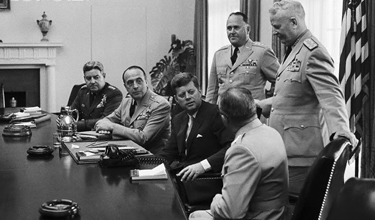
In his book, Thirteen Days (1968), Robert Kennedy publicized the inner workings of the Kennedy White House during the terrible days of the Cuban Missile Crisis. He described how the President’s special advisory group, known as ExComm, debated the options available to defuse the crisis in light of the intelligence presented to them.
“And Sarah died in Kiryas Arbah, which is Chevron, in the land of Canaan, and Avraham came to mourn for Sarah and to cry for her.” – Bereishis 23:2 Every word in the Torah is exact and every nuance measured. Therefore, Rashi is bothered that the Torah places the burial of Sarah next to the […]

In this week’s parshah we learn of the episode whereby Avraham sent his servant Eliezer to find a wife for his son Yitzchak. Eliezer met Rivka and decided that she was right for Yitzchak. After discussing matters with her parents and her brother, Lavan, Eliezer was ready to return with Rivka to Avraham and Yitzchak. Prior to their departure Rivka’s family blessed her, saying that she should become “thousands of myriad…” and may her offspring inherit the gate of its foes.
Hashem appeared to Avraham and told him that the people of Sodom were wicked and would be destroyed. The only ones who would be saved were Lot and his family, because of the merit of Avraham. Hashem then sent two malachim, Gavriel and Michoel, to accomplish this task.

We learn in this week’s parshah about the wickedness and demise of the residents of Sedom. Further, we learn from medrashim that the residents of Sedom did not show much hospitality. Similarly, the mishnah in Avos 5:10 says that there are four different types of middos that people live by. The first is one who says, “What is mine is mine and what is yours is yours.” The mishnah says that this is an intermediate middah; others say that this is middas Sedom. Rashi, in Kesubos 103a, says that the people in Sedom would not allow anyone to benefit from their possessions even if it would be of no loss to them.

Many trees upstate were damaged by the hurricane that swept through the East Coast at the end of last summer, and I was involved in finding the safest equipment to clean up the mess. I love trees and found the chore of cutting them down very difficult, especially knowing that the stately 60 year old trees would be impossible to replace. Even though we planted new trees, I don't know whether I will be there to enjoy these new saplings when they are 60 years old.

The new Jewish year is still young. The new Parshas HaShavua cycle is but a few weeks old. It is indeed time for new beginnings.
And Hashem said to Avram, “Go for yourself from your land, from your birth place, and from your father’s house to the land that I will show you.” – Bereishis 12:1 With these words begins one of the ten great tests of Avraham. The Ramban explains that these were trials by fire, designed to bring Avraham’s greatness to the surface, taking it from the potential to the actual. They helped form him into the singular tzaddik he became.
By Rabbi Lord Jonathan Sacks z"l
The call to Abraham, with which Parshat Lech Lecha begins, seems to come from nowhere: “Leave your land, your birthplace, and your father’s house, and go to a land that I will show you.”

In this week’s parshah Hashem commands Avraham Avinu to perform the mitzvah of bris milah. The pasuk tells us that Avraham was 99 when he performed the bris milah on himself. The Pirkei D’Rabbi Eliezer (29) and Tosafos, in Rosh Hashanah 11a, say that Avraham’s bris was performed on Yom Kippur. The Pirkei D’Rabbi Eliezer adds that Shem, Noach’s son, performed the bris on Avraham. There are several explanations as to why Avraham had Shem perform his milah.
In this pasuk, Hashem appears to Noach, telling him the world has turned to evil and He will now destroy all of life. Noach, his family, and the animals that remained pure will be the core of a new world. The reason for this destruction is stealing – “since the land is filled with robbery.”
By Rabbi Lord Jonathan Sacks z"l
Is there such a thing as an objective basis of morality? For some time, in secular circles, the idea has seemed absurd. Morality is what we choose it to be. We are free to do what we like so long as we don’t harm others. Moral judgments are not truths but choices. There is no way of getting from “is” to “ought,” from description to prescription, from facts to values, from science to ethics. This was the received wisdom in philosophy for a century after Nietzsche had argued for the abandonment of morality – which he saw as the product of Judaism – in favor of the “will to power.”

Toward the end of this week’s parshah Rashi quotes a Medrash that relates the familiar episode of when Avraham Avinu was thrown into a furnace. Rashi recounts that Avraham’s father, Terach, had reported to Nimrod that his son had broken all of his idols. Avraham was then thrown into a fire and was saved. The wording of the Medrash, however, is that Avraham had gone into the fire by himself (kesheyarad Avraham letoch kivshan ha’eish – when Avraham went into the fire, and in another place it says that Nimrod decreed that he should leireid lekivshan ha’eish – go down into the fire).

“Isn’t it ironic that kids whose parents fail to set and enforce limits feel unloved and angry? Although they tend to test and protest, we have learned over and over again that limits are what kids really want. Invariably, when we talk with out-of-control teenagers or adults who were juvenile delinquents and lucky enough to survive, we ask them, ‘If you could go back to when you were a child, what would you change?’ Most of them say something like, ‘I wish my parents had reeled me in when I was a kid. Why didn’t they make me behave?’
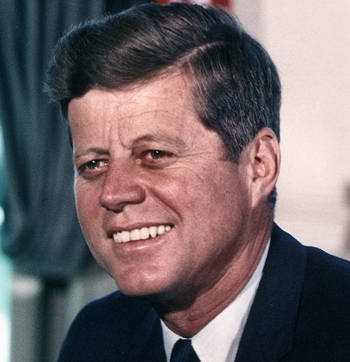
With the campaigns for the presidency of the United States in full swing people are beginning to imagine the inaugural address that will be delivered this coming January 20. Especially this year, when the candidates offer such different visions for America, rhetoric enthusiasts are expecting whoever wins to deliver an inspiring speech designed to provide a strategy and game plan for the country to move forward.
Adom HaRishon was given one mitzvah: not to eat from the Eitz HaDas. When he transgressed it, Hashem gave him the opportunity to do teshuvah. Not only did Adom not repent, he played the blame game – “It was that woman that You gave to me. You gave her to me as a helpmate and she turned out to be my ruination.”

In this week’s parshah the Torah commands us in the first mitzvah: pru u’revu – be fruitful and multiply. We rule in accordance with Beis Hillel that one fulfills this mitzvah when he has fathered one boy and one girl.
By Rabbi Lord Jonathan Sacks z"l
It is the most famous, majestic and influential opening of any book in literature: “In the beginning, G-d created the heavens and the earth.” What is surpassingly strange is the way Rashi – most beloved of all Jewish commentators – begins his commentary:
Each year, amid the ebullient joy manifest during the holiday of Sukkot, we read the megillah of Kohelet. With its realistic perspective on the world, Kohelet provides us with the means to not only properly calibrate our joy, but to accurately understand the role of joy and happiness in the world.
The Gemara in Megillah 31a says that on the last day of Sukkos the Torah reading is the parshah of Vezos Haberachah and the maftir is Vaya’amod Shlomo (Melachim 1:8). The Rishonim are bothered by the following question: the Mishnah in Megillah says that Moshe Rabbeinu instituted what portion of the Torah should be read on each of the Yamim Tovim. Each portion relates to that particular Yom Tov. What then is the connection between Vezos Haberachah and the last day of Sukkos?

Yom Kippur was but a few days ago and we were all feeling the closest to Hashem that we feel all year. And now it’s time to build the sukkah. But before we move on with the holiday cycle we need to see what we can do to retain at least some of those special feelings of Yom Kippur. This week’s haftorah guides us on just such a path.
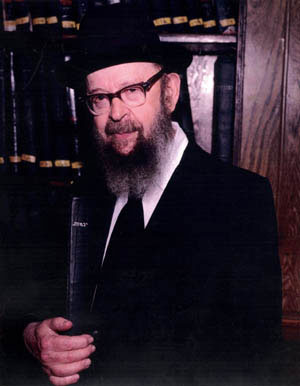
“When I proclaim the name of Hashem, give greatness to our G-d (32:3). When we hear a berachah, it is proper to exclaim "Baruch Hu u’Baruch Shemo" (“He is blessed and His name is blessed”) when Hashem's name is pronounced. But much more is intended. The mention of that most important word (in any language) should evoke the greatest reverence and love and devotion. How much should we exert ourselves in this function?
The Gemara in Sukkah says that the sechach that one must use for his sukkah must be detached from the tree in order for it to be fit for use. The Gemara (Sukkah 11a) discusses what a person must do if one put branches on his sukkah before they were cut off from the tree. The Gemara concludes that branches must be detached from the tree and he then must shake them.
By Rabbi Lord Jonathan Sacks z"l
Yom Kipper, the Day of Atonement, is the supreme moment of Jewish time, a day of fasting and prayer, introspection and self-judgment. At no other time are we so sharply conscious of standing before God, of being known by Him. But it begins in the strangest of ways.
There is a machlokes between the Mechaber and the Rema concerning the berachos recited on the Yom Kippur haftarah by Minchah. The Mechaber says (Shulchan Aruch, Orach Chaim 622:2) that we take the Torah out and read the parshah of arayos and then read Maftir Yonah. He says that we recite the berachos of the haftarah before and after the haftarah. If Yom Kippur falls out on Shabbos, we mention Shabbos in the berachos. The Rema argues that we do not recite the berachah of “al haTorah v’al ha’avodah” by Minchah.
By Rabbi Lord Jonathan Sacks z"l
By now Moses had given 612 commands to the Israelites. But there was one further instruction he still had to give, the last of his life, the final mitzvah in the Torah: “Now therefore write this song and teach it to the people of Israel. Put it in their mouths, that this song may be My witness against the people of Israel” (Deuteronomy 31: 19).
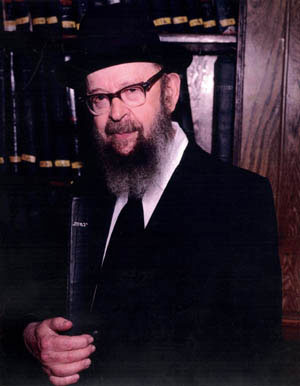
We live in an age of conveniences – and dangers. Our affluence presents dangers to our quest for spiritual perfection, which the Torah cautions against and which Rabbi Avigdor Miller elaborates on in Parshas Vayelech.

Colin Powell, despite reaching the pinnacle of power, has never forgotten his simple roots in the Bronx. This proud connection to his past manifests itself in many ways, ranging from his work ethic to his love of hotdogs. It also manifests itself in his appreciation of what the “regular guy” brings to the table in every organization.
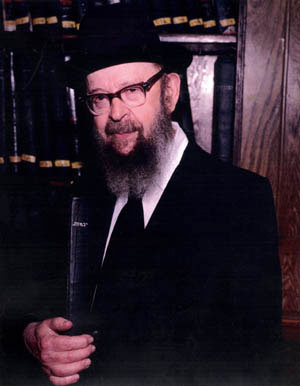
“The life and the death I have given before you…in order that you should live, you and your seed.… And you shall choose life” (30:19). “Choosing life” is one of the highest accomplishments (Shaare Teshuvah III:17). This means that not only does Hashem allow us the free will to choose (a principle that materialist psychologists deny), He also gives us the information that we possess free will.
The 10-day period from Rosh Hashanah-Yom Kippur is, as is well known, a time to begin personal introspection – an occasion to look back at one’s mistakes of the past year and plan the needed changes to improve oneself in the New Year. In the U.S. it is also a time for Americans to make positive “resolutions."
The Mishnah in Rosh Hashanah 32a lists the Yom Tov’s berachos and the order in which we must daven on Rosh Hashanah. The Mishnah says in the name of Rabbi Akiva that we begin with the berachah of avos. We then recite, in this order: gevuros (atah gibor); kedushas Hashem; kedushas hayom (we incorporate malchuyos in that berachah); zichronos; and shofros. This is followed by avodah hoda’ah and birchas kohanim (sim shalom). The Gemara there brings a beraisa that cites a source in the Torah for reciting each one of these berachos.
By Rabbi Lord Jonathan Sacks z"l
Rosh Hashanah, the Jewish New Year, is a kind of clarion call, a summons to the Ten Days of Penitence that culminate in the Day of Atonement. The Torah calls it “the day when the horn is sounded,” and its central event is the sounding of the shofar.
 October 16, 2026