יום שלישי, י״ח תשרי תשפ״זTuesday, September 29, 2026



Follow Us


One aspect of Divine Justice stipulates that through the decisions we make we help shape the world around us. Good deeds bring in their wake positive outcomes and the reverse is also true. In the mitzvah of the Second Pesach (Pesach Sheni), Rabbi Avigdor Miller, zt”l, develops this understanding and finds that Hashem manipulated history specifically for the purpose of making such outcomes happen.
By Blumie A.
Dear Ariana, It was a steep, downhill walk from our bunkhouse to the marquee where we would be lighting Shabbos candles. A weak sun sank lower into the mountains, the sky behind it a hazy yellow with streaks of pink weaving their way through purple accents.

Question: Why do we celebrate when a boy becomes bar mitzvah?

For any reader who may be confused about the obligation to live in the Land of Israel, this sweeping halachic and Talmudic overview of Rabbi Kahane will surely put all uncertainty to rest. Because of its vital importance to each and every Jew, we will be presenting it in two installments.
The Rambam, in Hilchos Beis Habechirah 1:12, derives from the pasuk in this week’s parshah, “u’veyom hakim es haMishkan… – and on the day the Mishkan was set up…” (Bamidbar 9:15), that the Beis HaMikdash can only be built by day, not by night. Further in that halacha the Rambam writes that both men and women are obligated in the mitzvah of building the Beis HaMikdash. The Kesef Mishneh explains that the source for the halacha that women are obligated in this mitzvah is from the pasuk in parshas Vayakhel: “v’kol ishah chachmas lev beyada tavu – and every wise-hearted woman spun with her hands.”
By Tzvi Fishman
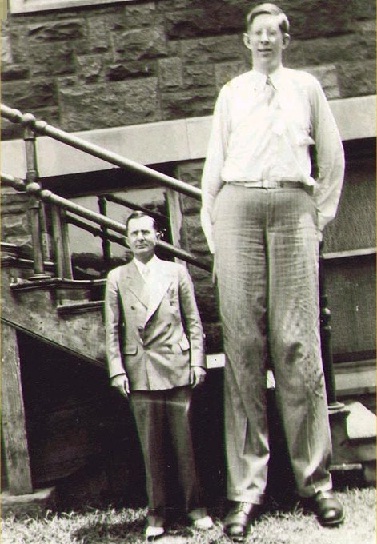
When a Jew makes Aliyah to Eretz Yisrael, the letters of his soul shift into high gear and multiply in size. All of his being gets bigger. He grows closer to God. Compared to the person he was in Galut, he becomes larger than life. He transforms into a giant, filled with greater valor, greater holiness, greater happiness and wisdom.

The Rambam begins hilchos talmud Torah with the following halacha: Women and slaves are exempt from talmud Torah. A man is obligated to teach his son Torah, as it says, “velimadetem osam es beneichem ledaber bam.” However, a woman is not obligated to teach her son Torah because whoever is obligated to learn is obligated to teach – and since a woman is not obligated to learn, she is not obligated to teach.

Question: Many people stay awake Shavuot night and learn Torah. Is this proper considering that one’s davening the next morning may lack kavannah as a result? Wouldn’t it make more sense to get a good night’s sleep and then learn with more fervor the next day? No Name Please (Via E-Mail)

By dvora
It was a brisk fall day in late October some years ago when Chavy (name changed) decided that since the weather was perfect she would walk to work. She had, Baruch Hashem, just resumed her work schedule after being home for six weeks due to her maternity leave for the birth of her latest child. She felt the exercise was good for her, as it was only about a half mile to her job. She put all of her work papers into her knapsack and gingerly swung it over onto her back for the trek to work.

The forthcoming debate over an updated Tal Law – the parameters for service by haredim in the Israel Defense Forces – is liable to become heated and nasty. Mutual accusations will be hurled, with one group asserting that mandatory military service is part of an ill-disguised war against Torah and the other side seeking an equal sharing of the defense burdens that fall on most other Israelis.
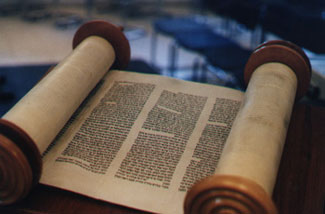
The past is never dead. It’s not even past. – William Faulkner We Jews are a people of memories. Our past defines who we are. The past infuses our religious lives with context, purpose and meaning. How could we be if not for knowing how we were?
By Rachel Weiss
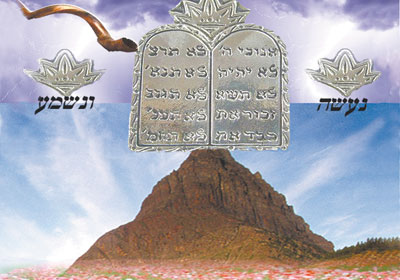
Shavuos. How unremarkable a name for a Yom Tov that celebrates the very foundation of our existence. Actually, Shavuos is one of five names designated for this holiday, the others being Atzeres, Yom HaBikurim, Chag HaKatzir and Z’man Mattan Toraseinu.

By dvora
Rivkah Bloch grew up in Telz (Telsiai), a historic township and renowned Torah center in north-west Lithuania. In 1939 the Jews of Telz numbered about 2,800, some 28 percent of the population. Rivkah’s paternal grandfather Reb Yosef Leib Bloch, (1849-1930) zt”l, also known as Maharil Bloch, was a distinguished personality and a prominent scholar and educator. Besides his position as town rabbi, he headed the great Yeshivah of Telz that his father-in-law Rav Eliezer Gordon, zt”l had founded. Its student body numbered around 400 students in 1900.

When we are on our own land we are commanded to keep every seventh year as the shemittah year, and at the completion of seven shemittahs to add an additional shemittah year – the yovel. During this year, all land lays fallow. Homesteads return to their original owners, and all Jewish slaves are freed.
Question: I understand that at a minyan, the chazzan is required to repeat Shmoneh Esreh out loud so that people who may not know how to daven can fulfill their obligation to daven with the chazzan’s repetition. What, however, should the chazzan do when he reaches kedushah and Modim? I hear some chazzanim say every word of kedushah out loud and some only say the last part of the middle two phrases out loud. As far as the congregation is concerned, I hear some congregants say every word of kedushah and some say only the last part. Finally, some chazzanim and congregants say Modim during chazaras hashatz out loud and some say it quietly. What is the source for these various practices? A Devoted Reader (Via E-Mail)
In Behar, one of this week’s parshiyos, the Torah commands us in regard to some of the laws of buying and selling. The pasuk says, “Vechi simkiru mimkar la’amisecha … al tonu ish es achiv – When you make a sale to your fellow … do not afflict one another.” The Gemara in Baba Metzia 51a derives from this pasuk that one may not overcharge when selling an item without informing the buyer. This is referred to as ona’ah. The Gemara says that if one charges more than a sixth more than the market value of an item, the sale is void. If one charges less than a sixth more, the sale is valid. If one charges exactly a sixth more, the sale is valid; however, the seller must return the overcharge.

For the time being, at least, this will be my closing column on my experiences in the hospital in San Diego. Today, Baruch Hashem, I am on my way. I had the zechus to be at our Hineni Fortieth Anniversary Dinner, to greet the overflow crowd and impart my heartfelt love to them. True, I am walking with a cane, sometimes a walker, but I am walking, speaking, teaching and writing, and for as long as Hashem will allow me, I shall continue to try to serve Him.

Question: May one recite Sefirat Ha’Omer with a berachah after sunset (shekiah)?
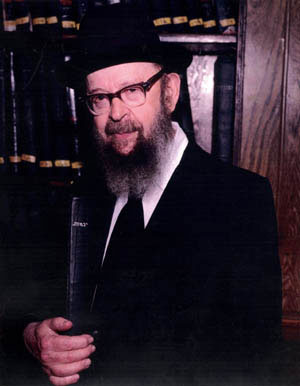
The truth is sometimes unpopular or uncomfortable. Thus, people who wish to dismiss the Hand of Hashem from history and human affairs may be taken aback by the assertion of Rabbi Avigdor Miller, zt”l, based on the beginning of this parshah, that the suffering that befalls Israel comes for a Divine purpose. Rabbi Miller finds this purpose explicit in the opening words of Bechukosai, and observes that this “wish” (to dismiss the Hand of Hashem from history) is not a Jewish way of thinking.

By Ann Goldberg
“Mum, you’ll never guess what happened.” My daughter Tammy’s tone of voice at the other end of the phone indicated that it wasn’t something pleasant. “Someone took my baby stroller from the bus. When I went to pick it up and get off the bus, it wasn’t there any more. I couldn’t believe it. Who would do such a thing?”

"In every generation they try to kill us, and the Holy One, Blessed Be He, rescues us from their hands." Every year, for centuries, Jews the world over say these words at the Seder. I paid particular attention this year as this phrase was sung by the golden-voiced Dudu Fisher, a chazzan and Broadway star, who led sedarim at Kutcher's Hotel in the Catskill Mountains.

The Talmud tells us that compassion is one of the three traits that distinguish the nation of Israel (the others are shame and kindness). The Torah abounds with commandments that exercise this quality, and Rabbi Avigdor Miller, zt”l, explains that they are given for exactly that purpose.
By Rabbi Yaakov Klass and Rabbi Gershon Tannenbaum
Guarding the Temple Even Today! ‘Kohanim Were Stationed in Three Places’ (Tamid 25b)
Sefer HaChinuch: The Torah commands us to count the Omer so we can relive the Exodus from Mitzrayim. Just as the Jews back then anxiously anticipated the great day when they were to receive the Torah, so too we count the days till Shavuos, the Yom Tov that commemorates the giving of the Torah. To the Jews then, accepting the Torah on Har Sinai was even greater than their redemption from slavery. So we count each day to bring ourselves to that sense of great enthusiasm, as if to say, “When will that day come?”
One who forgets to count sefirah at night may count during the day without a berachah, and then continue counting the rest of the days with a berachah. If one forgets to count sefirah at night and does not remember to count by day, he may not count with a berachah thereafter.
In sixteenth-century Cracow, there lived a Jew named R’ Isserl. He was a scholar, philanthropist, and a well-respected community leader, who made a fine living manufacturing and selling fine silk. Many member of the Polish nobility were his customers.

By now everyone has heard of Deborah Feldman’s Unorthodox: The Scandalous Rejection of My Hasidic Roots. The book received much more attention than it should have.
According to the Targum, it appears that if Reuven ate a ham sandwich and I didn’t rebuke him, I would be punished for his sin. This seems difficult to understand. Why should I be punished for his sin? At most, you might argue that if I was capable of rebuking him and didn’t, I would be responsible for the sin of not rebuking him. But how do I become responsible for the sin he perpetrated? He transgressed it; I didn’t.

The following is one unique halacha that is associated with arayos (forbidden relationships): Concerning most aveiros, if one is put in a predicament where he must choose between saving his life and fulfilling a mitzvah he must choose to live and transgress the mitzvah. The Gemara says that arayos are one of the three mitzvos that are yehareg v’al ya’avor (one must allow himself to be killed so as not to transgress the mitzvah), along with murder and avodah zarah.

Shares In The Embarrassment Among the famous practitioners of our forefather Abraham’s virtue, hospitality, was Rav Akiva Eger. Naturally, on Pesach, it was “Let all who are hungry come and eat...’’ Once, at the Seder, a guest accidentally overturned his cup. As the red wine stained the fine white tablecloth and the guest’s face […]
In order to fulfill one’s obligation in the mitzvah of matzah, one must eat a k’zayis amount of matzah. This is because the Torah uses the wording of achilah (eating) when it commands the mitzvah of matzah.
Question: If a person has a number of personal concerns that need to be thought out and analyzed, can he go to shul to do this?
Question: How much matzah must one eat at the Pesach Seder?

An act never dies. Each word you utter, each mitzvah you do, continues to ring in the world for all eternity. Rabbi Avigdor Miller, zt”l, teaches it was such an eternal act that was the undoing of Pharaoh and the making of Israel as a nation of holy people.
The Gemara in Pesachim 115a says that there was a machlokes regarding how one was supposed to eat matzah and marror in the times of the Beis HaMikdash. Hillel said that during those times, when there was a korban Pesach, matzah and marror should be eaten together. His peers argued that they must be eaten separately. The Gemara concludes that since the halacha was not paskened we eat matzah separately, then marror separately, and then both together to accommodate both opinions.

It's 1 p.m. on Friday, Erev Pesach. The rabbi had already sold the chametz at 10 a.m. But I forgot to sell mine. Now the synagogue office is closed and I can't get hold of the form the rabbi uses to sell the chametz. The Torah requires me to remove all chametz from my house on Pesach. But I just cannot bring myself to throw out that Glenfiddich. Is there a way the whisky can remain in my house during Pesach, and would I be able to drink it after Pesach?

By Sandy Eller
Against all odds, the spark of Judaism continues to burn brightly in the Amazon as two members of the Brazilian city of Porto Velho underwent a bris milah performed by a renowned Argentian mohel just days after Rosh Chodesh Adar.
The evil inclination likes to tempt us to indulge in material delights. It is important to know that these delights may have another purpose, too: kedushah (holiness).
Question: What is the basis of the custom to refrain from eating matzah for a period of time before Pesach?
In this week’s parshah the Torah teaches many of the halachos of the korbanos. Each of the korbanos has a limited amount of time when they may be eaten, after which they become nosar and forbidden.
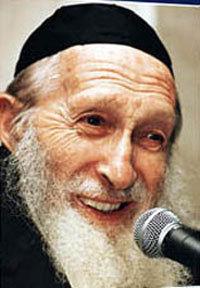
On Tuesday afternoon, 26 Adar, March 20, 5772, Rabbi Chaim Pinchas Scheinberg, zt”l, returned his soul to the Creator. He was the rosh yeshiva of Torah Ore in Jerusalem, one of the leading rabbonim in Kiryat Mattersdorf, and a member of the Moetzes Gedolei HaTorah of Israel. The entire yeshiva world deeply mourns his passing.
The Dos Zakainim explains that the reason every korban must be brought with salt is to remind us that just as salt is a preservative that allows food to last longer, so too the sacrifices are permanently ours to cleanse us from our sins.
At the conclusion of this week’s parshah, the Torah discusses the halachos of one who stole from another. The pasuk says, “veheishiv es hagezeilah asher gazal – and he shall return the stolen object that he stole.” We derive from this that there is a mitzvas assei to return a stolen object.
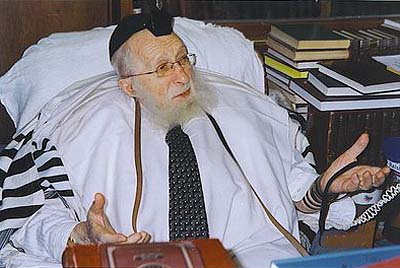
Rabbi Chaim Pinchas Scheinberg, Dean of Yeshiva Torah Ore in Kiryat Mattersdorf, Jerusalem, and Yeshivas Derech Chaim in Brooklyn, passed away Tuesday at age 101. Rabbi Scheinberg was born in Poland, in 1910, and raised in the US. He moved to Israel in 1965. He was a renowned halachic posek, and was considered by many […]

Dear Dr. Yael: I read the March 2 letter from A Lonely Wife who feels unappreciated and neglected as she seeks more attention from her husband. It is necessary for her to receive a reality check – in other words, mussar. While apparently having it all, she is unfulfilled. Well, how would she feel if […]

The Rambam, in Hilchos Shabbos 24:7, rules that Beis Din may not carry out the punishment of either death or lashes on Shabbos. He cites the same pasuk of “lo seva’aru” as the source for this halacha. In his Sefer Hamitzvos the Rambam lists as a separate negative commandment (number 322) that Beis Din may not judge or carry out a punishment on Shabbos.
By Rachel Weiss
Just last week we experienced the crowning point of the month of Adar by commemorating the extraordinary events that unfolded in the ancient Persian Empire. We read the scroll of Esther, enjoyed a hearty feast, and traded gifts of goodies with each other.
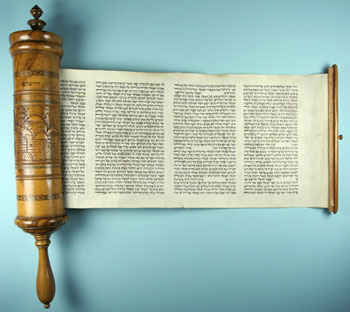
On Purim we read Megillas Esther twice, once by night and once by day. It is uncertain what the nature of the obligation is.
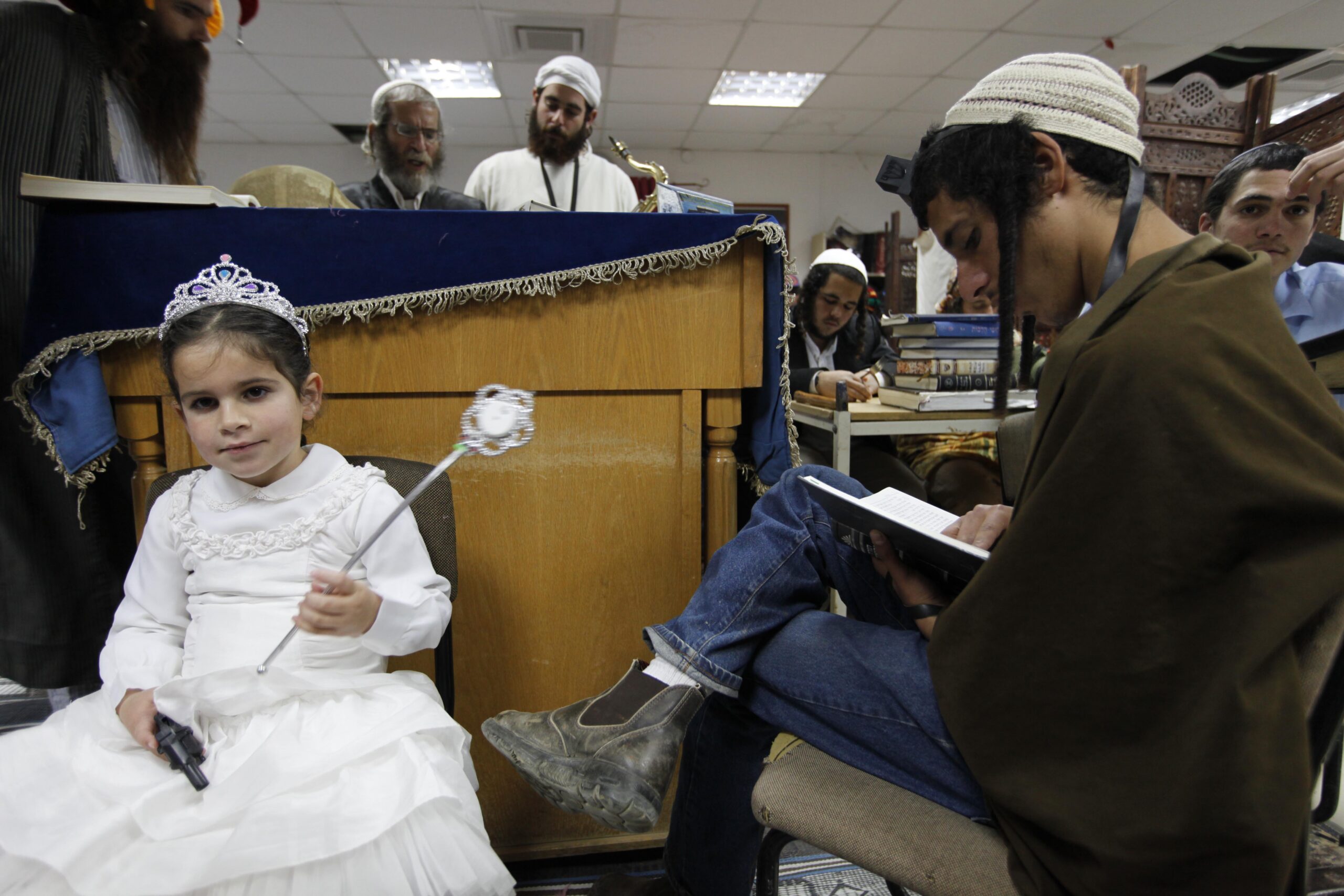
To properly fulfill the mitzvah of listening to the megillah, each word must be heard. If a word is missed, the listener should read it quietly to himself from the text in his hand. The principal purpose of reciting the megillah is to publicize the miracle of Purim. Accordingly, many poskim permit the megillah to be read in English if the reader does not understand Hebrew.

The Sefer HaChinuch states in mitzvah 603 that women are exempt from the mitzvah of remembering what Amalek did to us. He explains that this is because it is not upon women to wage war against and avenge the enemy.

Those who are subjected to emotional suffering tend to be kept out of society's line of sight. All the more so when society is either the cause of the suffering or can alleviate it and does not do so.

There certainly are many reasons to look forward to Purim. It is a time of feasting, joy, and merriment. We celebrate an important victory over our enemies, which was a precedent for many other such victories over the course of our history. We read one of the most moving stories in our entire tradition, and we have good fun while we’re doing it.

Question: Is there any halachic rationale for men to shake hands with women?
By Rabbi Yaakov Klass and Rabbi Gershon Tannenbaum
Permission Granted? ‘Lo Yachlifenu B’Shel Acheirim…’ (Temurah 9)

Hadassa Dubrofsky, a lovely twelve-year old girl from Toronto, Canada decided to forgo bat-mitzvah presents and replace them with something even more meaningful and exciting – an act of chesed (charitable kindness).

A worried mother asks Dr. Yael how to deal with her two-and-a-half year old daughter's jealousy of her newborn brother.
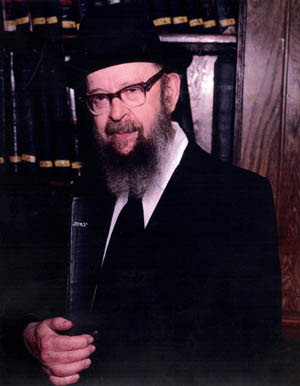
We should not be so naive to think Moshe himself could not have thought of the plan of appointing officers. The Elders of the sons of Israel in Egypt were an official and recognized body, not mere old men as are found today in homes for the aged.
Question: Should a person try to observe mitzvot he is technically exempt from performing?

By Sandy Eller
If the phrase mishloach manos conjures up dreaded images of piles of sugar laden treats that no one wants to eat cluttering every available horizontal surface just weeks before Pesach, chances are that this is one part of the happiest of Yomim Tovim that you are not looking forward to.
By Rabbi Yaakov Klass and Rabbi Gershon Tannenbaum
Pleading The Fifth ‘…And Minors Are Not Obligated To Fulfill Mitzvos’ (Arachin 22a)
Question: Are there limitations to the mitzvah of chinuch?
Question: Are there limitations to the mitzvah of chinuch?
In this week’s parshah Hashem instructs Moshe to tell the Bnei Yisrael that each household should take for themselves, on the 10th of Nissan, a lamb or a kid within its first year for the korban pesach.
Question: My son recently stopped wearing a necktie and lace-up shoes on Shabbat. He explained that he doesn’t want to transgress the prohibition against tying knots on Shabbat. Is tying a necktie or shoelaces really forbidden? “A Mother in Israel” (Via E-Mail)

By Anonymous
The following inspiring story was told to Rochelle Rothman by her close family member. It truly shows how Hashem runs the world, and helps us in all of our endeavors.

Years ago at a Torah Umesorah convention, I heard a presenter state that there is a correlation between derech eretz and the distance one is from New York.

Dear Dr. Respler: Although I am only 40 years old, I feel as if I have discovered the ultimate emotional healing remedy.
Head of Har Bracha yeshiva supports IDF service for religious men.
Pidyon ha’ben, like brit milah, is primarily the responsibility of the father. A brit milah must be performed on the eighth day of the child’s birth, unless it would endanger the life of the child. Pidyon ha’ben must be performed on the 31st day of the child’s birth. Neither ceremony may be delayed beyond its prescribed time unless there is some halachic justification to do so.
In this week’s parshah (Shemos 6:6) the pasuk reveals the four leshonos of geulah: v’hotzeisi, v’hitzalti, v’ga’alti, and v’lakachti. Rashi, in his commentary to Pesachim 99b, tells us that the four cups of wine that we are commanded to drink on Pesach at the Seder correspond to the four leshonos of geulah mentioned above.
In February we conducted a thorough discussion of the mitzvah of techeilet. The following guest piece by Baruch Sterman, marking 20 years since the establishment of the Ptil Tekhelet Foundation (www.tekhelet.com), is a follow up to that discussion.
Question: Are there limitations to the mitzvah of chinuch?
By Rabbi Yaakov Klass and Rabbi Gershon Tannenbaum
Lulav or Shofar on Shabbos ‘It Refers To Tithing In Our Days’ (Bechoros 61a)
After Moshe had agreed to go to Pharaoh to beseech him on Klal Yisrael’s behalf, he began traveling to Mitzrayim with his wife Tziporah and their sons – including the newborn.
Here is an amazing story. I recently made a bar mitzvah for my second son. I went to have my daughter's hair done in Flatbush, and had to be at the hall two hours later.

By David Wilder, Tazpit News Agency
Rav Dov Lior is not only a Torah scholar; he is quintessential Jewish patriot, whose allegiance is pledged fully to God, Torah, the People and the Land. His courage in speaking the truth is undeniably tangible, without regard for any public controversy or dispute.
Question: Are there limits to the mitzvah of chinuch?
 September 25, 2026