יום רביעי, י׳ חשוון תשפ״זWednesday, October 21, 2026



Follow Us


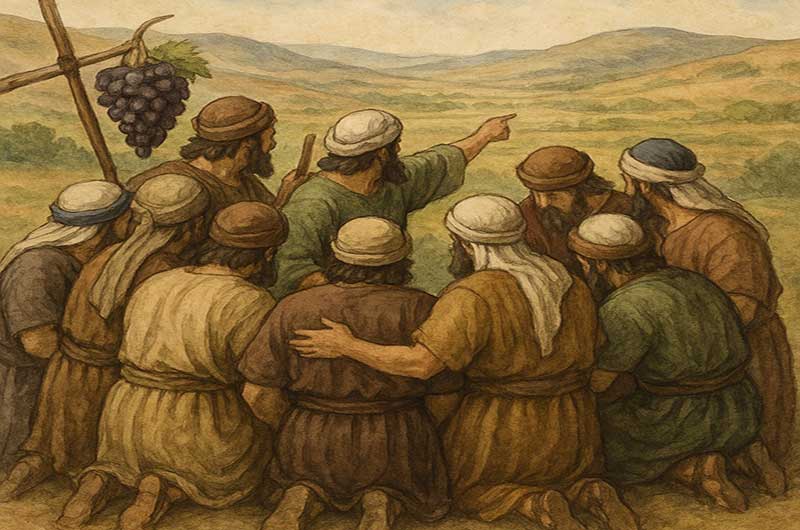
When the spies returned with a bunch of grapes so big it could only be carried by ten people and one fig which could hardly be carried by one person, instead of praising the land which grew such produce, they became concerned that the price of such opulence was too expensive and that they would not be able to afford to pay for it with mitzvot.

Think about this for a moment. They were just about to enter Eretz Yisrael and Eldad and Meidad's prophecy revealed that Moshe would die and Yehoshua would lead Bnei Yisrael into the land flowing with milk and honey. Did this phase Moshe? Not in the least.

Some 200 years ago, Rebbe Nachman of Breslov wrote a statement that I find amazing: The time will come when being an upright and simple person will be as revolutionary as being the Baal Shem Tov.

If a person ploughs his field when it is time to plow, sows his seeds when it is time to sow, reaps his produce when it is time to reap , thrashes his grain when it is time to thrash and winnows the grain when it is time to winnow, when will he have time to learn Torah? (Berachos 35b).

We cannot totally control our sustenance – not the food we eat, nor the money we earn.
This is Judaism’s unique gift: the slow accumulation of wisdom through repeated encounters with Torah. Not through theoretical lectures, but through real life examples.
Every time we discover a new Torah deMoshe MiSinai, an unprovenanced edict associated colloquially with Moshe, we are reaffirming our connection to that primary source of all Torah and to Moshe who passed it on to us.

Home is not where you live, but where they understand you.— Christian Morgenstern

He leaped off the jeep, shouting that he’d take the next one.

Know Hashem in all your ways – serious or inconsequential – for every ounce of success comes from Hashem.
As we are taught, Ein tzaddik ba’aretz asher yaaseh tov v’lo yecheta – There is no righteous person in this world who does good and doesn’t sin, there is certainly what to worry about.

Wealth can also lead one astray: Wealth hoarded by its owner is to his detriment (Koheles 5:12). Avshalom was blessed with beautiful hair (Sotah 11a) and Shimshon was blessed with strength, but these attributes led them astray.

Parshat Naso, as you know, is the longest single parsha in the Torah. In most years, Naso follows Shavuot, which is appropriate – once we receive the Torah, the next thing is to dive straight in and begin reading the longest parsha in the Torah. There are 176 pesukim in Parshat Naso. An interesting […]

With regard to the Birkas Kohanim, the Zohar comments that actions performed in this earthly world inspire astounding conduct in Heaven. When the Kohanim spread their fingers to bless the Jewish people, it rouses the Divine Presence to dwell upon His people.

Israel is blessed in the merit of the three fathers, also in whose merit the Torah was given.

Our response now must be as it like at Har Sinai, to turn to one another with a sense of oneness, love, and unity and to wish each other chazak
Like in an election, the division of the land among the twelve tribes had to be supervised by officials who made sure that there would be no fraud involved in allocating the land.

Pesach and Shavuot...represent the liberation of the body and the liberation of the mind, respectively.
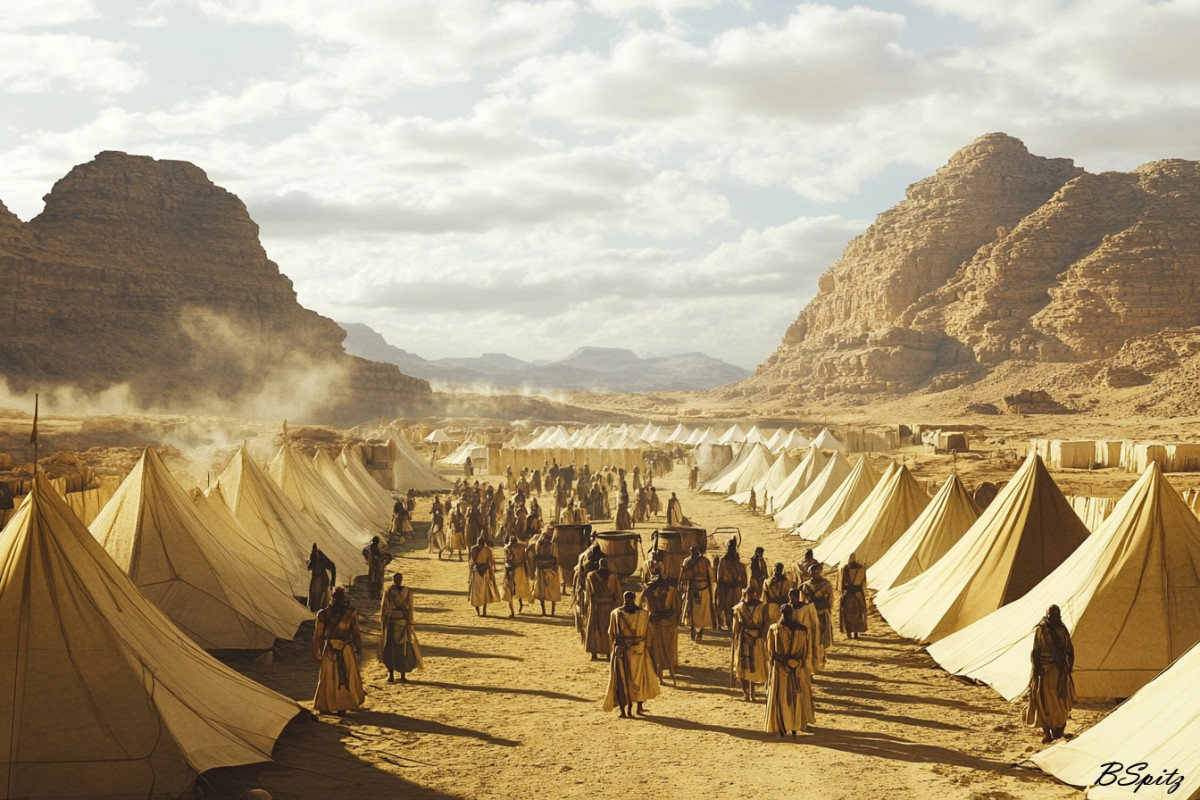
The road to hell is paved with good intentions.— Proverb (widely attributed to Saint Bernard of Clairvaux)
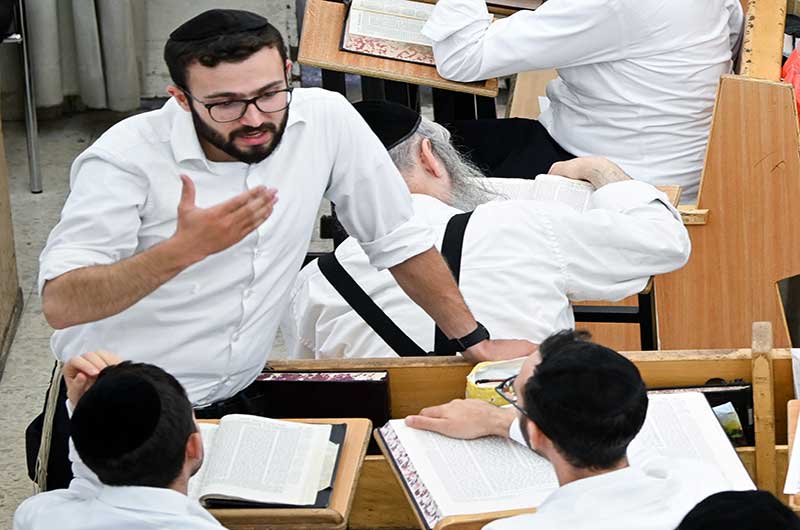
How do Torah scholars make more peace in the world?

R’ Elazar states that all agree, though, that on the holiday of Shavuos, we are obligated to eat and drink because it is the day on which the Torah was given. R’ Shimshon Nachmani, the renowned Zera Shimshon, notes that this conclusion seems paradoxical. We would think that the day commemorating the giving of the Torah would be dedicated solely to spirituality, to Torah study.
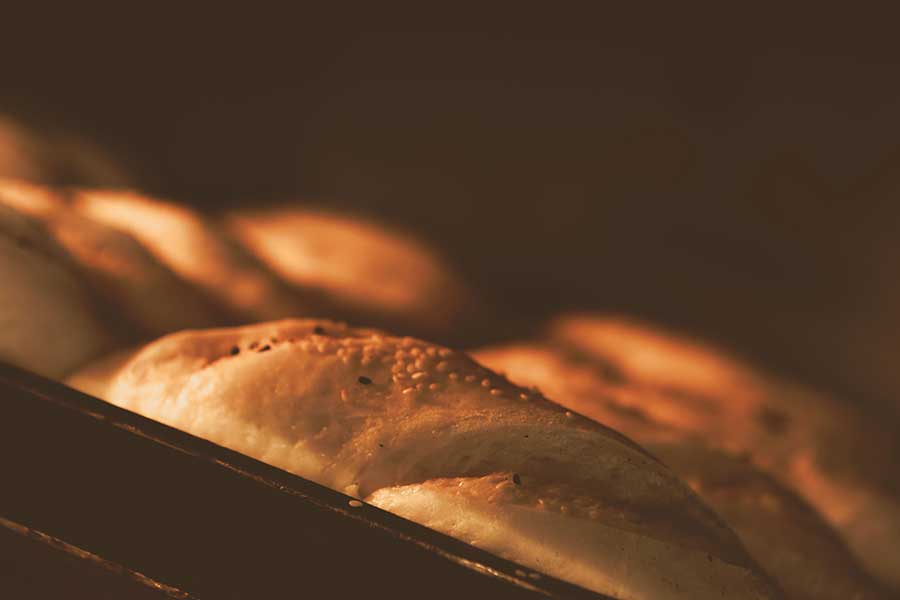
The total weight of the shulchan with the lechem hapanim was over 551 pounds.

Indeed the laws of Shemittah were meant to be given at Har Sinai because the original plan was that we would enter the land of Israel a short while later, not forty years later.
Unlike the entry of the Israelites into the Promised Land, the return to Zion in modern times has been a natural event within the confines of nature.

One possible explanation that Rashi finds in the Midrash is that all of the general principles were received at Har Sinai; however, many of the specifics were taught by Moshe in the land of Moav immediately before the crossing of the Yarden.

Faith is not certainty. It is the courage to live with uncertainty.— Rabbi Jonathan Sacks
Torah does not have a set place. It can be found anywhere. It should be found everywhere.

When a person appears before the Heavenly Court, he is asked whether he properly fulfilled the mitzvah of you shall strengthen him.

Detach yourself from the illusions of this world and focus on the true realities of the world and Who determines them…. Today you do not take care of yourselves, I take care of you.
As we exist in the world and interact with it, we receive input and understand our surroundings by means of the data we collect, chiefly by way of our senses. But because we also have the ability to communicate with one another, we learn much useful information about the world from each another.
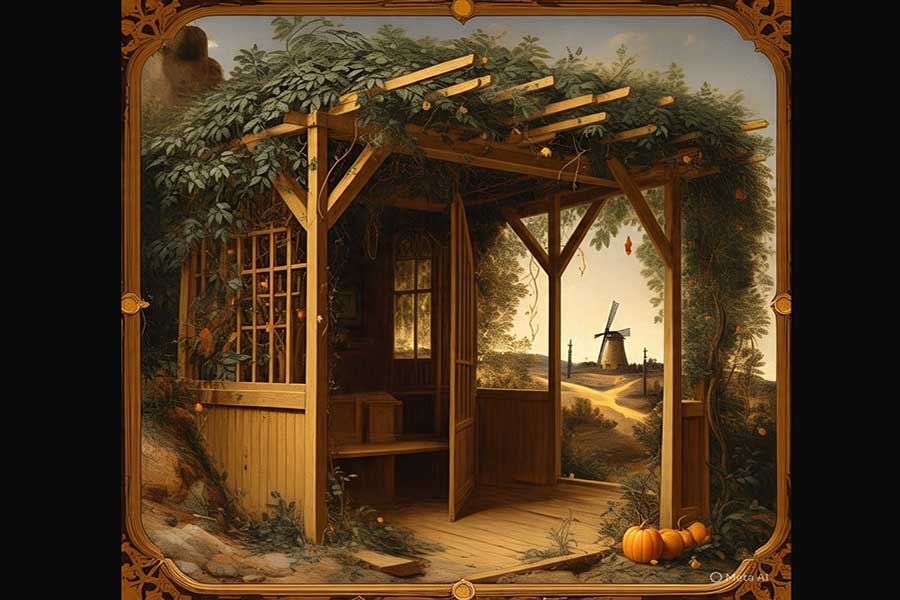
When Yosef related his dreams to his brothers and to his father, his brothers became jealous of him. Not his father. His father shamar es ha’davar, kept it in mind and looked forward to the time when Yosef’s dreams would come true (Rashi to Bereishis 37:11).

Joy in Judaism is not hedonic; it is redemptive, cathartic, and spiritual.— Rabbi Joseph B. Soloveitchik

Rebbe Akiva. He is the Jewish hero par excellence, which means that, on some level, his life story encapsulates the values and ideals of the Jewish people. And yet, perhaps not coincidentally, he lived in the shadow of death.

Based on one’s Torah stature in the community [one] must conduct himself beyond the measure of the law.
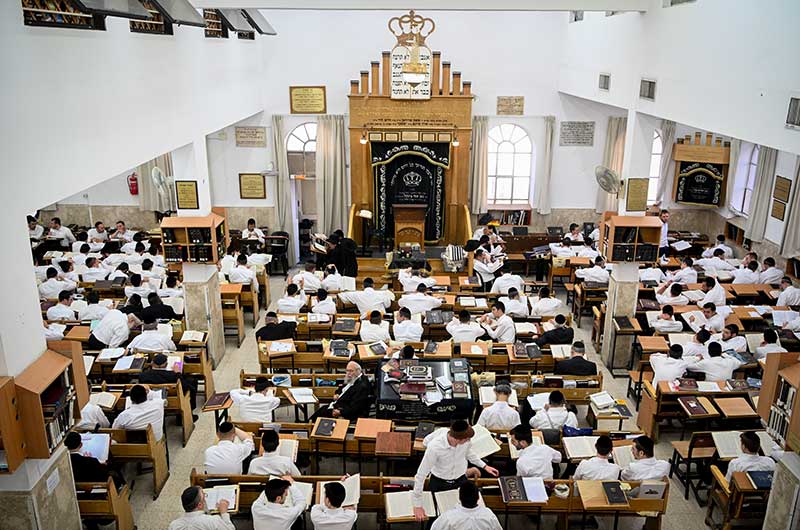
We must know that the mitzvah of kavod haTorah is even greater than learning Torah. As the Gemara in Masechtas Megilla in the first perek states categorically that while learning Torah does not supersede the hearing of the megillah, giving honor to the Torah does.

One might say that the menorah and the ketoret were temidin, while the lechem hapanim was only switched once a week, on Shabbat. However, although it was only switched once a week, the lechem hapanim was on the shulchan every day, a korban in itself, a repeating miracle that occurred each day anew.
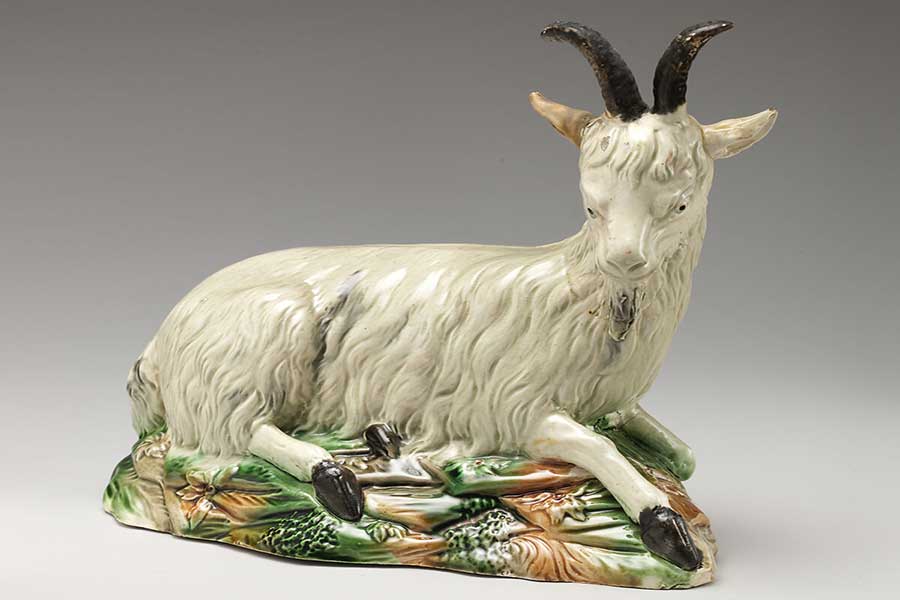
Before the Kohen Gadol could come into G-d’s chamber with the blood of the sacrifice, there was a barrier to entry. That barrier is called lashon hara, slander. G-d cannot abide the presence of slanderers (Arachin 15b).

Flour is the most basic ingredient needed to feed the body, but once it is made into bread, it becomes more associated with physical urges and pleasures and thus potentially detrimental to spiritual growth.

I don’t believe in ghosts. But I’m afraid of them.— Edith Wharton
The Talmud states that when a tzaddik does not pray for another person who needs to do teshuva, then the tzaddik becomes partially responsible for the sinner’s actions and liable for punishment.

Sometimes, the yetzer hara pushes us off until the summer – and then in the summer, he tells us that we need to rest in order to recharge our batteries before the coming winter.
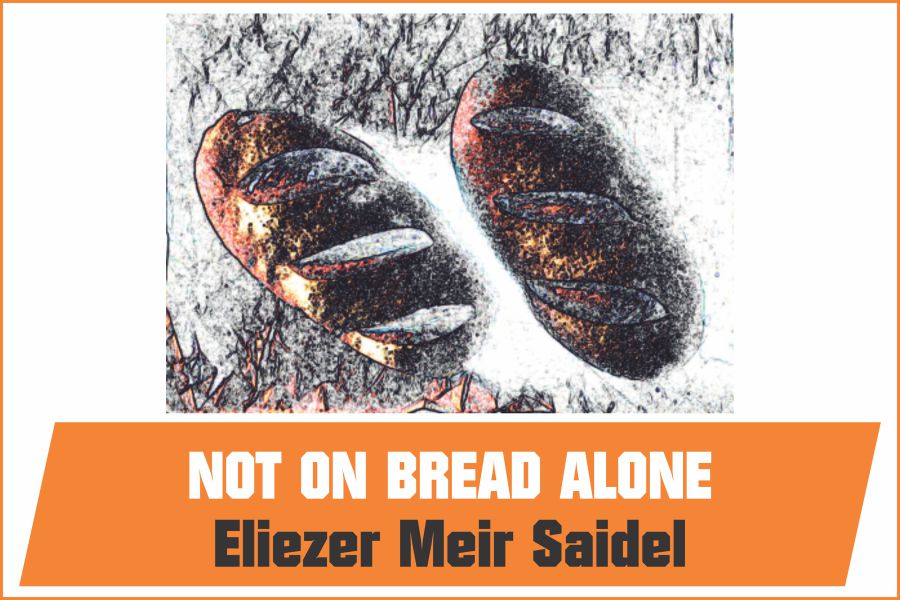
The Ramban says that the word se'ir (goat) is also reminiscent of Eisav, who Yaakov describes as sa'ir (hairy).

G-d does not immediately punish us or strike us down with a bolt of lightning if we speak lashon hara. He warns us in stages.
We ate matzah – boom! We received an injection of faith for the entire year. This dose of faith is absorbed into our bodies and souls. It doesn’t matter how we felt. Consciously or unconsciously, we have been transformed by this experience.
Aharon was silent out of pride in his sons.
Why was it preferable, then, for Hashem to penalize Nadav and Avihu for their wrongdoing on this very special day during the chanukas hamishkan when it certainly detracted from the happiness of all the people gathered?

According to one opinion, the second keruv on the parochet was not a lion but had the face of an eagle! This eagle was present in both the first and second Batei Mikdash, until they were destroyed.
When Hashem judges us and confers upon us the things we deserve in this world, our Sages teach, He responds to us middah keneged middah, in a manner befitting the conduct we have exhibited.

It is interesting to note that while everyone assumes that the drowning of the Egyptians in the Red Sea was punishment middah k’neged middah for drowning our children in the Nile, this is really not such a simple explanation.
On the Shabbat before Pesach, Israel risked everything to begin offering the Korban Pesach, and in doing so we made ourselves great, making G-d that much greater in proportion. This manifestation of the Divine light of redemption – in just the moment we most needed to see it – was the greatest thing Hashem could do for us.

Unlike the Olah which was entirely burned on the altar, only a handful of the flour, called the kometz, was burned on the altar (Vayikra 6:5).
Involving our bodies in the holiness of looking for chametz or preparing for Shabbat is something that can become a habit. That is not to say that we shouldn’t use our minds to superimpose even greater meaning on these actions while we perform them. But it does mean that accustoming our bodies to do good things has value unto itself

We are all believers. We believe in Hashem and all the Thirteen Principles of Faith. However, we are a work in progress, growing our emunah every moment of every day.

It is no coincidence that the seder night was when Yitzchak gave the blessings both to Yaakov and to Eisav, thus demonstrating his love for Eisav too!

Fire is something that belongs in Heaven, that is its place. It is therefore not difficult to understand that fire came down from Heaven onto the mizbe'ach. What is difficult to understand is the mitzvah for us to add our own fire.
Sometimes, because of the low spiritual state of Israel going out of bondage, there are intermediate steps in order for growth to be achieved. The Rambam understands the sacrificial rite in this spirit. He sees the korbanot as serving a practical purpose in weaning Israel off of the idolatrous customs of primitive civilizations.
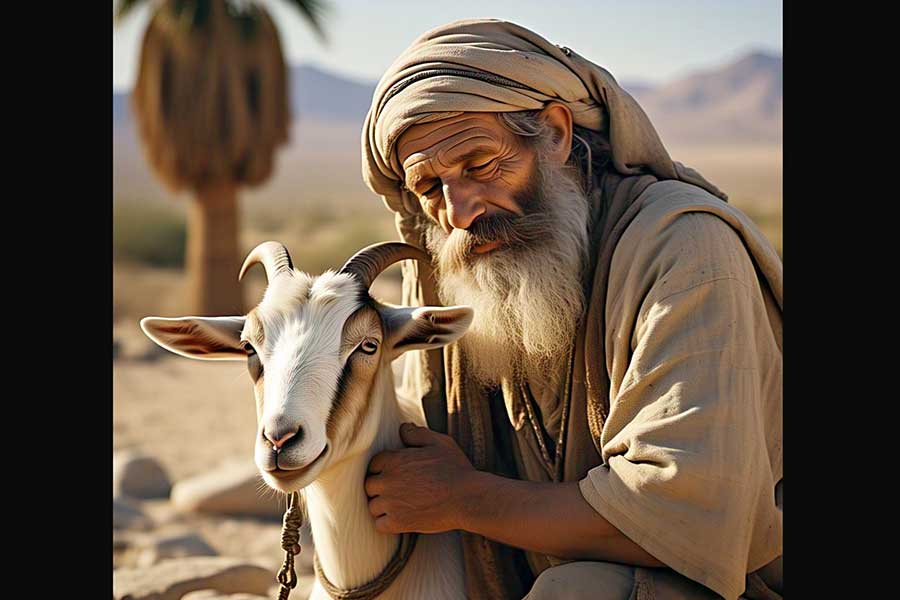
When we perform a mitzvat aseh, like davening, putting on tefillin, sitting in the sukkah, keeping Shabbat, with full concentration, while putting aside all other thoughts and preoccupations, it pleases G-d no end, because it justifies His experiment in creating mankind.

The Gemara teaches us that one who has three traits can consider himself a true talmid, a disciple, of Avraham Avinu. One of these traits is ayin tova, a good eye, which means the characteristic of seeing the good in everyone.

Hashem told Avraham Avinu: You are the root of the Jewish nation. If there is a black spot – a small lack of emunah – then the fruit that you bear will be bitter, that is to say, there will eventually be no emunah at all among the people.

The Rambam (Sefer HaMitzvot, negative commandment 99) says that it is not permitted to bring a Korban that has no taste, it has to have an intrinsic taste and flavor that is not just palatable, but an honor to the King to Whom it is sacrificed, it has to be delicious.
More than one scholar has noted the absence of self-critique in ancient literature of all peoples except the Jews.

Etching the Torah in our hearts and minds takes an enormous investment of effort and time. We may fear that the long hours we spend on it displaces the time we need to meet our surrounding responsibilities, our commitment to work, to family etc. Miraculously, however, nothing gets displaced.

The innermost aspects of being are revealed in the interior of the Tent of Meeting in the Mishkan, or in the Hechal (or sanctuary) of the Beit HaMikdash.
Day by day we are building for eternity ... Every gentle word, every generous thought, every unselfish deed will become a pillar of eternal beauty in the life to come. -Rebecca Ruter Springer

With the mitzvah of tzedakah, there is the possibility of saving oneself even as the ship is beginning to sink. The mitzvah of tzedakah is especially unique in that it can protect the individual even if a Heavenly decree has already been issued to the contrary.
I will learn the art of saying I’m sorry, showing that I empathize with the damage I’ve done and demonstrating that I’m making concrete corrections so that it won’t happen again. This is very different than the But, I said I’m sorry already approach!

Chazal tell us that every component in the earthly Beit HaMikdash is paralleled by a "twin component" in the Heavenly Beit HaMikdash. Just as there is a Menorah down here, there is a Menorah up there. Just like there is a Shulchan down here, there is a Shulchan up there, etc.

the Talmud speaks about His presence moving away from the Temple only gradually during its last days. So would it not have made more sense for G-d’s presence to also come down gradually while the Tabernacle was being builtT

Of all the 39 acts of work which are prohibited on Shabbat, why does The Torah single out the act of lighting fire? As we know, in the Jewish calendar, the night belongs to the next day. By burning the light at night, we extend the working day into Shabbat.

The women had to be there and also the babies, not simply because that was how it was at Matan Torah, but for another reason. Neither the women or the babies were complicit in the sin of the eigel, they didn't have anything to atone for – it was the men.
Ramchal teaches that although the Kohen officiates in the offering of korbanot, the three groupings of Israel are all essential to the effective completion of the service in the Beit HaMikdash.
Mesiras nefesh does not only refer to extreme instances. It also includes acts that may require a degree of selflessness for others.
In the spirit of Passover spiritual cleansing which we are commencing, here is a list of fifty-two areas of life which perhaps could use some ongoing scrubbing and scouring.
What was Moshe Rabbeinu was doing for those 40 days?
In everyday life we frequently meet people who seem to be walking around in disguise. One is disguised as someone arrogant, another as someone vulgar, and a third as someone apathetic – but what we see is not a true reflection of who these people really are.
In the aftermath of this ordeal, Moshe seems to struggle with his understanding of the omnipotence of Hashem and the instantiation of His will in the affairs of men.
By accepting the Torah, the Jews themselves became a Kingdom of Priests and a Holy Nation (Shemos 19:6). However, Chazal tell us (Shabbat 88a) that their acceptance of the Torah was under duress.

It seems like no coincidence, then, that we read Esther and Ruth at the beginning and end of this period in the year.

Hashem does not forgive anyone who ever shed a drop of Jewish blood. There is no question that justice will be served by Hashem Himself, as the Yalkut Shimoni states, upon anyone who participated in any way in this massacre.
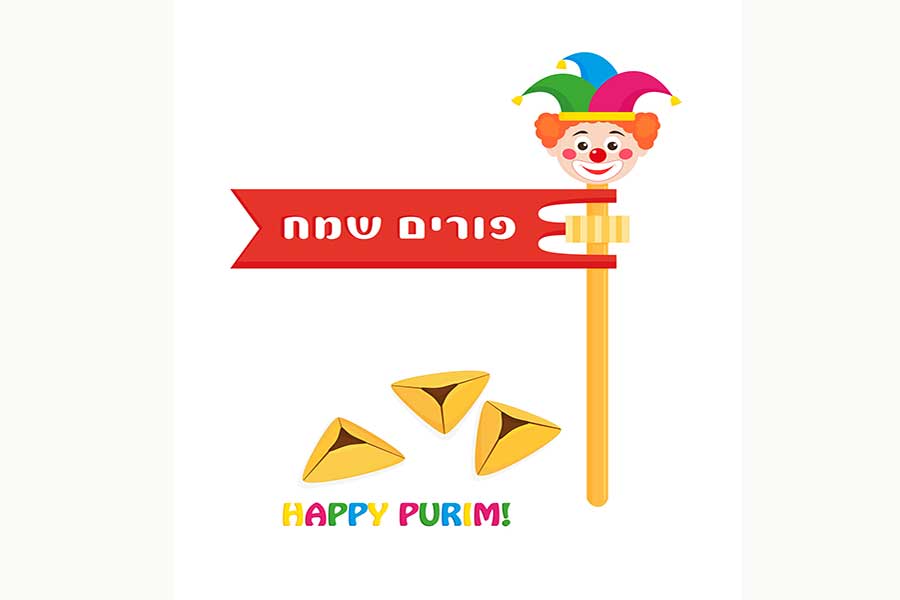
The holy rebbe, Rav Yisroel of Ruzhin, adds that Purim is even more, for while on Yom Kippur Hashem forgives only with teshuva, repentance, on Purim He forgives as soon as we ask Him, as it says, Kol haposhet yad nosnin lo.

Of all the vessels in the Mikdash, the kiyor is something of a conundrum. Is it one of the main vessels in the Mikdash, like the Menorah, Shulchan, etc., or not?
In the back of the Choshen Mishpat there was a slip of parchment, known as the Urim Ve’tumim, containing G-d’s ineffable name. G-d was behind every decision the judges rendered. Even those decisions, which in hindsight appeared wrong, were right, because G-d was behind them.
The nexus of all worlds, the point of conjunction of the physical and spiritual poles is the golden Mizbe’ach.

Our sages teach us, Words that exit from the heart [of the one who utters them] enter into the heart [of the listener]. This suggests that if someone does not truly believe or feel that which he is saying out loud it has no effect or impact on the listener.
The Megillah is called Esther, which means hidden. This is because the Divine Hand was cloaked under the guise of palace intrigue, and within the lust and caprice of the royal court.
Assimilation was quite prevalent at the time with many prosperous exiled Jews preferring a liberal, cosmo-political approach as opposed to a conservative, separatist approach. Very few remained true to the old teachings and values, like Mordechai, the former head of the Sanhedrin.
Nadav and Avihu don’t only teach us about how to relate to God, but also how to relate to each other
The Jews that didn't make Aliyah relinquished their rights!
How the Mishkan preserves inspiration.

The air up there in the clouds is very pure and fine, bracing and delicious. And why shouldn't it be?--it is the same the angels breathe. -Mark Twain
Mishkenei Elyon is a small but profound text that explains the spiritual significance of the detailed structure of the third Beit HaMikdash that was witnessed and reported on by the navi Yechezkel.

When the Kohen would light the menorah in the lower word, the menorah in the heavens was lit simultaneously, lighting up the lives of the Jewish people.
If you analyze the overall structure of the Mishkan (and Beit HaMikdash) you see that it is layered according to the level of holiness.

Loaning money is a greater Mitzvah than giving Tzedakah...
When Israel enslaves their own brothers, they are also enslaving G-d’s very image and likeness on earth.

Perhaps it is the nature of debate that blinds many from the wisdom of the opposing position, but our sages clearly advocated both approaches simultaneously.

This message of hope – that all is not lost and that one can always climb back from a spiritual morass without needing years to do so – is a vital lesson that is important to remember every day of our lives. This is one of the reminders of the tefillin.

One is not promised that he will live longer than the number of years that he was destined to live. Rather, one who worships Hashem will live out his days.

If you think that wealth is limited to your investment portfolio, you are very much mistaken (although money is one form of wealth). There are other forms of wealth, which many tend to regard as mundane, but which are often more valuable than all the money in the world.
 October 16, 2026